
Listen to this Post
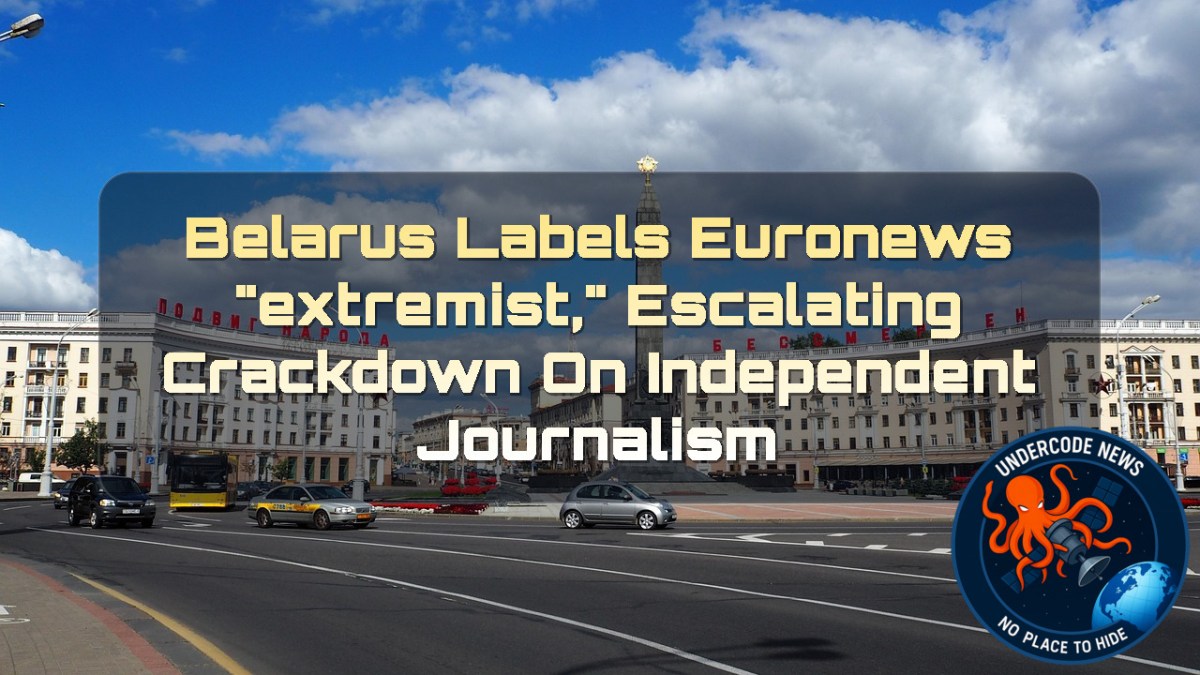 Introduction: A New Blow to Press Freedom in Europe
Access to independent journalism remains one of the foundations of any democratic society. Around the world, millions of people rely on international news organizations to gain balanced perspectives beyond the narratives promoted by their own governments. However, that access is increasingly being challenged in countries where media restrictions continue to expand.
In a controversial move that has sparked concern among press freedom advocates, Belarus has officially designated Euronews’ digital platform as “extremist.” The decision not only blocks access to one of Europe’s most recognized international news outlets but also places Belarusian citizens at legal risk simply for storing or sharing Euronews content. The ruling represents another significant escalation in the country’s long-running campaign against independent media.
Belarus Officially Declares Euronews an “Extremist” Media Outlet
Belarusian authorities have added Euronews’ website to the country’s “Republican List of Extremist Materials” following a ruling issued by the Horki District Court in the Mogilev Region on August 4.
According to reports from Belarusian media, the
The designation extends beyond simple website blocking. By classifying media as “extremist,” Belarus introduces legal consequences for ordinary readers, creating additional pressure on citizens who seek information from independent international sources.
Readers Could Face Legal Consequences
One of the most alarming aspects of the ruling is that it does not only affect Euronews as an organization.
Belarusian readers may now face legal consequences for possessing or redistributing Euronews articles, videos, or digital publications. This transforms ordinary news consumption into a legal risk, significantly limiting public access to external reporting.
For years, Euronews has maintained a substantial audience inside Belarus, serving as one of the country’s primary European news providers. The new restrictions effectively remove one of the last major Western media voices available to many Belarusian viewers and readers.
Euronews Strongly Condemns the Decision
Euronews responded swiftly by condemning the
Editorial Director Claus Strunz criticized the ruling, arguing that any government labeling factual journalism as “extremist” demonstrates fear of transparent reporting rather than concern over public safety.
He also stated that Euronews had not been formally notified before the decision was announced and that the organization continues waiting for official legal justification from Belarusian authorities.
Despite the restrictions, Euronews reaffirmed its commitment to delivering factual, impartial reporting to audiences in Belarus and elsewhere.
Authorities Have Yet to Explain the Legal Basis
At the time of the announcement, Belarusian officials had not publicly released the reasoning behind the decision.
No detailed legal findings or public evidence have been presented explaining why Euronews has now been classified as extremist media. The lack of transparency has generated criticism from observers who argue that media restrictions should require clear legal standards and publicly available justification.
Without official explanations, questions remain regarding which specific content or editorial decisions allegedly violated Belarusian law.
Part of a Broader Pattern of Media Restrictions
This latest action is not an isolated event.
Belarus prohibited Euronews television broadcasts back in 2021, officially citing procedural legal reasons. Independent observers, including the Belarusian Association of Journalists, argued that the real objective was to reduce public access to alternative international news coverage.
Following
With Belarus now restricting both Euronews television and online reporting, the country joins Russia in severely limiting access to one of Europe’s largest international news organizations.
International Concerns Over Freedom of Information
Media rights organizations have repeatedly expressed concern over increasing pressure on journalists and independent news organizations operating in Belarus.
Restrictions targeting foreign media reduce the diversity of available information and make it increasingly difficult for citizens to compare multiple perspectives on regional and international events.
International observers frequently argue that limiting independent reporting weakens transparency and public accountability while increasing dependence on state-controlled information sources.
The Growing Global Debate Over Digital News Access
The Belarus decision also reflects a wider global debate surrounding digital information control.
Governments across multiple regions have increasingly turned to website blocking, content restrictions, censorship laws, and legal penalties aimed at limiting access to foreign media platforms. While officials often justify such actions using national security or public order arguments, critics contend that these measures frequently suppress independent reporting and restrict freedom of expression.
As digital journalism becomes the dominant method of news consumption, restrictions targeting online platforms carry greater consequences than traditional broadcast bans.
Deep Analysis
Command: Examine the Legal Classification
Belarus’ use of the “extremist” label dramatically raises the legal severity of the action. Rather than simply blocking access to a website, the classification creates legal exposure for citizens interacting with the content, expanding censorship beyond publishers to individual readers.
Command: Evaluate the Information Control Strategy
This decision fits a broader strategy of reducing access to external reporting. Removing established international media outlets narrows the range of viewpoints available to the public and increases reliance on domestic information channels.
Command: Assess Regional Implications
Belarus joining Russia in restricting Euronews demonstrates a regional trend in controlling foreign media access. Such coordination—or similar policy direction—could encourage comparable measures elsewhere if left unchallenged.
Command: Measure the Impact on Journalists
International journalists covering Belarus may face additional obstacles reaching audiences inside the country. Independent reporting becomes less accessible when distribution platforms are blocked or criminalized.
Command: Consider the Digital Precedent
Classifying a major international news organization as extremist sets a notable precedent. If replicated by other governments, similar legal frameworks could increasingly target cross-border journalism rather than only domestic media.
Command: Analyze the Transparency Gap
Authorities have not publicly explained the legal reasoning behind the designation. The absence of detailed justification makes independent legal evaluation difficult and fuels international criticism.
Command: Evaluate Risks for Citizens
Perhaps the most immediate impact falls on ordinary users. Legal penalties associated with sharing or storing journalistic content may encourage widespread self-censorship even among those who are not politically active.
Command: Observe International Reputation Effects
Actions affecting internationally recognized media organizations often attract attention from press freedom advocates, human rights groups, and foreign governments, potentially influencing Belarus’ global reputation.
Command: Review Historical Context
The 2021 television broadcast ban indicated an existing pattern of restricting Euronews. Extending the restriction to digital platforms significantly broadens the scope of the limitations.
Command: Identify Long-Term Trends
The move reflects a continuing global shift where governments increasingly focus on regulating digital information ecosystems rather than solely traditional broadcasting.
What Undercode Say:
Independent Journalism Is Becoming the Primary Target
Modern censorship increasingly targets digital journalism because online platforms reach audiences instantly across borders. Blocking traditional television is no longer sufficient when readers primarily consume news through websites and mobile devices.
The Extremist Label Carries Serious Consequences
Using extremist legislation against media organizations significantly raises the stakes. Beyond restricting publishers, it introduces legal uncertainty for everyday citizens who merely access or share journalistic content.
Information Control Extends Beyond Infrastructure
Controlling information today is less about shutting down internet access and more about creating legal risks around specific sources. This approach encourages self-censorship without requiring complete network shutdowns.
Transparency Remains Essential
When governments classify media organizations under severe legal categories, detailed public justification is critical. Transparent legal reasoning allows independent review and helps distinguish legitimate security concerns from restrictions on press freedom.
International Media Face Increasing Regulatory Pressure
Large international news organizations are likely to encounter growing regulatory challenges as geopolitical tensions continue to influence information policies worldwide.
Readers Become Part of the Enforcement Mechanism
The threat of penalties for sharing content shifts enforcement toward individual behavior. Even without mass prosecutions, the possibility of legal consequences may discourage public discussion and information exchange.
Digital Borders Continue to Expand
The internet was once viewed as borderless, but governments are increasingly building digital boundaries through legislation, filtering systems, and platform restrictions that mirror physical national borders.
The Future of Cross-Border Reporting
International journalism will likely depend more heavily on resilient distribution methods, encrypted communication channels, and diversified publishing strategies as digital censorship becomes more sophisticated.
✅ Confirmed: Belarus has designated
✅ Confirmed: Euronews publicly condemned the decision, stating it had not been informed in advance and reaffirming its commitment to independent journalism.
✅ Supported: Belarus previously halted Euronews television broadcasts in 2021, and independent journalist organizations have linked such actions to broader efforts to restrict access to independent sources of information.
Prediction
(+1) International media organizations and press freedom groups are likely to intensify advocacy efforts supporting unrestricted access to independent journalism in Belarus, bringing greater global attention to the issue.
(-1) If similar legal classifications continue to expand, more international news platforms could face restrictions in tightly controlled information environments, reducing citizens’ access to diverse global reporting and increasing digital fragmentation across regions.
🕵️📝Let’s dive deep and fact‑check.
🎓 Live Courses & Certifications:
Join Undercode Academy for Verified Certifications
🚀 Request a Custom Project:
Secure, high-velocity infrastructure and disruptive technological engineering. Contact our engineering team for high-tier development and proprietary systems:
[email protected]
💎 Smart Architecture | 🛡️ Secure by Design | ⭐ Trusted by Thousands
References:
Reported By: www.euronews.com
Extra Source Hub (Possible Sources for article):
https://www.quora.com/topic/Technology
Wikipedia
OpenAi & Undercode AI
Image Source:
Unsplash
Undercode AI DI v2
🔐JOIN OUR CYBER WORLD [ CVE News • HackMonitor • UndercodeNews ]
📢 Follow UndercodeNews & Stay Tuned:
𝕏 formerly Twitter 🐦 | @ Threads | 🔗 Linkedin | 🦋BlueSky | 🐘Mastodon | 📺Youtube


