
Listen to this Post
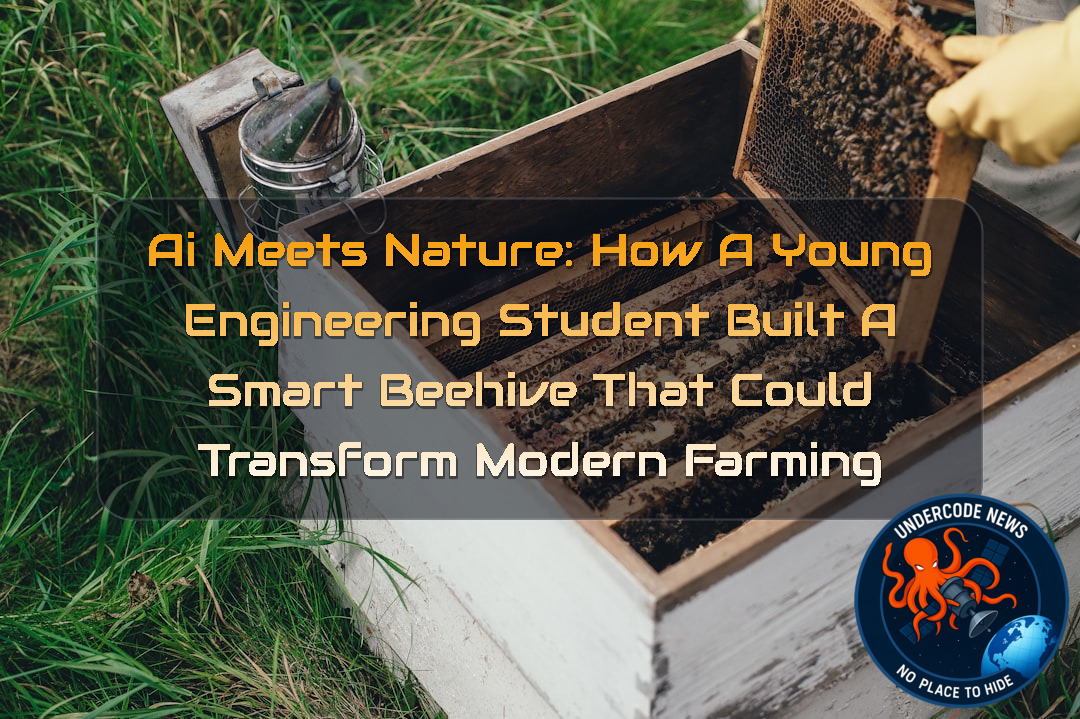
Introduction: When Artificial Intelligence Protects the
Artificial intelligence is often associated with robots, data centers, cybersecurity, and advanced software. Yet one of its most meaningful applications may be taking place inside a humble wooden beehive. As global agriculture faces increasing pressure from climate change, declining bee populations, and rising production costs, innovative technologies are becoming essential for sustainable farming.
A young engineering student from India has demonstrated that groundbreaking innovation does not always require billion-dollar laboratories. Instead, a combination of environmental sensors, AI-powered vision, and mobile connectivity has produced a practical solution that helps protect honeybee colonies while supporting farmers. This project represents more than an engineering achievement. It offers a glimpse into how AI can strengthen food security, improve biodiversity, and make agriculture smarter without replacing the people who depend on it.
A Student Innovation with Real Agricultural Impact
Building an AI-Powered Smart Beehive
Rohit N, an engineering student at the Vellore Institute of Technology in Tamil Nadu, has designed an intelligent beehive capable of monitoring bee colonies without requiring farmers to open the hive repeatedly.
Traditional beekeeping often depends on manual inspections. While experienced beekeepers can identify problems by opening a hive, every inspection disturbs the bees, increases stress inside the colony, and sometimes reduces productivity. Rohit’s innovation aims to solve this challenge by allowing continuous monitoring through artificial intelligence and smart sensors.
Instead of relying solely on human observation, the smart hive continuously collects environmental and biological information and delivers it directly to the beekeeper’s smartphone.
Advanced Sensors Turn an Ordinary Hive into a Smart Ecosystem
Monitoring Every Critical Hive Condition
The smart beehive is equipped with multiple sensors designed to observe conditions that directly affect colony health.
Among the information collected are:
Bee movement and activity
Internal hive temperature
Humidity levels
Air pressure
Honey storage levels
Environmental changes surrounding the colony
Together, these measurements create a detailed picture of the hive’s health throughout the day.
Rather than checking colonies manually every few days, farmers receive real-time insights into what is happening inside each hive.
Artificial Intelligence Watches the Bees
AI Camera Detects Problems Before They Become Serious
One of the most innovative components of the system is its AI-powered camera.
Instead of simply recording images, the camera analyzes bee behavior using machine learning algorithms. Changes in movement patterns, unusual clustering, reduced activity, or signs of pest invasion can all be recognized automatically.
If abnormal behavior appears, the system immediately sends alerts to the beekeeper’s mobile application.
Early detection allows problems to be addressed before they threaten the survival of the colony.
Real-Time Mobile Alerts Improve Beekeeping
Farmers Stay Connected Anywhere
The accompanying mobile application serves as the central management platform.
Whenever unusual hive conditions occur, farmers receive instant notifications. These alerts may include:
Pest attacks
Dangerous temperature fluctuations
Excessive humidity
Reduced bee activity
Unexpected changes in honey levels
Instead of discovering problems days later during routine inspections, beekeepers can respond almost immediately.
This significantly reduces colony losses.
Reducing Stress on Honeybee Colonies
Fewer Physical Inspections Mean Healthier Bees
Every time a beekeeper opens a hive, the internal environment changes.
Temperature shifts, exposure to light, vibrations, and interruptions to bee activity all create stress for the colony.
The smart hive minimizes unnecessary disturbances by allowing remote observation.
Healthier colonies often remain more productive and experience fewer interruptions during honey production and pollination seasons.
Helping Farmers Increase Productivity
Technology Supports Daily Agricultural Work
The smart hive is not designed to replace beekeepers.
Instead, it functions as an intelligent assistant that continuously watches over the colony while farmers focus on other agricultural tasks.
This saves time, reduces unnecessary labor, and allows farmers to manage larger numbers of hives more efficiently.
For small farming communities, these efficiency gains can translate directly into improved profitability.
Expanding Across Tamil Nadu
More Than 1,500 Smart Hives Already Distributed
The innovation has already moved beyond laboratory testing.
Through a local agricultural initiative in Tamil Nadu, more than 1,500 smart hives have been distributed to farming communities.
This wider deployment has helped demonstrate that the technology can operate in real agricultural environments rather than remaining an experimental prototype.
Large-scale adoption also provides valuable data for improving future versions.
Improving Pollination Across Farmland
Healthy Bees Mean Better Crop Production
Honeybees are among the
Many fruits, vegetables, oilseed crops, and flowering plants depend on healthy bee populations to produce high yields.
By improving colony health and reducing losses, the smart hive indirectly strengthens agricultural productivity.
Better pollination often leads to:
Higher crop yields
Improved fruit quality
Increased seed production
Greater biodiversity
Healthier agricultural ecosystems
The benefits extend well beyond honey production.
Creating New Income Opportunities
Honey Production Supports Rural Families
The initiative has also generated additional household income.
Farmers participating in the project are producing honey while simultaneously improving pollination services for nearby crops.
For many rural families, honey sales provide an extra revenue stream that complements traditional farming activities.
Diversified income sources make agricultural communities more resilient during difficult growing seasons.
Affordability Remains the Biggest Challenge
Current Prototype Costs Limit Wider Adoption
Although the technology has demonstrated promising results, the current prototype remains relatively expensive.
Many small-scale farmers may find it difficult to invest in advanced monitoring equipment without financial assistance.
Reducing manufacturing costs will be essential if the project is to achieve widespread adoption.
Lower-cost sensors, mass production, and open hardware designs could significantly reduce future prices.
The Future of AI in Sustainable Agriculture
Smarter Farms Begin with Smarter Monitoring
This project illustrates a broader trend in precision agriculture.
Artificial intelligence is increasingly being used to monitor livestock, crops, irrigation systems, soil conditions, weather patterns, and now bee colonies.
Rather than replacing farmers, AI provides continuous observation that would be impossible through manual work alone.
As sensor prices continue to fall and AI models become more efficient, intelligent agricultural systems are likely to become common even on smaller farms.
The smart beehive represents one example of how emerging technologies can support environmental sustainability while improving economic outcomes for farming communities.
Deep Analysis
Technical Architecture Behind the AI Smart Beehive
Although the article focuses on the agricultural impact, the underlying engineering combines several Internet of Things (IoT) and Artificial Intelligence technologies.
A typical architecture may include:
Hive Sensors
├── Temperature Sensor
├── Humidity Sensor
├── Barometric Pressure Sensor
├── Weight Sensor (Honey Level)
└── Vibration Sensor
AI Image Processing Pipeline
Run
Capture Image
↓
Preprocessing
↓
Bee Detection Model
↓
Behavior Analysis
↓
Anomaly Detection
↓
Mobile Alert
Possible Linux Monitoring Commands
top
htop
journalctl
dmesg
Network Diagnostics
ping api.server.com
traceroute api.server.com
netstat -tulnp
ss -tunlp
MQTT IoT Communication Example
mosquitto_pub -t hive/status -m "temperature=34"
mosquitto_sub -t hive/alerts
Python Sensor Reading Example
Run
temperature = sensor.read_temperature()
humidity = sensor.read_humidity()
if temperature > 38:
send_alert("Hive temperature is too high")
AI Computer Vision Workflow
Image Capture
↓
Object Detection
↓
Bee Counting
↓
Behavior Classification
↓
Health Prediction
Such an architecture demonstrates how embedded systems, wireless communication, cloud analytics, and AI models can work together to create a practical precision agriculture solution.
What Undercode Say:
AI Is Becoming
Unlike headline-grabbing AI chatbots, this project solves a tangible problem with measurable benefits. It addresses bee health, which directly influences food production worldwide.
Precision Farming Is No Longer Limited to Large Corporations
Affordable sensors and edge AI are enabling students and startups to create technologies once reserved for multinational agricultural companies. This democratization of innovation could reshape farming in developing countries.
Remote Monitoring Improves Sustainability
Reducing unnecessary hive inspections not only saves labor but also minimizes stress on bee colonies. Less disruption often leads to healthier bees and more consistent honey production.
Pollination Has Greater Value Than Honey
While honey generates direct income, the hidden economic value lies in improved pollination. Stronger bee populations can significantly enhance the productivity of surrounding crops, multiplying the technology’s overall impact.
Data Will Become a
Continuous environmental monitoring creates datasets that can reveal seasonal trends, disease patterns, and climate effects. Over time, this information could help farmers make more informed decisions.
Edge AI Makes Rural Deployment Practical
Processing images and sensor data locally reduces internet dependency and allows smart systems to function even in regions with unreliable connectivity.
Scalability Depends on Cost Reduction
The biggest barrier is affordability. Mass production, cheaper sensors, and government or cooperative support could dramatically increase adoption among small-scale farmers.
Education Fuels Practical Innovation
This project highlights how universities can contribute directly to solving local challenges. Student-led engineering initiatives often produce solutions tailored to real community needs.
Environmental Benefits Extend Beyond Agriculture
Healthy bee populations support biodiversity, protect ecosystems, and strengthen natural pollination cycles. The environmental impact may be as important as the financial benefits.
The Future Is Collaborative
AI, IoT, cloud computing, environmental science, and agriculture are increasingly intersecting. Future farming solutions will likely depend on multidisciplinary collaboration rather than isolated technological advances.
Prediction
(+1) AI-Powered Beekeeping Could Become a Standard Tool for Sustainable Farming 🐝📱
As sensor prices decrease and artificial intelligence becomes more efficient, smart beehives are likely to become accessible to a much broader range of farmers. Future versions may include predictive disease detection, automated queen health monitoring, weather forecasting integration, and cooperative cloud platforms that compare hive performance across entire regions. If governments and agricultural organizations support these technologies through subsidies and training programs, AI-assisted beekeeping could become a major contributor to global food security while helping protect declining bee populations.
✅ Engineering Student Developed the Smart Beehive
The article accurately states that an engineering student from the Vellore Institute of Technology developed an AI-powered smart beehive designed for remote colony monitoring.
✅ Smart Sensors and AI Monitoring Are Real Technologies
The described use of environmental sensors, AI cameras, and mobile alerts aligns with existing Internet of Things and computer vision technologies already used in precision agriculture and environmental monitoring.
✅ Cost Remains a Practical Limitation
The claim that the current prototype is relatively expensive is realistic. While the technology demonstrates strong potential, reducing hardware costs will be essential before widespread adoption among small-scale farmers becomes economically feasible.
▶️ Related Video (74% Match):
🕵️📝Let’s dive deep and fact‑check.
🎓 Live Courses & Certifications:
Join Undercode Academy for Verified Certifications
🚀 Request a Custom Project:
Secure, high-velocity infrastructure and disruptive technological engineering. Contact our engineering team for high-tier development and proprietary systems:
[email protected]
💎 Smart Architecture | 🛡️ Secure by Design | ⭐ Trusted by Thousands
References:
Reported By: www.dw.com
Extra Source Hub (Possible Sources for article):
https://www.facebook.com
Wikipedia
OpenAi & Undercode AI
Image Source:
Unsplash
Undercode AI DI v2
🔐JOIN OUR CYBER WORLD [ CVE News • HackMonitor • UndercodeNews ]
📢 Follow UndercodeNews & Stay Tuned:
𝕏 formerly Twitter 🐦 | @ Threads | 🔗 Linkedin | 🦋BlueSky | 🐘Mastodon | 📺Youtube


