
Listen to this Post
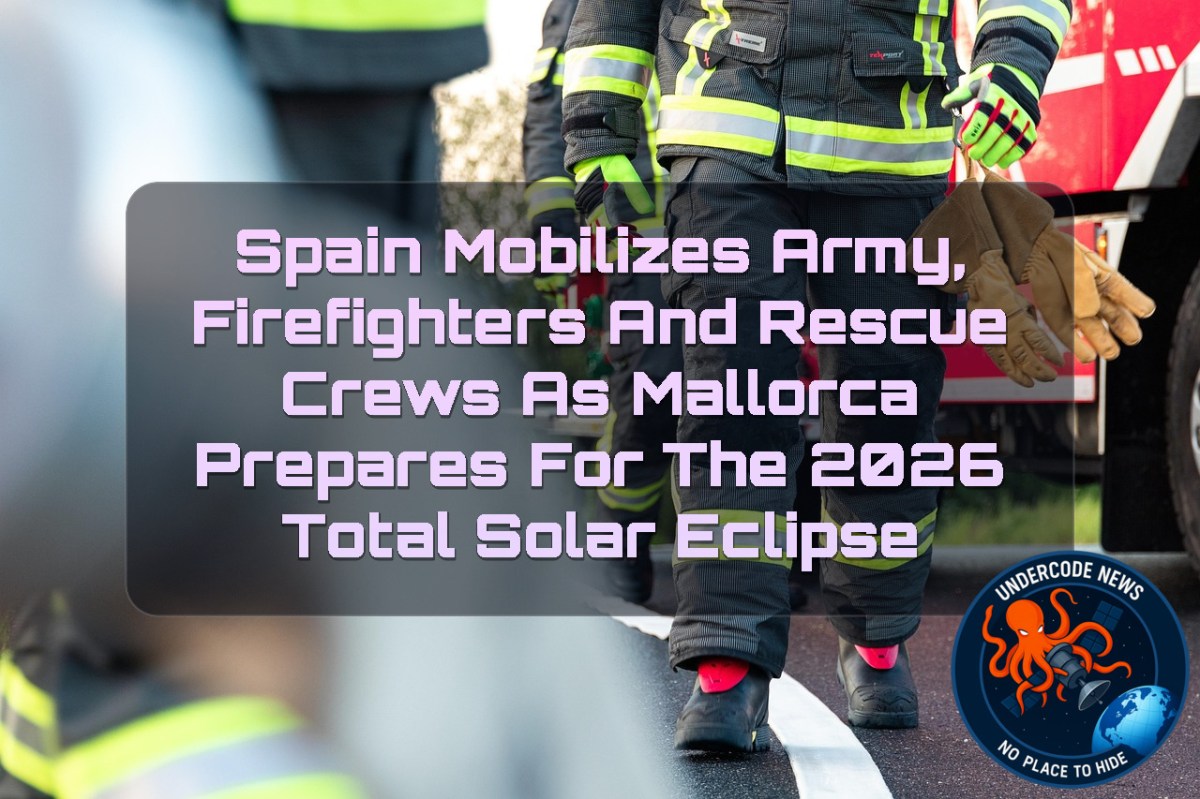 A Spectacular Eclipse Brings an Extraordinary Security Challenge
On Wednesday, August 12, 2026, the Balearic Islands will become one of the most closely watched locations in Spain as a rare total solar eclipse crosses the region. What should be a breathtaking astronomical spectacle is also creating a major logistical and emergency-management challenge, with authorities preparing for unusually large crowds, elevated wildfire risks, congested roads and increased maritime activity.
Mallorca Becomes the Center of the Operation
The Spanish Ministry of Defence has agreed to a request from the Balearic Government to reinforce security operations in Mallorca ahead of the eclipse. A tactical military unit will be deployed at several locations in the Serra de Tramuntana, where authorities are particularly concerned about access, crowd movement and the possibility of wildfires.
Military Support Joins a Much Larger Emergency Operation
The Army will not be operating alone. Its deployment forms part of a wider emergency response involving forest firefighters, Maritime Rescue personnel, police, traffic authorities and local public-transport services.
The objective is straightforward: keep people safe while preventing the eclipse from overwhelming roads, natural areas, beaches, mountain viewpoints and coastal infrastructure.
Hundreds of Firefighters Are Already on Alert
The Balearic Government has positioned 93 forest firefighters in Mallorca, 23 in Menorca, 39 in Ibiza and another six in Formentera.
That deployment reflects one of the biggest concerns surrounding the eclipse: thousands of people gathering outdoors at the same time in areas where emergency access can be difficult.
Wildfire Risk Adds Another Layer of Danger
The eclipse itself does not create a wildfire hazard. The concern comes from the combination of environmental conditions, human activity and large numbers of visitors entering natural areas.
Dry vegetation, hot weather, vehicles parked near vulnerable areas, discarded cigarettes, barbecues and accidental ignition sources can become far more dangerous when emergency crews have to navigate crowded roads.
Aerial Surveillance Will Be Increased
Regional authorities also plan to increase aerial surveillance flights. The goal is to detect smoke or fire as quickly as possible and provide emergency services with an early picture of developing incidents.
Rapid detection can make a crucial difference in wildfire response, particularly in mountainous terrain such as the Serra de Tramuntana.
The Army Operation Will Last Five Days
The military deployment is not limited to the eclipse itself. The operation is expected to remain active for five days, reflecting the expectation that increased tourism and public activity will begin before the main event and continue afterward.
Authorities are particularly interested in controlling access routes leading into the Tramuntana mountain range.
The Serra de Tramuntana Presents a Unique Challenge
The Serra de Tramuntana is one of
Mountain roads can become congested quickly. Narrow routes, limited parking, steep terrain and isolated viewpoints can make it difficult for emergency vehicles to reach people when thousands of visitors arrive simultaneously.
The Ma-10 Road Will Face Major Restrictions
One of the most important traffic measures concerns the Ma-10 road between Andratx and Pollença.
The road will be closed to general traffic from 15:00 to 21:00 on the eclipse day. Access will be limited to specific groups, including residents, property owners, workers, registered guests, customers with accredited parking and public transport or VTC vehicles.
Authorities Are Trying to Prevent a Mountain Traffic Collapse
The restrictions are not simply about reducing ordinary traffic. They are designed to preserve emergency access.
If large numbers of private vehicles were allowed onto the mountain road simultaneously, traffic could become effectively gridlocked. In an emergency, that could prevent firefighters, ambulances or other response teams from reaching affected areas.
Viewpoints and Natural Areas Will Also Be Restricted
The restrictions will extend beyond the Ma-10. Authorities are also preparing closures or access limitations affecting numerous viewpoints, coves and natural areas across several municipalities.
These locations are naturally attractive to eclipse watchers because they offer open horizons and scenic views.
The Best View May Not Be the Safest Location
For eclipse observers, an isolated mountain viewpoint might seem like the perfect place to experience totality.
For emergency planners, however, the same location can represent a serious problem if hundreds or thousands of people attempt to reach it at once.
The central challenge is therefore not simply finding places with good visibility. It is finding places where large numbers of people can gather without creating an evacuation or emergency-access problem.
Maritime Rescue Is Preparing for a Surge at Sea
The emergency response extends far beyond the roads.
Maritime Rescue has strengthened its deployment with 70 professionals for the eclipse period, anticipating increased activity in surrounding waters.
Boats Are Already in Extremely High Demand
The maritime dimension could become one of the defining features of the eclipse in the Balearic Islands.
The Balearic Association of Nautical Companies has reported that practically all available boats have already been hired for eclipse viewing, according to reports cited by SER Mallorca.
That level of demand demonstrates how strongly people are willing to move away from crowded land-based viewing areas in search of unobstructed views.
The Sea Offers Freedom but Creates New Risks
Watching an eclipse from the water may sound like the perfect solution to road congestion.
But large numbers of recreational boats gathering in the same maritime areas can create a different kind of emergency-management challenge. Navigation, anchoring, visibility, communications and rescue access all become more important when marine traffic suddenly increases.
Palma Is Preparing Its Own Transport Response
Palma’s municipal transport operator EMT is also preparing special services.
A dedicated bus service will operate toward
Public Transport Could Become a Critical Safety Tool
Special bus services are more than a convenience during an event of this scale.
Moving large numbers of people by public transport can reduce private-car traffic, lower pressure on parking areas and make crowd management considerably easier.
In a situation where authorities are deliberately restricting access to sensitive areas, organized transport can also provide a controlled alternative.
A Major Beach Closure Is Also Planned
The city beach area in
Such restrictions illustrate the scale of preparation taking place across the islands. Authorities are not waiting for problems to emerge; they are attempting to manage the movement of people before the eclipse reaches its most intense phase.
Spain Is Preparing for More Than One Million Journeys
The Balearic Islands are only one part of a much larger national operation.
The Spanish Government expects the eclipse to generate more than one million journeys across the country.
That number transforms the event from a tourism occasion into a significant national mobility and public-safety operation.
33,600 Police and Civil Guard Personnel Will Be Mobilized
Spain has activated a large-scale security operation involving approximately 33,600 members of the National Police and Civil Guard.
The operation will coordinate surveillance across land, sea and air under a unified command structure.
Traffic Authorities Are Adding Thousands More Personnel
The Directorate-General for Traffic is also reinforcing the operation with an additional 2,500 personnel.
Their role will be especially important as vehicles converge on areas offering favorable eclipse visibility.
Road congestion is one of the most predictable problems associated with major astronomical events because viewing locations are often concentrated in relatively small geographic areas.
Authorities Have Identified 123 High-Risk Areas
The central government has also restricted access to 123 areas considered particularly vulnerable.
Some have been classified as high risk because of environmental concerns, while others present difficulties related to evacuation.
This distinction is important because an area does not need to be dangerous under normal circumstances to become problematic during a mass gathering.
Evacuation Capacity Is a Major Consideration
A location capable of safely hosting several dozen people may not be capable of safely hosting several thousand.
Emergency planners therefore have to consider not only the number of visitors an area can physically accommodate, but also how quickly those people could be evacuated if a wildfire, accident, severe weather event or other emergency occurred.
The Eclipse Creates a Temporary Population Surge
The Balearic Islands are accustomed to tourism, but an eclipse produces a very different pattern of movement.
Visitors are not distributed evenly throughout the day. Large numbers of people can converge on specific locations within a narrow window, remain there for the event and then attempt to leave almost simultaneously.
The Peak Moment Is Also the Peak Risk
The moments surrounding totality are likely to generate the greatest concentration of spectators.
People who have spent hours traveling toward a viewing location may be reluctant to move once they arrive. That makes proactive restrictions especially important.
Authorities cannot rely entirely on people voluntarily leaving an overcrowded area once an emergency begins.
Why the Military Presence Matters
The
Military personnel can provide logistical support, help control access and reinforce existing capabilities when local resources are under exceptional pressure.
Their presence also provides authorities with additional manpower during a period when ordinary emergency services must remain ready to respond to unrelated incidents.
This Is Not a Response to a Security Threat
The deployment should not automatically be interpreted as evidence of a specific terrorist or military threat associated with the eclipse.
The available information points toward a public-safety and emergency-management operation focused on crowd control, wildfire prevention, traffic management and access restrictions.
The extraordinary nature of the deployment reflects the extraordinary concentration of people expected in vulnerable locations.
The Real Enemy May Be Congestion
One of the greatest dangers may be far less dramatic than people imagine.
A traffic jam can become a serious emergency when thousands of vehicles are trapped on narrow roads surrounded by dry vegetation.
If a wildfire starts while traffic is stationary, evacuation can become dramatically more difficult.
Emergency Access Must Remain Open
Every road closure and access restriction therefore serves a secondary purpose: preserving routes for emergency responders.
Fire engines need room to maneuver. Ambulances need predictable access. Rescue teams need to reach people quickly.
A road filled with
Weather Conditions Could Change the Situation Quickly
Weather will also play an important role.
Clear skies are obviously essential for people hoping to see the eclipse, but hot and dry conditions can simultaneously increase wildfire risk.
Authorities therefore have to prepare for two conflicting possibilities: excellent viewing conditions that attract enormous crowds and weather conditions that increase environmental danger.
The Balearic Islands Face a Delicate Balancing Act
The islands want visitors to experience the eclipse, but they also need to protect residents, tourists and the environment.
Too few restrictions could produce dangerous overcrowding.
Too many restrictions could create frustration and push visitors toward unauthorized locations.
The challenge is finding the point where public access and public safety can coexist.
The Eclipse Could Become a Test of Modern Crowd Management
Large astronomical events are increasingly becoming mass-tourism phenomena.
Social media makes this even more pronounced. A photograph or viral post can turn an obscure viewpoint into a destination almost overnight.
That means authorities now have to plan not only for organized tourism but also for spontaneous crowd movement driven by online recommendations.
Digital Maps Can Create Physical Problems
Navigation applications can direct thousands of drivers toward exactly the same location.
Under ordinary circumstances, this is useful.
During a major event, however, automated routing can unintentionally concentrate traffic on roads that were never designed to accommodate such volumes.
That makes official access information particularly important.
Visitors Should Expect Restrictions
Anyone traveling to Mallorca for the eclipse should expect that normal travel patterns will not apply.
Roads may close, parking may be restricted, beaches and viewpoints may become inaccessible, and police or emergency personnel may redirect traffic.
Attempting to bypass those restrictions could create risks not only for the individual traveler but also for emergency responders.
Planning Ahead Will Matter More Than Finding the Perfect View
The safest strategy for visitors is likely to be planning around officially accessible areas rather than searching for an isolated location at the last minute.
A slightly less spectacular viewing position with reliable transport and emergency access is ultimately safer than a beautiful but overcrowded mountain road.
The Eclipse Is Still a Historic Opportunity
Despite all the restrictions, the reason behind the enormous operation is extraordinary.
A total solar eclipse is one of nature’s most dramatic astronomical events. For a short period, the Moon passes directly between Earth and the Sun, completely covering the Sun’s visible disk for observers located within the path of totality.
For people in the right location, daylight can temporarily transform into an unusual twilight-like environment as the sky darkens and the solar corona becomes visible around the Moon.
A Moment That Can Bring Thousands Together
The eclipse is expected to attract people from different countries, professions and backgrounds.
Astronomers, photographers, families, tourists and casual observers will all be looking toward the same point in the sky.
That shared experience is precisely what makes the event so compelling—and what makes crowd management so important.
Deep Analysis: Why the 2026 Eclipse Is Becoming a National Security and Emergency-Management Operation
Command 01 — Watch the Crowd, Not Just the Sky
The most important operational variable is the number of people arriving in concentrated areas. The eclipse itself is predictable; human movement is much harder to control.
Command 02 — Protect Emergency Corridors
Every major access restriction should be viewed through the question of emergency response. Roads must remain usable for firefighters, ambulances, police and rescue teams.
Command 03 — Treat Wildfire Risk as a Force Multiplier
A wildfire during normal tourist conditions is already dangerous. A wildfire surrounded by thousands of vehicles and pedestrians can become significantly more complicated.
Command 04 — Monitor Mountain Access
The Serra de Tramuntana presents a combination of narrow roads, steep terrain and limited escape routes. These characteristics make preventive access control particularly important.
Command 05 — Track Maritime Density
The enormous demand for boats means maritime authorities must prepare for unusually concentrated recreational traffic.
Command 06 — Prevent Secondary Accidents
When attention is focused on the sky, people may pay less attention to traffic, terrain, water conditions and other physical hazards. Authorities must compensate for that behavioral shift.
Command 07 — Keep Transportation Moving
Special public-transport services can reduce the number of private vehicles entering sensitive areas. Efficient transportation therefore becomes part of the emergency strategy.
Command 08 — Expect Last-Minute Decisions
Visitors may change plans after seeing weather forecasts, social-media posts or reports about crowded viewing areas. Emergency planners must therefore remain flexible.
Command 09 — Control Information
Clear communication can be as important as physical barriers. Visitors need to know which roads are open, where they can park and which viewing areas are authorized.
Command 10 — Avoid Information Gaps
Conflicting information can cause people to ignore restrictions or make dangerous last-minute journeys. Authorities need consistent messaging across police, tourism, transport and local-government channels.
Command 11 — Prepare for the Unexpected
Even a carefully planned operation can be disrupted by an accident, medical emergency, fire, severe weather or infrastructure failure. Reserve capacity is essential.
Command 12 — Preserve Evacuation Routes
A location that cannot be evacuated efficiently should not be allowed to become an uncontrolled mass gathering point.
Command 13 — Watch for Traffic Bottlenecks
The greatest congestion may not occur at the final destination. It could develop several kilometers away when multiple routes merge.
Command 14 — Use Aerial Surveillance Intelligently
Aircraft can provide emergency planners with a wider view of traffic, smoke, crowd density and developing incidents than ground teams can obtain individually.
Command 15 — Protect Natural Areas
The eclipse should not become an environmental disaster. Large crowds can damage vegetation, generate waste and disturb sensitive areas even without a major emergency.
Command 16 — Keep Local Residents Moving
Residents should not become trapped by visitor traffic. Access arrangements for people who live or work in restricted areas are therefore essential.
Command 17 — Expect a Delayed Departure Wave
The crowd will not necessarily disappear immediately after totality. Thousands of people may attempt to leave at approximately the same time, creating a second transportation peak.
Command 18 — Watch the Post-Eclipse Risk
Emergency services should remain alert after the main spectacle. Fatigue, traffic congestion and impatient driving can create hazards once people begin their journeys home.
Command 19 — Coordinate Land and Sea Operations
The eclipse is unusual because spectators can position themselves on beaches, roads, mountains, boats and urban waterfronts simultaneously. Separate agencies must therefore share situational awareness.
Command 20 — Keep Police Visible
A visible police and emergency presence can discourage unsafe parking, unauthorized access and dangerous crowd behavior before those problems escalate.
Command 21 — Prioritize Prevention
The operation demonstrates an important principle of modern emergency management: preventing an incident is usually easier than responding after thousands of people are already trapped in it.
Command 22 — Understand the Psychology of Rare Events
People know that total eclipses are unusual. That scarcity can encourage visitors to take greater risks because they believe the opportunity may not return.
Command 23 — Manage the Photography Effect
Large numbers of people may spend the eclipse looking through cameras and phones. That can reduce awareness of surrounding hazards and create additional crowd-management challenges.
Command 24 — Prepare for Social-Media Crowding
A location can become overcrowded extremely quickly if it becomes popular online. Emergency planners should assume that digital recommendations can change physical crowd patterns.
Command 25 — Do Not Depend on One Viewing Area
Distributing spectators across multiple authorized locations can reduce pressure on any single road, beach, viewpoint or public facility.
Command 26 — Maintain Communication During Closures
Road closures work best when people understand why they exist. Explaining that restrictions protect emergency access can improve compliance.
Command 27 — Protect Firefighting Capacity
The 93 firefighters positioned in Mallorca represent more than a numerical deployment. Their effectiveness depends on their ability to reach incidents quickly.
Command 28 — Treat the Five-Day Operation as a Strategic Choice
Keeping the Army operation active for five days recognizes that the risk period extends beyond the precise moment of totality.
Command 29 — Watch for Resource Fatigue
Emergency personnel must remain capable of responding to ordinary incidents while supporting the eclipse operation. Long deployments require careful resource management.
Command 30 — Preserve Flexibility
Authorities cannot predict every movement pattern. Plans must be capable of changing as traffic, weather and crowd behavior develop.
Command 31 — Expect Economic Pressure
The eclipse is also a major opportunity for tourism businesses, boat operators, hotels, restaurants and transport providers. High demand can increase commercial pressure around access decisions.
Command 32 — Balance Tourism With Safety
The success of the event should not be measured solely by how many people attend. It should also be measured by whether people can attend without creating unacceptable risks.
Command 33 — Remember That Normal Rules Still Apply
An eclipse does not suspend ordinary safety responsibilities. Visitors remain responsible for following traffic rules, respecting restricted areas and listening to emergency personnel.
Command 34 — Treat the Sea as a Separate Operational Environment
Maritime activity requires different emergency resources from land-based crowd management. The 70 Maritime Rescue professionals reflect the need for dedicated coverage.
Command 35 — Prepare for Medical Incidents
Large gatherings inevitably increase the possibility of heat-related illness, dehydration, falls, accidents and other medical emergencies. Response routes must remain clear.
Command 36 — Plan for Multiple Simultaneous Incidents
The greatest test would not necessarily be one major emergency. Several smaller incidents occurring at once could stretch local resources.
Command 37 — Use the Event as a Learning Exercise
The eclipse provides Spanish authorities with an opportunity to test large-scale coordination among military, police, firefighters, transport agencies and maritime services.
Command 38 — Protect Public Confidence
Visible preparation can reassure visitors and residents that authorities have anticipated the unusual circumstances.
Command 39 — Measure Success by What Does Not Happen
A successful security operation may look uneventful. If roads remain accessible, fires are contained and rescue teams are rarely needed, the apparent lack of drama will actually represent effective preparation.
Command 40 — The Sky Is Predictable; People Are Not
That may be the central lesson of the entire operation. Astronomers can calculate precisely when the eclipse will occur, but no mathematical model can perfectly predict where every visitor will decide to stand, drive, anchor or gather.
What Undercode Say: The Eclipse Is a Test of Preparedness
A Beautiful Event With Serious Consequences
The 2026 total solar eclipse is a reminder that even peaceful and extraordinary events can generate complex security challenges.
The Real Story Is the Scale of Preparation
The military deployment, hundreds of firefighters, Maritime Rescue personnel, police officers and traffic teams reveal how seriously authorities are treating the expected movement of people.
Mallorca Is Especially Vulnerable
Mallorca combines international tourism, mountainous terrain, narrow roads, popular beaches and environmentally sensitive areas. That makes it an especially complicated location for a mass gathering.
Fire Is the Most Immediate Environmental Concern
The decision to increase aerial surveillance and position large numbers of firefighters suggests that wildfire prevention is one of the operation’s central priorities.
Road Access Could Determine the Outcome
If vehicles become trapped on mountain roads, emergency response could be compromised. The Ma-10 restrictions therefore appear to be one of the most important preventative measures.
The Five-Day Deployment Is Significant
Keeping the military operation active beyond the eclipse itself shows that authorities are planning for a wider period of elevated activity rather than treating the event as a few minutes of astronomical interest.
Maritime Demand Is Another Warning Sign
The fact that boats are reportedly almost fully booked demonstrates how strongly people are seeking premium viewing locations.
More Boats Mean More Coordination
Large concentrations of recreational vessels can create their own safety challenges, making the additional Maritime Rescue presence particularly relevant.
Public Transport Could Reduce Pressure
The special EMT service toward
Restrictions May Frustrate Some Visitors
People who travel long distances for the eclipse may be disappointed when they discover that a famous viewpoint or coastal location is inaccessible.
But Restrictions Can Save Lives
The purpose of emergency restrictions is not to spoil the experience. It is to ensure that emergency services can still operate when thousands of people are concentrated in a small area.
The Biggest Risk May Come After Totality
Once the eclipse ends, people may simultaneously attempt to leave their viewing locations. That could create a second wave of congestion that lasts well beyond the astronomical event.
Spain Is Managing a National Mobility Challenge
With more than one million journeys expected, this is much larger than a local tourism event. The national security operation reflects the geographic scale of the phenomenon.
The 33,600-Person Deployment Shows the Magnitude
Mobilizing tens of thousands of police and Civil Guard personnel demonstrates that authorities are treating the eclipse as a major public-safety operation rather than simply a tourism opportunity.
The 123 Restricted Areas Matter
Identifying locations because of environmental danger or evacuation limitations shows that authorities are thinking about the consequences of overcrowding before people arrive.
Prevention Is the Strongest Strategy
Once thousands of people are trapped on a narrow road or gathered in an inaccessible natural area, emergency management becomes dramatically harder.
Information Will Be Critical
Clear communication about closures, authorized viewing areas and transport options could prevent visitors from making unsafe last-minute decisions.
Social Media Could Change the Equation
A single viral photograph could send thousands of people toward a location that authorities never intended to become a major gathering point.
The Operation Reflects a Changing Tourism Environment
Modern travelers increasingly plan around rare events. Astronomical phenomena can therefore produce tourism surges comparable to major festivals or sporting events.
The Eclipse Could Benefit the Balearic Economy
Hotels, restaurants, transport companies, boat operators and other tourism businesses may benefit enormously from the influx of visitors.
Economic Benefits Must Not Override Safety
The strongest response is one that allows businesses to benefit while ensuring that environmental and emergency constraints remain respected.
Mallorca Is Effectively Becoming a Temporary Mass-Event Venue
For a short period, roads and public spaces normally used for everyday tourism will have to accommodate extraordinary demand.
Emergency Services Must Remain Ready for Normal Emergencies
Even while preparing for the eclipse, firefighters, police and rescue workers still need to respond to ordinary accidents, fires and medical emergencies.
Coordination Is More Important Than Individual Strength
No single agency can manage an event of this scale alone. Success depends on communication between the Army, firefighters, police, maritime services, traffic authorities, municipalities and transport operators.
The Military Role Is Primarily About Capacity
The
The Event Could Become a Model for Future Planning
Lessons from Mallorca could influence how authorities handle future astronomical events, major festivals, sporting events and other temporary population surges.
Total Eclipses Are Rare, But Mass Gatherings Are Increasing
The phenomenon may be unusual, but the challenge of managing large crowds is becoming increasingly common.
Safety Planning Is Invisible When It Works
Visitors may never notice most of the operation. That is precisely the point. Effective emergency planning prevents problems before they become visible.
The Eclipse Should Be Remembered for the Right Reasons
The ideal outcome is simple: people see an extraordinary celestial event, return home safely and leave the islands without a major emergency.
Undercode’s Bottom Line
The deployment of military personnel, firefighters, Maritime Rescue teams and tens of thousands of police and traffic personnel may appear extraordinary for an astronomical event, but the numbers make sense when the eclipse is viewed as a massive, temporary population movement.
The biggest threats are not necessarily dramatic security incidents. They are congestion, wildfire, overcrowding, maritime accidents, medical emergencies and blocked evacuation routes.
Mallorca’s restrictions are therefore best understood as preventive measures designed to protect both visitors and the emergency infrastructure they depend on.
The eclipse will last only a short time. The logistical consequences of bringing enormous crowds together can last much longer.
✅ The Balearic Government Requested Additional Support
The supplied report states that
✅ Large-Scale Emergency Resources Are Being Mobilized
The article reports deployments involving forest firefighters, Maritime Rescue personnel, National Police, Civil Guard and traffic authorities. These figures form the basis of the described nationwide security operation.
⚠️ Exact Operational Details May Change
Road closures, access restrictions, deployment locations and staffing arrangements can be adjusted according to weather, crowd levels and operational requirements. Visitors should therefore rely on official government and emergency-service announcements for final instructions.
Prediction
(+1) The Eclipse Will Produce a Major Tourism Surge
The combination of a rare total solar eclipse and the Balearic Islands’ established tourism infrastructure is likely to generate unusually high demand for hotels, transportation, beaches, viewpoints and maritime excursions.
(+1) Public Transport Will Become More Important
Special services such as the EMT operation toward s’Arenal are likely to play a growing role as authorities attempt to reduce private-vehicle congestion around major viewing locations.
(+1) Maritime Viewing Will Remain Extremely Popular
With many boats reportedly already booked, viewing the eclipse from the water is likely to remain one of the most sought-after experiences in the Balearic Islands.
(-1) Traffic Congestion Could Become the Biggest Operational Problem
Even with extensive planning, the simultaneous movement of thousands of people could create severe congestion, particularly after the eclipse when spectators begin leaving at roughly the same time.
(-1) Fire Risk Could Escalate Under Poor Conditions
If dry and hot conditions coincide with large crowds in natural areas, wildfire prevention could become one of the most important challenges facing emergency services.
(+1) Preventive Restrictions Will Likely Reduce Serious Incidents
Although closures and access limitations may frustrate some visitors, proactive crowd management should reduce the probability of major emergencies by preventing vulnerable locations from becoming dangerously overcrowded.
(+1) The Operation Could Become a Blueprint for Future Mass Events
If the coordination between military, police, firefighters, maritime authorities and transport agencies works effectively, the experience could provide valuable lessons for managing future large-scale events in Spain.
(-1) Last-Minute Visitors Could Face Significant Disruption
Travelers arriving without checking access rules, road closures and authorized viewing areas may encounter closed roads, restricted beaches, limited parking and heavy congestion.
(+1) The Best Outcome Is a Quiet One
If the eclipse passes without major fires, maritime accidents, serious traffic incidents or evacuation emergencies, the enormous operation will have achieved exactly what it was designed to do: keep an extraordinary day safe.
Final Assessment
The 2026 total solar eclipse is more than an astronomical event for Spain. It is a temporary test of national mobility, emergency coordination, environmental protection and crowd management.
Mallorca and the wider Balearic Islands are preparing for the possibility that the sky will attract an enormous audience. The real challenge will be ensuring that everyone who comes to witness the rare spectacle can do so without overwhelming the roads, mountains, beaches, waterways and emergency systems around them.
▶️ Related Video (76% Match):
🕵️📝Let’s dive deep and fact‑check.
🎓 Live Courses & Certifications:
Join Undercode Academy for Verified Certifications
🚀 Request a Custom Project:
Secure, high-velocity infrastructure and disruptive technological engineering. Contact our engineering team for high-tier development and proprietary systems:
[email protected]
💎 Smart Architecture | 🛡️ Secure by Design | ⭐ Trusted by Thousands
References:
Reported By: www.euronews.com
Extra Source Hub (Possible Sources for article):
https://www.digitaltrends.com
Wikipedia
OpenAi & Undercode AI
Image Source:
Unsplash
Undercode AI DI v2
🔐JOIN OUR CYBER WORLD [ CVE News • HackMonitor • UndercodeNews ]
📢 Follow UndercodeNews & Stay Tuned:
𝕏 formerly Twitter 🐦 | @ Threads | 🔗 Linkedin | 🦋BlueSky | 🐘Mastodon | 📺Youtube


