
Listen to this Post
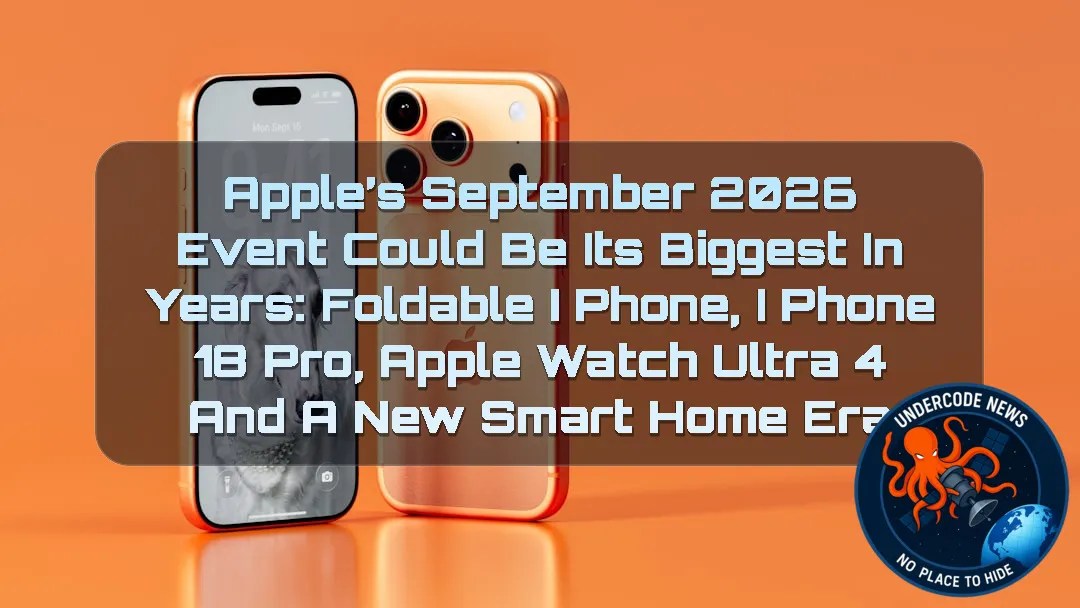
A September Event Filled With High-Stakes Expectations
Apple’s September product event is traditionally the moment when the company takes control of the technology news cycle. This year, however, the expectations appear unusually high. According to Bloomberg’s Mark Gurman, Apple could use the event to introduce not only its next-generation iPhones and Apple Watch models, but also a much broader lineup of products designed to reshape its hardware ecosystem.
At the center of the attention is the long-rumored foldable iPhone, which could represent one of the most important changes to Apple’s smartphone strategy in years. Alongside it, Apple is expected to introduce the iPhone 18 Pro and iPhone 18 Pro Max, new Apple Watch models, an updated Apple TV 4K, a second-generation HomePod mini, and potentially the company’s first dedicated smart home hub.
If these expectations become reality, Apple’s September event would be about much more than another annual iPhone refresh. It could mark the beginning of a new hardware chapter for the company, connecting the iPhone, wearable devices, entertainment hardware and smart-home products more tightly than ever.
The Foldable iPhone Could Steal the Entire Show
The biggest attraction is expected to be Apple’s first foldable iPhone, sometimes referred to as the iPhone Ultra in the rumor cycle. A foldable device would immediately become one of the most significant products Apple has introduced since the original iPhone changed the smartphone industry.
Apple has watched Samsung, Google and other manufacturers experiment with foldable smartphones for years. The company has largely avoided entering the category while the technology matured, allowing competitors to deal with early problems involving durability, software optimization, thickness and pricing.
That strategy could finally be coming to an end.
If Apple introduces a foldable iPhone in September, the company will not simply be joining an existing market. It will be attempting to redefine what consumers expect from a premium foldable smartphone.
Why Apple May Have Waited This Long
Apple’s approach to new categories is usually different from that of its competitors. Rather than being first, the company often waits until it believes the hardware, software and user experience can be integrated into a polished ecosystem.
That philosophy has been visible across several Apple product categories. The Apple Watch was not the first smartwatch, AirPods were not the first wireless earbuds, and Apple’s approach to mixed reality arrived long after other companies had experimented with headsets.
A foldable iPhone could follow the same philosophy.
Apple may believe that consumers are no longer interested in simply owning a phone that folds. They want a device that feels like a normal iPhone when closed but can become something significantly more capable when opened.
iPhone 18 Pro and Pro Max Remain the Core Products
Even if the foldable iPhone becomes the headline, the iPhone 18 Pro and iPhone 18 Pro Max are expected to remain the center of Apple’s smartphone business.
These models would represent the conventional flagship iPhone experience, offering Apple’s newest processor technology, camera improvements, display advancements and software features without requiring consumers to adopt a completely different form factor.
For millions of customers, that familiarity will remain important.
Apple therefore has an interesting challenge ahead. It needs to make the foldable iPhone exciting enough to justify its premium positioning while ensuring that the standard Pro models continue to feel like genuinely advanced flagship smartphones.
The iPhone 18 Pro Could Become the Safer Upgrade
The iPhone 18 Pro could appeal to customers who want Apple’s newest technology without embracing an entirely new design.
For users who prefer the traditional smartphone form factor, improvements to photography, battery efficiency, display technology, artificial intelligence features and processing performance could provide a compelling upgrade path.
This distinction could become particularly important if the foldable iPhone carries a significantly higher price.
Apple may effectively create two different definitions of premium iPhone ownership: the conventional Pro experience and an ultra-premium foldable experience.
The iPhone 18 Pro Max Could Target Power Users
The iPhone 18 Pro Max is expected to continue Apple’s strategy of offering a larger flagship with additional appeal for users who prioritize screen size, battery life and camera capabilities.
The Pro Max has increasingly become more than simply a bigger iPhone. It represents the high-end traditional iPhone experience for customers who want maximum capability without moving to a different form factor.
That could make the Pro Max particularly important in 2026.
If the foldable iPhone becomes the ultimate prestige device, the Pro Max could serve as the premium workhorse for customers who want reliability and familiarity.
Apple Watch Series 12 Could Continue the Annual Cycle
Apple is also expected to introduce the Apple Watch Series 12.
The Apple Watch has become an important component of Apple’s broader ecosystem, linking health, communications, notifications, fitness and security features with the iPhone.
The next-generation Series model is therefore unlikely to depend on one dramatic visual redesign. Instead, Apple could focus on incremental improvements that make the device faster, more efficient and more useful in everyday life.
Battery improvements, health-related capabilities, sensors, display technology and deeper integration with Apple’s software ecosystem are all areas where customers could expect continued development.
Apple Watch Ultra 4 Could Push the Premium Wearable Further
The Apple Watch Ultra 4 could receive even more attention from enthusiasts.
The Ultra line was created for users who want a more rugged design, larger display, longer battery life and specialized outdoor capabilities. It has also become a status product within Apple’s wearable portfolio.
A new Ultra model could therefore focus heavily on endurance and performance.
For Apple, the Ultra is also strategically valuable because it allows the company to sell a much more expensive wearable without forcing the standard Apple Watch line to move into an entirely different price category.
Apple TV 4K Could Receive a Long-Awaited Refresh
Another product reportedly ready for the fall is a new Apple TV 4K.
Compared with the iPhone and Apple Watch, Apple TV receives considerably less attention. Yet the device occupies an important position in Apple’s services ecosystem.
A faster processor, improved connectivity, better gaming performance and deeper integration with Apple’s home strategy could give the next Apple TV a larger role.
That becomes especially interesting when combined with rumors of Apple’s broader smart home ambitions.
HomePod Mini 2 Could Be More Important Than It Looks
The HomePod mini 2 may initially appear to be a smaller announcement, but it could become an important piece of Apple’s smart home strategy.
A compact smart speaker can function as much more than an audio device. It can provide voice control, act as a home automation interface and potentially serve as part of a wider network of Apple home products.
Apple’s challenge is that the smart speaker market is already highly competitive.
The company therefore needs to make the HomePod mini more than a simple speaker if it wants to significantly increase its presence in connected homes.
Apple’s Smart Home Hub Could Be the Bigger Story
Perhaps the most strategically interesting product mentioned in the report is Apple’s first dedicated smart home hub.
The device is reportedly expected sometime between October and early next year, meaning Apple could preview it during the September event even if it does not immediately ship.
That would make sense from a marketing perspective.
Apple could use September to explain its smart home strategy before gradually releasing the hardware and software components that support it.
Why the Smart Home Matters to Apple
The smart home represents one of the few major consumer technology categories where Apple does not have the same dominance it enjoys with smartphones, tablets and wearables.
Companies such as Google and Amazon have spent years building ecosystems around connected speakers, cameras, displays and household devices.
Apple has participated in the category through HomeKit, HomePod and related products, but its strategy has never felt as aggressive or unified.
A dedicated smart home hub could change that.
The iPhone Could Become the Control Center for Everything
Apple’s biggest advantage in the smart home may not be the individual device itself.
It is the ecosystem surrounding the iPhone.
Hundreds of millions of people already carry an iPhone. If Apple can turn that device into the central interface for home security, lighting, entertainment, cameras, speakers and automation, it does not necessarily need to beat every competitor in every individual hardware category.
It simply needs to make its ecosystem easier and more attractive to use.
Why September Is the Perfect Moment
Apple’s September event receives enormous global attention.
Millions of consumers, journalists, developers and investors watch the presentation closely, making it one of the most powerful technology marketing opportunities of the year.
Launching new smart home products during that event would allow Apple to connect them directly to the iPhone.
The message could be simple: the iPhone is no longer only a personal computer in your pocket. It is the gateway to an entire connected environment.
Apple Could Be Building a New Hardware Ecosystem
The most interesting part of this product list is not necessarily any single device.
It is the combination.
Imagine a consumer using an iPhone 18 Pro, wearing an Apple Watch Series 12, controlling a HomePod mini 2, watching Apple TV, managing smart home devices through Apple’s new hub and potentially using a foldable iPhone Ultra as the ultimate premium device.
Each product reinforces the others.
That is the business model Apple has perfected over decades.
The Products That Could Still Surprise Everyone
Gurman’s list does not necessarily represent everything Apple could announce.
Several other rumored products have previously been associated with Apple’s future roadmap, including AirPods with cameras, a third-generation HomePod and a dedicated security camera.
Their absence from the reported September lineup does not automatically mean they have been canceled.
Apple frequently changes its launch schedules, separates products into different events and adjusts announcements depending on software readiness, supply chains and marketing priorities.
AirPods With Cameras Could Be a Wildcard
Camera-equipped AirPods would represent a particularly unusual expansion of Apple’s wearable strategy.
If such a product eventually arrives, it could combine audio, sensors and environmental awareness in a new category of personal computing.
However, because this would be a much more experimental product than a new iPhone or Apple Watch, Apple may prefer to introduce it separately.
The company would need to carefully explain privacy, battery life, processing and practical use cases.
A New Security Camera Would Fit the Smart Home Strategy
A dedicated Apple security camera would arguably make more sense alongside a smart home hub.
Apple could potentially connect cameras with iCloud, HomeKit-style automation, notifications and the broader Apple ecosystem.
Privacy would likely become a major selling point.
Apple has repeatedly positioned privacy as a differentiator, and a security camera could give the company an opportunity to argue that connected home technology does not have to mean sacrificing control over personal data.
The iPad Mini Is Still on the Horizon
The reported September lineup does not appear to include the next iPad mini.
Instead, the device is expected to arrive later in the fall alongside other products, including a new M6 MacBook Pro.
That distinction matters because Apple rarely needs to put every new product into one presentation.
The company can generate multiple waves of attention throughout the fall by separating major launches.
Apple May Be Planning a Longer Fall Campaign
Rather than thinking of September as one giant product launch, it may be better to view Apple’s strategy as a multi-month campaign.
September could focus on the iPhone and Apple Watch.
October could bring Macs and the iPad mini.
Later announcements could introduce additional smart home products.
This approach allows Apple to dominate technology headlines repeatedly instead of allowing every product to compete for attention on the same day.
Why the Foldable iPhone Changes the Equation
A normal iPhone launch is highly predictable.
A foldable iPhone is not.
That single product could dramatically increase interest in Apple’s September event because it represents a major departure from the company’s traditional smartphone design.
For Apple, the opportunity is enormous.
For consumers, the biggest question will be whether the foldable design offers enough practical value to justify the likely premium.
The Biggest Question Is Price
A foldable iPhone is almost certainly going to face intense scrutiny over pricing.
Apple’s premium products already occupy the upper end of the smartphone market. A more complex folding display, hinge mechanism and redesigned internal architecture could push the price significantly higher.
If Apple positions the device as an ultra-premium product, it could become less about replacing conventional iPhones and more about creating a new luxury tier within the ecosystem.
That would allow Apple to increase average selling prices without needing every customer to buy the foldable model.
Software Will Be Just as Important as Hardware
A foldable iPhone cannot succeed simply because it folds.
Apple would need software designed specifically around the form factor.
Multitasking, app layouts, notifications, video, gaming, productivity and camera controls would all need to work naturally across different screen configurations.
This is where
Apple’s Ecosystem Could Make the Foldable More Valuable
A foldable iPhone could also interact naturally with Macs, iPads, Apple Watch, AirPods, iCloud and Apple’s services.
That ecosystem integration could become one of its strongest selling points.
Consumers would not simply be buying a foldable phone.
They would be buying a foldable component of a larger Apple environment.
Competition Will Be Watching Closely
Samsung and other foldable-phone manufacturers have spent years developing the category.
Apple entering the market could validate foldables for mainstream consumers who previously viewed them as expensive niche products.
That could accelerate competition.
Manufacturers would likely respond with thinner designs, better durability, improved software and aggressive pricing.
Apple’s arrival could therefore change the entire competitive landscape even if the company sells fewer foldable phones than its conventional iPhone models.
The September Event Could Define Apple’s Next Chapter
Taken individually, each expected product is an incremental development.
Taken together, they tell a much bigger story.
Apple could be preparing to move beyond its traditional annual iPhone-and-Watch rhythm and toward a broader ecosystem built around personal devices, entertainment and connected homes.
The foldable iPhone would represent the new smartphone direction.
The Apple Watch models would strengthen wearable computing.
The Apple TV and HomePod mini would reinforce entertainment and home control.
The smart home hub could tie everything together.
What Undercode Says:
A Different Kind of Apple Event
The most important thing about this rumored lineup is not simply the number of products. It is the strategic direction suggested by the combination of those products.
Apple appears increasingly interested in making its ecosystem surround the user rather than simply serving the user through individual devices.
The Foldable Is the Attention Magnet
The rumored iPhone Ultra would almost certainly dominate headlines if it appears.
A foldable iPhone gives Apple the kind of dramatic hardware announcement that has been missing from the traditional iPhone cycle.
It would also give the company a new premium product capable of generating enormous curiosity among existing iPhone users.
Apple Has a Reason to Enter Late
Apple’s delayed entry into foldables should not automatically be interpreted as weakness.
Entering after competitors have spent years discovering engineering problems could allow Apple to avoid some of the mistakes associated with first-generation foldable devices.
The company can study durability issues, hinge designs, screen creasing, battery limitations and software challenges before making its own decisions.
The Risk Is That Expectations Are Already Too High
The danger for Apple is that years of rumors have created extremely high expectations.
If the first foldable iPhone is merely good rather than revolutionary, some consumers could interpret that as disappointing.
Apple therefore needs more than a folding screen.
It needs a convincing reason for consumers to believe the form factor fundamentally improves the iPhone experience.
The Smart Home Strategy May Be Even More Important
The smart home story deserves more attention than it usually receives.
Apple already owns the personal device relationship with millions of customers, but its smart home footprint remains comparatively limited.
A new hub could finally give Apple a central platform for expanding that presence.
HomePod Could Become More Than a Speaker
If Apple successfully connects HomePod, Apple TV, cameras and a smart home hub, the HomePod could evolve from a speaker into a household interface.
That would create additional reasons for customers to remain inside Apple’s ecosystem.
Privacy Could Become a Major Selling Point
Smart home products inevitably raise privacy questions.
Cameras, microphones and connected household devices can potentially collect highly sensitive information.
Apple could use its privacy-focused branding to differentiate its smart home platform from competitors.
The Apple TV Has an Opportunity
Apple TV may not receive the attention of the iPhone, but it could become increasingly important if Apple wants a central home device.
A powerful Apple TV could function as an entertainment box, gaming platform and smart home controller.
Apple Watch Remains a Strategic Anchor
The Apple Watch is also more important than the annual hardware upgrade cycle suggests.
It keeps users connected to
It also creates another reason for iPhone customers to remain loyal to the platform.
The Ultra Line Is Becoming a Premium Brand
The Apple Watch Ultra has developed into a recognizable premium product rather than simply a rugged alternative.
A new Ultra 4 could strengthen that positioning.
Apple may increasingly use the Ultra name to represent maximum hardware capability across different categories.
Apple Could Be Creating an “Ultra” Ecosystem
The rumored iPhone Ultra and Apple Watch Ultra could potentially become complementary products.
That would give Apple a premium ecosystem designed specifically for customers willing to spend significantly more.
The strategy could resemble
September Is About More Than Hardware
Apple’s event is also a storytelling exercise.
The company will want consumers to understand how the products work together.
That makes the smart home products particularly interesting because they can demonstrate the ecosystem rather than existing as isolated devices.
The New Hub Could Become the Missing Piece
Apple’s smart home strategy has lacked a single obvious centerpiece.
A dedicated hub could solve that problem.
It could become the device responsible for coordinating accessories, automation, security and communication throughout the home.
The Biggest Challenge Is Simplicity
Apple’s strength has traditionally been making complicated technology feel simple.
If the smart home ecosystem requires users to manually configure dozens of devices and settings, it could struggle.
The successful version of
Apple Needs Developers and Accessories
A smart home platform cannot succeed on
Third-party accessory manufacturers need strong reasons to support the ecosystem.
Developers also need APIs and tools that make it easy to build useful experiences.
The iPhone Gives Apple an Enormous Advantage
Apple does not have to convince consumers to buy a completely new computing platform.
The iPhone already exists in their pockets.
The company can use that established relationship to introduce smart home features gradually.
Services Could Benefit Too
More Apple hardware could mean more opportunities for services.
iCloud storage, Apple Music, Apple TV+, fitness features and other subscriptions could become increasingly integrated into the home environment.
This is where hardware and recurring revenue can reinforce each other.
The Foldable Could Increase Average Selling Prices
A premium foldable iPhone would provide Apple with another way to increase revenue per customer.
The company would not need the majority of iPhone owners to buy the device.
It could instead target a smaller audience willing to pay substantially more.
Competition Could Become More Intense
Apple entering foldables would likely increase pressure on Samsung and other manufacturers.
The market could see faster innovation as companies compete for premium consumers.
Apple’s involvement would also help convince skeptical consumers that foldables are no longer a niche experiment.
Apple’s Timing Could Be Deliberate
The company may have waited until foldable technology reached a level where it could be incorporated into Apple’s quality standards.
That does not guarantee perfection.
But it does suggest that
Hardware Leaks Are Not Final Products
Consumers should remember that rumors can change.
Product lists reported months before an event are based on supply-chain information, sources, software clues and historical patterns.
None of those automatically guarantees what Apple will announce on stage.
Gurman’s Track Record Adds Weight, Not Certainty
Mark Gurman is widely followed for Apple reporting, but even highly regarded analysts cannot guarantee Apple’s final launch plans.
Apple can delay, cancel or move products at any time.
The safest interpretation is therefore that these are expectations rather than confirmed announcements.
The Missing Products Matter Too
The products not included in the reported lineup may be just as interesting.
AirPods with cameras, a third-generation HomePod and a dedicated security camera could still appear later.
Apple’s fall roadmap may therefore be significantly larger than the September presentation alone.
The September Event Could Set Up October
If the smart home hub is previewed in September and released later, Apple could effectively turn one announcement into a multi-stage product campaign.
The same strategy could apply to the iPad mini and new MacBook Pro.
This would give the company several opportunities to dominate the technology conversation.
Apple’s Biggest Advantage Is Integration
Competitors can build excellent individual products.
Apple’s strongest argument is that its products work together.
The more devices Apple introduces into a household, the more valuable that integration becomes.
The Real Product May Be the Ecosystem
Ultimately, consumers may not remember every individual specification announced in September.
They may remember the broader message that Apple is building a connected ecosystem spanning the pocket, wrist, living room and home.
That is potentially much more significant than a processor upgrade.
Investors Will Watch the Strategy
Investors will also be paying attention.
The foldable iPhone could create a new premium revenue opportunity, while smart home products could expand Apple’s hardware footprint.
The question will be whether these products can meaningfully increase Apple’s growth without creating excessive complexity.
Consumers Will Watch the Value
For customers, the question is simpler.
Are these products worth buying?
The answer will depend on pricing, real-world improvements and how well the devices work together.
Apple Has an Opportunity to Reset Expectations
After years of incremental iPhone improvements, a foldable model would give Apple an opportunity to generate genuine excitement around the iPhone again.
That could become particularly valuable in a mature smartphone market where many customers are comfortable keeping their current devices for longer.
The Foldable Could Become the New Status Symbol
If Apple prices the iPhone Ultra aggressively, ownership could become a prestige statement.
That could create powerful demand among
But Apple will have to balance exclusivity against the risk of making the product inaccessible to the broader market.
Smart Home Could Become Apple’s Next Growth Frontier
The smart home may ultimately matter more than the foldable.
Foldables could increase premium smartphone revenue, but a successful home ecosystem could generate years of hardware and service opportunities.
Apple would be entering a market where a household can purchase multiple connected products rather than just one smartphone every few years.
The Biggest Question Is Execution
The product list looks impressive on paper.
The real test will be execution.
Apple must deliver hardware that feels mature, software that feels intuitive and an ecosystem that provides tangible benefits rather than simply adding more devices.
September Could Be a Turning Point
If the reported lineup becomes reality, Apple’s September event could represent a turning point in the company’s hardware strategy.
The company would be moving from an annual iPhone-centered event toward a broader vision of personal and household computing.
That would make the event important even for people who have no interest in buying a foldable phone.
Deep Analysis: Commands
Watch the Foldable Price
Command: Monitor the final starting price of the rumored iPhone Ultra and compare it with the highest-priced iPhone 18 Pro Max configuration.
A substantial price gap would reveal whether Apple intends the foldable to be a mainstream flagship or a luxury-tier device.
Compare the Foldable With Conventional iPhones
Command: Compare the rumored iPhone Ultra against the iPhone 18 Pro Max across display size, cameras, battery, thickness, processor and multitasking capabilities.
The key question is not whether the foldable is technically different, but whether those differences create meaningful everyday value.
Track Apple’s Smart Home Positioning
Command: Watch whether Apple presents the smart home hub as an accessory or as the central platform for its home ecosystem.
If Apple emphasizes the hub as the foundation of a broader ecosystem, the company could be preparing for a much larger smart home expansion.
Monitor HomePod Integration
Command: Examine how the HomePod mini 2 interacts with the Apple TV, smart home hub, iPhone and Apple Watch.
Deep integration would suggest that Apple is treating these devices as components of one platform rather than separate products.
Watch for Privacy Features
Command: Identify every privacy and security feature Apple highlights for cameras, microphones, home automation and cloud services.
Privacy could become one of
Follow Third-Party Support
Command: Track announcements from accessory manufacturers following Apple’s smart home launch.
Strong third-party adoption would be an early indicator that Apple’s new platform has genuine ecosystem potential.
Examine Developer APIs
Command: Monitor
Developer support would reveal how seriously Apple intends to build the category.
Compare Apple’s Foldable Strategy With Samsung
Command: Compare Apple’s foldable design philosophy with Samsung’s latest foldable devices.
The differences in thickness, hinge design, software and durability could reveal where Apple believes the existing category is still falling short.
Watch Battery Technology
Command: Pay particular attention to battery capacity and efficiency across the iPhone 18 lineup.
Foldable smartphones have traditionally faced difficult internal-space constraints, making battery engineering especially important.
Track Apple Watch Health Features
Command: Compare the Apple Watch Series 12 and Ultra 4 health capabilities with previous generations.
Health and wellness features could remain one of Apple’s strongest reasons for customers to upgrade.
Watch the Ultra Strategy
Command: Determine whether Apple introduces exclusive hardware features to the Ultra 4 that do not appear on the standard Series 12.
More differentiation would indicate that Apple is deliberately expanding the Ultra into a premium sub-brand.
Examine Apple TV’s Role
Command: Track whether the new Apple TV is positioned primarily as an entertainment product or as a smart home controller.
A stronger home-control role could significantly change the importance of the device.
Follow HomePod Mini Pricing
Command: Compare the HomePod mini
Apple will need to balance premium positioning with the reality that smart speakers are often purchased in multiples.
Track the Smart Home Hub Release
Command: Monitor the time between the September preview and the smart home hub’s actual retail release.
A long delay could indicate that Apple is still finalizing the ecosystem.
Watch for a Security Camera
Command: Monitor whether Apple introduces a dedicated security camera alongside or after the smart home hub.
A camera would dramatically expand
Examine AirPods Developments
Command: Track future AirPods models for cameras, sensors and additional environmental awareness capabilities.
Such features could indicate
Follow iPad Mini Timing
Command: Compare the iPad mini launch timing with the September iPhone event.
A later launch would support the idea that Apple is intentionally spreading announcements across the fall.
Monitor M6 MacBook Pro Timing
Command: Track the M6 MacBook Pro announcement separately from the iPhone event.
Separating the products could allow Apple to maintain attention across multiple months.
Watch Consumer Upgrade Intent
Command: Measure whether customers show stronger interest in the iPhone 18 Pro or the foldable iPhone.
The difference could determine whether
Watch for Ecosystem Bundling
Command: Look for Apple promotions that encourage customers to purchase multiple devices together.
Bundling would provide a strong signal that Apple wants consumers to think of the products as one ecosystem.
Evaluate the Real-World Foldable Advantage
Command: Ask whether the foldable design improves productivity, entertainment, communication or multitasking enough to justify its premium.
This is ultimately more important than the novelty of the hinge.
Track Early Durability Reports
Command: Monitor independent testing of the
Long-term reliability could determine whether
Watch Software Optimization
Command: Examine how iOS handles applications across the foldable’s different screen states.
Poor software adaptation could undermine even excellent hardware.
Follow Developer Adoption
Command: Monitor whether major applications quickly introduce layouts optimized for the foldable.
Strong adoption would make the device substantially more useful.
Watch Apple’s Marketing Language
Command: Pay attention to whether Apple describes the foldable as a new iPhone category or as a completely new computing experience.
The language will reveal how aggressively Apple intends to position the product.
Analyze the Services Opportunity
Command: Track whether
The more connected the ecosystem becomes, the greater the opportunity for recurring service revenue.
Monitor Supply Constraints
Command: Watch reports of display, hinge and component availability during the first months of the foldable’s release.
Limited supply could indicate either overwhelming demand or manufacturing difficulties.
Examine Regional Availability
Command: Track whether the foldable launches globally or initially appears in selected markets.
Regional limitations could reveal production constraints or regulatory considerations.
Watch the Competitive Response
Command: Monitor Samsung, Google and other manufacturers after Apple’s announcement.
Their immediate responses could reveal how seriously the industry views Apple’s entrance into foldables.
Follow Smart Home Competitors
Command: Compare
Apple’s success will depend partly on whether its ecosystem offers enough advantages to persuade consumers to switch or consolidate.
Track Security and Privacy Reviews
Command: Follow independent security testing of
Trust will be essential if Apple wants consumers to place cameras, microphones and connected sensors throughout their homes.
Watch for a Unified Apple Home Experience
Command: Determine whether Apple presents the iPhone, Apple Watch, HomePod, Apple TV and smart home hub as one unified system.
A truly unified experience could become the central theme of Apple’s hardware strategy.
Measure the September Event’s Impact
Command: Compare search interest, consumer sentiment, preorders and media coverage across every major product announced.
The data could reveal which products genuinely captured consumer attention rather than simply generating headlines.
Evaluate Apple’s Long-Term Direction
Command: Look beyond the September launch and monitor which categories receive continued investment throughout 2027.
The products that receive follow-up updates, new accessories and software features will reveal which parts of Apple’s strategy are genuinely strategic.
✅ The September Product Cycle Is Consistent With Apple’s History
Apple traditionally uses its September period for major iPhone announcements and often introduces new Apple Watch models alongside them. That makes the expected iPhone 18 Pro and Apple Watch launches plausible, although the exact 2026 lineup remains subject to official confirmation.
⚠️ The Foldable iPhone and Smart Home Products Remain Expectations
The
❌ The Eight-Product Lineup Should Not Be Treated as Confirmed
The reported list is not an official Apple release schedule. Apple has not confirmed that all eight products will appear at the September event, and additional products could be delayed, moved to another event or announced later in the year.
Prediction
(+1) Apple Will Use the September Event to Expand Beyond the iPhone
Apple is likely to make the iPhone the centerpiece of the presentation while using the event to reinforce a broader ecosystem strategy involving watches, entertainment and the smart home. The company has a strong incentive to turn its largest annual hardware event into a showcase for more than one category.
(+1) The Foldable iPhone Will Become the Main Headline
If Apple officially unveils its first foldable iPhone, it will almost certainly dominate media coverage regardless of what else is announced. The product would represent Apple’s biggest smartphone design change in years.
(+1) Smart Home Will Receive More Attention
Apple appears increasingly positioned to strengthen its presence in the smart home, and a dedicated hub would provide a logical foundation for that effort. Even if the hub does not launch immediately, a September preview could establish the direction of Apple’s strategy.
(+1) Apple Will Keep the Pro Max Relevant
The iPhone 18 Pro Max is likely to remain a major premium product rather than being overshadowed completely by the foldable model. Apple has strong reasons to maintain a conventional flagship for customers who want maximum performance without adopting a new form factor.
(+1) Apple Watch Will Continue Expanding as an Ecosystem Device
The Series 12 and Ultra 4 are likely to focus on health, performance, battery efficiency and deeper integration with Apple’s broader platform rather than simply delivering cosmetic changes.
(-1) Not Every Rumored Product Will Appear in September
The larger the rumor list becomes, the more likely it is that some products will be moved to October or later. Apple has little reason to crowd every product into one presentation when separate launches can generate additional media attention.
(-1) The First Foldable May Be Extremely Expensive
The complexity of foldable displays and hinges, combined with Apple’s premium pricing strategy, could place the iPhone Ultra far above conventional iPhone models. That could limit initial adoption to enthusiasts and high-income customers.
(+1) Apple’s Biggest Opportunity May Be the Ecosystem
The long-term significance of this product cycle may not be the foldable iPhone itself. If Apple successfully connects smartphones, watches, home speakers, entertainment hardware and smart home controls, it could create a much broader ecosystem that increases customer loyalty and recurring revenue.
(+1) The September Event Could Mark a New Apple Era
If even most of the reported products appear over the coming months, Apple could be entering one of its most ambitious hardware cycles in years. The combination of foldables, wearables and smart home technology would signal that the company is preparing for a future where Apple devices extend from the user’s pocket into almost every part of daily life.
▶️ Related Video (58% Match):
🕵️📝Let’s dive deep and fact‑check.
🎓 Live Courses & Certifications:
Join Undercode Academy for Verified Certifications
🚀 Request a Custom Project:
Secure, high-velocity infrastructure and disruptive technological engineering. Contact our engineering team for high-tier development and proprietary systems:
[email protected]
💎 Smart Architecture | 🛡️ Secure by Design | ⭐ Trusted by Thousands
References:
Reported By: 9to5mac.com
Extra Source Hub (Possible Sources for article):
https://stackoverflow.com
Wikipedia
OpenAi & Undercode AI
Image Source:
Unsplash
Undercode AI DI v2
🔐JOIN OUR CYBER WORLD [ CVE News • HackMonitor • UndercodeNews ]
📢 Follow UndercodeNews & Stay Tuned:
𝕏 formerly Twitter 🐦 | @ Threads | 🔗 Linkedin | 🦋BlueSky | 🐘Mastodon | 📺Youtube


