
Listen to this Post
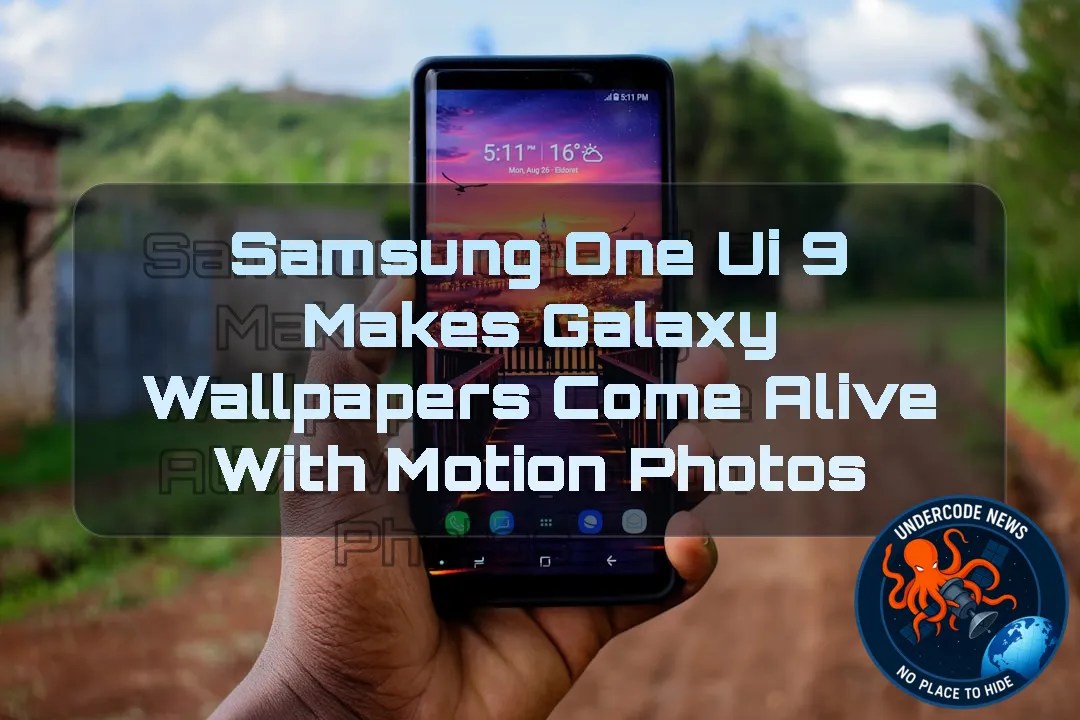 A Small Feature That Could Make Your Galaxy Feel Much More Personal
Samsung’s One UI 9 may not represent the most dramatic visual overhaul in the company’s software history, but sometimes the features that make the biggest difference are not the ones that dominate the launch presentation. One of the more interesting additions is a new way to turn Samsung Motion Photos into animated wallpapers, giving Galaxy users the ability to bring a little movement and personality to their home and lock screens.
One UI 9 debuted on Samsung’s latest foldable generation, including the Galaxy Z Flip 8, Galaxy Z Fold 8, and Galaxy Z Fold 8 Ultra. Samsung’s official One UI 9 documentation confirms that the software has been designed around a more personalized and seamless experience, particularly on its newest foldable devices.
The new Motion Photo wallpaper feature is particularly appealing because it takes something many Galaxy owners already have in their Gallery and gives it a second purpose. Instead of leaving a Motion Photo as a simple memory inside the Gallery app, users can potentially transform it into a living background that reacts with a brief animation when used as wallpaper.
One UI 9 Focuses on Useful Refinements
One UI 9 is not simply about making Samsung phones look different. Samsung has positioned the update around improved usability, personalization, AI-powered features, and better adaptation to different Galaxy form factors.
The company specifically highlights optimized wallpapers, improved cover-screen functionality, smoother interactions, and a more flexible interface for its newest foldables. On the Galaxy Z Fold 8, for example, One UI 9 is designed to take advantage of the larger display and enhanced multitasking capabilities.
That makes the Motion Photo wallpaper feature an interesting example of Samsung’s broader approach. Rather than introducing a completely separate wallpaper ecosystem, Samsung is finding additional ways to use content users have already created.
Motion Photos Become More Than Memories
Samsung Motion Photos capture a short moving moment around the time a photograph is taken. This gives users something between a conventional still photograph and a short video, allowing them to preserve movement and context that would otherwise disappear when the shutter button is pressed.
Samsung’s support documentation confirms that Motion Photos are available across many recent Galaxy devices and can preserve a short video segment around a photograph.
With One UI 9, that concept can become part of the phone’s visual identity. A Motion Photo showing a person smiling, a pet moving, city lights, ocean waves, falling snow, or a memorable travel moment could potentially become an animated background rather than remaining hidden inside the Gallery.
Setting a Motion Photo as Wallpaper
The process described for the new feature is straightforward. Users can open the Gallery application, select a compatible Motion Photo, and choose to use it as wallpaper.
The system then provides a preview showing how the image will look on the device. Users can enable or disable the Motion Photo animation before applying it, giving them control over whether they want a traditional static wallpaper or the moving version.
This is important because animated wallpapers are not always desirable. Some users prefer a completely static background for a cleaner interface, while others enjoy small visual effects that make the device feel more dynamic.
Home Screen and Lock Screen Personalization
The most interesting aspect is that the Motion Photo can be used for the home screen, lock screen, or potentially both depending on the device and software implementation.
That gives Galaxy owners more flexibility in deciding where the animation belongs. A subtle animated image may work especially well on the lock screen, where users naturally pause for a moment before unlocking their phone.
The home screen is a different story. Because users interact with it constantly, an animated background could become distracting if the motion is too aggressive. Samsung’s ability to preview and control the animation therefore makes the feature more practical than simply forcing moving wallpapers on users.
The Feature Is Closely Connected to
Samsung has increasingly treated personalization as an important part of the Galaxy experience. One UI already offers extensive options for wallpapers, widgets, lock screens, Always On Display elements, and other interface components.
Samsung’s own support material describes dynamic wallpapers and other customization options as ways for Galaxy owners to create a more individualized experience.
Motion Photo wallpapers fit naturally into that philosophy. Instead of downloading a random animated wallpaper from an external application, users can turn their own memories into something personal.
The Galaxy Z Flip 8 Is an Especially Interesting Device for This Feature
The Galaxy Z Flip 8 may benefit from this type of personalization more than traditional smartphones because Samsung has placed an unusually strong emphasis on its external FlexWindow.
Samsung says One UI 9 on the Z Flip 8 allows users to customize the cover-screen experience with widgets and other content, while features such as Flip Shot allow photos, animations, and text to become part of the cover-screen experience.
This makes the idea of animated visual content particularly appropriate for the Flip series. The device already encourages users to treat its outer display as more than a secondary screen.
Foldable Phones Give Wallpapers a New Challenge
Wallpapers become more complicated when a phone has multiple displays and different aspect ratios.
The Galaxy Z Fold 8, for example, has an external cover display and a much larger internal foldable screen. Samsung has therefore optimized One UI 9 to handle different screen configurations and automatically position wallpaper content more effectively.
For Motion Photos, this raises an important technical challenge: the animation needs to remain visually appealing regardless of the display being used.
A photo that looks perfect on a conventional 20:9 smartphone may not necessarily work well on a foldable’s larger or differently shaped screen. Samsung’s wallpaper optimization is therefore more important than it might initially appear.
Compatibility Is Still Limited
The original report states that the Motion Photo wallpaper feature is currently available on the Galaxy Z Flip 8, Galaxy Z Fold 8, and Galaxy Z Fold 8 Ultra.
Samsung’s official One UI 9 information confirms that these new foldables are the first devices to receive the software, with the company planning a gradual rollout to additional Galaxy devices.
This means availability should not automatically be interpreted as an exclusive hardware limitation. Some One UI features arrive first on new flagship devices and later expand to older compatible models.
The Galaxy S26 Ultra Situation Is More Complicated
The original report also notes that the feature was not visible on a Galaxy S26 Ultra running One UI 9.0 Beta 5 at the time of testing.
That does not necessarily mean Samsung has decided to exclude the S26 Ultra permanently. Beta software is unfinished by definition, and features can appear, disappear, or remain hidden until a later build.
SamMobile has separately reported that the Galaxy S26 series was part of the One UI 9 beta program while Samsung’s newest foldables launched with the stable version preinstalled.
The safest conclusion is therefore that Galaxy S26 users should not assume permanent incompatibility simply because the feature was absent from an early beta build.
Why a Small Feature Like This Matters
At first glance, animated wallpapers might sound like a minor addition. They do not make a phone faster, improve camera hardware, or fundamentally change how apps operate.
But smartphone personalization has always been about small details. The wallpaper is one of the first things users see when they interact with their phone, and the lock screen is effectively the device’s front door.
Giving people the ability to use their own moving memories instead of generic wallpapers makes the phone feel more personal.
Motion Photos Could Become a More Valuable Format
The bigger story may actually be Motion Photos themselves.
If Samsung continues finding new uses for Motion Photos, users may become more likely to keep the feature enabled when taking pictures. What was once an optional camera mode could gradually become part of Samsung’s broader photography ecosystem.
That creates a useful feedback loop. More Motion Photos mean more personal content that can be used for wallpapers, shared as short videos, or converted into still frames.
The Feature Could Also Encourage Better Photography Habits
There is an emotional side to Motion Photos that conventional wallpapers cannot easily reproduce.
A static photograph captures what something looked like. A Motion Photo can sometimes capture what the moment felt like.
A child’s laugh, a pet turning its head, a friend waving, a candle flickering, or a city street moving around you can all contain tiny details that disappear in a single frame.
Turning one of those moments into a wallpaper makes the feature more than a technical novelty. It turns a captured memory into part of the daily smartphone experience.
Battery Life Will Be an Important Question
Animated wallpapers inevitably raise questions about battery consumption.
The impact will depend heavily on how Samsung implements the animation. A short, controlled Motion Photo that plays only at specific moments should not necessarily have the same impact as a continuously looping video wallpaper.
This distinction matters. Users increasingly expect flagship phones to provide rich visual experiences without sacrificing endurance.
Samsung has not positioned Motion Photo wallpapers as an always-running video environment, so the practical battery impact will need to be evaluated on stable software and real-world devices.
Performance Should Not Be Ignored
Modern Galaxy flagships have enough processing power to handle short animations without difficulty, but software efficiency still matters.
A well-optimized Motion Photo wallpaper should feel instantaneous and lightweight. If the animation introduces delays when unlocking the device or returning to the home screen, users may quickly disable it.
This is why seemingly simple personalization features can require careful engineering.
Samsung Is Competing on Experience, Not Just Specifications
The smartphone market has reached a point where raw specifications alone are becoming less persuasive.
Flagship phones already have extremely powerful processors, high-refresh-rate displays, advanced cameras, and large amounts of storage. The difference increasingly comes from how those components work together.
One UI 9 reflects this shift. Samsung is trying to make the Galaxy experience feel more coherent across conventional phones and foldables while adding personalization and AI features that distinguish its software.
Motion Photo wallpapers are a small but visible part of that strategy.
Deep Analysis: Why
A Small Feature With Strong Emotional Value
The strongest aspect of this feature is not technical complexity. It is emotional relevance.
People rarely choose a wallpaper because they need another productivity feature. They choose it because they want their phone to represent something.
Personal Memories Are More Powerful Than Generic Wallpapers
A downloadable wallpaper may look beautiful, but a personal photograph carries context.
Samsung can therefore make its customization system more meaningful by allowing users to repurpose moments they personally captured.
Motion Creates a Different Kind of Wallpaper
Traditional wallpapers remain static. Animated wallpapers introduce movement.
Motion Photos occupy an interesting middle ground because the animation originates from a photograph rather than being designed purely as a visual effect.
The Feature Fits
Samsung already promotes Motion Photos as a camera capability across many Galaxy devices.
Using those files as wallpapers gives the format another reason to exist.
It Could Increase Motion Photo Adoption
Users are more likely to use a feature when they understand what they can do with the resulting content.
Wallpaper support could make Motion Photos more attractive to ordinary Galaxy owners.
Foldables Make the Feature More Interesting
Foldable displays create additional opportunities for personalization because users interact with multiple screens.
The Galaxy Z Flip
One UI 9 Is Designed Around Different Form Factors
Samsung says One UI 9 has been optimized for foldable devices, including different screen configurations and cover-screen interactions.
That gives Samsung a software foundation for experimenting with more advanced personalization.
The Lock Screen Is the Best Place for Motion
An animated memory makes the most sense on the lock screen because users naturally spend a brief moment there.
The home screen, meanwhile, needs to remain practical and readable.
Animation Should Remain Optional
Giving users an on/off control is essential.
Not everyone wants movement, and Samsung is right to provide a choice rather than assuming animation is always better.
Battery Efficiency Could Determine Adoption
If the feature proves efficient, users may leave it enabled.
If it significantly affects battery life, it could remain a novelty that many users disable.
Samsung Needs Consistent Availability
A major issue is fragmentation.
If the feature works on one Galaxy model but disappears from another running the same One UI version, users may become confused about what One UI 9 actually supports.
Regional and Software Differences Could Matter
Samsung regularly notes that software functionality can vary by country, language, device, and service availability.
That means feature availability should always be checked on the specific device rather than assumed from the One UI version number alone.
Beta Software Makes Early Conclusions Dangerous
The absence of the feature on a One UI 9 beta device should not automatically be treated as a final decision.
Samsung can change feature availability between beta builds and stable releases.
Samsung Could Expand the Feature Later
If the feature performs well on the new foldables, expanding it to more Galaxy devices would make sense.
Samsung already supports Motion Photos across a wide range of Galaxy hardware.
Older Flagships Could Benefit
Galaxy S-series owners could particularly appreciate the feature because they already have large libraries of Motion Photos.
Making the feature available to those devices would increase its usefulness dramatically.
Tablets Could Become Part of the Story
Samsung’s software ecosystem extends beyond smartphones.
If Motion Photo wallpaper support eventually reaches compatible Galaxy tablets, users could create a more consistent visual identity across their devices.
The Gallery App Becomes More Important
Features like this also increase the importance of Samsung Gallery.
The app becomes not only a place to view photographs but also a starting point for customizing the device itself.
Samsung Is Building a More Connected Content Ecosystem
A photograph can increasingly become a wallpaper, an edited image, an AI-assisted creation, or a shared video.
That creates more value from the same piece of user-generated content.
AI Could Eventually Enhance Motion Wallpapers
The next logical step could involve AI.
Samsung could theoretically allow users to extend, stabilize, crop, or intelligently reposition Motion Photos for different screen formats.
Foldable Screens Could Benefit From Intelligent Cropping
A future version of One UI could automatically identify the important subject in a Motion Photo and keep it visible across different screen layouts.
That would make animated wallpapers much more practical on foldables.
Personalization Is Becoming a Competitive Advantage
As smartphones become increasingly similar in hardware, software personality becomes more important.
Samsung’s One UI ecosystem is one of the company’s strongest opportunities to differentiate Galaxy devices.
Small Features Can Shape Brand Loyalty
Users may forget individual specifications after a few years.
They are less likely to forget an interface that feels uniquely theirs.
Motion Photos Could Become a Signature Galaxy Feature
Apple has long used Live Photos as part of its photography identity.
Samsung’s Motion Photos could occupy a similar space if the company continues developing the format.
The Feature Also Encourages Users to Revisit Old Memories
A new wallpaper can bring old photographs back into daily life.
That creates an unexpected emotional benefit: technology becomes a mechanism for resurfacing memories.
The Best Features Often Feel Invisible
A good software feature does not always need to announce itself.
If a Motion Photo wallpaper simply makes the phone feel more alive without causing inconvenience, users may appreciate it without thinking about the underlying technology.
Samsung Should Avoid Overcomplicating It
The biggest danger is unnecessary complexity.
The appeal of the feature comes from its simplicity: choose a Motion Photo, preview it, decide whether to animate it, and apply it.
Privacy Is Also Naturally Better With Personal Content
Using photographs already stored on the phone can be more comfortable for users than relying on third-party wallpaper applications.
There is no obvious need to search for an external animated wallpaper service simply to get a moving background.
Third-Party Wallpaper Apps May Face More Competition
If Samsung expands this capability, some users may have less reason to install dedicated wallpaper applications.
That could make
One UI
The Motion Photo feature should not be viewed in isolation.
It represents
The Galaxy Z Fold 8 Family Is the Beginning
Samsung’s newest foldables are the first major showcase for One UI 9.
The company has already stated that the software will gradually expand to other Galaxy devices.
The S26 Series Could Become the Next Major Test
Because the Galaxy S26 series has already been involved in One UI 9 beta testing, those devices will be particularly interesting to watch as Samsung moves toward broader stable availability.
The Feature Could Become More Important Over Time
What looks like a minor wallpaper option today could become the foundation for a broader dynamic personalization system tomorrow.
Samsung has plenty of room to expand the concept.
The Real Test Is Everyday Use
Specifications and feature lists only tell part of the story.
The real question is whether users actually enjoy seeing their favorite memories move on the screen every day.
Samsung Has Chosen the Right Kind of Innovation
Not every software update needs to reinvent the smartphone.
Sometimes improving the small interactions that users repeat hundreds of times is more valuable than adding another complicated feature.
Motion Photo Wallpapers Could Be One of Those Features
It is simple, personal, visually noticeable, and directly connected to something Galaxy owners already use.
That combination gives it genuine potential.
What Undercode Say:
Samsung Is Making Personalization More Emotional
One UI
The Feature Makes Existing Content More Valuable
The smartest part of the idea is that users do not necessarily need to create anything new. A Motion Photo they already captured can become a wallpaper, extending the usefulness of content that might otherwise remain buried in the Gallery.
Foldables Give Samsung More Room to Experiment
The Galaxy Z Flip 8 and Z Fold 8 provide Samsung with an ideal environment for experimenting with interactive personalization because they offer different displays and form factors. Samsung is already using One UI 9 to tailor the experience to those screens.
The Lock Screen Could Become More Dynamic
The lock screen is evolving from a simple security barrier into a personalized information surface. Animated Motion Photos fit naturally into that evolution because they add movement without requiring users to interact with anything.
Samsung Must Keep It Efficient
The success of this feature will depend on optimization. If the animation is smooth, brief, and battery-friendly, it could become a feature people keep enabled. If it creates noticeable power consumption, its appeal will quickly decline.
Wider Availability Would Make the Feature Stronger
At launch, the
The S26 Ultra Will Be Worth Watching
The absence of the feature from the reported One UI 9 beta build does not necessarily mean Samsung has abandoned support. The stable rollout will provide a much clearer indication of whether the Galaxy S26 series receives it.
Motion Photos Could Become
Samsung already has the underlying technology. The next step is making Motion Photos feel like a central part of the Galaxy experience rather than simply another camera option.
Personalization Could Become
Hardware differences between flagship smartphones are becoming increasingly difficult for consumers to notice. Software personality can therefore become a much more powerful reason to remain inside an ecosystem.
One UI 9 Shows
Samsung is clearly moving toward a Galaxy experience that adapts to device type, screen size, user behavior, AI services, and personal content. Motion Photo wallpapers are a small but visible example of that strategy.
✅ One UI 9 Is Officially Available on Samsung’s New Foldables
Samsung confirms that One UI 9 first rolled out with the Galaxy Z Fold8 Ultra, Galaxy Z Fold8, and Galaxy Z Flip8. The company also says the update is expected to gradually reach additional Galaxy devices.
✅ Samsung Motion Photos Are a Real Galaxy Feature
Samsung’s own support documentation confirms Motion Photos are supported on numerous recent Galaxy smartphones and capture a short moving segment around a photograph.
⚠️ Motion Photo Wallpaper Availability Is Still Device-Dependent
The reported feature is currently associated with
Prediction
(+1) Samsung Will Expand Motion Photo Wallpaper Support
Samsung is likely to expand the feature beyond its newest foldables as One UI 9 reaches more Galaxy phones. Wider support would make the feature considerably more useful and would strengthen Samsung’s overall personalization ecosystem.
(+1) Motion Photos Will Become More Integrated With One UI
Samsung has multiple opportunities to connect Motion Photos with wallpapers, lock screens, Gallery, AI editing, and other personalization tools. The format could gradually become a more visible part of the Galaxy experience.
(+1) Foldables Will Receive Even More Personalized Features
Samsung is clearly using One UI 9 to differentiate the experience on foldable hardware. Expect future updates to continue taking advantage of the unique cover and inner displays.
(-1) The Feature May Remain Limited on Older Hardware
Not every Galaxy device will necessarily receive every One UI 9 feature. Samsung can restrict capabilities according to hardware, performance, display configuration, or other technical requirements.
(+1) Personal Memories Will Become a Bigger Part of Smartphone Interfaces
The industry is moving toward more personalized devices, and features such as Motion Photo wallpapers show where that trend could lead. Instead of simply displaying information, smartphones are increasingly becoming visual extensions of their owners.
Final Verdict: A Small One UI 9 Feature With Surprisingly Big Potential
Samsung’s Motion Photo wallpaper capability is not the kind of feature that will sell millions of phones by itself. It does not dramatically change performance, camera quality, or battery life.
But it is exactly the type of small improvement that can make a smartphone feel more personal.
One UI 9 is already being positioned by Samsung as a major step toward a more seamless experience across its newest Galaxy devices, particularly its foldables.
Giving users the ability to transform their own Motion Photos into moving wallpapers fits perfectly into that philosophy. It turns a simple photograph into a living memory and makes the Galaxy interface feel less generic.
The real opportunity for Samsung is what comes next. If the company expands Motion Photo wallpapers to more devices and combines them with AI-powered cropping, intelligent animation, better foldable optimization, and deeper Gallery integration, this small feature could become part of a much larger personalization ecosystem.
For now, Motion Photo wallpapers are a subtle addition to One UI 9. But sometimes the smallest features are the ones users end up interacting with every single day.
▶️ Related Video (84% Match):
🕵️📝Let’s dive deep and fact‑check.
🎓 Live Courses & Certifications:
Join Undercode Academy for Verified Certifications
🚀 Request a Custom Project:
Secure, high-velocity infrastructure and disruptive technological engineering. Contact our engineering team for high-tier development and proprietary systems:
[email protected]
💎 Smart Architecture | 🛡️ Secure by Design | ⭐ Trusted by Thousands
References:
Reported By: www.sammobile.com
Extra Source Hub (Possible Sources for article):
https://www.pinterest.com
Wikipedia
OpenAi & Undercode AI
Image Source:
Unsplash
Undercode AI DI v2
🔐JOIN OUR CYBER WORLD [ CVE News • HackMonitor • UndercodeNews ]
📢 Follow UndercodeNews & Stay Tuned:
𝕏 formerly Twitter 🐦 | @ Threads | 🔗 Linkedin | 🦋BlueSky | 🐘Mastodon | 📺Youtube


