
Listen to this Post
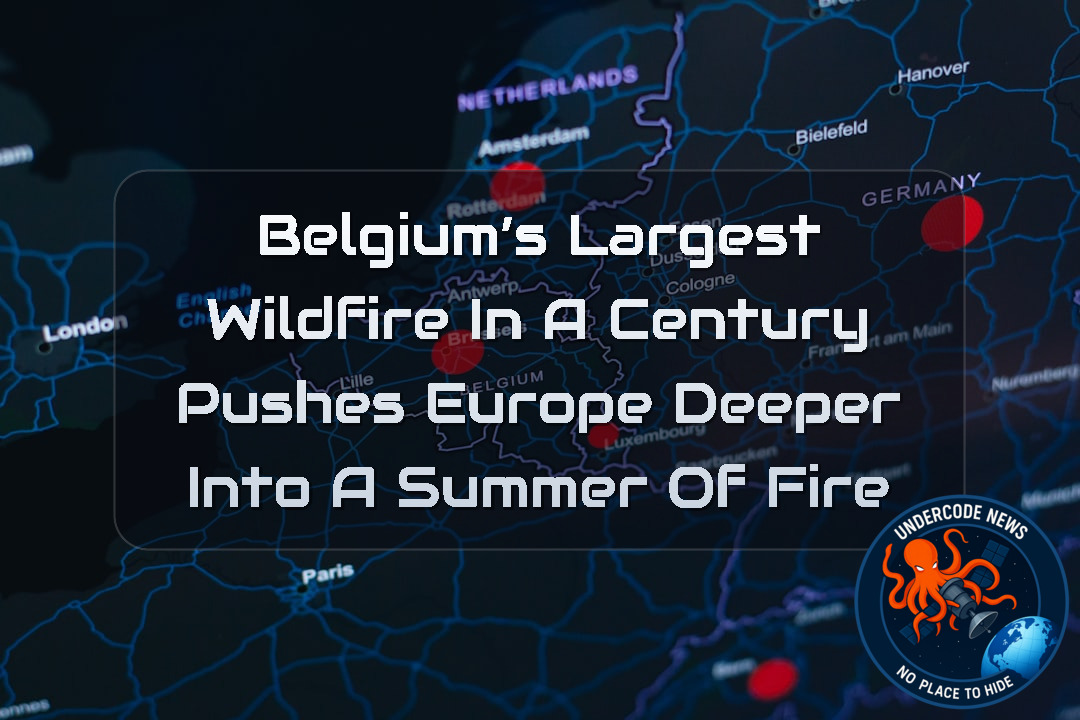
Introduction: When a Continent Begins to Burn
Europe is facing a summer that will be remembered not for holidays, festivals, or warm evenings, but for smoke-filled skies, exhausted firefighters, emergency evacuations, and forests turning into ash. Weeks of destructive wildfires have swept across the continent, fuelled by prolonged drought, exceptionally high temperatures, and weather conditions capable of turning a small blaze into a national emergency.
Belgium, a country not usually associated with catastrophic wildfires on the scale seen in southern Europe, has now found itself at the centre of one of the most dramatic fire emergencies in its modern history. In the High Fens nature reserve near the German border, thousands of hectares of peatlands and forests have been consumed by flames. Firefighters have been battling for days to prevent the disaster from spreading further, while changing winds threaten to transform an already dangerous situation into an even larger cross-border emergency.
The High Fens fire is more than a Belgian disaster. It has become another warning signal in a European summer already marked by major fires in France, Greece, Portugal, and Spain. The pattern is increasingly difficult to ignore. When extreme heat, dry vegetation, strong winds, and vulnerable ecosystems collide, the consequences can spread far beyond the point where the first flames appeared.
Summary: A Massive Fire Puts Belgium on High Alert
Firefighters in Belgium launched a major effort to encircle and contain the enormous wildfire burning through the High Fens nature reserve. Authorities focused heavily on reinforcing defences on the eastern side of the fire as sustained winds threatened to push the blaze toward the nearby German border.
The wildfire had already burned approximately 3,000 hectares, making it Belgium’s largest wildfire in more than a century. Hundreds of firefighters and emergency personnel were deployed, supported by farmers and water-dropping aircraft when weather conditions allowed.
Rain provided temporary relief, but officials warned that the situation remained unstable. The fire was no longer rapidly advancing toward Germany, yet authorities could not initially declare the blaze fully contained. Strong winds remained one of the biggest concerns because even a partially controlled wildfire can suddenly accelerate when weather conditions change.
The smoke generated by the fire also created a wider environmental and public health problem. Thick yellowish smoke spread across the border region and was reportedly detected as far away as eastern France, where authorities issued air-pollution alerts. Two Belgian villages were evacuated because of the smoke and fire danger, while residents were instructed to remain away from the affected areas.
The disaster carries historical significance as well. The High Fens region was previously devastated by major fires in 1911 during another period marked by intense heat and drought. More than a century later, the region is once again facing an enormous wildfire under similarly extreme environmental conditions.
A Battle to Draw a Line Around the Fire
The central objective for Belgian emergency services was brutally simple in theory and extraordinarily difficult in reality, create a defensive perimeter and stop the wildfire from finding a path beyond it.
Firefighters worked to encircle the affected area while concentrating resources on the eastern flank. This direction mattered because sustained winds could potentially push flames, embers, and smoke toward Germany. Wildfires do not need a solid wall of flames to expand. Wind can carry burning material ahead of the main fire, creating new ignition points and overwhelming containment lines.
That is why changing weather conditions became one of the most important factors in the entire operation. Rain can reduce fire intensity, cool vegetation, and increase moisture levels, but a sudden increase in wind can quickly reverse some of those advantages.
The High Fens Is a Particularly Difficult Environment
The High Fens nature reserve is not an ordinary forest landscape. The region includes peatlands, bogs, pine forests, and extensive natural areas crossed by trails and environmentally sensitive terrain.
Peat fires can be particularly challenging because heat may persist beneath the surface even when visible flames appear to weaken. Firefighters may therefore face a longer and more complicated containment operation than they would in a conventional surface fire.
The ecological damage can also be severe. Wetland and peat ecosystems store significant amounts of carbon and support specialised plant and animal life. When large areas burn, the immediate destruction is only part of the problem. Recovery can take years, and in some cases the ecosystem may not return to exactly the same condition.
Belgium’s Largest Wildfire Since 1911
The scale of the disaster has made it historically significant for Belgium. The country has not experienced a wildfire of this magnitude since the massive fires that affected the same broader region in 1911.
The comparison between the two events is striking. Both occurred during periods associated with severe heat and drought. More than a century separates the disasters, but the environmental ingredients remain familiar, dry landscapes, extreme temperatures, and conditions capable of allowing fire to spread rapidly.
Belgium’s King Philippe visited the affected region as firefighters continued their operations, highlighting the national importance of the emergency and the enormous effort required to bring the situation under control.
The symbolism is difficult to miss. A disaster that once belonged to history has returned to the same landscape on a scale large enough to become a national emergency again.
Hundreds of Firefighters Entered the Fight
Around 500 firefighters and emergency personnel were mobilised during the response. Their mission involved far more than simply spraying water onto visible flames.
Wildfire response requires constant monitoring of wind direction, temperature, humidity, terrain, fuel availability, and the possibility of new fire fronts. Emergency crews must decide where to establish containment lines, which communities may require evacuation, where aircraft can safely operate, and how to protect personnel working for long periods in extreme conditions.
Farmers also contributed to the response, demonstrating how large-scale emergencies often require cooperation beyond traditional emergency services. In a wildfire crisis, local knowledge, equipment, access routes, and logistical support can become valuable parts of the containment strategy.
Rain Brought Relief, but Not Victory
Rainfall offered firefighters an important opportunity to strengthen their position. Moisture can reduce flame intensity and make vegetation less immediately combustible.
However, rain does not automatically mean that a wildfire has ended.
Large fires can continue to burn in isolated areas, underground, or beneath layers of vegetation. If strong winds return and dry material remains available, hotspots can intensify again. Authorities therefore remained cautious even after the fire stopped advancing in some directions.
The key difference between a fire that has slowed down and a fire that is fully contained can be enormous. A temporary pause can create a dangerous sense of security if weather conditions later change.
Strong Winds Created a Dangerous New Situation
Wind is one of the most unpredictable elements in wildfire behaviour. It can increase oxygen supply, bend flames toward unburned vegetation, carry embers across containment zones, and rapidly alter the direction of a fire.
For crews near the Belgian-German border, sustained winds represented a particularly serious threat. A change in direction could have pushed the fire into new areas and created additional pressure on communities and emergency services.
This is why firefighting commanders continued preparing for what they described as a challenging new situation. Wildfire response is not static. A strategy that works in the morning may become ineffective by the afternoon.
The German Border Became a Critical Firefront
The proximity of the wildfire to Germany transformed the High Fens disaster into more than a local Belgian emergency.
As the fire moved closer to the border, authorities in the German town of Monschau took precautionary measures, including a partial evacuation order. Although the blaze later stopped advancing in that direction, the situation demonstrated how quickly a wildfire can become an international concern.
Borders have little meaning to wind, smoke, and fire.
A wildfire near an international boundary requires coordination between emergency services, environmental agencies, local governments, and potentially multiple national authorities. Even if flames remain on one side of the border, smoke and air pollution can affect populations much farther away.
Smoke Became a Second Disaster
The flames were not the only threat.
A massive plume of yellowish smoke covered parts of the border region, creating poor air quality and forcing authorities to monitor the health risks associated with the disaster. Smoke was detected far beyond the immediate fire zone, reaching eastern France and triggering air-pollution alerts.
Wildfire smoke can contain fine particulate matter and other pollutants capable of affecting respiratory health, especially among children, elderly people, and individuals with pre-existing vulnerabilities.
This means that the geographical impact of a wildfire can be much larger than the burned area shown on a map. Thousands of hectares may be directly affected by flames, while smoke spreads the consequences across cities, regions, and even neighbouring countries.
Evacuations Showed the Human Cost
Two Belgian villages were evacuated because of the dangers created by the fire and smoke. Residents were instructed to remain away from their homes while emergency services worked to stabilise the situation.
Evacuation decisions are never taken lightly. Authorities must balance the danger of waiting too long against the disruption caused by moving entire communities.
For residents, the experience can be deeply unsettling. A wildfire does not only threaten buildings. It creates uncertainty about whether homes will survive, whether roads will remain open, and whether returning will be safe.
Behind every evacuation statistic is a family waiting for news.
Europe Is Facing a Wider Wildfire Crisis
Belgium’s High Fens fire emerged during a period in which several European countries were already battling major wildfires.
France, Greece, Portugal, and Spain have also faced destructive fire activity as dry landscapes and intense summer heat created conditions favourable to rapid fire spread.
Southern Europe has long been familiar with severe wildfire seasons, but the broader pattern raises concerns about the geographical expansion of extreme fire risk. Countries and regions historically considered less vulnerable may increasingly need to prepare for conditions once associated mainly with hotter and drier parts of the continent.
Wildfire preparedness can no longer be treated as a problem belonging exclusively to the Mediterranean.
Heat and Drought Created the Perfect Fuel
Wildfires require ignition, but their scale depends heavily on environmental conditions.
When vegetation becomes exceptionally dry, forests, grasslands, and other natural landscapes can behave like enormous reservoirs of fuel. Prolonged heat removes moisture, drought weakens ecosystems, and low humidity allows flames to spread more efficiently.
The result is a dangerous chain reaction.
A small fire starts. Dry vegetation allows it to grow. Wind pushes it into new areas. Heat creates additional stress on the landscape. Emergency services are forced to respond across a larger area.
Breaking that chain becomes increasingly difficult once the fire reaches a certain size.
Climate Extremes Are Changing Emergency Planning
The broader lesson from
Fire services need equipment, trained personnel, surveillance systems, aircraft, communication networks, and cross-border coordination. Governments also need to consider forest management, land restoration, drought monitoring, evacuation planning, and public warning systems.
Wildfire response cannot begin only when smoke appears on the horizon.
The most effective strategy begins long before ignition through prevention, preparation, detection, and risk reduction.
The High Fens Fire Is Also an Ecological Emergency
The destruction of 3,000 hectares represents more than a dramatic number.
The High Fens contains ecosystems shaped by water, peat, forests, and unique environmental conditions. Damage to these areas can affect biodiversity, soil stability, carbon storage, and the natural balance of the landscape.
Fire may also change how water moves through the ecosystem. In peat-rich environments, damage can create long-term restoration challenges because recovering the original hydrological balance may be difficult.
The emergency will therefore continue long after the final flames disappear.
What Happens After the Fire Is Contained?
Once firefighters succeed in securing the perimeter, attention will eventually shift toward investigation, recovery, and restoration.
Authorities may examine the origin of the fire and determine whether natural conditions, human activity, infrastructure, or another factor contributed to ignition. Environmental experts will assess the damage to forests and peatlands, while local authorities will focus on reopening roads, restoring access, and supporting affected residents.
The recovery phase may take far longer than the firefighting operation.
Burned landscapes can remain vulnerable to erosion, flooding, ecological disruption, and secondary fires. Restoration will require patience and long-term planning.
What Undercode Say:
The High Fens wildfire should be viewed as more than an isolated Belgian emergency.
It represents how rapidly environmental risk can evolve when several dangerous conditions appear at the same time.
Heat alone does not automatically create a megafire.
Drought alone does not guarantee a disaster.
Wind alone is not enough to burn thousands of hectares.
But when extreme heat, prolonged dryness, combustible vegetation, and strong winds converge, the situation can become extremely difficult to control.
Belgium is particularly interesting in this case because it challenges the traditional perception of European wildfire geography.
When people think about catastrophic European fires, countries such as Greece, Spain, Portugal, or southern France often come to mind first.
The High Fens disaster demonstrates that severe wildfire conditions can threaten landscapes outside those traditional high-risk zones.
The location near an international border adds another important layer.
Modern disaster response must increasingly operate beyond administrative boundaries.
Smoke can cross borders.
Embers can cross firebreaks.
Pollution can affect populations far from the flames.
Emergency coordination therefore needs to become faster and more integrated.
The fire also highlights the strategic importance of weather intelligence.
A wildfire response operation can change dramatically after a single shift in wind direction.
This makes real-time meteorological monitoring as important as manpower on the ground.
Firefighters need to understand not only where the fire is now.
They must constantly predict where it could be several hours later.
Another major concern is the nature of peatland ecosystems.
Surface containment may not always mean that every underground hotspot has disappeared.
This can complicate recovery and require extended monitoring.
From a risk-management perspective, the event also demonstrates the importance of early detection.
The earlier a fire is detected and attacked, the greater the chance of preventing exponential growth.
Satellite monitoring, drones, thermal imaging, automated sensors, and rapid communication systems can all support this objective.
Technology will not replace firefighters.
However, technology can help firefighters make better decisions before a situation becomes uncontrollable.
There is also a public awareness problem.
Many people only recognise wildfire danger when they can see flames.
By that stage, the environmental conditions that made the disaster possible may have existed for weeks.
Drought indexes, heat alerts, and vegetation monitoring should therefore be treated as early warning signals.
The High Fens wildfire may eventually be extinguished.
But the strategic questions created by it will remain.
Are emergency services prepared for larger fires?
Are communities prepared to evacuate quickly?
Are cross-border response systems sufficiently integrated?
Are environmentally sensitive landscapes being monitored closely enough?
And perhaps most importantly, are governments preparing for the wildfire patterns of the future rather than relying only on the assumptions of the past?
Europe’s fire problem is increasingly becoming a continental resilience issue.
The High Fens disaster should be treated as another signal that prevention, detection, rapid response, and international coordination must evolve together.
Deep Analysis: Understanding the Fire Through Data and Monitoring
A modern wildfire investigation and response strategy can benefit from continuous environmental monitoring, system logging, and automated alerting. Security-style analytical thinking can also be applied to disaster intelligence by collecting data, identifying anomalies, and detecting dangerous patterns before they escalate.
Monitoring System Logs and Sensor Data
Emergency monitoring systems can use Linux tools to inspect incoming environmental data and identify abnormal events:
journalctl -f
This command can be used to follow system logs in real time when monitoring infrastructure generates alerts from weather stations, cameras, or connected environmental sensors.
Tracking Active Network Services
If a wildfire monitoring platform relies on network-connected sensors, administrators can inspect active listening services:
ss -tulpn
This helps identify which processes are receiving or transmitting monitoring data across the network.
Monitoring Resource Consumption
Large-scale data processing systems handling satellite imagery, thermal information, and weather data require continuous performance monitoring:
htop
This can help administrators detect overloaded systems during periods of intense emergency activity.
Searching for Critical Alerts
Analysts can search log files for warning indicators:
grep -i "warning|alert|critical" /var/log/syslog
A command like this can help isolate high-priority events from large volumes of operational logs.
Monitoring Environmental Data Streams
If sensor data is stored or streamed through a Linux environment, administrators can inspect live updates:
tail -f /var/log/environment-monitor.log
This approach can support real-time analysis of changing temperature, humidity, smoke, or wind measurements.
Checking Automated Monitoring Processes
Wildfire intelligence systems may depend on scheduled tasks that collect weather information or update risk models:
systemctl list-timers
Administrators can use this to verify whether automated collection and analysis tasks are running as expected.
Investigating Network Traffic
During an emergency, analysts may also need to ensure that monitoring infrastructure remains connected:
ip -s link
This can provide interface statistics and help identify communication issues affecting data transmission.
Building a Broader Detection Model
The most effective wildfire intelligence system would combine weather information, satellite imagery, ground sensors, historical fire data, and predictive modelling.
For example, a simplified analytical workflow could continuously evaluate:
Temperature + Wind Speed + Low Humidity + Dry Vegetation = Elevated Fire Risk
A real system would be far more complex, but the principle remains important. The goal is to identify dangerous combinations before they become disasters.
In the future, AI-assisted monitoring platforms may help emergency teams analyse enormous amounts of environmental data faster than traditional manual processes. However, automated predictions should support trained experts rather than replace human decision-making.
The lesson from the High Fens fire is clear. Information is part of emergency response. The faster authorities understand what is happening, the better their chances of placing resources in the right location before conditions become catastrophic.
✅ The article describes a wildfire that burned approximately 3,000 hectares in Belgium’s High Fens region and required a large-scale firefighting response.
✅ The fire’s historical significance is supported by its comparison with the major High Fens fires of 1911, making it one of Belgium’s most serious wildfire disasters in more than a century.
❌ It would be inaccurate to conclude that rainfall alone meant the wildfire was permanently extinguished, because changing winds and remaining hotspots can continue to create operational risks.
Prediction
(-1) Europe is likely to face increasing pressure to treat wildfires as a cross-border emergency challenge rather than a seasonal problem limited to traditionally hot southern regions.
Stronger heatwaves and extended dry periods could increase the number of regions exposed to severe wildfire conditions.
Governments may expand investments in early-warning systems, satellite monitoring, firefighting aircraft, and cross-border emergency coordination.
Sensitive ecosystems such as peatlands may require specialised fire-prevention and restoration strategies as extreme weather events place additional pressure on vulnerable landscapes.
The High Fens disaster may become a reference point in future discussions about how Belgium and neighbouring countries prepare for large-scale environmental emergencies.
Conclusion: The Fire May End, but the Warning Will Remain
The battle to contain
The High Fens fire started as an emergency in a protected natural landscape, but its consequences quickly spread across communities, borders, airspace, and environmental systems. Hundreds of firefighters were mobilised, residents were evacuated, smoke travelled into neighbouring regions, and weather conditions repeatedly threatened to change the course of the battle.
Europe’s devastating wildfire season has shown how quickly extreme environmental conditions can overwhelm traditional expectations.
When the flames are finally extinguished, the real question will remain.
Will Europe simply rebuild what burned, or will it use disasters like the High Fens wildfire as a warning to prepare for a future in which extreme fires may become more frequent, more destructive, and far more difficult to contain?
▶️ Related Video (80% Match):
🕵️📝Let’s dive deep and fact‑check.
🎓 Live Courses & Certifications:
Join Undercode Academy for Verified Certifications
🚀 Request a Custom Project:
Secure, high-velocity infrastructure and disruptive technological engineering. Contact our engineering team for high-tier development and proprietary systems:
[email protected]
💎 Smart Architecture | 🛡️ Secure by Design | ⭐ Trusted by Thousands
References:
Reported By: www.euronews.com
Extra Source Hub (Possible Sources for article):
https://www.pinterest.com
Wikipedia
OpenAi & Undercode AI
Image Source:
Unsplash
Undercode AI DI v2
🔐JOIN OUR CYBER WORLD [ CVE News • HackMonitor • UndercodeNews ]
📢 Follow UndercodeNews & Stay Tuned:
𝕏 formerly Twitter 🐦 | @ Threads | 🔗 Linkedin | 🦋BlueSky | 🐘Mastodon | 📺Youtube


