
Listen to this Post
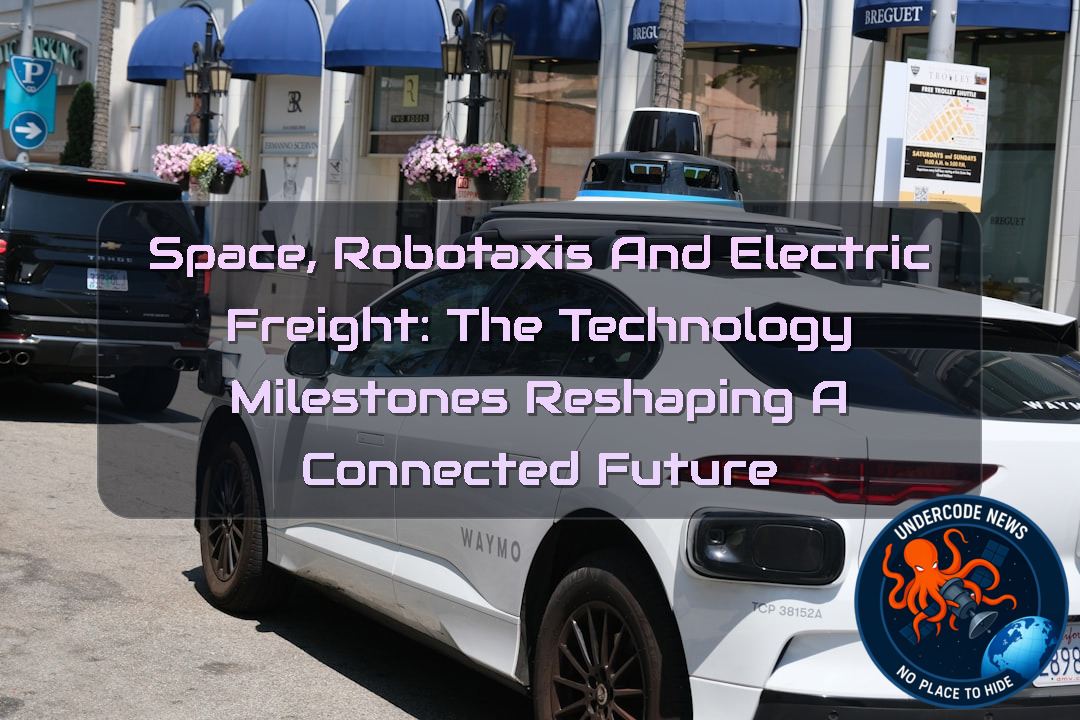 A New Era Is Being Built Above Us and Around Us
The future is no longer waiting quietly in laboratories, concept videos, or ambitious corporate presentations. It is launching into orbit, driving through American cities, charging inside massive infrastructure hubs, and preparing to move freight across the country. In a remarkable series of developments, SpaceX has pushed Starlink beyond another historic threshold, while Tesla is accelerating its plans for the Cybercab, Robotaxi infrastructure, and large-scale electric trucking.
These stories may appear separate at first glance. One involves satellites circling Earth. Another involves cars without steering wheels. A third focuses on charging hubs and electric Class 8 trucks. Yet together, they reveal something much larger: the infrastructure of the next technological era is being built simultaneously in space, on roads, and across energy networks.
The original reports describe SpaceX launching its 11,000th Starlink satellite, Tesla opening opportunities for selected members of the public to experience Cybercab rides, new Robotaxi charging infrastructure planned for Austin, and a major 500-unit Tesla Semi order from Swedish freight company Einride.
Starlink Reaches an Extraordinary Orbital Milestone
SpaceX has reached another extraordinary moment in the history of commercial spaceflight. During the Starlink Group 17-50 mission, launched on August 19, 2026, the company sent another 24 Starlink V2 Mini satellites toward low Earth orbit. The mission lifted off from Space Launch Complex 4 East at Vandenberg Space Force Base in California.
According to the original report, this mission pushed the number of Starlink satellites in orbit to just over 11,000. The Falcon 9 rocket also demonstrated once again why reusable launch systems have become central to SpaceX’s strategy, with booster B1097 completing its twelfth flight before successfully landing on the droneship Of Course I Still Love You in the Pacific Ocean.
From Two Test Satellites to a Global Orbital Network
The scale of Starlink becomes even more impressive when compared with its origins. The program began with the launch of the Tintin A and Tintin B test satellites in February 2018. Just over a year later, the first operational group of 60 Starlink satellites was launched.
What followed was an expansion at a pace rarely seen in the history of telecommunications.
SpaceX transformed satellite deployment from an occasional and extremely expensive event into a continuous industrial operation. Falcon 9 rockets began launching batches of satellites repeatedly, while reusable boosters reduced the cost and preparation time associated with each mission.
By mid-2026, according to the source material, SpaceX had launched more than 12,000 Starlink satellites across different generations, while older satellites continued to be replaced and deorbited as part of the constellation’s operational lifecycle.
Connectivity Is Becoming Space Infrastructure
Starlink is no longer simply an experiment designed to prove that satellite internet can work at scale. It has developed into a global communications infrastructure serving residential users, businesses, aircraft, ships, emergency services, and other connectivity-dependent operations.
The original article states that the network serves millions of users in more than 160 countries. That geographic reach is one of Starlink’s most important advantages. Traditional internet infrastructure depends heavily on cables, towers, exchanges, and physical networks. Satellite systems can potentially reach areas where building conventional infrastructure is difficult, expensive, or slow.
The strategic significance of this model is becoming increasingly clear. Connectivity is no longer just a consumer product. It is becoming critical infrastructure.
Starship Could Change the Scale of the Starlink Project
The next major chapter for Starlink may depend heavily on Starship.
SpaceX plans to introduce larger V3 satellites capable of delivering substantially greater throughput. However, these satellites require more launch capacity than Falcon 9 can efficiently provide at the scale SpaceX ultimately intends.
This is where Starship becomes more than another rocket program.
If it reaches reliable operational capability, Starship could allow SpaceX to deploy significantly larger numbers of more capable satellites during individual launches. That could change the economics of orbital infrastructure once again.
The future of Starlink, therefore, is closely connected to the future of Starship.
The Vision of 100,000 Additional Satellites
SpaceX’s ambitions extend far beyond its current constellation. The original report notes that the company submitted an application to the Federal Communications Commission in July seeking authority for a Gen3 constellation of up to 100,000 satellites.
The proposed spacecraft would operate in very low Earth orbit at approximately 325 and 475 kilometers, using a combination of existing and additional spectrum bands.
The objective is enormous. SpaceX has described a system intended to deliver multi-gigabit symmetrical broadband to consumers, enterprises, governments, and potentially billions of AI-powered devices worldwide.
Whether such a massive constellation ultimately receives regulatory approval and reaches full operational deployment remains dependent on technical readiness, regulatory decisions, orbital management, and the successful maturation of Starship.
Still, the proposal reveals the scale of the company’s ambition. SpaceX is not thinking in terms of thousands of satellites anymore. It is thinking in terms of orbital infrastructure capable of supporting a significant portion of global connectivity.
Tesla Opens the Door to the Cybercab Era
A Driverless Vehicle Moves Closer to Public Roads
While SpaceX continues expanding infrastructure above Earth, Tesla is preparing another technological transition at street level.
Tesla has opened a sweepstakes that could allow selected participants to become among the first members of the public to experience a ride in the Cybercab. The vehicle represents Tesla’s vision for an autonomous transportation platform built around a car without a steering wheel or pedals.
For years, autonomous vehicles have been presented as a future technology. The Cybercab represents Tesla’s attempt to move that concept toward a dedicated commercial product.
According to the original report, participants could enter through qualifying activity involving the Robotaxi platform or by submitting a mail-in entry to Tesla’s Gigafactory Texas headquarters under the stated sweepstakes rules.
Tesla Turns Public Interest into a Launch Strategy
Tesla has always relied heavily on public attention, community engagement, and unconventional product launches. The Cybercab sweepstakes fits naturally into that approach.
Instead of quietly introducing the vehicle through a traditional transportation rollout, Tesla is creating anticipation around the possibility of becoming one of the first people outside the company to experience the vehicle.
The strategy is unusual, but it also serves a purpose.
Autonomous transportation depends on public trust. People are not simply evaluating the appearance of a car. They are evaluating whether they are comfortable entering a vehicle with no steering wheel, no pedals, and no conventional human driver.
That makes the first public rides symbolically important.
Employee Rides Suggest a Transition Toward Wider Deployment
The source material indicates that Tesla employees had already been using the Cybercab in some capacity before the anticipated public rides.
Internal use can provide valuable operational experience before a wider rollout. It allows a company to observe how vehicles behave under real conditions, identify operational problems, improve fleet management, and refine the passenger experience.
The transition from internal rides to selected public experiences may therefore represent an important stage in Tesla’s broader Robotaxi strategy.
The real test, however, will come when autonomous transportation moves from controlled or limited operations into larger and more complex public environments.
A Car Without Controls Is a Radical Design Decision
The
Removing the steering wheel and pedals is not simply a cosmetic choice. It represents a complete commitment to the idea that the vehicle itself is designed around autonomous operation.
A conventional electric vehicle can still function as a car controlled by a human. A purpose-built autonomous vehicle changes the relationship between the passenger and the machine.
The passenger becomes a customer of a transportation service rather than a driver.
This distinction could have major consequences for vehicle ownership, fleet management, insurance, maintenance, urban transportation, and the economics of ride-hailing.
Austin Becomes a Testing Ground for
A Massive Charging Hub Is Taking Shape
Tesla’s autonomous transportation ambitions cannot depend on vehicles alone.
A large Robotaxi fleet requires a dedicated ecosystem capable of supporting charging, maintenance, storage, software monitoring, and fleet logistics. This is why Tesla’s planned charging hub in Austin may be just as important as the Cybercab itself.
According to permit submissions described in the original report, Tesla plans to develop a major Robotaxi-oriented charging location near its St. Elmo service center.
The first phase is expected to include 48 Tesla Robotaxi-focused Supercharger stalls. The site has additional capacity that may later be converted into a significantly larger charging installation.
Wireless Charging Could Become Part of the Robotaxi Model
One of the most interesting details involves the possibility of wireless induction charging in a future phase.
The source notes that project documentation suggests infrastructure that could support as many as 80 wireless chargers, although the plans appear to contain inconsistencies regarding the charging cabinet specifications.
Even so, the concept itself is strategically important.
A traditional electric vehicle still requires a human to connect and disconnect a charging cable. A fully autonomous Robotaxi fleet benefits from infrastructure that minimizes human involvement.
Wireless charging could potentially allow a vehicle to position itself, charge automatically, and return to service with less direct intervention.
That is exactly the kind of infrastructure autonomous fleets may eventually require.
Robotaxi Networks Need Their Own Industrial Ecosystem
Tesla reportedly has additional Robotaxi charging projects planned in locations including Phoenix, San Antonio, Irving, and Las Vegas.
This suggests that Tesla is not simply preparing to launch a vehicle. It is building a distributed operational network.
That distinction matters.
The success of autonomous ride-hailing will not be determined only by whether a Cybercab can drive safely. It will also depend on whether fleets can remain charged, maintained, cleaned, monitored, repaired, insured, and efficiently dispatched.
The invisible infrastructure behind autonomous mobility could become as important as the vehicles passengers actually see.
Tesla Semi Receives Its Largest Order Yet
Einride Orders 500 Electric Class 8 Trucks
Tesla’s ambitions are also expanding beyond passenger transportation.
The original article reports that Swedish freight technology company Einride AB has placed an order for 500 Tesla Semi trucks, representing the largest order for the electric Class 8 vehicle described in the source.
The trucks are expected to be integrated with Einride’s Saga AI fleet intelligence platform and deployed across logistics operations serving major companies, including Amazon, across states such as California, New Jersey, Texas, Illinois, and Georgia.
The deployment is expected to occur in phases over the next two years, with the first units scheduled to arrive in September according to the report.
Electric Freight Is Moving Beyond the Pilot Stage
For years, electric heavy-duty trucks have been tested through pilot programs involving selected fleets.
The challenge has always been scale.
A few electric trucks operating on carefully selected routes are very different from hundreds of vehicles integrated into large commercial logistics networks.
A 500-unit deployment, if executed as described, would represent a significant move toward broader commercial adoption.
The question is no longer only whether an electric truck can operate.
The increasingly important question is whether electric freight can be deployed at industrial scale while maintaining operational efficiency.
Saga AI Could Become a Critical Part of the Deployment
Einride plans to use its Saga AI platform to coordinate the electric freight deployment.
This highlights another important trend in transportation.
Future logistics may not simply be electrified. It may become increasingly software-defined.
Fleet intelligence systems can help companies coordinate routes, monitor vehicle status, estimate energy requirements, manage charging schedules, and improve operational planning.
Electric vehicles generate a large amount of operational data, and software platforms may become essential for transforming that information into lower costs and more efficient logistics.
Tesla Semi Enters a More Competitive Commercial Phase
Tesla’s Semi program has already been tested with companies such as Frito-Lay and PepsiCo., which helped provide real-world operational feedback.
The Einride agreement could represent another stage in the vehicle’s commercial evolution.
According to statements included in the original report, both Einride and Tesla view the partnership as an opportunity to scale sustainable freight operations and demonstrate the economic advantages of electric heavy-duty transportation.
The long-term success of that strategy will depend on production capacity, charging infrastructure, vehicle reliability, energy costs, and the ability of logistics companies to redesign operations around electric fleets.
A Shared Pattern Connects SpaceX and Tesla
Infrastructure Is the Real Story Behind the Headlines
At first glance, an 11,000-satellite constellation, a steering-wheel-less car, a charging hub, and a fleet of electric trucks seem like unrelated stories.
But there is a common pattern.
Each project depends on infrastructure operating at enormous scale.
Starlink requires rockets, satellites, ground stations, spectrum, software, and orbital coordination.
Robotaxi requires autonomous software, vehicles, charging networks, maintenance facilities, mapping, data systems, and fleet operations.
Tesla Semi requires manufacturing capacity, charging infrastructure, energy planning, logistics software, and commercial partnerships.
The visible product is only one part of the system.
Reusability and Automation Are Changing the Economics of Scale
SpaceX built much of its launch advantage around reusable rockets.
Tesla is attempting to build transportation systems around automation.
Both approaches focus on reducing the human and financial costs associated with repetitive operations.
A reusable rocket can fly again.
An autonomous Robotaxi can potentially operate without a traditional driver.
A software-managed freight platform can potentially optimize thousands of vehicle movements.
The technological details are different, but the economic principle is similar: automation and repeatability can make large-scale systems more efficient.
What Undercode Say:
The Bigger Story Is Not the Satellite, Car, or Truck
The most important lesson from these developments is that technology is entering a period where isolated products are becoming interconnected systems.
SpaceX is not merely launching satellites.
It is attempting to construct a communications layer around Earth.
Tesla is not merely selling an unusual electric car.
It is attempting to create a transportation network where software, vehicles, charging, and artificial intelligence operate together.
The Tesla Semi is not simply another truck.
It is part of a broader transformation in which logistics becomes electric, connected, and increasingly controlled by intelligent software.
The companies that dominate the next decade may not necessarily be those that create the most impressive individual product.
They may be the companies capable of building the strongest infrastructure around that product.
Starlink demonstrates the power of vertical integration.
SpaceX controls launch capability, satellite production, and much of the network architecture.
That allows the company to iterate at extraordinary speed.
Tesla appears to be pursuing a similar strategy in transportation.
Cybercab depends on autonomous software.
That software depends on vehicles.
Those vehicles depend on charging.
The charging network depends on physical infrastructure.
The entire system depends on data.
This is why the Austin charging hub may be more strategically important than it initially appears.
A Robotaxi cannot become a large autonomous fleet if charging remains dependent on manual and inefficient processes.
Automation requires automated infrastructure.
The possibility of wireless charging therefore deserves serious attention.
A truly autonomous fleet should eventually be capable of receiving passengers, navigating independently, monitoring its energy level, returning to a charging location, replenishing energy, and re-entering service with minimal human involvement.
That is the industrial model Tesla appears to be moving toward.
Starlink presents another important question.
Can Earth safely support constellations containing tens of thousands or potentially more than one hundred thousand satellites?
Technical capability does not remove the need for orbital responsibility.
As satellite populations increase, space traffic management, collision avoidance, debris mitigation, and regulatory coordination become increasingly important.
The next era of the internet may partly exist above our atmosphere.
But it will require governance as well as engineering.
Tesla’s Semi order from Einride also shows that electrification is entering a more serious commercial stage.
A 500-unit order is fundamentally different from a demonstration involving a handful of trucks.
At this level, companies must think about fleet availability, charging schedules, maintenance, route planning, and the economics of every mile traveled.
Artificial intelligence platforms such as Saga AI may become central to this transition.
AI will not replace the physical truck.
It will coordinate the increasingly complex system around the truck.
That may be one of the most important roles for artificial intelligence in industry.
The future may not always involve humanoid robots performing dramatic tasks.
Sometimes,
It will optimize routes.
It will predict maintenance.
It will schedule charging.
It will analyze demand.
It will help fleets reduce downtime.
This is the less glamorous side of artificial intelligence, but it may be one of the most economically valuable.
Another major factor is manufacturing.
Ambitious announcements eventually collide with physical reality.
Satellites must be produced.
Rockets must be prepared.
Vehicles must leave factories.
Charging stations must be installed.
Power infrastructure must support growing demand.
This is why the next technology race will not be won by software alone.
The winners will combine software with manufacturing, energy, infrastructure, and logistics.
SpaceX and Tesla are particularly interesting because both companies operate in sectors where physical infrastructure remains unavoidable.
You cannot launch a satellite constellation with an app.
You cannot operate a Robotaxi network using code alone.
You cannot electrify freight without vehicles and energy infrastructure.
The digital and physical worlds are becoming increasingly inseparable.
The next few years could determine whether these ambitious systems remain impressive demonstrations or become normal parts of everyday life.
Starlink may continue expanding until satellite internet becomes a routine part of global connectivity.
Cybercab may become an important test of whether consumers are ready to trust vehicles without traditional controls.
Robotaxi charging hubs may become the early foundation of autonomous transportation networks.
Tesla Semi deployments may reveal whether electric freight can move from specialized operations into mainstream logistics.
The technology is impressive.
But the infrastructure behind it is the real battlefield.
The Starlink Milestone Check
✅ The source states that SpaceX’s August 19, 2026 Starlink Group 17-50 mission deployed 24 Starlink V2 Mini satellites and pushed the constellation to just over 11,000 satellites in orbit.
The Cybercab and Charging Check
✅ The source reports a Tesla Cybercab public-ride sweepstakes and describes Austin permit plans for an initial 48-stall Robotaxi charging installation, with a possible future wireless charging phase.
The Tesla Semi Order Check
✅ The source reports that Einride AB placed a 500-unit Tesla Semi order and planned phased deployment through its Saga AI fleet intelligence platform.
Prediction
(+1) Autonomous and Orbital Infrastructure Will Expand Faster Than Traditional Systems
Starlink’s continued deployment and the proposed next-generation constellation suggest that satellite connectivity will continue expanding into a more important part of global communications infrastructure.
Tesla’s Cybercab and charging hub development indicate that autonomous transportation is moving beyond vehicle prototypes toward dedicated operational ecosystems.
Large commercial orders such as Einride’s 500-unit Semi deployment could accelerate investment in electric freight infrastructure and intelligent fleet management.
Regulatory pressure, manufacturing limitations, energy infrastructure requirements, public trust, and technical challenges could still slow the most ambitious timelines.
Deep Analysis
Linux Commands for Tracking the Technology Infrastructure Behind These Developments
Researchers and analysts monitoring satellite, autonomous vehicle, and transportation infrastructure can organize public datasets, APIs, logs, and downloaded reports using command-line tools.
Download a public dataset or report
curl -L "https://example.com/report.csv" -o report.csv
Inspect the first lines of a dataset
head -n 20 report.csv
Search for references to Starlink or Cybercab
grep -iE "starlink|cybercab|robotaxi|semi" report.csv
Extract unique locations or keywords
grep -i "Austin" report.csv | sort | uniq
Monitor a local log file in real time
tail -f infrastructure.log
Compare changes between two versions of a report
diff -u report-old.txt report-new.txt
Search recursively through a research directory
grep -RniE "Starship|wireless charging|electric freight" ./research/
Calculate a SHA-256 hash for file integrity
sha256sum report.csv
View system and network information
uname -a
ip addr
The Final Technological Question
The most fascinating part of these developments is not whether SpaceX can launch another batch of satellites or whether Tesla can place another autonomous vehicle on the road.
The real question is whether these companies can transform ambitious technology into reliable, scalable infrastructure.
SpaceX is building toward a future where connectivity increasingly comes from orbit.
Tesla is building toward a future where transportation increasingly depends on autonomy and electrification.
Einride’s planned Semi deployment adds another dimension, showing how artificial intelligence, electric vehicles, and logistics may increasingly operate as a single system.
The future is becoming less about individual machines.
It is becoming about networks.
Networks of satellites.
Networks of autonomous vehicles.
Networks of chargers.
Networks of intelligent freight.
And the companies that successfully connect those systems may help define how humanity communicates, travels, and moves goods for decades to come.
▶️ Related Video (84% Match):
🕵️📝Let’s dive deep and fact‑check.
🎓 Live Courses & Certifications:
Join Undercode Academy for Verified Certifications
🚀 Request a Custom Project:
Secure, high-velocity infrastructure and disruptive technological engineering. Contact our engineering team for high-tier development and proprietary systems:
[email protected]
💎 Smart Architecture | 🛡️ Secure by Design | ⭐ Trusted by Thousands
References:
Reported By: www.teslarati.com
Extra Source Hub (Possible Sources for article):
https://www.discord.com
Wikipedia
OpenAi & Undercode AI
Image Source:
Unsplash
Undercode AI DI v2
🔐JOIN OUR CYBER WORLD [ CVE News • HackMonitor • UndercodeNews ]
📢 Follow UndercodeNews & Stay Tuned:
𝕏 formerly Twitter 🐦 | @ Threads | 🔗 Linkedin | 🦋BlueSky | 🐘Mastodon | 📺Youtube


