
Listen to this Post
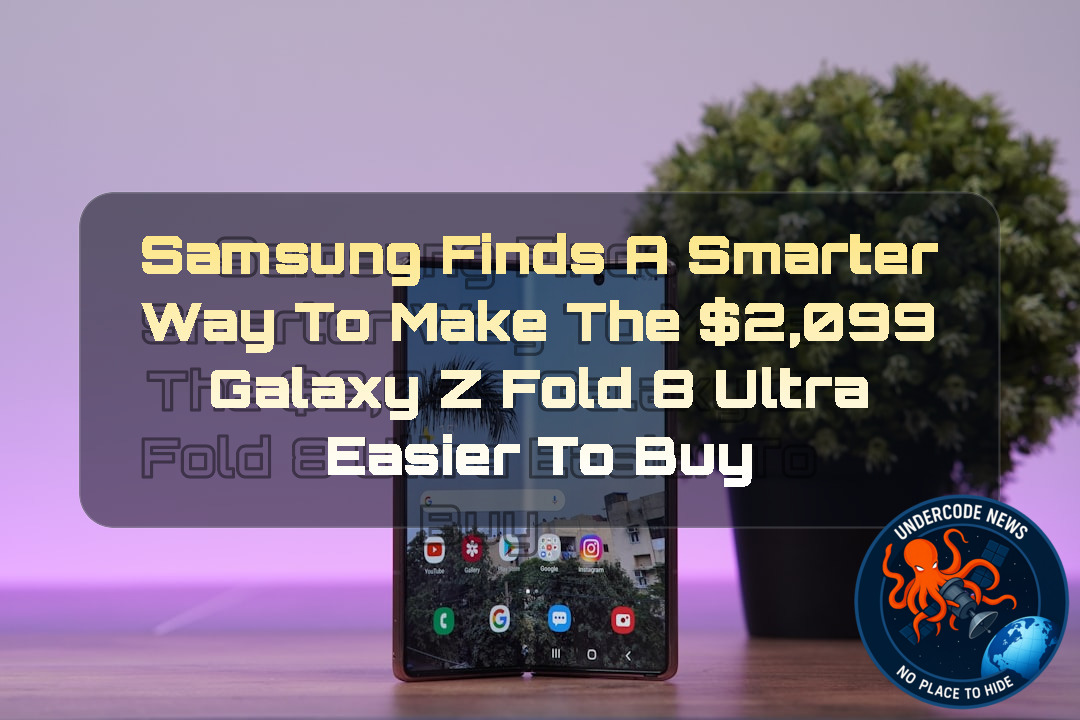 Samsung’s Most Expensive Foldable Gets a More Attractive Deal
Samsung is trying to make its most ambitious foldable smartphone a little easier to justify. The Galaxy Z Fold 8 Ultra carries a starting price of $2,099 in Samsung’s U.S. online store, putting it firmly in the luxury smartphone category. But Samsung is offering several ways for buyers to reduce the effective cost or gain additional value from the purchase.
A $2,099 Price Tag Is Only the Beginning
The Galaxy Z Fold 8 Ultra is not positioned as an ordinary smartphone. It is Samsung’s premium foldable flagship, designed for customers who want a large-screen experience without giving up the portability of a traditional phone. That positioning also explains its unusually high price.
For many buyers, however, the headline $2,099 price is unlikely to be the final amount they effectively pay. Samsung is using trade-in incentives, store credit and card rewards to make the purchase more appealing.
Trade-In Discounts Can Reach $1,000
The biggest potential saving comes through Samsung’s trade-in program. According to the original report, customers can receive up to $1,000 when trading in an eligible device.
That maximum discount is not available for every phone. Buyers generally need to trade in a high-end device, with examples including the Galaxy Z Fold 7 or Galaxy S26 Ultra, to reach the top trade-in value.
For customers already sitting on an expensive recent Galaxy phone, this changes the calculation considerably. A $2,099 foldable can effectively become a much less intimidating purchase when a qualifying flagship is exchanged toward it.
Older Devices Can Still Reduce the Cost
Not everyone owns a Galaxy Z Fold 7 or Galaxy S26 Ultra, but Samsung’s trade-in strategy does not stop with its newest and most expensive devices.
Other eligible smartphones can still provide meaningful discounts. The exact value depends on the model and its condition, meaning the trade-in program is designed to capture customers across a wider range of existing Galaxy and competing smartphones.
This is particularly important because Samsung is effectively turning an existing device into purchasing power rather than forcing every buyer to absorb the entire cost of the new foldable.
No Trade-In? Samsung Still Has an Offer
Samsung has another incentive for customers who have no suitable device to exchange. Instead of a trade-in discount, the company is offering $200 in Samsung Credit.
There is an important distinction, however: the $200 cannot simply be deducted from the Galaxy Z Fold 8 Ultra’s purchase price.
Instead, customers can use the credit toward products and services such as Samsung Care+ or another Galaxy device. That makes the offer less powerful than a direct discount, but it can still reduce the broader cost of owning Samsung’s premium foldable.
Samsung Care+ Could Make the Credit More Useful
For an expensive foldable smartphone, protection is arguably more important than it is with a conventional handset.
The Galaxy Z Fold 8 Ultra contains a sophisticated folding display and complex hinge mechanism, making protection plans potentially more attractive to buyers who are concerned about accidental damage or repair costs.
Using the $200 Samsung Credit toward Samsung Care+ therefore gives the incentive a practical angle. Samsung may not be lowering the phone’s sticker price, but it is helping buyers offset some of the additional expenses associated with owning a premium foldable.
Galaxy Card Customers Have Another Advantage
Samsung is also targeting customers who use its Galaxy Card. According to the original report, cardholders can earn 5% cash rewards on their purchase.
That creates another layer of potential value. Unlike Samsung Credit, cash rewards can potentially function more like a conventional financial benefit, although the actual value depends on the card’s terms, eligibility requirements and applicable reward conditions.
For a $2,099 purchase, a 5% reward would represent approximately $105 in rewards before considering any other limitations or promotional conditions.
Multiple Incentives Change the Buying Equation
The important point is that Samsung is not relying on a single promotion.
A buyer with an eligible premium phone could potentially combine a substantial trade-in value with other applicable benefits, while someone without a trade-in device may instead receive Samsung Credit. Galaxy Card customers have another potential avenue for extracting value from the purchase.
This creates different paths toward making the Galaxy Z Fold 8 Ultra more affordable depending on the buyer’s situation.
Samsung Knows the Ultra Needs an Incentive
A $2,099 smartphone requires more than impressive specifications to convince mainstream buyers.
At this price, customers are not simply comparing smartphones. They are evaluating whether the advantages of a premium foldable justify spending significantly more than they would on a conventional flagship.
Samsung’s promotional strategy appears designed to address that psychological barrier. Rather than simply cutting the official price, the company can preserve the premium positioning of the Galaxy Z Fold 8 Ultra while giving customers reasons to feel that they are receiving additional value.
The Foldable Market Is Becoming More Sophisticated
Foldable smartphones have evolved considerably from their early days. They are no longer experimental devices aimed exclusively at technology enthusiasts.
Samsung has spent years building the Galaxy Z Fold line into a recognizable premium category. The Ultra branding pushes that concept even further, suggesting that Samsung wants the highest-end Fold models to compete not merely with other foldables but with the most expensive conventional flagship smartphones.
The problem is that premium positioning inevitably creates premium pricing.
The $1,000 Trade-In Is Strategically Important
The possibility of receiving up to $1,000 in trade-in value is more than a simple discount.
It gives existing Samsung customers a reason to remain inside the Galaxy ecosystem. Someone who purchased a previous-generation Fold or Ultra phone is effectively being given a financial bridge toward Samsung’s newest premium device.
That can strengthen customer retention while simultaneously creating a steady supply of used smartphones for the secondary market.
Samsung Is Turning Upgrades Into a Sales Engine
The strategy also fits the broader smartphone
Instead of convincing consumers to spend $2,099 from scratch, Samsung can target customers who already own expensive devices and frame the purchase as an upgrade.
The psychological difference is significant. Spending $2,099 can feel excessive. Trading in a $1,000 device and paying the remaining balance feels much more manageable, even though the customer is still committing substantial money to the new phone.
The Real Cost Depends on the Buyer
There is no single effective price for the Galaxy Z Fold 8 Ultra.
For one customer, the phone could represent a major financial commitment. For another, a valuable trade-in could dramatically reduce the amount required upfront. A third buyer may have no device to trade in but could benefit from the $200 Samsung Credit.
That makes it important for buyers to evaluate their individual trade-in value rather than assuming the headline promotion applies equally to everyone.
Premium Foldables Are Still Expensive Territory
Even with aggressive incentives, the Galaxy Z Fold 8 Ultra remains an expensive smartphone.
A $1,000 trade-in does not make the phone cheap. It simply moves the transaction into a lower effective price range for qualifying customers.
That distinction matters because consumers should evaluate the total cost of ownership, including accessories, protection, financing, insurance and future depreciation.
The Samsung Ecosystem Adds Another Layer
Samsung’s incentives also make more sense when viewed through the company’s broader ecosystem.
A Galaxy Z Fold 8 Ultra owner may also purchase Galaxy Buds, a Galaxy Watch, Samsung Care+, accessories and other connected products. Store credit can therefore become another mechanism for keeping spending within Samsung’s ecosystem.
The $200 credit may be less exciting than a direct discount, but it could still encourage additional purchases after the phone transaction is completed.
Foldable Buyers Are Buying More Than a Phone
The attraction of the Fold series has always been the experience.
A large internal display can make multitasking, reading, gaming, productivity and media consumption feel closer to using a compact tablet. That makes the Fold concept fundamentally different from a conventional smartphone with a slightly larger screen.
The Ultra branding suggests Samsung wants to push this philosophy even further, targeting consumers who want the most advanced version of that experience.
The Premium Price Creates a Difficult Question
The central question for buyers is not whether the Galaxy Z Fold 8 Ultra is expensive. It clearly is.
The real question is whether its capabilities justify the premium compared with Samsung’s other flagship devices.
For customers who genuinely use a
Samsung’s Promotions Address the Psychological Barrier
The smartest part of the strategy may be psychological rather than financial.
Samsung can keep the Galaxy Z Fold 8 Ultra positioned as a premium $2,099 device while simultaneously giving customers several ways to reduce the effective burden.
That allows Samsung to maintain the perception of exclusivity while making the actual transaction more flexible.
The Trade-In Strategy Rewards Existing Customers
Existing Galaxy owners appear to have the most compelling path.
Someone upgrading from a recent premium Galaxy phone is already participating in Samsung’s ecosystem and may have a device valuable enough to offset a large portion of the Fold 8 Ultra’s price.
This creates a powerful upgrade loop: buy a premium Galaxy device, trade it in later, and use its residual value toward the next premium Galaxy.
New Buyers Face a Different Calculation
Customers entering the Samsung ecosystem for the first time do not necessarily have access to the same level of trade-in value.
They may still have an eligible smartphone from another manufacturer, but the economics can be different depending on Samsung’s valuation of that device.
For these buyers, the $200 Samsung Credit and any applicable card rewards may become more important.
The Galaxy Card Reward Is Small Compared With the Price
A 5% reward sounds impressive, but context matters.
On a $2,099 purchase, 5% is roughly $105. That is useful, but it does not transform the phone into an inexpensive purchase.
Still, when combined with other legitimate savings, even a relatively modest reward can improve the overall value proposition.
Buyers Should Read the Fine Print
Promotional offers often come with conditions.
Trade-in values can depend on the exact device model, storage configuration, physical condition and eligibility requirements. Samsung Credit can also have restrictions on where and how it can be spent.
Likewise, card rewards may depend on account status, promotional terms or exclusions. Buyers should therefore verify the final terms at checkout rather than assuming every incentive will automatically stack.
Deep Analysis
What Undercode Say:
The $2,099 price is deliberately shocking.
Trade-ins are
The $1,000 maximum matters because it changes perception. A customer seeing $2,099 may hesitate, while a customer seeing a potentially much lower effective cost after a premium trade-in may be more willing to proceed.
Samsung is protecting its headline price. Instead of permanently reducing the retail price, the company can use temporary or conditional incentives to create value without weakening the Ultra’s premium positioning.
That is an important luxury-brand tactic. Keeping the official price high reinforces the perception that the product is Samsung’s ultimate foldable.
The strategy also protects future pricing. If Samsung simply cut the phone’s official price, customers could begin expecting lower prices across the product line.
Trade-in promotions are more flexible. Samsung can adjust trade-in values without changing the phone’s advertised retail price.
The ecosystem is part of the calculation. Samsung does not necessarily need to maximize profit from the smartphone transaction alone if the customer subsequently buys accessories, services and other Galaxy products.
The $200 Samsung Credit demonstrates this approach. The company is effectively giving customers money that is most valuable when it is spent inside Samsung’s ecosystem.
That creates a controlled form of discounting. Samsung offers value while encouraging the customer to remain within its product ecosystem.
Samsung Care+ is particularly relevant. Foldables are sophisticated devices, and customers paying more than $2,000 may be more inclined to protect them.
That means the credit could indirectly strengthen
The Galaxy Card incentive adds another layer. Samsung can encourage customers to finance or complete the purchase through its own financial ecosystem.
The result is a multi-dimensional promotion. Trade-in value, store credit and card rewards attack the price problem from different directions.
But buyers should not confuse incentives with affordability. A discount does not automatically make a $2,099 smartphone financially sensible for everyone.
The Fold 8 Ultra still represents a major purchase. Even after incentives, buyers should consider whether they will use its unique capabilities enough to justify the expense.
Foldable technology has a clear target audience. Productivity-focused users can benefit substantially from a large internal display.
Frequent multitaskers may see genuine value. Running multiple applications simultaneously can make the Fold experience fundamentally different from a conventional phone.
Mobile professionals may also benefit. A foldable can reduce the need to carry a separate tablet for certain tasks.
Entertainment is another major advantage. A large folding display can provide a more immersive experience for video and gaming.
But not everyone needs that experience. Many consumers will find a standard flagship more than sufficient.
This is where
Competitors also matter. As foldable technology becomes more common, Samsung cannot rely indefinitely on novelty.
The Fold category is entering a maturity phase. Buyers increasingly expect durability, software optimization and meaningful advantages rather than simply a futuristic design.
Samsung has an advantage in familiarity. The Galaxy Z Fold brand has been developed over multiple generations.
That established identity can make buyers more comfortable with the category. Customers know roughly what the Fold experience represents before they purchase it.
However, established products also face higher expectations. Every new generation must provide enough improvement to justify upgrading.
That is why trade-in incentives are strategically valuable. They help reduce the financial barrier between generations.
The strategy may be particularly effective among enthusiasts. Technology-focused customers are often more willing to upgrade frequently.
Samsung can use those customers as a recurring revenue base. Each generation becomes another opportunity to capture an upgrade transaction.
The secondary market also benefits. Trade-in programs put older premium smartphones back into circulation.
That can increase access to previous-generation flagship devices. Consumers unwilling to pay Ultra-level prices may eventually purchase traded-in models at lower prices.
The promotion also reveals
The biggest risk is promotional fatigue. If customers become accustomed to large trade-in bonuses, they may begin viewing the full retail price as artificial.
Samsung therefore needs to balance incentives carefully. Too little value could hurt demand, while excessive discounts could weaken the perceived premium status.
The $2,099 figure ultimately works as both a price and a marketing statement. Samsung is telling the market that the Galaxy Z Fold 8 Ultra belongs at the top of its smartphone hierarchy.
The promotions then soften the impact of that statement. Instead of saying the Ultra is cheap, Samsung is effectively saying it can be made more attainable.
That distinction is crucial. Samsung is not trying to turn the Fold 8 Ultra into a mainstream budget purchase.
It is trying to make luxury technology feel financially reachable. For the right customer, that could be enough to close the sale.
Undercode’s view is that the strongest offer is the trade-in path. Customers with a high-value Galaxy device have the clearest opportunity to reduce the effective purchase cost.
For everyone else, the decision requires more caution. Samsung Credit and card rewards add value, but they should not distract from the phone’s substantial underlying price.
✅ The original article states that the Galaxy Z Fold 8 Ultra starts at $2,099 in Samsung’s U.S. online store. This figure is presented as the starting retail price in the supplied source.
✅ The source states that trade-in values can reach $1,000. It specifically identifies premium devices such as the Galaxy Z Fold 7 and Galaxy S26 Ultra as examples of devices that can qualify for the highest value.
⚠️ The $200 Samsung Credit and 5% Galaxy Card rewards are promotional benefits described by the source and may be subject to Samsung’s terms and eligibility conditions. Buyers should confirm the exact offer at checkout because promotions can change.
Prediction
(+1) Samsung Will Continue Using Trade-Ins to Push Ultra Upgrades
Samsung is likely to keep leaning heavily on trade-in incentives as a way to make expensive flagship upgrades feel more accessible without officially lowering the retail price.
(+1) Foldable Promotions Will Become More Aggressive
As premium foldables face increasing competition, manufacturers will probably use larger trade-in bonuses, credits, financing incentives and ecosystem rewards to win customers.
(+1) Existing Galaxy Owners Will Remain the Best Target
Samsung’s most valuable customers for the Galaxy Z Fold 8 Ultra are likely to be owners of recent premium Galaxy devices because their existing phones can substantially reduce the effective upgrade cost.
(-1) The $2,099 Price Will Still Limit Mainstream Adoption
Even with aggressive promotions, the Galaxy Z Fold 8 Ultra remains far beyond the normal smartphone budget for many consumers. Incentives can soften the price, but they cannot completely eliminate the affordability problem.
(+1) Samsung’s Ecosystem Will Become More Important
The future of premium Galaxy sales will increasingly depend on the ecosystem surrounding the phone. Samsung can use smartphones, watches, earbuds, protection plans, accessories and financial rewards together to make individual purchases feel more valuable.
(-1) Buyers Without Trade-Ins May Feel the Price Pressure Most
Consumers without a high-value device to exchange will have fewer ways to reduce the effective cost, making the full premium of the Ultra much harder to justify.
(+1) Trade-In Deals Could Become the New Normal for Flagship Foldables
Instead of competing only through specifications, foldable manufacturers are likely to compete through upgrade economics. The company that makes upgrading feel cheapest may have an advantage even when its sticker price remains high.
(+1) Samsung’s Premium Fold Strategy Is Becoming More Sophisticated
The combination of high-end pricing, trade-in incentives, store credit and card rewards shows that Samsung is treating the Fold line as an ecosystem business rather than simply another smartphone category.
▶️ Related Video (74% Match):
🕵️📝Let’s dive deep and fact‑check.
🎓 Live Courses & Certifications:
Join Undercode Academy for Verified Certifications
🚀 Request a Custom Project:
Secure, high-velocity infrastructure and disruptive technological engineering. Contact our engineering team for high-tier development and proprietary systems:
[email protected]
💎 Smart Architecture | 🛡️ Secure by Design | ⭐ Trusted by Thousands
References:
Reported By: www.sammobile.com
Extra Source Hub (Possible Sources for article):
https://www.linkedin.com
Wikipedia
OpenAi & Undercode AI
Image Source:
Unsplash
Undercode AI DI v2
🔐JOIN OUR CYBER WORLD [ CVE News • HackMonitor • UndercodeNews ]
📢 Follow UndercodeNews & Stay Tuned:
𝕏 formerly Twitter 🐦 | @ Threads | 🔗 Linkedin | 🦋BlueSky | 🐘Mastodon | 📺Youtube


