
Listen to this Post
A Dangerous Journey Ends in Relief
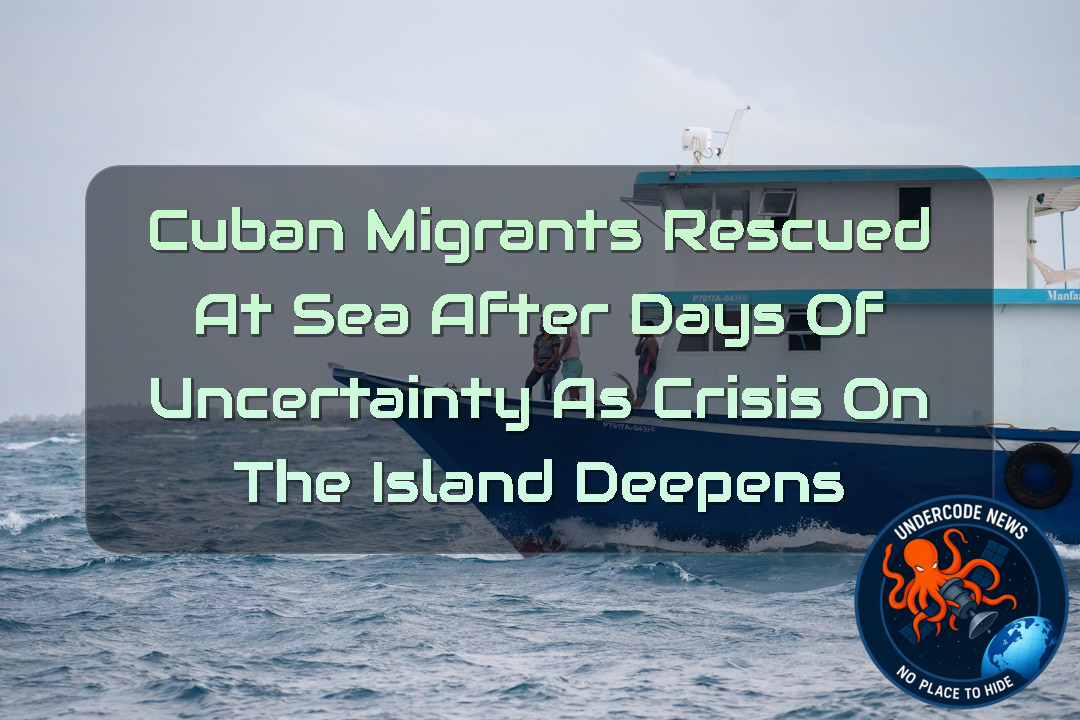
A desperate journey across the Caribbean has ended with a measure of relief after Mexican authorities rescued a group of Cuban migrants who had disappeared at sea. The group, which included several children, had been traveling in a small boat from western Cuba when contact with them was lost, raising fears that the vessel had run out of fuel or encountered serious trouble.
The Mexican Navy said it located and rescued 15 Cuban migrants, including four minors. Their rescue brought an end to several days of uncertainty for relatives and friends who had been increasingly worried about their safety.
The Boat Left Cuba on August 11
According to reports from Cuban and U.S. media, the migrants departed from Pinar del Río province in western Cuba on August 11. They were attempting to make the dangerous maritime journey toward Mexico, a route that has become one of several escape paths used by Cubans seeking better living conditions and greater economic security.
Their disappearance became particularly concerning because small migrant boats operating in the Caribbean can quickly become vulnerable to mechanical problems, shortages of fuel, rough seas and limited access to food and drinking water.
Four Children Were Among Those Rescued
The Mexican Navy said the rescued group consisted of 15 people, including four minors. The presence of children made the situation especially urgent, as young passengers are particularly vulnerable when a vessel becomes stranded or loses access to essential supplies.
The rescue therefore represented more than the conclusion of a difficult journey. For families waiting on shore, it meant that children who had been feared missing at sea were alive and had been brought to safety.
Fears Grew as the Boat Ran Low on Fuel
The situation became even more alarming after a Cuban man living in Mexico told Univision that his two children were aboard the vessel with their mother. He said the boat was running low on fuel, adding to fears that the migrants could become stranded far from land.
A small boat without sufficient fuel can quickly turn into a life-threatening situation. Even if the vessel remains physically intact, losing propulsion can leave passengers at the mercy of currents and weather, making rescue considerably more difficult.
A Dangerous Tradition Born From Desperation
For decades, Cubans have attempted to leave the island using improvised or poorly equipped boats. Some have crossed the Florida Straits toward the United States, while others have attempted routes across the Caribbean toward Mexico and other destinations.
These journeys are dangerous by nature. The waters can be unpredictable, boats may not be designed for long-distance travel, and migrants often begin their journeys without the safety equipment, communications systems or fuel reserves available to commercial vessels.
The Human Cost Has Been Severe
The danger is not theoretical. Maritime migration from Cuba has repeatedly ended in disappearances, drownings, rescues and returns. Over the years, numerous Cubans have lost their lives attempting to reach another country by sea.
For people making the decision to board an unsafe vessel, however, the immediate dangers of the journey may appear less frightening than the economic and social pressures they are attempting to escape.
Cuba’s Economic Crisis Has Added Pressure
The latest migration episode comes against the backdrop of an increasingly severe crisis inside Cuba. The original report describes deteriorating access to electricity, food, water and medicine, portraying conditions that have made everyday life exceptionally difficult for many people.
Long power outages can affect nearly every aspect of daily life, from refrigeration and cooking to transportation, communications and medical care. When electricity shortages are combined with shortages of basic goods, families can find themselves facing a cycle of instability that is difficult to escape.
Energy Shortages Are More Than an Electricity Problem
Cuba’s energy crisis has consequences that extend far beyond the loss of household electricity. Fuel shortages can disrupt transportation, agriculture, supply chains, manufacturing and public services.
When fuel becomes scarce, getting food into communities becomes harder. Moving people becomes harder. Operating businesses becomes harder. Medical facilities can also face additional challenges when reliable power and fuel supplies are unavailable.
The result is a crisis that can encourage people to consider extraordinarily risky alternatives.
Migration Decisions Are Rarely Simple
It is easy to look at a dangerous sea crossing and ask why anyone would take such a risk. The more difficult question is what conditions make that risk appear acceptable in the first place.
For many migrants, the decision is not simply about choosing between staying home and traveling abroad. It can involve weighing an uncertain future against another uncertain future, with the hope that leaving will provide access to employment, stability, family reunification or basic necessities.
Family Separation Makes the Journey Even More Painful
The story of the rescued family highlights another dimension of migration: separation. A parent waiting thousands of miles away can be left with little information when a vessel disappears.
The uncertainty can become unbearable. Every hour without communication creates new fears, especially when children are involved and relatives know that the boat may have limited fuel and supplies.
The rescue therefore carries enormous emotional significance for the families involved.
Mexico’s Role in the Rescue
The intervention by the Mexican Navy demonstrates the importance of maritime search-and-rescue operations along major migration routes. When a vessel carrying migrants disappears, locating it can require coordination, surveillance and significant resources.
For the passengers aboard the boat, the arrival of rescuers likely represented the moment when a frightening journey finally became survivable.
The Caribbean Is Not a Simple Passage
The Caribbean can appear deceptively manageable on a map. Distances between islands and coastlines may look relatively short, but open water presents challenges that are difficult to appreciate from land.
Waves, wind, currents, storms, mechanical failures and limited visibility can rapidly transform a voyage into an emergency. A small vessel with limited navigation equipment has far fewer options when something goes wrong.
Improvised Boats Increase the Risk
Many migrant vessels are not built for the conditions they encounter during these journeys. Some are modified fishing boats or other small craft, while others may lack basic safety features.
A vessel can appear capable of carrying passengers when it is close to shore but become dangerously unstable during extended travel. Overloading can make the problem even worse.
The Rescue Does Not End the Migration Story
Although the 15 migrants were rescued, their situation does not necessarily become simple afterward. They may face immigration procedures, temporary detention or processing, uncertainty about their legal status and difficult decisions about what comes next.
For families who have already taken extraordinary risks to leave Cuba, reaching safety at sea may represent only the first stage of a much longer journey.
A Broader Regional Migration Pressure
The Cuban migration situation is part of a wider pattern of movement across the Americas. Economic hardship, political uncertainty, shortages, insecurity and the desire for family reunification can all contribute to decisions to migrate.
But maritime migration remains one of the most dangerous forms of movement because the environment itself becomes an additional threat.
The Most Important Story Is the Human One
Behind every migration statistic is a person making a difficult decision. In this case, there were 15 people on a boat, including four children, whose families spent days uncertain about whether they were alive.
That human dimension should not disappear behind political arguments about migration policy. Whatever one’s views on immigration, the risks faced by people at sea are real, immediate and potentially fatal.
Deep Analysis
A Rescue That Reveals a Larger Crisis
The successful rescue is unquestionably good news, but it also exposes the desperation driving people toward dangerous maritime routes. When individuals are willing to place themselves and their children aboard a fragile boat, the decision tells us something about the pressures they believe they are escaping.
Fuel Can Become the Difference Between Life and Death
The reported shortage of fuel is particularly significant. A vessel that loses propulsion can become difficult to control, especially when passengers are unfamiliar with navigation and rescue services are not immediately available.
Children Change the Stakes
The presence of four minors makes the incident especially serious. Children depend entirely on adults for food, water, protection and decisions about whether a journey should continue.
Migration Pressure Can Build Gradually
People do not necessarily decide to migrate because of a single event. Economic problems often accumulate over months or years until leaving begins to look like the only realistic path toward improvement.
Electricity Shortages Have Economic Consequences
Repeated power outages can damage businesses, reduce productivity and make ordinary household activities more difficult. The impact therefore extends into employment, income and access to essential services.
Food Shortages Increase Household Pressure
When basic food becomes difficult to obtain or increasingly expensive, families must spend more time and resources securing necessities. That pressure can contribute to migration decisions.
Medicine Shortages Add Another Layer of Fear
Access to medicine is particularly important because families with elderly relatives, children or people requiring regular treatment can face risks that cannot easily be solved through ordinary household budgeting.
Water Security Matters Too
Water shortages can transform an economic crisis into a public-health concern. Reliable access to clean water is one of the most fundamental requirements for any stable community.
Maritime Migration Is an Extreme Choice
Crossing the sea in an unsafe boat is not a normal migration strategy. It is an extreme response to extreme circumstances, and the dangers should be understood accordingly.
Rescue Operations Save Lives but Cannot Solve Root Causes
Search-and-rescue missions are essential, but they address the immediate emergency rather than the conditions that caused the journey to happen.
Border Policy Alone Cannot Explain the Phenomenon
Migration is influenced by a combination of economic conditions, family circumstances, political realities, expectations about opportunities abroad and perceptions of future security.
Family Networks Can Encourage Migration
When relatives or friends are already living abroad, potential migrants may believe they have somewhere to go and someone who can help them begin again.
Economic Expectations Matter
Even when the journey itself is dangerous, the possibility of earning significantly more money abroad can become a powerful motivation for people living through prolonged economic hardship.
Risk Perception Changes Under Pressure
People facing persistent shortages may perceive risks differently from those living in stable conditions. A dangerous journey can begin to look like a calculated gamble rather than an impossible option.
Children Can Become Part of the Migration Decision
Parents may make the painful decision to migrate because they believe their children will have better opportunities elsewhere. The presence of children therefore does not always discourage migration; in some circumstances, it can intensify the desire to leave.
The Caribbean Route Requires Greater Attention
The rescue demonstrates why maritime migration routes deserve continued monitoring. Small boats can disappear quickly, particularly when communication systems are limited.
Early Detection Can Save Lives
The sooner authorities know that a vessel is missing or in distress, the greater the possibility of locating passengers before supplies are exhausted.
Communication Is Critical
Reliable communication equipment can dramatically improve the chances of rescue. Without it, authorities may have little information about a vessel’s location.
Weather Can Change the Outcome
A journey that appears manageable under calm conditions can become dangerous when winds and waves intensify. Migrants traveling on poorly equipped vessels have limited protection from sudden changes.
Overcrowding Increases Vulnerability
Small boats carrying too many people have less stability and fewer resources per passenger. Overcrowding can also make emergency evacuation more difficult.
The Psychological Cost Is Often Forgotten
People who survive dangerous crossings may still carry significant emotional stress afterward. The fear of disappearing at sea, particularly when children are involved, can leave lasting consequences.
Survivors Still Face Uncertainty
Rescue does not automatically guarantee a secure future. Migrants may still confront legal, financial and logistical difficulties after reaching safety.
The Story Highlights Regional Interdependence
Migration across the Caribbean involves multiple countries, meaning humanitarian responses cannot be viewed solely through the lens of one nation’s domestic policy.
Mexico’s Rescue Role Is Significant
By rescuing the Cuban migrants, Mexican authorities demonstrated the humanitarian importance of maritime response capabilities even when the people aboard a vessel are traveling for migration purposes.
The Crisis Can Produce More Maritime Journeys
If living conditions continue deteriorating, more people may consider leaving despite knowing the dangers involved.
Migration Routes Can Shift
When one route becomes more difficult or restricted, migrants may seek alternative pathways. That can push people toward unfamiliar and potentially more dangerous maritime routes.
Smuggling Risks Can Increase
Where legal migration options are limited, informal networks and smugglers can become more influential, potentially exposing migrants to exploitation and additional danger.
International Cooperation Is Essential
Search-and-rescue coordination, maritime surveillance and humanitarian assistance can reduce fatalities even when governments disagree over broader migration policy.
Humanitarian Assistance Matters Before Departure
Improving access to basic necessities can reduce the pressure that pushes people toward dangerous journeys in the first place.
Economic Stability Is a Long-Term Solution
Ultimately, reducing desperate migration requires more than rescue operations. People need realistic opportunities to live safely and build sustainable futures where they are.
The Rescue Should Not Become a Forgotten Statistic
Fifteen people were found alive, but countless other migrants have not received the same outcome. Each rescue should reinforce the need to prevent future maritime tragedies.
The Most Dangerous Part May Be the Decision to Leave
For families contemplating a sea journey, the danger begins before the boat leaves shore. They must already believe that the alternatives available to them are inadequate.
This Incident Is a Warning
The rescue should be viewed as both a success and a warning. It shows that lives can be saved, but it also demonstrates how quickly migration journeys can become emergencies.
The Bigger Question Remains
The central issue is not simply how many people were rescued. It is why people continue to believe that risking their lives at sea is worth the possibility of reaching another country.
What Undercode Say:
A Rescue With a Much Bigger Meaning
Undercode sees this incident as a reminder that migration stories should not be reduced to numbers. Fifteen people survived, including four children, but the circumstances that pushed them onto a dangerous boat remain unresolved.
Desperation Changes Risk Calculations
When basic necessities become increasingly difficult to obtain, people can begin accepting risks that would otherwise be unimaginable. The reported fuel shortage illustrates how quickly a migration attempt can become a fight for survival.
Children Make the Situation More Serious
The presence of minors should reinforce the humanitarian dimension of the story. Whatever political debate surrounds migration, children caught in dangerous maritime journeys are particularly vulnerable.
Rescue Capacity Matters
The Mexican
The Real Crisis Is Bigger Than the Boat
The boat is only the visible part of the story. Behind it are economic hardship, shortages, family pressures, uncertainty and the belief that life elsewhere may offer a better future.
Energy Security Is Closely Connected to Migration
Long-lasting energy shortages can affect transportation, commerce, food preservation, healthcare and household stability. A power crisis can therefore become a migration pressure.
Humanitarian Responses Need Multiple Layers
Rescue operations can save people after they enter danger, but preventing future tragedies requires addressing the conditions that encourage people to take those risks.
The Caribbean Deserves Attention
Maritime migration in the region can become deadly quickly. Authorities and humanitarian organizations need to recognize how vulnerable small vessels can be when traveling long distances.
The Family Perspective Is Crucial
The story of the father waiting for his children demonstrates how migration affects people who are not physically aboard the vessel. Relatives can experience days of uncertainty without knowing whether their loved ones are alive.
A Successful Rescue Is Still a Warning
The best outcome of a dangerous journey should never obscure the fact that the journey was dangerous in the first place. The rescue succeeded, but another vessel might not be so fortunate.
The Next Phase Could Be More Difficult
If economic and humanitarian conditions continue deteriorating, migration pressure could remain high or increase. That means similar incidents may continue appearing unless underlying conditions change.
Technology Can Help Save Lives
Better communication equipment, satellite tracking and coordinated maritime monitoring can improve the chances of locating vessels before supplies run out.
Prevention Remains Better Than Rescue
Rescue is essential, but the strongest humanitarian strategy is preventing people from feeling compelled to make life-threatening journeys.
The Human Cost Should Stay Central
Political debates about Cuba, Mexico, the United States and migration policy should not erase the individual human stories involved. The people on the boat were families, parents and children—not merely migrants in a statistic.
✅ The Mexican Navy reported rescuing 15 Cuban migrants, including four minors, after the group had gone missing at sea.
✅ Reports stated that the migrants departed from Pinar del Río in western Cuba on August 11 and that relatives feared the boat was running low on fuel.
⚠️ Claims about the causes and scale of Cuba’s current shortages, including references to a U.S. “energy blockade,” require careful context because political descriptions of sanctions, energy restrictions and their effects can differ significantly depending on the source.
Prediction
(+1) More Maritime Rescue Operations Are Likely
(+1) If economic pressure and shortages continue encouraging Cubans to leave by sea, regional authorities are likely to face continued demand for search-and-rescue operations involving small migrant vessels.
(+1) Migration Will Remain a Major Humanitarian Issue
(+1) The combination of economic hardship, family reunification and expectations of better opportunities abroad is likely to keep migration pressure elevated, even when maritime routes carry substantial risks.
(-1) More Dangerous Journeys Could End in Tragedy
(-1) Not every vessel will be detected in time. Boats with limited fuel, poor navigation equipment or inadequate safety capacity remain highly vulnerable to mechanical failures and changing sea conditions.
(+1) International Coordination Could Reduce Fatalities
(+1) Greater cooperation among Caribbean and North American authorities, combined with faster communication and better maritime surveillance, could improve the chances of rescuing migrants before emergencies become fatal.
(-1) Rescue Alone Will Not Stop the Departures
(-1) Unless the economic and humanitarian pressures behind these journeys improve, successful rescues are unlikely to eliminate the underlying motivation to leave. The boats may keep coming as long as people continue to see dangerous migration as a path toward survival or a better future.
▶️ Related Video (78% Match):
🕵️📝Let’s dive deep and fact‑check.
🎓 Live Courses & Certifications:
Join Undercode Academy for Verified Certifications
🚀 Request a Custom Project:
Secure, high-velocity infrastructure and disruptive technological engineering. Contact our engineering team for high-tier development and proprietary systems:
[email protected]
💎 Smart Architecture | 🛡️ Secure by Design | ⭐ Trusted by Thousands
References:
Reported By: www.euronews.com
Extra Source Hub (Possible Sources for article):
https://www.stackexchange.com
Wikipedia
OpenAi & Undercode AI
Image Source:
Unsplash
Undercode AI DI v2
🔐JOIN OUR CYBER WORLD [ CVE News • HackMonitor • UndercodeNews ]
📢 Follow UndercodeNews & Stay Tuned:
𝕏 formerly Twitter 🐦 | @ Threads | 🔗 Linkedin | 🦋BlueSky | 🐘Mastodon | 📺Youtube


