
Listen to this Post
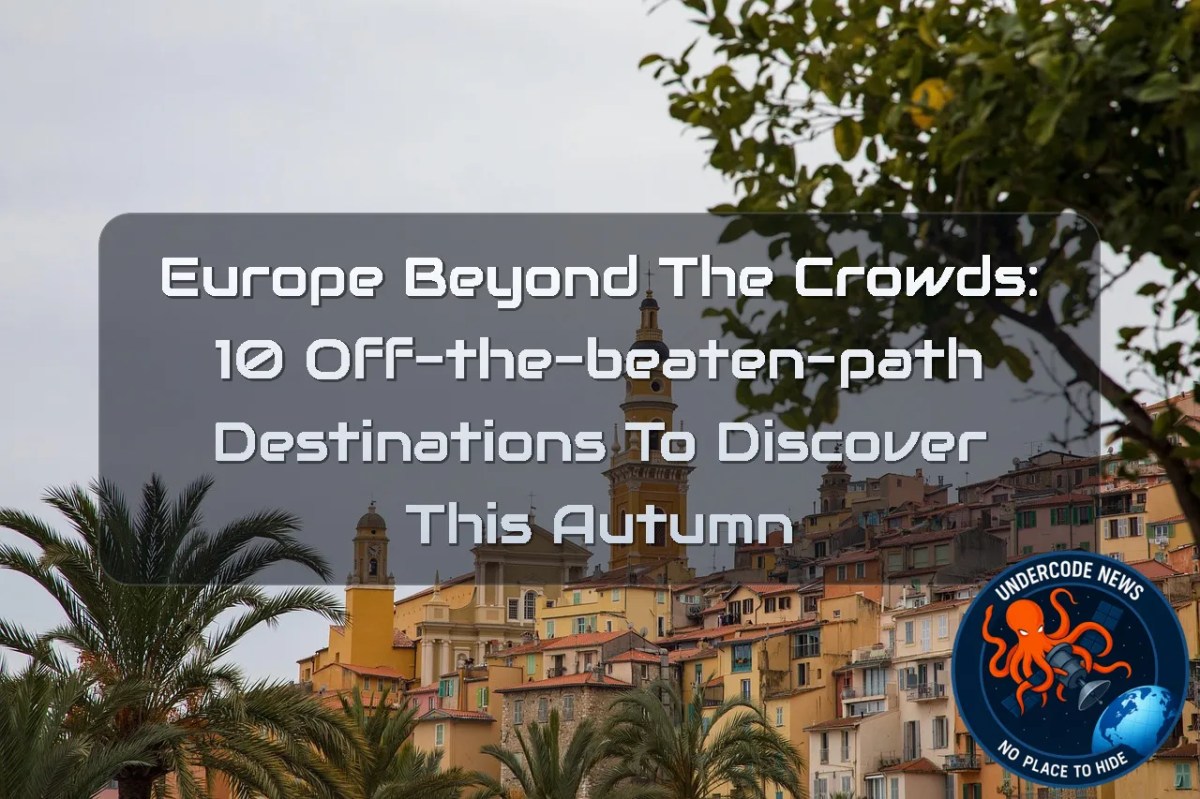 Autumn Is the Season to See Europe Differently
When summer fades and Europe begins to trade long, crowded days for golden leaves, cooler temperatures and quieter streets, something remarkable happens: some of the continent’s most beautiful destinations become even more appealing.
For many travelers, Europe means the same familiar names — Rome, Paris, Barcelona, Prague, Lisbon or Amsterdam. These cities deserve their popularity, but an itinerary built entirely around major tourist capitals can sometimes overlook the places where Europe feels most authentic.
Autumn offers a different opportunity. With milder weather, changing landscapes, seasonal food and fewer peak-season crowds, the months between summer and winter can be ideal for exploring historic towns, archaeological treasures, dramatic natural landscapes and smaller cities that rarely receive the same attention as their famous neighbors.
A growing travel trend is making that easier. Instead of treating the journey between two major destinations as nothing more than transportation time, travelers are increasingly turning those transfers into miniature adventures of their own.
The Journey Between Cities Can Become Part of the Vacation
Travel company Daytrip, which specializes in city-to-city transfers by car, identified a growing pattern in booking data involving primarily American travelers planning European trips.
Rather than traveling directly from one famous city to another, some travelers are adding stops along the way. A few hours can become enough time to walk through an ancient town, explore a historic monument, visit a museum, admire a viewpoint or experience a local dish.
The idea is simple but powerful: instead of spending an entire afternoon sitting in a car or train station, travelers can transform part of their transportation day into another destination.
That approach can make a European vacation feel substantially richer without necessarily requiring another hotel booking or an additional vacation day.
Why Autumn Makes These Stops Even More Attractive
Autumn is particularly well suited to this style of travel because travelers are no longer fighting the intensity of Europe’s summer high season.
The temperatures are generally more comfortable for walking, historic centers can feel less overwhelmed by visitors, and landscapes begin changing dramatically as forests and countryside take on warmer seasonal colors.
There is also the food.
Autumn brings regional specialties, harvest-season ingredients and traditional dishes that can make a short stop feel surprisingly memorable. For travelers willing to move beyond familiar menus, smaller destinations can provide some of the most distinctive culinary experiences of an entire European trip.
- Pompeii, Italy — Where an Ancient City Still Feels Alive
Pompeii takes the number-one position on Daytrip’s autumn ranking, and it is easy to understand why.
Located less than an hour from Naples by road, the ancient Roman city offers one of Europe’s most extraordinary opportunities to walk directly through history. Its streets, public buildings, temples, theaters and private residences provide a remarkable picture of everyday Roman life before the catastrophic eruption of Mount Vesuvius.
You do not necessarily need to spend an entire day exploring every corner to appreciate Pompeii.
Travelers working with limited time can concentrate on selected areas, including the city’s theaters. The Large Theatre once hosted Greek-Roman performances, while the smaller Odeon was designed for musical and poetic performances.
For visitors who prefer architecture and gardens to massive ruins, the Villa of Julia Felix offers another perspective on Pompeii, combining Roman aristocratic life with landscaped surroundings.
Pompeii Is More Than a Ruin
What makes Pompeii particularly powerful is that it does not feel like a conventional museum.
You are not simply looking at objects behind glass. You are walking along streets that existed almost two thousand years ago, passing through spaces where people worked, worshipped, socialized and lived.
That physical connection with the past is precisely what makes Pompeii such an effective stop on an autumn itinerary. Even a shortened visit can leave travelers with a sense that they have stepped into another world.
- Český Krumlov, Czechia — A Fairytale Town With Real History
Second on the list is Český Krumlov, a picturesque historic town in southern Czechia.
Located several hours from Prague, the town offers a completely different atmosphere from the country’s capital. Instead of broad city boulevards and modern urban life, visitors encounter winding streets, colorful historic buildings and a dramatic castle complex overlooking the town.
The Český Krumlov Castle is the centerpiece of the destination and reflects centuries of South Bohemian aristocratic history.
Its architectural development stretches across multiple periods, giving visitors a chance to see how the site evolved over centuries rather than belonging to a single historical moment.
Autumn Gives Český Krumlov a Special Character
Český Krumlov may be particularly photogenic during autumn.
The changing foliage adds another layer to the town’s medieval appearance, while cooler temperatures can make wandering through its streets more comfortable than during the height of summer.
For travelers seeking atmosphere rather than an endless checklist of attractions, this is exactly the kind of place where simply walking can become the main activity.
- Coimbra, Portugal — History With an Adventurous Taste
Coimbra occupies third place and offers a combination that many travelers look for but do not always find: deep history, distinctive architecture and a strong regional food culture.
Situated in central Portugal, Coimbra is closely associated with its historic monuments and long-standing academic traditions. Its elevated historic areas and old buildings create a visual contrast with the modern parts of the city.
But Coimbra also introduces another side of travel: food that may challenge visitors to move beyond familiar choices.
The Taste of the Mondego River
The
Lamprey and eel are among the local specialties associated with the region. They may not be the first dishes an international traveler expects to encounter, but that is precisely what makes them interesting.
Travel is not only about photographing beautiful buildings. Sometimes the most memorable experience comes from sitting at a local table and ordering something you have never tried before.
- Óbidos, Portugal — A Medieval Escape in a Small Package
Óbidos is another Portuguese destination appearing in the ranking, and its appeal lies largely in its compact historic character.
Surrounded by medieval walls, the town feels dramatically different from Portugal’s larger urban destinations. Visitors can walk through narrow streets, explore historic architecture and enjoy the atmosphere without needing an enormous amount of time.
That makes Óbidos particularly suitable for the transfer-stop concept.
A few hours can be enough to experience the town, take photographs, explore its streets and enjoy local food before continuing toward the next major destination.
Small Towns Can Create Big Memories
There is an important lesson in Óbidos: a destination does not have to be enormous to be memorable.
Some of
Instead of spending hours moving between attractions, travelers can slow down and actually absorb their surroundings.
- Plitvice Lakes National Park, Croatia — Autumn in Its Most Dramatic Form
Croatia’s Plitvice Lakes National Park brings something different to the list: spectacular natural scenery.
The park is famous for its interconnected lakes, waterfalls, forests and walking routes. While Croatia is often associated with its Adriatic coastline, destinations such as Plitvice demonstrate that the country’s appeal extends far beyond beaches and coastal cities.
Autumn can be an especially compelling season for nature lovers because changing foliage adds additional color to the landscape.
Nature Becomes the Main Attraction
Plitvice is a reminder that an autumn itinerary does not have to focus entirely on historic architecture.
Sometimes the best break from city sightseeing is a few hours surrounded by forests, waterfalls and clear water.
For travelers moving between Croatian destinations, the park can transform an otherwise ordinary transfer day into one of the most visually memorable parts of the trip.
- Bratislava, Slovakia — The Capital Worth a Longer Look
Bratislava is perhaps the most recognizable major city on this list, but it still offers an alternative to Europe’s better-known capitals.
Slovakia’s capital combines historic architecture with a relatively compact center, making it easier to explore during a shorter visit.
Its location also makes it particularly interesting for travelers building multi-country itineraries across Central Europe.
A Strategic Stop in Central Europe
One of
Travelers exploring Vienna, Budapest, Prague and other Central European destinations can potentially incorporate Bratislava without completely restructuring their trip.
That makes it a strong example of the central idea behind the ranking: a destination can be worthwhile not only because it is famous, but because it fits naturally into the journey.
7. Aveiro, Portugal —
Aveiro offers yet another reason to look beyond Portugal’s biggest tourist destinations.
Often associated with its canals, colorful boats and distinctive architecture, the city has a visual identity that immediately separates it from Lisbon and Porto.
It is compact enough for travelers to explore without committing to a lengthy stay, making it particularly attractive as a shorter itinerary stop.
A Slower Kind of European Experience
Aveiro represents the kind of destination where travelers can spend less time rushing and more time observing.
The canals, traditional architecture and local atmosphere provide plenty of opportunities to explore at a slower pace.
For autumn travelers, that slower rhythm can be exactly what is needed after several days of navigating major tourist cities.
- Kutná Hora, Czechia — Gothic Architecture Beyond Prague
Kutná Hora provides another opportunity to see Czech history outside Prague.
The historic town is known for its remarkable architecture and long connection with silver mining, which helped make it an important medieval center.
Its historical significance is reflected in its monuments and unusual atmosphere.
The Value of Leaving Prague
Prague is one of Europe’s most recognizable destinations, but spending an entire Czech holiday there can mean missing some of the country’s most fascinating smaller cities.
Kutná Hora demonstrates how easy it can be to add historical depth to a trip without traveling to an entirely different region of Europe.
For travelers already visiting Prague, it can serve as an excellent example of the kind of secondary destination that turns a conventional city break into a broader exploration of Czechia.
- Montepulciano, Italy — Tuscany Without the Rush
Montepulciano brings the list back to Italy, but away from the country’s largest tourist centers.
The Tuscan hill town is surrounded by landscapes that become particularly appealing as autumn progresses. Vineyards, rolling hills and historic architecture combine to create the classic visual image many travelers associate with Tuscany.
Autumn Is Made for Tuscany
The
Autumn brings a sense of transition to the countryside, making it an appealing time for travelers interested in food, wine, architecture and landscapes.
Rather than trying to see everything, Montepulciano encourages a slower approach: walk, eat, admire the views and allow the town to become part of the journey.
- Nazaré, Portugal — Where the Ocean Adds Adventure
Nazaré completes the ranking with a destination that offers a different type of spectacle.
Located on
The destination is especially interesting for travelers who want their European itinerary to include something more adventurous than museums and historic streets.
A Coastal Finale to an Autumn Journey
Nazaré can provide a striking contrast after days spent exploring castles, archaeological sites and medieval towns.
The Atlantic landscape, coastal atmosphere and local character make it a destination where travelers can simply stop, breathe and watch the ocean.
That contrast is valuable. A strong European itinerary does not need every destination to look or feel the same.
The Bigger Travel Trend Behind the Ranking
The most interesting part of
The deeper trend is the changing way travelers think about transportation.
For decades, travel itineraries were often structured around a simple formula: fly to a major city, stay there, travel to another major city, stay there, and repeat.
But modern travelers increasingly have access to more flexible transportation options and more information about smaller destinations.
That creates an opportunity to turn the spaces between major cities into experiences rather than empty hours.
The Transfer-Day Revolution
A transfer day is often one of the least exciting parts of a vacation.
You pack your bags, check out, travel to a station or airport, wait, travel again, find your accommodation and spend the rest of the day recovering.
Breaking that routine with a carefully chosen stop can completely change the experience.
Instead of thinking, “Today is a travel day,” travelers can start thinking, “Today I get to see another place.”
More Destinations Without More Vacation Days
This approach is particularly valuable for travelers with limited annual leave.
Adding another full destination to a trip normally means another hotel, another check-in, another transportation segment and potentially another day.
A transfer stop can offer a compromise.
It allows travelers to experience another town or attraction without necessarily committing to an overnight stay.
The Risk of Trying to See Too Much
There is, however, a danger in this trend.
Turning every transfer into a sightseeing marathon can create the opposite of what travelers want.
If an itinerary contains too many stops, travelers may spend the entire vacation watching the clock, carrying luggage and rushing from one attraction to another.
The goal should not be to collect destinations.
The goal should be to make travel more meaningful.
Quality Matters More Than Quantity
A three-hour stop in a beautiful historic town can be more memorable than spending three days rushing through a famous capital.
But the opposite can also be true.
Travelers should choose stops based on what genuinely interests them rather than simply trying to increase the number of countries or cities on their itinerary.
A history enthusiast may prefer Pompeii or Kutná Hora. A nature lover may choose Plitvice Lakes. A foodie could gravitate toward Coimbra. Someone looking for landscapes might prefer Montepulciano.
The Importance of Building Realistic Itineraries
Travelers should also consider practical details before adding a transfer stop.
Luggage storage, opening hours, transportation schedules, walking distances and seasonal conditions can determine whether a short visit is enjoyable or stressful.
A destination that looks close on a map may require more time than expected once parking, traffic and local transportation are considered.
The best stops are therefore not necessarily the most famous ones. They are the ones that can be visited comfortably within the available window.
Europe Is Bigger Than Its Famous Capitals
The ranking ultimately reinforces an important truth about European travel: the continent’s identity is not concentrated in its biggest cities.
Some of
The famous capitals can provide extraordinary experiences, but they are only the beginning.
Why Smaller Destinations Feel More Personal
There is also an emotional difference between visiting an internationally famous attraction and discovering a place that feels less obvious.
Smaller destinations often encourage travelers to slow down.
There may be fewer landmarks competing for attention, fewer packed streets and fewer expectations about what the experience is supposed to look like.
That creates room for spontaneous discoveries.
Food Can Be the Unexpected Highlight
The inclusion of Coimbra also highlights another important part of modern travel: culinary curiosity.
Travelers increasingly want experiences they cannot easily reproduce at home.
A regional dish, an unfamiliar ingredient or a traditional recipe can become a story that lasts much longer than another photograph of a famous monument.
The willingness to try unfamiliar food can therefore transform a short stop into a genuine cultural experience.
Deep Analysis: What This Ranking Says About the Future of European Travel
Analysis Command: Look Beyond the Destination
The first lesson is to stop thinking of a European vacation as a collection of isolated cities.
The most interesting trips increasingly connect destinations together through experiences.
Analysis Command: Turn Transportation Into Exploration
Transportation does not have to be dead time.
A carefully planned stop can turn an ordinary transfer into another memorable chapter of the vacation.
Analysis Command: Favor Shoulder-Season Travel
Autumn is strategically attractive because travelers can potentially experience Europe with a different atmosphere than during peak summer.
Cooler weather and seasonal landscapes can also make walking-heavy itineraries more comfortable.
Analysis Command: Avoid Tourist-City Tunnel Vision
Travelers often build itineraries around names they already recognize.
That creates a feedback loop in which famous destinations become increasingly crowded while equally compelling alternatives remain overlooked.
Analysis Command: Use Geography to Your Advantage
The smartest itinerary is not always the one with the shortest route.
A slightly longer journey that includes a worthwhile historical or natural stop can produce a much richer experience.
Analysis Command: Choose Stops Based on Interests
There is no universal perfect destination.
History lovers may find Pompeii irresistible, while nature enthusiasts may remember Plitvice Lakes more vividly.
Analysis Command: Protect Your Energy
A good itinerary should leave enough time to enjoy the destination.
Travelers should resist the temptation to turn every available hour into another attraction.
Analysis Command: Make Short Visits Meaningful
A short stop does not have to be superficial.
Walking through one historic neighborhood, visiting one major landmark and eating one local meal can be enough to create a lasting impression.
Analysis Command: Think in Experiences, Not Countries
Counting countries visited can become a distraction.
What matters more is whether travelers actually experienced the places they entered.
Analysis Command: Let the Season Influence the Route
Autumn should not simply be treated as summer with slightly cooler temperatures.
Seasonal scenery, food and atmosphere can influence which destinations deserve priority.
Analysis Command: Explore Regional Identity
Small towns often preserve traditions and architectural styles that can be difficult to experience in larger international cities.
They can reveal a more localized version of European culture.
Analysis Command: Use Major Cities as Gateways
A major city does not have to be the final destination.
It can also serve as the starting point for discovering smaller communities nearby.
Analysis Command: Build Flexible Itineraries
Weather, transportation delays and unexpected discoveries can change travel plans.
Leaving some breathing room can make a vacation considerably more enjoyable.
Analysis Command: Avoid the Checklist Mentality
The purpose of travel is not to prove how many landmarks were visited.
A slower day in one beautiful town can sometimes outperform a frantic day containing five attractions.
Analysis Command: Look for Contrast
The strongest itineraries often alternate experiences.
Ancient ruins can be followed by a coastal town. A busy capital can be followed by a quiet village. Museums can be followed by a national park.
Analysis Command: Give Smaller Economies More Attention
Traveling beyond major cities can also distribute tourism spending more broadly.
Restaurants, independent shops, local guides and smaller accommodations can benefit when visitors venture away from established tourist centers.
Analysis Command: Search for Authenticity Carefully
“Off the beaten path” does not automatically mean authentic.
Some supposedly hidden destinations have become extremely popular.
Travelers should focus on genuine local experiences rather than simply chasing the newest viral location.
Analysis Command: Consider the Emotional Value of Travel
The best memories are rarely measured by the number of attractions visited.
They come from moments: watching autumn leaves fall over an old town, eating something unfamiliar or discovering a quiet viewpoint unexpectedly.
Analysis Command: Plan Around Transfer Windows
The concept works best when travelers know exactly how much time they have.
A two-hour stop requires a different strategy from a six-hour stop.
Analysis Command: Minimize Friction
Luggage, parking and transportation logistics can quickly destroy the pleasure of a spontaneous stop.
Good planning should make the experience feel effortless.
Analysis Command: Prioritize Walkable Destinations
Compact historic centers are particularly useful for short visits.
They allow travelers to experience a meaningful amount of a destination without spending most of the stop getting around.
Analysis Command: Combine Culture and Nature
Europe’s diversity allows travelers to combine completely different environments within a single trip.
That variety can make an itinerary feel much more dynamic.
Analysis Command: Think About the Story of the Trip
A memorable vacation has a narrative.
Instead of simply visiting Prague, Lisbon or Naples, travelers can create a journey that moves through medieval towns, Roman ruins, forests, coastlines and regional kitchens.
Analysis Command: Let Food Expand the Route
Food can justify a stop just as much as architecture.
A destination with a distinctive culinary tradition may provide a stronger experience than another generic tourist attraction.
Analysis Command: Use Technology Without Losing Spontaneity
Modern travel planning makes it easier to identify smaller destinations, compare routes and research opening times.
But travelers should still leave room for unplanned discoveries.
Analysis Command: Understand the Value of Three Hours
Three hours may sound insignificant.
In a compact historic town, however, three hours can be enough for a meaningful walk, one major attraction, a local meal and a few photographs.
Analysis Command: Do Not Confuse Famous With Better
Popularity is not a guarantee of quality.
Some of
Analysis Command: Look at the Whole Route
Instead of asking, “Where should I stay?” travelers can also ask, “What can I see between these two places?”
That single question can dramatically expand the possibilities of a European itinerary.
Analysis Command: Make Autumn a Reason to Travel
Seasonal travel should be intentional.
Autumn’s colors, temperatures and culinary traditions can become part of the experience rather than merely background conditions.
Analysis Command: Balance Discovery With Comfort
Adventure is valuable, but so is convenience.
The best itinerary finds a balance between discovering something new and avoiding unnecessary logistical stress.
Analysis Command: Think Beyond Instagram
A destination can be visually spectacular without being personally meaningful.
Travelers should ask whether a place offers history, culture, food, nature or atmosphere that genuinely interests them.
Analysis Command: Short Stops Can Inspire Future Trips
A transfer stop can become a preview.
A few hours in Coimbra might inspire a future Portugal trip. A short visit to Český Krumlov could lead to a longer Czechia journey.
Analysis Command: The Ranking Reflects Changing Traveler Priorities
The rise of secondary destinations suggests that travelers may increasingly value experiences over conventional sightseeing checklists.
Analysis Command:
Few regions of the world offer such a concentration of countries, cultures, historic towns and landscapes within relatively manageable distances.
That density makes stopover-style travel especially practical in Europe.
Analysis Command: The Best Itinerary May Be the One You Did Not Initially Plan
Some of the most memorable destinations are discovered only after travelers look beyond the obvious route.
That is the real promise behind this autumn ranking.
✅ The article’s original ranking identifies Pompeii, Český Krumlov and Coimbra as the top three destinations, followed by Óbidos, Plitvice Lakes National Park, Bratislava, Aveiro, Kutná Hora, Montepulciano and Nazaré.
✅ The central travel trend described in the source is that travelers are increasingly considering stops between major European destinations rather than treating transfers solely as transportation.
❌ The ranking should not be interpreted as an objective global measurement of the "best" European autumn destinations; it is specifically a ranking attributed to Daytrip's travel and booking-data analysis.
Prediction
(+1) European travelers are likely to continue looking beyond traditional capitals as transportation becomes more flexible and travelers seek richer experiences from limited vacation time.
(+1) Shoulder-season travel could become increasingly attractive as visitors look for cooler weather, seasonal scenery and alternatives to the intense crowds associated with Europe’s peak summer months.
(+1) Transfer-based sightseeing is likely to become more popular because it allows travelers to add meaningful experiences without necessarily adding another overnight stay.
(+1) Smaller historic towns, national parks and regional food destinations could benefit as travelers increasingly prioritize authentic experiences over simply collecting famous landmarks.
The Final Takeaway: Your Next Favorite European Destination May Be Between Two Famous Ones
The biggest message from this autumn ranking is not that travelers should abandon Europe’s famous cities.
It is that they should stop assuming those cities are the entire story.
Pompeii, Český Krumlov, Coimbra, Óbidos, Plitvice Lakes, Bratislava, Aveiro, Kutná Hora, Montepulciano and Nazaré demonstrate how much variety can exist outside the standard European itinerary.
A vacation does not have to become longer to become richer.
Sometimes the difference between an ordinary journey and an unforgettable one is simply deciding to stop somewhere you would normally have driven past.
This autumn, the road between two famous destinations may turn out to be one of the most rewarding parts of the entire trip.
▶️ Related Video (86% Match):
🕵️📝Let’s dive deep and fact‑check.
🎓 Live Courses & Certifications:
Join Undercode Academy for Verified Certifications
🚀 Request a Custom Project:
Secure, high-velocity infrastructure and disruptive technological engineering. Contact our engineering team for high-tier development and proprietary systems:
[email protected]
💎 Smart Architecture | 🛡️ Secure by Design | ⭐ Trusted by Thousands
References:
Reported By: www.euronews.com
Extra Source Hub (Possible Sources for article):
https://www.pinterest.com
Wikipedia
OpenAi & Undercode AI
Image Source:
Unsplash
Undercode AI DI v2
🔐JOIN OUR CYBER WORLD [ CVE News • HackMonitor • UndercodeNews ]
📢 Follow UndercodeNews & Stay Tuned:
𝕏 formerly Twitter 🐦 | @ Threads | 🔗 Linkedin | 🦋BlueSky | 🐘Mastodon | 📺Youtube


