Listen to this Post
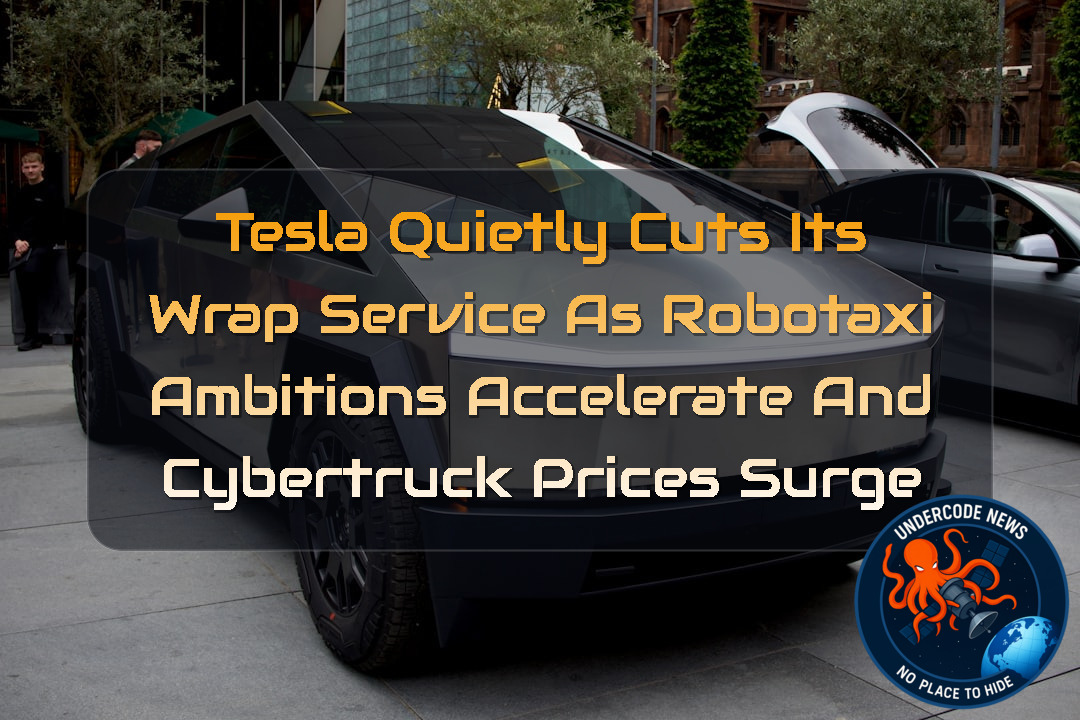 Tesla Is Changing More Than Just Its Online Shop
Tesla has quietly ended one of its more unusual customization experiments: the company’s in-house vehicle wrap service. After several years of changing materials, prices, colors, locations, and eligible vehicles, the wrap option has disappeared from Tesla’s online shop, leaving owners to turn to the much larger aftermarket wrapping industry. The removal was first reported on August 26, 2026, although Tesla has not publicly explained why the service was removed.
A Small Service That Never Became a Big Business
Tesla’s wrap experiment was interesting because it attempted to solve a problem created partly by Tesla itself. The company has historically offered relatively few factory paint colors, while Tesla owners have become increasingly interested in making their cars look different from the millions of other Teslas on the road.
Wrapping provided an easy answer. Owners could transform a Model 3, Model Y, or Cybertruck into something completely different without permanently repainting the vehicle.
But Tesla never built the service into a truly nationwide operation. At its most recent stage, installation was limited to a small number of locations in California and Washington. That geographic limitation made it difficult for Tesla to compete with independent wrap shops, mobile installers, detailers, and specialized automotive businesses that were already serving customers across the United States.
From Premium Protection Film to More Affordable Vinyl
Tesla’s wrap program also went through several identities before disappearing.
The company launched its U.S. program in 2023, initially using paint-protection-film-based materials that were significantly more expensive than conventional vinyl. Prices were eventually reduced, Tesla added colors, and the Cybertruck joined the program.
Later, Tesla shifted toward traditional vinyl wraps and substantially lowered prices. At one point, Model 3 and Model Y wraps were offered around $4,000, while Cybertruck wraps were around $4,500.
That evolution showed that Tesla was trying to find a workable business model. Unfortunately, the experiment appears to have reached its end.
The Wrap Service Could Return
There is one important caveat.
Tesla has removed the wrap products from its online shop, but it has not issued a major public announcement declaring that the program is permanently dead. A Tesla support page related to the service reportedly remains online, and the company has previously removed wrap offerings before bringing them back with revised pricing and options.
That means the safest description right now is that Tesla has ended or suspended its current in-house wrap offering, rather than claiming with absolute certainty that the company will never bring it back.
Why Tesla Was Never Likely to Dominate the Wrap Market
The biggest problem was scale.
Tesla was entering a market that already had thousands of established professionals. Local wrap shops can offer dozens or hundreds of colors, custom graphics, commercial branding, textured finishes, satin films, matte films, paint protection film, color-shifting materials, and highly personalized designs.
Tesla’s own service could not match that level of flexibility.
Even if Tesla had eventually expanded nationally, it would have been competing against businesses whose entire operation was built around customization.
Tesla Owners Still Have Plenty of Options
For Tesla owners, the end of the official service does not mean the end of vehicle customization.
In fact, the aftermarket may be better positioned to serve them. Independent installers can provide more colors, finishes, designs, and pricing options than Tesla’s own program ever did.
Tesla also continues to offer other forms of protection and customization through its ecosystem, including third-party-oriented paint protection products.
For many owners, the disappearance of
Tesla’s Robotaxi Strategy Is Moving in the Opposite Direction
From Physical Customization to Software Intelligence
While Tesla is eliminating a small physical customization business, the company is simultaneously pushing much harder into software-driven transportation.
Tesla says its Robotaxi service now operates from 6 a.m. to 10 p.m., seven days a week, across its current operating footprint. The company also says its unsupervised fleet has become significantly larger and that improved vehicle distribution and routing are helping reduce passenger wait times.
This is an important distinction.
The improvement Tesla is highlighting is not necessarily a new Full Self-Driving release. Instead, it appears to involve the intelligence behind the fleet itself.
Smarter Routing Could Matter More Than a Bigger Fleet
A robotaxi network does not become useful simply because more cars exist.
The system needs to know where those cars should be.
If ten vehicles are sitting in one part of a city while demand suddenly appears somewhere else, adding more cars may not completely solve the problem. Better forecasting and positioning can make an existing fleet feel much larger because vehicles spend less time traveling empty to pick up passengers.
That means
Tesla Is Turning Fleet Management Into an AI Problem
The logic is relatively simple.
Predict demand.
Position vehicles before passengers request them.
Reduce empty driving.
Reduce pickup times.
Increase the number of rides each vehicle can complete.
Increase utilization.
That creates a powerful feedback loop.
The more efficiently Tesla can operate each vehicle, the fewer vehicles it theoretically needs to serve the same number of customers.
Cybercab Is the Bigger Test
The next major milestone is Cybercab.
Tesla is scheduled to hold its Cybercab launch event in Austin on September 3, 2026.
The Cybercab is particularly important because it represents Tesla’s attempt to build a vehicle around autonomous transportation rather than simply converting an existing passenger car into a robotaxi.
The vehicle has been presented as a purpose-built two-seat autonomous taxi without conventional steering controls and pedals.
That makes the September event considerably more important than a simple product unveiling.
Robotaxi Expansion Is Happening Incrementally
Tesla’s strategy appears to be incremental rather than a single overnight transformation.
First came limited geographic operating areas.
Then expanded operating hours.
Then a larger unsupervised fleet.
Now Tesla is preparing to introduce a purpose-built vehicle.
Each stage tests another piece of the business model.
The real question is whether Tesla can eventually combine all of those pieces into a reliable, profitable transportation network.
Cybertruck Has Become a Very Different Financial Proposition
The $60,000 Cybertruck Is Already History
The Cybertruck is facing a completely different issue.
Tesla recently increased the price of two Cybertruck variants by $5,000. The entry-level Dual Motor AWD now starts at $74,990, while the Premium AWD rises to $84,990. The Cyberbeast remains at $99,990.
That makes the
Earlier in 2026, Tesla briefly offered a Dual Motor Cybertruck at $59,990, although the company indicated that introductory pricing would be temporary.
The difference between that promotional figure and
At $75,000 the Cybertruck Faces a Tougher Argument
The Cybertruck can be impressive without necessarily being an obvious value.
At roughly $60,000, its unusual design, steer-by-wire technology, performance, technology package, and Full Self-Driving subscription could make the vehicle feel like an extraordinary deal.
At nearly $75,000, buyers have more alternatives.
Traditional pickup trucks can offer greater towing capability.
Some competitors provide larger cargo capacities.
Others offer longer driving ranges.
And buyers in this price category may have very different priorities from the technology-focused customer Tesla is targeting.
The Driving Experience Remains the
Despite the pricing issue, the
The review described in the original report praises its smooth ride, acceleration, handling, spacious interior, Full Self-Driving capability, and long-distance comfort.
After hundreds of miles, the reviewer reported surprisingly little fatigue and described the cabin as feeling like a “living room on wheels.”
That is significant because the
It may be the experience of driving it.
Steer-by-Wire Changes the Character of the Truck
Steer-by-wire is one of the technologies that makes the Cybertruck fundamentally different from conventional pickups.
The system allows Tesla to create a steering experience that feels remarkably different from traditional trucks.
It can make a large vehicle easier to maneuver and contributes to the Cybertruck’s unique personality.
Combined with its low center of gravity, instant electric torque, sophisticated suspension, and software integration, the result is a pickup that behaves very differently from what many drivers expect.
The Interior Has Its Own Compromises
The Cybertruck is not perfect.
The reviewed vehicle reportedly had panel-gap issues, although another Cybertruck tested by the reviewer was significantly better.
The interior also has some practical shortcomings.
One complaint was the limited number of front USB-C ports, while cleaning the enormous windshield can be awkward.
Those details may sound minor, but they matter in a vehicle costing around $75,000.
At this price, buyers expect not only innovation but also excellent execution.
Deep Analysis
Tesla Is Becoming More Selective
Tesla’s wrap-service cancellation may look insignificant, but it illustrates a broader business principle: the company appears increasingly willing to eliminate offerings that do not justify their operational complexity.
Small Experiments Have Value
The wrap program allowed Tesla to test whether customization could become a meaningful service business without requiring the company to commit to a nationwide network.
The Experiment Produced Useful Information
Tesla learned about customer demand, installation logistics, pricing, material choices, and geographic limitations.
The Aftermarket Already Won
Independent wrapping businesses had a massive head start and continue to offer broader choices than Tesla.
Tesla’s Core Advantage Is Software
The
Robotaxi Fits Tesla Better
A robotaxi network directly connects with
Cybercab Represents Vertical Integration
A purpose-built robotaxi allows Tesla to design the vehicle around autonomous operation rather than adapting an existing passenger vehicle.
Routing Is an Underrated Technology
A robotaxi can have excellent autonomous driving technology and still deliver a poor customer experience if riders wait too long.
Fleet Positioning Could Become Critical
Predicting where customers will request rides can reduce wasted travel and improve vehicle utilization.
Utilization Determines Economics
A vehicle that spends more time transporting passengers and less time waiting or repositioning can potentially generate significantly more revenue.
More Cars Are Not Always the Answer
Tesla may be able to improve service quality through software before dramatically increasing fleet size.
The Robotaxi Business Is a Network Problem
The value of one autonomous vehicle increases when it becomes part of a larger coordinated fleet.
Austin Is the Important Laboratory
Austin provides Tesla with an environment where the company can continue testing autonomous transportation at meaningful scale.
Cybercab Raises the Stakes
Once a dedicated autonomous vehicle enters the fleet, Tesla will have fewer excuses for limitations associated with conventional vehicle architecture.
Reliability Will Matter More Than Hype
Robotaxi customers will care less about impressive demonstrations and more about whether a car consistently arrives when requested.
Waiting Time Is a Customer Metric
The recent emphasis on reducing waits suggests Tesla understands that autonomous transportation must compete on convenience, not merely technology.
Geographic Expansion Creates Complexity
Moving into more cities increases the number of roads, traffic patterns, weather conditions, regulations, and operational challenges Tesla must manage.
The Business Model Is Still Being Tested
Tesla has not yet demonstrated that a large autonomous ride-hailing network can operate profitably at scale.
Cybertruck Is a Different Kind of Experiment
Unlike Robotaxi, Cybertruck is a conventional consumer product competing directly against established pickup trucks.
Price Changes Can Reshape Demand
Moving from $59,990 to $74,990 dramatically changes the group of consumers who might consider buying the vehicle.
Tesla Is Testing Pricing Power
The latest price increase can be interpreted as an attempt to determine how much the market will tolerate while protecting margins.
Premium Positioning Could Be the Goal
The Cybertruck may increasingly be positioned as a technological luxury pickup rather than a mass-market truck.
That Strategy Has Risks
A premium strategy can protect revenue per vehicle but may further shrink the potential customer base.
Tesla Needs Volume and Margin
The company must balance manufacturing utilization with profitability.
Excess Production Is Dangerous
If production capacity significantly exceeds demand, a higher price does not automatically solve the underlying problem.
Brand Identity Still Matters
Cybertruck is one of the most recognizable vehicles on the road, giving Tesla an advantage that specifications alone cannot measure.
The Design Creates Polarization
People tend to have strong opinions about the Cybertruck, which can generate attention but does not guarantee sales.
Attention Is Not the Same as Demand
A vehicle can dominate social media conversations while still struggling to convert attention into purchases.
Tesla’s Portfolio Is Narrowing
With several older vehicle programs changing or disappearing, the company’s remaining products carry greater strategic importance.
Model Y Remains the Volume Engine
The Cybertruck does not need to become
Robotaxi Could Change the Equation
If autonomous services succeed,
That Would Be a Fundamental Transformation
Tesla would increasingly resemble a transportation platform rather than simply an automaker.
The Vegas Loop Shows the Same Ambition
The Boring Company is pursuing another transportation model built around infrastructure rather than conventional roads or rail.
Vegas Loop Has Expanded on Paper
Clark County recently approved 19 additional stations, bringing the total number of entitled stations to 123.
Entitled Does Not Mean Operational
This distinction is critical.
A permitted station is not the same thing as a completed station that passengers can actually use.
Construction Is the Real Test
The Vegas Loop still needs tunnels, stations, safety approvals, connections, and operational infrastructure.
The Gap Matters
A network with 123 approved stations but a much smaller number actually operating demonstrates how far infrastructure projects can sit between ambition and execution.
Musk’s Driveway Vision Is Aspirational
The Boring Company has suggested that its point-to-point system could theoretically place stations extremely close to individual destinations, even describing a future where every driveway could have a station.
That should be viewed as a long-term vision rather than a near-term construction schedule.
Tesla and Boring Company Share a Philosophy
Both projects rely on technology to rethink transportation infrastructure.
Both Also Face Execution Risk
The technology can be impressive while deployment remains difficult.
The Common Theme Is Efficiency
Tesla wants vehicles to move passengers more efficiently.
The Boring Company wants passengers to move through tunnels efficiently.
Software Is Becoming the Glue
In
Hardware Still Matters
Cars, tunnels, stations, sensors, batteries, and manufacturing capacity remain physical bottlenecks.
Tesla Cannot Escape the Physical World
That may be the biggest lesson from the wrap service.
Even a company obsessed with software eventually has to decide which physical services are worth operating itself.
The Wrap Cancellation Is Therefore Strategic
It is not necessarily evidence that Tesla is retreating.
It may simply mean Tesla is concentrating resources where it believes its competitive advantage is strongest.
What Undercode Say:
Tesla Is Cutting the Extras
Tesla’s decision to remove its wrap service makes sense from a business perspective. Custom wrapping is useful to customers, but it is not an obvious area where Tesla possesses a unique competitive advantage.
The Aftermarket Is Stronger
Tesla owners already have access to professional wrap specialists with more locations, materials, colors, and customization options.
Tesla Should Focus on Differentiation
The company is better positioned when it concentrates on technologies competitors cannot easily reproduce, particularly autonomous driving, fleet software, charging infrastructure, and vehicle computing.
Robotaxi Is the Bigger Opportunity
The expansion of Robotaxi hours and fleet size is far more strategically important than whether Tesla can install vinyl wraps.
Wait Times Are a Critical Metric
If Tesla can consistently reduce customer waiting times through smarter dispatching, the service could become substantially more competitive.
Cybercab Could Change Everything
A purpose-built autonomous taxi would give Tesla an opportunity to optimize hardware, software, interior design, maintenance, and fleet operations around one mission.
But Execution Will Decide the Outcome
Tesla’s history is full of ambitious announcements. The real measure will be how reliably these systems operate once they scale.
Cybertruck Has a Different Problem
The Cybertruck is not fighting a technological battle alone. It is fighting a value battle.
$75,000 Changes the Conversation
At $59,990, buyers could forgive certain compromises because the price was unusually aggressive. At $74,990, the Cybertruck has to justify itself against a much wider range of premium vehicles.
Innovation Still Has Value
The
But Truck Buyers Have Practical Needs
Towing, payload, range, durability, bed usability, serviceability, and purchase price can matter more to traditional pickup customers than technological novelty.
Cybertruck May Become a Niche Product
That would not necessarily make it a failure. A profitable premium niche can be valuable even when it does not achieve the enormous sales volumes originally associated with the Cybertruck.
Pricing May Be
The latest increase could reveal whether Tesla can push Cybertruck further toward the luxury segment without causing an even sharper decline in demand.
Vegas Loop Is Another Long-Term Bet
The approval of 123 stations shows that the Boring Company continues to secure regulatory room for expansion.
Approval Is Only Step One
The critical metric will be how quickly those stations become physical, operational parts of the network.
Transportation Is Becoming
Cars may eventually become only one part of the company’s transportation strategy.
Robotaxis Could Create Recurring Revenue
Selling a vehicle generates a one-time transaction. Operating an autonomous ride service potentially creates recurring revenue from the same asset.
That Changes the Economics
If autonomy becomes reliable, Tesla could theoretically generate more value from each vehicle over its operational lifetime.
AI Could Become
The long-term value of
But AI Cannot Fix Everything
Manufacturing, maintenance, charging, insurance, regulation, safety, and customer service remain physical and operational challenges.
Tesla Is Choosing Its Battles
The wrap cancellation suggests the company may be increasingly comfortable leaving non-core businesses to specialized partners.
That Could Be Healthy
A company does not need to own every part of the customer experience to remain competitive.
Focus Can Create Strength
If Tesla redirects resources from marginal services toward autonomy and fleet infrastructure, the strategic payoff could be much larger.
The Risk Is Overconcentration
The opposite argument is that Tesla is placing enormous expectations on a small number of future technologies.
Robotaxi Must Deliver
If autonomous transportation takes longer than expected to scale, the pressure on Tesla’s traditional automotive business could increase.
Cybertruck Must Also Find Its Audience
A premium price can work only if enough customers believe the vehicle provides something they cannot easily obtain elsewhere.
The Next Few Months Matter
Cybercab’s September launch and the continued expansion of Robotaxi will provide important evidence about Tesla’s ability to turn autonomy into a real-world service.
Tesla Is Entering a New Phase
The company increasingly looks less like a traditional automaker and more like a technology company attempting to control vehicles, software, energy, and transportation infrastructure simultaneously.
That Makes Small Decisions More Interesting
Even the cancellation of something as modest as an in-house wrap program can reveal where management believes its future advantage lies.
The Message Is Clear
Tesla does not need to dominate every automotive service.
It needs to dominate the technologies that it believes will define transportation over the next decade.
✅ Tesla’s in-house wrap service has been removed from its online shop: Multiple reports from August 2026 say Tesla’s Model 3, Model Y, and Cybertruck wrap listings disappeared, although Tesla has not publicly explained whether the change is permanent.
✅ Cybertruck prices have increased: Tesla raised the Dual Motor AWD to $74,990 and Premium AWD to $84,990, representing $5,000 increases for both variants.
❌ The $59,990 Cybertruck price should not be treated as its current price: That figure was associated with a limited introductory offer. The current entry price is substantially higher.
✅ Robotaxi hours have expanded: Tesla’s Robotaxi account announced service availability from 6 a.m. to 10 p.m., seven days a week, while also saying its unsupervised fleet had grown.
✅ Cybercab is scheduled for an Austin launch on September 3, 2026: Recent reporting confirms Tesla has sent invitations for the event.
✅ Vegas Loop received approval for 19 additional stations: The new approvals bring the total number of entitled stations to 123, although entitled stations should not be confused with operational stations.
Prediction
(+1) Robotaxi Will Become Tesla’s Most Closely Watched Business
Tesla is likely to continue expanding Robotaxi hours, fleet size, operating areas, and dispatch intelligence as it approaches the Cybercab launch. The company has strong incentives to demonstrate that autonomous transportation can become a meaningful business rather than simply an advanced driving feature.
(+1) Cybercab Will Receive a Major Strategic Push
The September 3 event is likely to mark the beginning of a more aggressive effort to establish Cybercab as a recognizable Tesla product category. The vehicle’s importance goes far beyond another model launch because it represents Tesla’s attempt to build transportation around autonomy from the beginning.
(-1) Cybertruck Sales Will Remain Under Pressure
The latest price increase makes the Cybertruck harder to justify for price-sensitive buyers. Unless Tesla introduces stronger incentives, financing, or meaningful feature improvements, the higher price could further restrict the truck to a smaller group of enthusiasts and premium buyers.
(+1) Tesla Will Continue Removing Low-Priority Services
The disappearance of the wrap program could be part of a broader strategy in which Tesla simplifies its retail ecosystem and focuses resources on products and services that support its larger technology ambitions.
(+1) Third-Party Wrap Shops Will Benefit
Tesla owners who still want customized vehicles will continue turning to independent installers. The aftermarket already offers broader geographic coverage and more customization than Tesla’s in-house program ever achieved.
(-1) The Vegas Loop Will Continue to Face a Gap Between Vision and Deployment
The approval of 123 stations is significant, but construction and operation will remain the real test. The network could eventually become much larger, but regulatory approvals alone do not guarantee rapid completion.
(+1) Transportation Will Become an Increasingly Important Part of the Musk Ecosystem
Tesla Robotaxi and the Boring Company’s Vegas Loop represent two different approaches to transforming urban transportation. If either model reaches meaningful scale, the impact could extend well beyond the automotive industry.
The Bigger Prediction
Tesla appears to be moving toward a future where owning and customizing a car is only one part of the story. The company’s more ambitious goal is to control the intelligence, software, fleet operations, and infrastructure surrounding transportation.
The wrap service was a relatively small experiment. Robotaxi and Cybercab are much bigger bets.
And that is why the most important Tesla story right now may not be what the company is removing from its shop, but what it is preparing to put on the road.
▶️ Related Video (80% Match):
🕵️📝Let’s dive deep and fact‑check.
🎓 Live Courses & Certifications:
Join Undercode Academy for Verified Certifications
🚀 Request a Custom Project:
Secure, high-velocity infrastructure and disruptive technological engineering. Contact our engineering team for high-tier development and proprietary systems:
[email protected]
💎 Smart Architecture | 🛡️ Secure by Design | ⭐ Trusted by Thousands
References:
Reported By: www.teslarati.com
Extra Source Hub (Possible Sources for article):
https://www.reddit.com
Wikipedia
OpenAi & Undercode AI
Image Source:
Unsplash
Undercode AI DI v2
🔐JOIN OUR CYBER WORLD [ CVE News • HackMonitor • UndercodeNews ]
📢 Follow UndercodeNews & Stay Tuned:
𝕏 formerly Twitter 🐦 | @ Threads | 🔗 Linkedin | 🦋BlueSky | 🐘Mastodon | 📺Youtube