
Listen to this Post
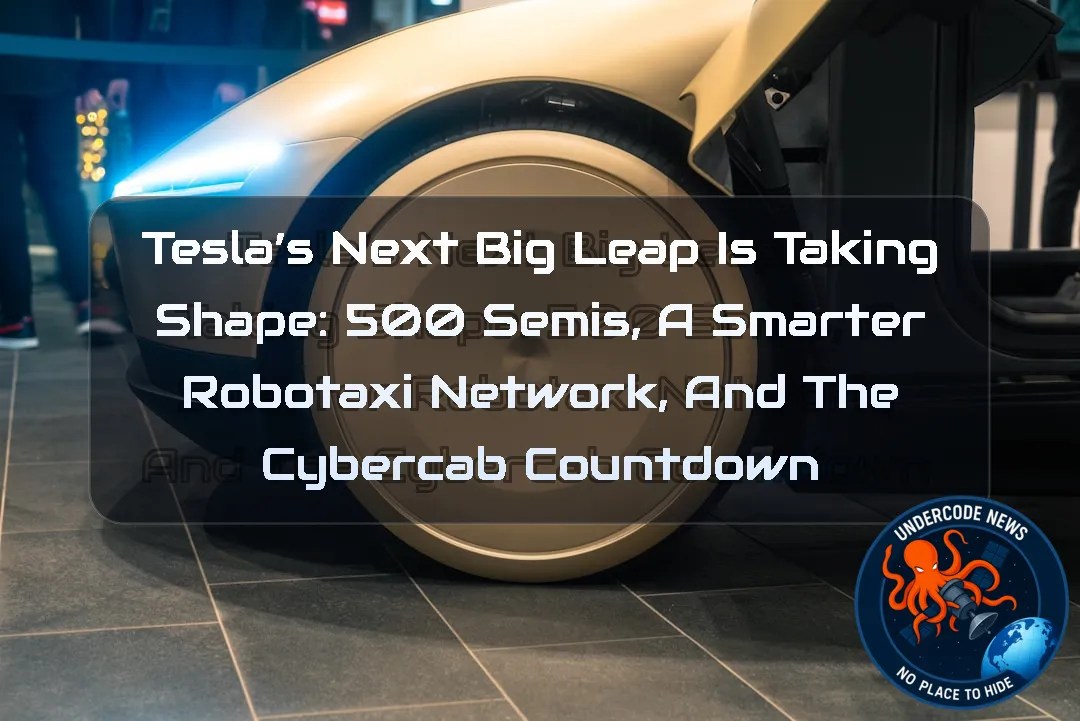 Introduction: Tesla Is Entering a More Operational Phase
Tesla is approaching a potentially important transition point in its history. The company is no longer being judged only on futuristic promises, prototypes, or ambitious demonstrations. Increasingly, the question is whether Tesla can turn those ideas into large-scale, repeatable operations. Three developments now illustrate that shift particularly well: Einride’s massive 500-truck Tesla Semi commitment, the approaching Cybercab launch, and the rapid evolution of Tesla’s Robotaxi network.
The developments may appear unrelated at first. One involves heavy-duty freight, another autonomous passenger transportation, and the third involves a service that connects vehicles, software, artificial intelligence, and customers. But together they point toward a broader Tesla strategy: build the hardware, connect it to software, and then use intelligent fleet management to extract more value from every vehicle.
That distinction matters. Tesla’s future increasingly depends not simply on selling vehicles, but on making those vehicles productive assets inside larger transportation networks.
The Tesla Semi story is particularly significant because Einride has now provided a much clearer timeline for its enormous order. The Swedish transport technology company plans to deploy approximately 75 Tesla Semis before the end of 2026, with the remaining vehicles expected to follow through 2027. That gives Tesla a concrete opportunity to demonstrate whether its dedicated Semi production operation can move from early ramp-up into meaningful volume.
At the same time, Tesla is preparing for the September 3 Cybercab milestone in Austin, where its purpose-built two-seat autonomous vehicle is expected to become part of the company’s Robotaxi strategy.
Meanwhile, Tesla says its existing Robotaxi network is already becoming larger and more intelligent. The company recently announced operating hours of 6 a.m. to 10 p.m., seven days a week, while claiming that improvements to vehicle distribution and routing are reducing customer wait times.
Taken together, these developments suggest that Tesla is moving into a phase where execution may matter more than announcements.
Einride’s 500 Tesla Semi Commitment Changes the Conversation
Einride’s agreement to acquire 500 Tesla Semis represents the largest disclosed Semi order discussed in the supplied article. The company originally announced that the trucks would be deployed over a 24-month period beginning in September, but CEO Roozbeh Charli has now provided a more specific schedule.
Charli said Einride expects approximately 75 Tesla Semis to be deployed before the end of 2026, while the remaining 425 are expected to be deployed by the end of 2027.
That is an important distinction because the original announcement left the delivery schedule relatively broad. The newer timeline gives observers a much better way to judge Tesla’s production ramp.
If Tesla can deliver the first 75 vehicles as expected and then accelerate production throughout 2027, the company will have demonstrated something that has historically been difficult for emerging vehicle programs: moving from validation into scalable manufacturing.
The First 75 Trucks Could Be the Most Important
The first portion of the Einride order is arguably more important than the headline number of 500.
A company can announce hundreds or thousands of future vehicles, but production capacity is ultimately measured by what actually leaves the factory.
The target of approximately 75 Semis in 2026 gives Tesla a near-term operational test. Those trucks will provide an early indication of how efficiently Tesla can manufacture, validate, deliver, service, and support the Semi outside the limited testing environments of previous years.
The remaining 425 vehicles will then become an even larger test of manufacturing consistency.
This is why the Einride order should not be viewed simply as another commercial contract. It can become a real-world measurement of Tesla’s ability to industrialize the Semi.
Einride Adds Software to the Hardware Equation
Einride is not simply purchasing trucks and putting them on the road.
The company plans to integrate the Tesla Semis into its Saga AI fleet-management platform, which is designed to help customers manage electric transportation without having to carry the full financial and operational burden of owning and managing the vehicles themselves. TechCrunch reported that Einride intends to add the Semis to its fleet in phases beginning in September.
That creates an interesting combination.
Tesla supplies the physical vehicle and much of the underlying vehicle technology, while Einride provides a software and fleet-management layer capable of coordinating transportation operations.
For Tesla, that means the Semi becomes more than a truck sale. It becomes part of a larger technology ecosystem.
Amazon Adds Another Layer to the Story
The Einride relationship is also connected to Amazon.
According to the supplied article, Einride has been working with Amazon through its Saga AI platform, giving the Semi deployment another potential connection to one of the world’s largest logistics companies.
That matters because commercial trucking is ultimately a utilization business.
A truck sitting idle is an expensive asset. A truck consistently moving freight on optimized routes is considerably more valuable.
If software can improve vehicle utilization, charging schedules, route planning, maintenance planning, and demand forecasting, then the economics of electric freight transportation can improve beyond the basic fuel savings associated with replacing diesel.
Tesla’s Dedicated Semi Factory Faces Its Real Test
Tesla’s Semi production is centered at its dedicated facility in Sparks, Nevada.
For years, the Semi remained one of Tesla’s most delayed programs. The vehicle was first unveiled in 2017, while initial customer deliveries began years later. The new production ramp therefore represents more than another factory milestone.
It represents Tesla finally attempting to industrialize a vehicle that has been under development for nearly a decade.
Tesla has also spent years gathering operational data from major customers, including PepsiCo and Frito-Lay. That experience is valuable because heavy-duty trucks face different challenges from passenger cars.
A commercial truck has to operate under demanding loads, long driving cycles, strict schedules, and expensive downtime considerations.
The real test is therefore not whether the Semi can perform impressively on a demonstration route.
The real test is whether it can perform consistently every day.
September 24 Could Become a Defining Semi Moment
The supplied article states that Tesla plans to officially launch the Semi on September 24, following the production ramp.
That event could be important because Tesla will have an opportunity to show the vehicle in a completely different context.
Instead of asking whether the Semi is coming, investors and customers will increasingly be asking how many Tesla can build, how quickly deliveries can scale, what the operating economics look like, and how reliable the trucks are under commercial workloads.
That is the point at which the Semi story moves from concept to industrial execution.
Drivers Are Becoming an Important Part of the Evidence
Another encouraging element is the feedback from drivers.
The supplied article notes that drivers have reportedly been positive about the Semi’s performance and its safety and productivity features.
Driver feedback is particularly important in commercial transportation because professional drivers spend vastly more time inside their vehicles than most private car owners.
Features that reduce fatigue, simplify operation, improve visibility, or make long routes easier can have meaningful economic consequences for fleet operators.
The strongest validation for the Semi, however, will come when positive driver feedback is combined with measurable fleet-level performance.
Cybercab Introduces a Completely Different Challenge
While the Semi is about industrial scale, the Cybercab represents a challenge of trust.
Tesla’s purpose-built robotaxi is designed around autonomous transportation, meaning the passenger is not simply buying a ride in a vehicle.
The passenger is trusting an automated system to identify the correct vehicle, navigate the route, handle traffic, and complete the trip safely.
That creates problems that traditional automakers rarely have to solve.
One of them is remarkably simple: how does a passenger know which car is theirs?
Tesla’s RGB Light Bar Has a Practical Purpose
Tesla appears to have an unusually simple answer.
The
The idea is straightforward: if several autonomous vehicles arrive at approximately the same location, passengers need an unmistakable way to identify the correct one.
Recent reporting has also highlighted footage showing the Cybercab’s RGB lighting capability.
The Simple Idea Reveals a Bigger Design Problem
The light-bar concept is clever, but it also exposes one of the deeper challenges of autonomous transportation.
A robotaxi has to communicate with people outside the vehicle.
A human driver can make eye contact, speak to passengers, gesture, or answer questions. An autonomous vehicle has to replace much of that informal communication with interfaces, lights, sounds, applications, and predictable behavior.
Tesla therefore needs the Cybercab to communicate clearly with passengers who may be unfamiliar with autonomous vehicles.
The RGB light bar is only one part of that larger human-machine interface.
Accessibility Cannot Depend Only on Color
There is also an obvious accessibility concern.
A color-based identification system may not work equally well for passengers who are color blind or have limited vision. The supplied article correctly points out that Tesla will likely need additional identification mechanisms.
Those mechanisms could include the
For an autonomous service intended to be broadly accessible, redundancy is essential.
The correct vehicle should be identifiable without requiring the passenger to rely on a single sensory signal.
Tesla Is Approaching a Major Cybercab Milestone
The supplied article states that public Cybercab rides are expected to begin in Austin on September 3, following employee rides and testing.
The September event is therefore more than a product presentation.
It represents an opportunity for Tesla to demonstrate how its purpose-built autonomous vehicle fits into an already operating Robotaxi network.
That could be more important than the Cybercab itself.
Tesla is effectively testing whether a transportation ecosystem can evolve from ordinary vehicles equipped with autonomous software toward vehicles specifically designed around autonomy.
Robotaxi Is Becoming a Fleet Optimization Problem
Tesla’s latest Robotaxi update may be less visually exciting than Cybercab, but it could be more important from a business perspective.
Tesla says its fleet is larger and that improvements in vehicle distribution and routing are helping reduce wait times.
That means the company is increasingly focused on an operational problem: where should each vehicle be at every moment?
This is fundamentally an optimization challenge.
If demand is concentrated in one neighborhood at 6:30 p.m., sending idle vehicles away from that area wastes time and energy. If the system can predict demand and position vehicles in advance, passengers can potentially receive faster service without Tesla needing to dramatically increase fleet size.
AI Can Improve the Economics Without Changing the Car
This is where the software becomes particularly interesting.
A vehicle does not necessarily need new hardware to become more economically useful.
If
That creates a powerful scaling mechanism.
Tesla can improve utilization without necessarily adding one vehicle for every incremental increase in demand.
Robotaxi Hours Are Expanding, but the Details Matter
Tesla says Robotaxi now operates from 6 a.m. to 10 p.m., seven days a week.
The company also says the unsupervised fleet is “a lot bigger,” although it has not provided a precise number in the cited announcement.
This is where careful analysis matters.
Longer hours and a larger fleet are positive operational signals, but they do not automatically prove that the service is profitable or ready for unrestricted expansion.
Fleet size, utilization, maintenance costs, insurance, charging, cleaning, customer support, safety performance, and regulatory requirements all affect the economics.
The more important metric will ultimately be how much revenue Tesla can generate per vehicle relative to the total cost of operating that vehicle.
Tesla Is Quietly Building the Infrastructure for Scale
The combination of longer operating hours, a larger unsupervised fleet, and smarter routing suggests Tesla is trying to solve the boring parts of autonomous transportation.
That is actually encouraging.
The technology demonstration attracts attention, but dispatching, charging, cleaning, maintenance, fleet positioning, customer identification, and vehicle utilization determine whether a robotaxi business can work at scale.
The company is increasingly dealing with those practical problems.
The Cybercab Could Accelerate the Transition
Cybercab is especially interesting because its design eliminates traditional driver controls.
The supplied article describes it as a two-seat robotaxi without a steering wheel or pedals.
That makes the vehicle fundamentally different from a conventional Tesla being used as a robotaxi.
If Tesla can operate Cybercab successfully, it could eventually create a purpose-built platform optimized for autonomous transportation rather than a passenger vehicle adapted for autonomy.
That could potentially reduce unnecessary hardware and increase efficiency.
Tesla’s Decision to End Its Wrap Service Also Says Something
Not every Tesla development is about expansion.
The company has also apparently ended its first-party vehicle wrap service.
The service had been limited geographically and was offered through selected locations. Reporting indicates Tesla has now removed the wrap offering from its online shop, although Tesla has not publicly explained the reason for the change.
That is an important distinction because the supplied article describes the program as effectively finished, while current Tesla support material has still displayed information about Tesla Vinyl Wraps.
Therefore, the safest interpretation is that Tesla has removed or paused the retail offering rather than assuming that the program’s permanent cancellation has been officially confirmed.
The Wrap Business Was Always Difficult to Scale
Even if
Wrapping vehicles is already a mature industry with thousands of specialized installers, detailing businesses, mobile services, and customization shops.
Tesla would have had to build a large installation network to make its service widely available.
Instead, the service remained geographically limited.
That made it difficult to compete with local businesses that were already established in their communities.
Removing Low-Priority Services Can Be Strategic
There is another way to view the decision.
A company does not need to provide every possible service simply because customers might want it.
If Tesla believes its internal resources are better used for vehicle production, charging infrastructure, autonomy, software, energy, and service capacity, removing a niche customization program could be a rational decision.
The wrap program may have generated revenue, but its strategic importance was probably much lower than Tesla’s larger industrial priorities.
Tesla’s Product Strategy Is Becoming More Selective
The supplied article also notes that Tesla removed several other products from its online shop.
That fits a broader pattern of Tesla periodically adjusting its catalog, pricing, accessories, and services.
Such changes should not automatically be interpreted as signs of a crisis.
Companies constantly eliminate low-volume products, simplify inventories, alter pricing, and prioritize products that generate stronger demand.
The more important question is whether these changes are isolated or part of a larger strategic restructuring.
The Bigger Story Is the Convergence of Hardware and Software
Looking across all four developments, a pattern emerges.
Tesla is simultaneously increasing production of a commercial vehicle, preparing a purpose-built autonomous vehicle, expanding an existing autonomous fleet, and improving the software responsible for moving that fleet efficiently.
That is not four unrelated stories.
It is a picture of a company attempting to become a transportation technology platform.
The Semi represents freight.
Cybercab represents autonomous passenger transportation.
Robotaxi software represents fleet intelligence.
And
Tesla’s Real Competitive Advantage May Be Integration
Tesla’s biggest advantage may not come from having the best individual component.
Instead, it may come from integrating hardware, software, AI, charging, fleet management, and customer applications into one ecosystem.
The Semi becomes more valuable when connected to intelligent logistics.
The Cybercab becomes more useful when connected to Robotaxi dispatch.
Robotaxi becomes more economically attractive when routing improves.
And all of it becomes more scalable when Tesla can manufacture the underlying vehicles in volume.
Integration therefore becomes the central theme.
What Undercode Say:
The Real Test Is No Longer the Prototype
Tesla has spent years demonstrating ambitious technology. The next stage is considerably less glamorous: proving that the technology can operate economically and reliably at scale.
The Semi Has Reached Its Execution Moment
The 500-truck Einride commitment gives Tesla a rare opportunity to demonstrate commercial-scale production rather than merely showcase a prototype.
Seventy-Five Trucks Are the First Benchmark
The approximately 75 Semis targeted for deployment before the end of 2026 could become the first meaningful checkpoint for Tesla’s production ramp.
The Remaining 425 Trucks Are the Bigger Test
Delivering the rest of the order through 2027 would demonstrate whether Tesla can maintain production momentum rather than simply complete an initial batch.
Einride Provides a Useful Real-World Customer
Einride is not simply buying trucks for display purposes. The vehicles are intended to become working assets inside a commercial freight network.
Saga AI Makes the Relationship More Interesting
The combination of Tesla’s hardware with Einride’s fleet-management software demonstrates how electric transportation increasingly depends on software optimization.
Commercial Trucks Need Utilization
The
Testing Has Already Provided Valuable Data
Tesla’s long-running work with customers such as PepsiCo and Frito-Lay gives the company experience that should help as production expands.
Production Scale Is the Critical Question
The September Semi milestone will matter less for its presentation value than for what it reveals about Tesla’s ability to manufacture the truck consistently.
Cybercab Changes the Equation
The Cybercab is not simply another Tesla model. It is being designed around the assumption that autonomous operation is the primary purpose of the vehicle.
Autonomous Vehicles Need Communication
Passengers must understand when a vehicle has arrived, whether it is theirs, and how to interact with it.
The RGB Light Bar Is a Smart Interface
Using a changing light bar gives the robotaxi a simple visual identity that can complement information displayed in the app.
Color Alone Is Not Enough
Accessibility means Tesla will need additional identification methods for passengers who cannot reliably distinguish colors.
Human-Machine Interaction Will Become Crucial
Autonomous transportation is not just about driving. It is also about communication between machines and people.
Robotaxi Is Becoming a Logistics System
The latest software improvements suggest Tesla is increasingly focused on dispatch efficiency rather than only autonomous driving capability.
Routing Can Create Hidden Value
Better routing can potentially reduce empty vehicle miles and position cars closer to expected demand.
Demand Prediction Could Matter More Than Raw Fleet Size
A smaller fleet that is positioned intelligently may sometimes provide better service than a larger fleet that is poorly distributed.
Utilization Is the Key Economic Variable
The more frequently each robotaxi generates productive rides, the more attractive the underlying economics can become.
Longer Hours Increase the Opportunity
Operating from morning through evening gives Tesla more opportunities to use its fleet productively.
But Longer Hours Do Not Equal Profitability
Revenue must ultimately be measured against charging, maintenance, insurance, cleaning, support, depreciation, and other operational expenses.
The Unsupervised Fleet Is the Critical Metric
Tesla’s claim that the fleet is “a lot bigger” is encouraging, but an exact number would provide much stronger evidence of progress.
The September 3 Event Is More Than a Launch
The Cybercab event could provide investors and customers with important clues about Tesla’s intended path toward larger-scale autonomous transportation.
Tesla Is Expanding Incrementally
The
Incremental Scaling Reduces Risk
Gradually expanding geography, operating hours, fleet size, and autonomy can give Tesla more opportunities to identify problems before attempting massive deployment.
The Wrap Service Is a Different Kind of Signal
Removing a niche service demonstrates that Tesla is willing to abandon initiatives that do not appear strategically important.
Focus Can Be Valuable
Tesla cannot simultaneously optimize every business line. Concentrating resources on manufacturing, autonomy, energy, and software could produce better long-term results.
The Tesla Shop Is Not the Core Business
Changes to accessories and customization products should not be confused with changes to Tesla’s fundamental vehicle strategy.
Tesla Is Becoming More Software-Centric
The Robotaxi update illustrates how software can improve the performance of existing hardware without requiring a completely new vehicle.
AI Is Moving Beyond Driving
The most interesting part of
Fleet Intelligence Could Become a Competitive Weapon
As autonomous fleets grow, the companies that manage vehicles efficiently may have an advantage even when the underlying autonomous-driving technology becomes increasingly commoditized.
The Semi and Robotaxi Share a Common Theme
Both require Tesla to maximize the economic value of a vehicle after it leaves the factory.
Freight and Passenger Networks Are Converging
Electric trucks and autonomous taxis are different markets, but both increasingly depend on software, connectivity, charging, scheduling, and fleet optimization.
Tesla’s Next Challenge Is Reliability
The company has demonstrated that it can create attention-grabbing vehicles. The harder challenge is delivering consistent performance over millions of operational miles.
Scale Will Expose Weaknesses
As fleets become larger, small problems that were manageable in testing can become expensive operational issues.
Service Infrastructure Will Matter More
The larger
The Next 16 Months Could Be Crucial
The period from the first Einride deliveries through the end of 2027 could provide some of the clearest evidence yet of whether Tesla can transform its Semi ambitions into a genuine commercial business.
The Next Few Weeks Could Be Equally Important
The Cybercab launch and Robotaxi expansion will provide an early look at whether Tesla’s autonomous transportation strategy is ready to move beyond controlled demonstrations.
Tesla Is Entering an Execution Era
The most important Tesla stories may increasingly come from production numbers, fleet utilization, operating costs, delivery schedules, and real-world performance rather than futuristic promises.
The Bigger Bet Is the Ecosystem
If Tesla can connect manufacturing, autonomous driving, AI routing, charging, fleet operations, and customer applications successfully, the company could create a transportation ecosystem that is significantly larger than the traditional automobile business.
Deep Analysis
Command: Watch the Semi Delivery Curve
The first analytical command is simple: watch actual deliveries rather than order headlines. The 500-truck commitment is significant, but the approximately 75-unit 2026 target will provide the first tangible evidence of Tesla’s ability to execute.
Command: Measure Production Consistency
The next step is to determine whether Tesla can maintain a predictable production cadence. One successful batch is not enough; sustained output is what separates a pilot program from an industrial product.
Command: Track Fleet Utilization
For Einride, the critical question will be how effectively the trucks are used. High utilization would strengthen the economic argument for electric heavy-duty transportation.
Command: Compare Real-World Performance
The Semi should ultimately be evaluated against diesel alternatives and competing electric trucks using measurable metrics such as energy consumption, uptime, payload performance, charging time, and operating cost.
Command: Watch Charging Infrastructure
A large electric-truck fleet requires appropriate charging capacity. Tesla’s production success will mean little if customers cannot efficiently recharge hundreds of trucks across their operating corridors.
Command: Follow Maintenance Data
Heavy-duty fleets are extremely sensitive to downtime. Maintenance frequency and repair duration could become as important as battery efficiency.
Command: Watch Einride’s Software Layer
Saga AI could become an important part of the story because efficient software may determine how much value customers receive from the physical fleet.
Command: Monitor Amazon-Linked Deployments
If Tesla Semis begin appearing in logistics operations connected to major customers such as Amazon, that would create another layer of commercial validation.
Command: Watch the September 24 Semi Event
Tesla’s official Semi event should be examined for concrete production figures, delivery commitments, manufacturing capacity, and operational specifications rather than presentation theatrics alone.
Command: Measure Cybercab Availability
The September 3 Cybercab event should be followed by evidence of actual customer availability. Demonstrations are useful, but recurring passenger rides are much more meaningful.
Command: Examine Accessibility
Tesla’s passenger-identification system should be evaluated from the perspective of users with visual impairments. A truly scalable robotaxi service needs more than a color-coded interface.
Command: Watch Vehicle Identification
The RGB light bar could become one part of a broader system involving the app, audio, text, and other signals. The quality of that interface will directly affect passenger confidence.
Command: Track Robotaxi Wait Times
Tesla’s claim of smarter routing should eventually be reflected in measurable customer wait times. If wait times decline while demand increases, the software upgrade will have demonstrated real value.
Command: Track Fleet Growth
The phrase “a lot bigger” is intentionally vague. Investors and analysts should look for actual fleet numbers as Tesla expands.
Command: Measure Utilization Per Vehicle
Fleet growth alone does not prove success. The more useful metric is how many productive rides each vehicle completes over a given period.
Command: Watch Operating Hours Carefully
The 6 a.m. to 10 p.m. schedule should be viewed alongside market-specific operating rules rather than assumed to represent identical conditions everywhere.
Command: Separate Autonomous Markets
Tesla’s autonomous operations are not necessarily identical across every geography. Regulatory status, safety-driver requirements, and deployment permissions can differ by market.
Command: Watch Regulatory Expansion
Autonomous transportation is constrained not only by technology but also by regulatory approval. Expansion into additional markets could therefore become a major growth catalyst.
Command: Track Safety Performance
As Tesla expands Robotaxi operations, safety performance will become increasingly important. A larger fleet means more autonomous miles and therefore a larger statistical sample.
Command: Analyze Economics
The most important long-term question is whether Robotaxi revenue can exceed the complete cost of operating autonomous vehicles.
Command: Watch Depreciation
Robotaxis are commercial assets. High utilization can increase revenue, but it can also accelerate wear and depreciation. Tesla must balance both sides of the equation.
Command: Monitor Energy Costs
Electricity costs and charging efficiency will influence both Semi and Robotaxi economics. Tesla’s advantage could become stronger in markets with favorable electricity pricing.
Command: Follow Software Improvements
Tesla’s routing upgrade demonstrates that software can potentially increase fleet productivity without increasing vehicle count. That creates a powerful scaling opportunity.
Command: Look for Network Effects
A larger fleet generates more operational data. More data can improve forecasting and optimization. Better optimization can increase utilization. Higher utilization can justify additional fleet investment.
Command: Watch the Feedback Loop
This creates a potential feedback loop in which scale improves the economics of additional scale. Whether Tesla can actually achieve this remains one of the central questions.
Command: Compare Tesla With Waymo and Others
Tesla’s Robotaxi strategy should also be evaluated against competitors such as Waymo and other autonomous-driving companies. Fleet size, operating geography, safety, customer experience, and economics will matter more than brand recognition.
Command: Watch Purpose-Built Vehicles
If Cybercab proves successful, Tesla could increasingly move toward purpose-built autonomous vehicles rather than relying primarily on modified passenger cars.
Command: Evaluate Manufacturing Economics
Purpose-built vehicles could potentially simplify manufacturing by eliminating components that autonomous transportation does not require, although the economic benefits remain to be demonstrated.
Command: Track Tesla’s Strategic Focus
The removal of the wrap program is minor compared with Semi and Robotaxi, but it illustrates Tesla’s ability to discontinue peripheral offerings and redirect attention toward higher-priority businesses.
Command: Separate Signal From Noise
Not every Tesla product change is strategically significant. The critical developments are the ones that affect production capacity, autonomy, fleet utilization, energy consumption, or recurring revenue.
Command: Watch 2027 as the Proof Year
The strongest validation of the current strategy may arrive in 2027, when Tesla will need to demonstrate sustained Semi production while simultaneously scaling autonomous transportation.
Command: Judge Results, Not Promises
Ultimately,
Command: Look Beyond the Car
The most important development may be that Tesla is increasingly trying to monetize vehicles as connected assets rather than one-time products.
Command: Follow the Ecosystem
If Semi, Robotaxi, Cybercab, AI routing, charging, and fleet software begin reinforcing one another, Tesla’s competitive position could become substantially different from that of a conventional automaker.
Command: Prepare for Volatility
Tesla’s transition from product development to operational scaling will probably not be smooth. Production bottlenecks, regulatory obstacles, software issues, customer complaints, or supply constraints could all disrupt the roadmap.
Command: Focus on Execution
The central conclusion is straightforward: Tesla has reached the point where execution matters more than excitement. The company has spent years building the technology and telling the story. The next stage is proving that the story works at scale.
✅ The 500 Tesla Semi Einride order is supported: Einride announced plans to add 500 Tesla Semis to its fleet, with initial deployments expected to begin in September 2026.
✅ The 75-truck 2026 target is supported: Einride CEO Roozbeh Charli said approximately 75 Tesla Semis are expected to be deployed before the end of 2026, with the remainder planned for 2027.
❌ The permanent cancellation of Tesla’s wrap service is not fully confirmed: Recent reporting says Tesla removed the service from its shop, but Tesla has not publicly explained whether the change is permanent, while Tesla’s support page has still displayed information about Vinyl Wraps.
Prediction
(+1) Semi Production Could Become Tesla’s Next Major Commercial Growth Story
If Tesla achieves the planned 2026 deliveries and successfully scales the remaining Einride order through 2027, the Semi could transition from a long-delayed product into a meaningful commercial business.
(+1) Cybercab Could Accelerate Robotaxi Adoption
A successful September 3 launch followed by consistent public availability could significantly strengthen Tesla’s argument that purpose-built autonomous vehicles are becoming commercially viable.
(+1) Smarter Fleet Routing Could Improve Robotaxi Economics
If Tesla’s upgraded distribution and routing system genuinely reduces wait times while increasing vehicle utilization, the company could gain economic benefits without needing proportional fleet growth.
(+1) Software Could Become Tesla’s Most Important Scaling Tool
The ability to improve the productivity of existing vehicles through AI-powered fleet management could become one of Tesla’s most powerful advantages as its autonomous network expands.
(-1) Production Bottlenecks Could Slow the Semi Ramp
The biggest risk to the Semi story is execution. If Tesla cannot manufacture and deliver vehicles at the promised pace, the 500-unit order will remain more impressive on paper than in practice.
(-1) Robotaxi Growth Could Face Regulatory and Operational Barriers
Autonomous transportation remains highly dependent on market-specific regulations and safety requirements. A technology that works in one operating environment may not immediately translate into unrestricted deployment elsewhere.
(-1) Fleet Expansion Could Increase Costs Faster Than Revenue
A larger robotaxi fleet is not automatically more profitable. Maintenance, charging, insurance, cleaning, depreciation, and customer support could grow rapidly if utilization does not keep pace.
The Bigger Prediction: 2027 Will Matter More Than the Headlines of 2026
The developments happening now are important because they establish the foundation for a much larger test. By 2027, Tesla could be judged less on whether the Semi exists or whether Cybercab can drive autonomously and more on whether thousands of vehicles can operate as dependable, productive assets.
That is the real transformation underway.
Tesla’s next chapter may not be defined by one spectacular vehicle launch. It may be defined by whether the company can turn vehicles into interconnected transportation infrastructure—electric trucks managed through intelligent logistics software, autonomous taxis dispatched by predictive systems, and purpose-built robotaxis operating for long hours with minimal human intervention.
If Tesla succeeds, the company will have moved another step away from being simply an automaker.
If it fails, the same ambitious ecosystem could expose exactly how difficult it is to scale autonomous transportation and commercial electric trucking simultaneously.
For now, the evidence points to a company moving aggressively from experimentation toward execution. The Semi is entering its production test, Robotaxi is becoming a larger operational network, and Cybercab is approaching its first major public milestone.
The next question is no longer whether Tesla can build the future.
It is whether Tesla can operate it at scale.
▶️ Related Video (74% Match):
🕵️📝Let’s dive deep and fact‑check.
🎓 Live Courses & Certifications:
Join Undercode Academy for Verified Certifications
🚀 Request a Custom Project:
Secure, high-velocity infrastructure and disruptive technological engineering. Contact our engineering team for high-tier development and proprietary systems:
[email protected]
💎 Smart Architecture | 🛡️ Secure by Design | ⭐ Trusted by Thousands
References:
Reported By: www.teslarati.com
Extra Source Hub (Possible Sources for article):
https://www.instagram.com
Wikipedia
OpenAi & Undercode AI
Image Source:
Unsplash
Undercode AI DI v2
🔐JOIN OUR CYBER WORLD [ CVE News • HackMonitor • UndercodeNews ]
📢 Follow UndercodeNews & Stay Tuned:
𝕏 formerly Twitter 🐦 | @ Threads | 🔗 Linkedin | 🦋BlueSky | 🐘Mastodon | 📺Youtube


