
Listen to this Post
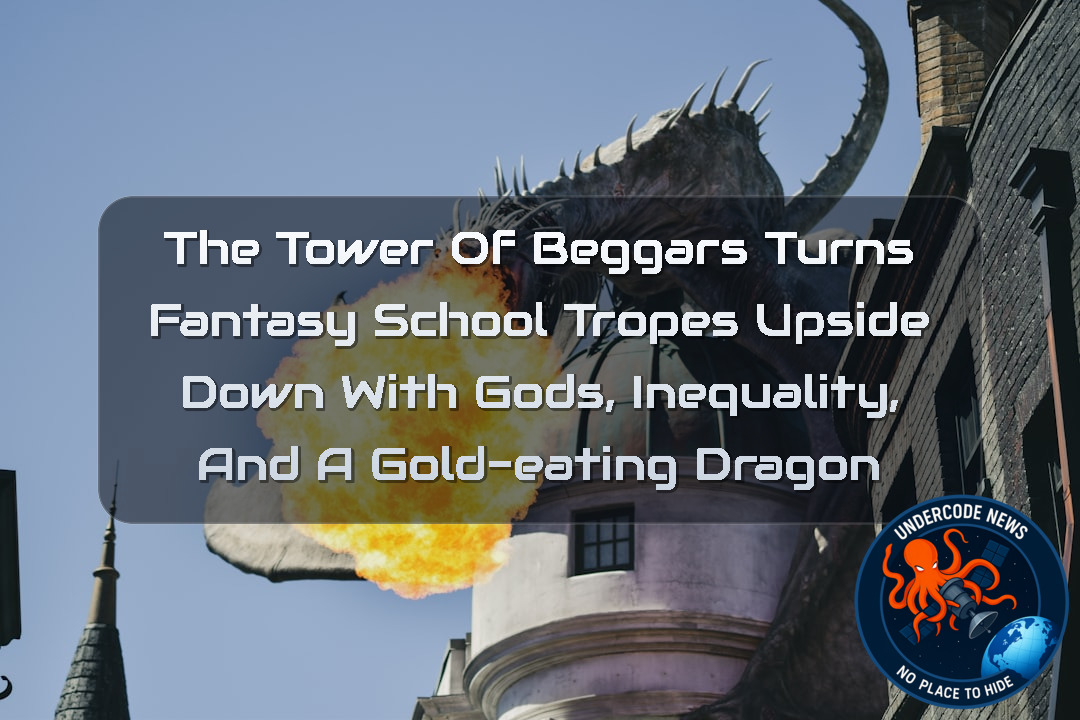 A Fantasy Story That Looks Familiar, Then Takes a Completely Different Path
Fantasy readers often know what to expect when a story introduces a young protagonist, a mysterious heritage, a magical institution, and a world filled with ancient powers. The Tower of Beggars: Stormfell Academy Book One initially appears to fit comfortably into that tradition. But Torsten Weitze’s story quickly reveals that it is interested in something much darker and more complicated than simply sending a teenager to a magical school.
Instead of building its story around an ordinary fantasy hero who discovers unlimited magical potential, the novel places Niri at the bottom of society. She is poor, vulnerable, frightened, politically inconvenient, and distrusted because of her mixed heritage. Her journey into Stormfell Academy is therefore not simply an adventure into a magical world. It is a struggle for survival in a society where wealth, strength, ancestry, and divine loyalty determine a person’s worth.
That difference gives The Tower of Beggars its identity. There are gods and monsters, magical powers and mysterious coins, ancient races and fantastical creatures, but underneath all of that is a story about inequality.
And surprisingly, one of the most memorable characters is a tiny dragon with an obsession with eating gold.
Niri Is Born Into a World That Already Hates Her
At the center of the story is Niri, a 16-year-old girl whose family background makes her life considerably harder.
Her father was an Aeldae, while her mother was human. That mixed heritage places Niri in an extremely dangerous position throughout the Splinterlands, particularly among followers of the Crimson God.
The hostility toward the Aeldae is connected to history. Before the fall of their god, the Aeldae enslaved humans. That history has left behind resentment and prejudice that continues to shape the world Niri inhabits.
Niri, however, did not choose any of this.
She inherited the consequences of history without having any responsibility for it.
A Girl Without a Safe Place to Call Home
Niri has already lost both of her parents by the time the story begins. Rather than growing up in comfort or receiving protection from a powerful family, she works as a coal girl for her mysterious uncle, Vasdram.
Even that relationship is far from reassuring.
Vasdram appears to have a serious gambling problem, adding another layer of instability to Niri’s already difficult existence. Her life is therefore defined by work, poverty, uncertainty, and the constant awareness that she does not belong comfortably anywhere.
This is an important departure from the traditional fantasy-school protagonist.
Niri does not begin her journey with privilege.
She begins it with almost nothing.
The Beggar Coin Changes Everything
The opening portion of the novel takes its time establishing Niri’s difficult circumstances and introducing the mythology surrounding the world.
Malkar, one of the central divine figures, plays an important role in defining the rules and values of the society. The influence of religion is not merely background decoration. It affects how people behave, whom they trust, and what kind of strength the world respects.
The story becomes much more active when Niri is forced to leave her home and use Vasdram’s mysterious Beggar Coin.
That moment effectively pushes her out of the life she knows and into the much larger conflict surrounding Stormfell.
Stormfell Academy Is Not Quite the Magical School Readers Expect
The presence of an academy naturally invites comparisons with famous fantasy-school stories.
But Stormfell Academy takes a very different approach.
Niri does eventually gain admission, yet the Tower of Beggars is not a comfortable institution dedicated primarily to educating gifted young people.
Her Beggar Coin gives her access to only a limited selection of classes. Those classes are often connected to preparing poorer citizens for military service rather than helping them achieve personal greatness.
The distinction is crucial.
The wealthy and privileged can look at education as an opportunity.
The poor are often treated as resources.
The Tower Is Really About Survival
The most interesting aspect of Stormfell is the way education exists alongside desperation.
Outside the academy is a monster-filled crater that offers opportunities for those brave or desperate enough to enter it. Many residents of the Tower are therefore less interested in studying than in finding enough wealth to survive.
This creates a fascinating contradiction.
Niri has technically gained access to an academy, but simply being admitted does not make her equal.
She is still poor.
She is still discriminated against.
She is still vulnerable.
And she still has to find ways to survive in an environment where everyone seems to be competing for something.
Niri’s Greatest Enemy Is Sometimes Fear
Niri is an appealing protagonist because she does not fit the traditional image of an unstoppable fantasy hero.
She is intelligent.
She is courageous when circumstances demand it.
She frequently chooses compassion even when selfishness would be easier.
But she is also afraid.
Very afraid.
Her tendency to freeze under pressure is described through the concept she calls “Sinking.” Rather than simply overcoming fear whenever the plot requires it, Niri has to deal with the very real possibility that fear will stop her from acting.
That weakness makes her feel considerably more human.
A Hero Who
Niri’s personality also creates an important contrast with the society around her.
The world she inhabits rewards strength and selfishness. Survival frequently comes at someone else’s expense.
Niri, meanwhile, repeatedly tries to preserve her compassion.
That makes her kindness more than a personality trait.
It becomes an act of resistance.
In a society that teaches people to look after themselves first, choosing to help someone else can be dangerous.
For Niri, generosity is not always convenient. Sometimes it could get her killed.
The Pocket Dragon Steals the Story
Then comes Grabbasnack.
Officially known by the considerably more complicated name Gh’rab-ehl-sh’naak, the creature is a tiny dragon with an extremely unusual diet.
He eats gold.
And apparently, he has absolutely no interest in keeping his opinions to himself.
Niri encounters Grabbasnack after he has been held captive, eventually freeing him and gaining something she desperately needs: a loyal companion.
The relationship between them becomes one of the novel’s strongest elements.
Why Grabbasnack Works So Well
Grabbasnack could easily have been nothing more than a cute fantasy mascot.
Instead, he becomes an important part of the story’s personality.
His constant hunger for gold is especially funny because Niri spends much of her journey surrounded by poverty and deprivation.
There is something inherently amusing about a creature whose greatest concern is finding precious metal to eat while his human companion is struggling simply to survive.
His personality also keeps the story from becoming too heavy.
Whenever the world becomes dominated by gods, prejudice, poverty, violence, or political conflict, Grabbasnack can inject a little chaos into the situation.
The Dragon Also Represents Something Bigger
There is more to Grabbasnack than comic relief.
His relationship with gold creates an interesting contrast with the Tower itself.
The people around Niri are constantly chasing wealth because wealth means security, status, freedom, and survival.
Grabbasnack also wants gold.
But he wants it because he literally eats it.
That difference makes his obsession strangely funny and strangely appropriate for the setting.
He is a walking reminder that the fantasy world’s obsession with wealth can be viewed from another perspective.
The Real Conflict Is Inequality
The strongest part of The Tower of Beggars may not be its magic at all.
It is the social structure surrounding that magic.
Niri can enter Stormfell Academy, but her entrance does not erase the circumstances that made her a beggar.
The same prejudices waiting outside the academy are still there inside it.
In some ways, they are worse.
The
Niri therefore has to fight two battles simultaneously.
She has to survive physically.
And she has to survive without becoming the kind of person her society expects her to become.
The Crimson God and the Philosophy of Strength
The influence of the Crimson God gives the story another layer.
This world does not simply contain religious beliefs in the background. Divine ideology appears to influence the social order itself.
Strength is elevated.
Weakness is punished.
Power becomes a measure of value.
For someone like Niri, that philosophy is particularly dangerous.
She is not physically dominant, and she does not have the social advantages that could compensate for that weakness.
Her greatest strengths are instead intelligence, empathy, courage, and loyalty.
The
A Slow Opening That Eventually Pays Off
One potential weakness is the pacing.
The beginning can feel slow because so much time is spent establishing Niri’s life as a coal girl and introducing the broader mythology.
Readers expecting immediate magical action may need patience.
However, the slower opening serves a purpose.
It establishes exactly what Niri stands to lose.
Without understanding her life before Stormfell, the academy would simply be another fantasy location.
Because we see how difficult her existence is beforehand, entering the Tower feels like a genuine transformation.
When the Adventure Finally Accelerates
Once Niri is forced to leave home and use the Beggar Coin, the narrative gains momentum.
The introduction of Grabbasnack further changes the atmosphere.
The story becomes more adventurous, more unpredictable, and considerably more entertaining.
The combination of Niri’s seriousness and Grabbasnack’s blunt personality creates a dynamic that keeps conversations from becoming too solemn.
Their relationship also provides emotional grounding.
Niri has lost her parents and has very little security.
Having someone who chooses to stay beside her matters.
The Academy Is More Dangerous Than It Sounds
Stormfell might initially sound like a place where young characters learn magic and discover their potential.
Instead, it feels closer to a social experiment involving poverty, war preparation, monsters, and economic desperation.
The academy does not magically remove class divisions.
It exposes them.
Those with money have opportunities.
Those without it have to find other ways to survive.
Niri’s Beggar Coin opens a door, but it does not give her the same position as everyone else.
That distinction makes the setting more believable.
The Crater Adds Another Layer of Danger
The monster-filled crater near the academy is particularly important because it connects survival directly with wealth.
Students and residents are not simply studying monsters from books.
The surrounding environment provides opportunities for those willing to risk their lives.
That creates a brutal economic equation.
Danger becomes a job.
Monsters become sources of income.
Treasure becomes a reason to enter places where people might not return.
The fantasy setting therefore turns adventure into labor.
A Fantasy Story With an Economic Backbone
This is where The Tower of Beggars becomes more interesting than a straightforward magical adventure.
Its worldbuilding repeatedly asks what happens when fantasy resources are distributed unequally.
Magic exists.
Monsters exist.
Ancient races exist.
Gods exist.
But none of those things automatically create fairness.
In fact, they can make inequality even more extreme.
Those who control resources, knowledge, strength, or social status gain additional advantages.
People at the bottom are left fighting over whatever remains.
Niri’s Mixed Heritage Is More Than a Plot Device
Niri’s ancestry also allows the novel to explore inherited hatred.
She is judged for what her father represented.
The fact that the Aeldae enslaved humans before the fall of their god becomes a justification for treating descendants of the Aeldae with suspicion.
But Niri herself is not responsible for those historical crimes.
That creates one of the
How much should someone be punished for the actions of their ancestors?
And at what point does remembering history become an excuse for creating new injustice?
The
Despite all of its fantasy elements, the emotional center remains relatively simple.
Niri wants to survive.
She wants to understand her world.
She wants to find people she can trust.
And she wants to remain herself while doing so.
That final part is arguably the most important.
The easiest way for Niri to survive might be to abandon compassion.
Instead, the story repeatedly places her in situations where she has to decide whether survival is worth becoming colder.
Why the Story Feels Different From Harry Potter
The initial comparison to Harry Potter is understandable because of the young protagonist and magical academy.
But the similarities largely stop there.
Harry’s story begins with the discovery that he belongs to a hidden magical world.
Niri’s story begins with the realization that the world she already lives in is deeply unfair.
Hogwarts represents discovery, education, friendship, and magical wonder.
Stormfell’s Tower of Beggars represents survival, class division, military preparation, and competition.
That makes the tone fundamentally different.
A World Where Being Admitted
One of the most effective ideas in the novel is that access does not equal equality.
Niri manages to enter Stormfell Academy.
But society does not suddenly accept her.
She remains a beggar.
She remains mixed-blood.
She remains vulnerable.
This reflects a broader reality that simply opening a door does not necessarily eliminate the barriers beyond it.
The novel uses fantasy to dramatize that idea.
The Importance of Friendship
Niri’s relationships become increasingly important because she cannot survive alone.
Her weakness makes companionship practically necessary.
But the emotional value is just as important.
Grabbasnack becomes her first genuinely steadfast companion, and that relationship gives Niri something the rest of her life has largely denied her: loyalty without conditions.
In a story filled with people chasing wealth and status, genuine friendship becomes its own form of treasure.
Why the Pocket Dragon May Be the Secret Weapon
Without Grabbasnack, the novel could potentially become overly serious.
There are heavy themes everywhere: discrimination, poverty, slavery, religion, war, social hierarchy, and survival.
Grabbasnack disrupts that seriousness.
His gold-eating habit is ridiculous.
His willingness to say exactly what he thinks is even more ridiculous.
And that is precisely why he works.
Fantasy worlds can become exhausting when every character speaks as though they are delivering a prophecy.
Grabbasnack makes the world feel alive.
A Strong Foundation for a Larger Series
Because this is the first book in the Stormfell Academy series, much of the worldbuilding appears designed to establish larger conflicts.
The gods, Aeldae history, religious divisions, magical institutions, monsters, Beggar Coin, and the crater all suggest that the story has room to expand.
Niri’s journey feels less like a complete destination and more like the beginning of a much larger confrontation with the world around her.
That is potentially one of the
The
At its heart, The Tower of Beggars is built around contradictions.
Niri is weak but courageous.
She is poor but enters an academy.
She is feared because of her heritage but has done nothing to deserve that fear.
The academy is supposed to provide education but primarily prepares poorer people for war.
The Tower offers opportunity while surrounding its residents with desperation.
And the tiny dragon that loves gold becomes one of the most loyal characters in a story where wealth frequently destroys relationships.
Those contradictions give the world personality.
What Undercode Say: Why The Tower of Beggars Could Become More Important Than It First Appears
1. The Novel Understands That Fantasy Is Strongest When Its World Has Consequences
Magic alone does not make a fantasy world convincing.
A believable world needs consequences.
The Tower of Beggars appears to understand this by connecting magical power with social status, economic survival, religion, and historical conflict.
2.
A physically powerful protagonist can make danger predictable.
Niri’s fear makes every dangerous situation more uncertain.
When she freezes, the reader understands that courage is not automatic.
She has to find it.
3. Sinking Gives Fear a Real Identity
Turning
Instead of simply saying that she is scared, the novel gives that fear a recognizable place in her experience.
That can make her eventual development more meaningful.
- Her Compassion Is a Form of Defiance
Niri’s kindness is not merely a cute personality feature.
It challenges the values of her society.
If strength and selfishness are rewarded, compassion becomes rebellious.
That makes her morality part of the conflict.
5. The
The academy does not appear to erase inequality.
Instead, it reproduces it.
That makes Stormfell more believable than a magical school where every student suddenly receives identical opportunities.
6. The Beggar Coin Is Symbolically Powerful
The Beggar Coin represents access.
Niri receives an opportunity through something associated with poverty.
That creates an interesting reversal of traditional fantasy storytelling.
Her path into the magical world is not a royal invitation.
It is a
- The Story Questions Who Gets to Define Strength
The Crimson
Niri represents another.
Physical power is not the only way to survive.
Intelligence, loyalty, empathy, and adaptability can also become weapons.
8. Grabbasnack Provides Tonal Balance
The
That balance is important.
A fantasy novel dealing with poverty and discrimination needs moments of levity to give readers room to breathe.
- His Gold Obsession Is More Clever Than It Looks
Gold represents wealth and status throughout the story.
Grabbasnack simply eats it.
That makes him both hilarious and thematically appropriate.
He literally consumes one of the
- Niri Needs Friends Because She Is Not Overpowered
This is another refreshing choice.
Her companions are not accessories.
They are necessary.
Without them, her weaknesses would probably make survival almost impossible.
11. That Makes Teamwork More Meaningful
When a powerful hero suddenly receives companions, teamwork can feel optional.
For Niri, it is essential.
That gives every friendship greater narrative weight.
12. The Crater Turns Adventure Into Economics
The monster-filled crater is not merely a place for action sequences.
It is connected to survival.
People go there because they need money.
That makes dangerous exploration feel like labor rather than entertainment.
- The Poor Are Not Simply Background Characters
The Tower of Beggars places lower-class citizens near the center of the narrative.
That changes the perspective of the fantasy world.
Instead of watching kings and legendary heroes, readers experience the world from much closer to the bottom.
- This Perspective Can Make Familiar Fantasy Tropes Feel New
The magical academy trope has been used many times.
The
Combining the two creates a different foundation.
15. Historical Guilt Is One of the
Niri’s treatment demonstrates how historical trauma can survive for generations.
But the novel also raises the question of whether inherited guilt is morally justified.
That is a much more complicated question than simple good-versus-evil storytelling.
- The Aeldae Conflict Could Become Bigger Later
Niri’s heritage is clearly important.
That suggests her identity could become increasingly significant as the series develops.
Her ancestry could eventually become a source of danger, power, or both.
- The Gods Appear to Influence Society Rather Than Just Mythology
Malkar and the Crimson God are not simply names from ancient legends.
Their philosophies affect how people live.
That makes religion part of the worldbuilding rather than decoration.
18. Divine Ideology Can Become Political Power
When a
That gives the religious conflict real consequences.
- The Story Understands That Institutions Can Be Unfair
Stormfell does not automatically become good simply because it is an academy.
Institutions can reproduce the inequalities of the societies that created them.
That is an unusually mature idea for a fantasy-school setting.
- Education and Exploitation Exist Side by Side
The academy teaches people, but poorer students are also prepared to become useful in war.
The distinction between education and exploitation therefore becomes blurry.
21.
A predictable fantasy arc would involve Niri becoming physically powerful.
A more interesting arc would involve her learning how to use her existing strengths.
That could make her development much more distinctive.
- Fear Does Not Have to Disappear for Courage to Exist
This may be one of the strongest ideas available to the character.
Courage is not the absence of fear.
It is action despite fear.
Niri’s “Sinking” gives the story a natural way to explore that distinction.
- Grabbasnack Could Become More Important Than Comic Relief
His personality makes him memorable.
But his relationship with Niri could also become emotionally significant as the series becomes darker.
Characters who begin as comic relief sometimes become the emotional anchors of long fantasy series.
- The World Has Plenty of Room for Expansion
Gods, races, monsters, academies, magical artifacts, social classes, and historical conflicts create multiple directions for future books.
The first installment does not need to explain everything.
- Mystery Is Useful When It Has a Purpose
The
Who exactly is Vasdram?
What is the full significance of the Beggar Coin?
What is
Those unanswered questions can provide momentum for later installments.
26. The
A familiar fantasy world becomes unfamiliar when experienced by someone with no power.
Niri’s perspective changes how readers interpret wealth, magic, education, and adventure.
27. The Novel Makes Survival Feel Personal
For wealthy fantasy characters, losing money can be a setback.
For Niri, losing resources can mean death.
That difference raises the stakes of ordinary decisions.
28. Poverty Changes the Meaning of Adventure
When you are poor, adventure is not always about discovering yourself.
Sometimes it is about finding enough money to eat.
That gives the story an unusual realism beneath its fantasy setting.
- The Tower Is Almost a Character Itself
The Tower represents opportunity and exploitation at the same time.
It offers access to education while surrounding residents with violence and economic desperation.
That contradiction makes the setting memorable.
30. The Becomes More Meaningful Over Time
“The Tower of Beggars” initially sounds like a strange fantasy location.
After understanding the
It tells readers exactly whose perspective matters.
31.
She belongs to multiple worlds but is completely accepted by none.
That gives her character an ongoing identity conflict.
Her journey could eventually become about deciding who she wants to be rather than simply discovering what she is.
- The Novel Does Not Need a Perfect Hero
Niri’s imperfections are part of what makes her interesting.
Her fear, weakness, uncertainty, and mistakes leave room for meaningful growth.
- Friendship Becomes More Valuable in a Cruel Society
When everyone is competing for wealth, genuine loyalty becomes rare.
That makes Niri and
- Humor Can Make Dark Fantasy More Effective
Grabbasnack demonstrates how comedy can strengthen serious storytelling.
The contrast between his personality and the surrounding darkness keeps the emotional tone from becoming monotonous.
- The Series Has Potential Beyond Traditional Young-Adult Fantasy
Although Niri is young, the themes involve class, historical violence, prejudice, religious authority, exploitation, and social inequality.
Those themes can appeal to readers well beyond a teenage audience.
- The Biggest Future Question Is Whether Niri Can Change the System
Surviving the Tower is one challenge.
Changing what the Tower represents is another.
If later books explore that distinction, the series could become significantly more ambitious.
- Niri Does Not Need to Become Like Her Enemies
One of the most satisfying possible directions would be seeing Niri become stronger without abandoning her compassion.
That would challenge the
- The Dragon Gives the Series an Emotional Signature
Many fantasy novels have magical creatures.
Far fewer have a gold-eating pocket dragon who is both irritating and deeply loyal.
Grabbasnack gives the series something instantly recognizable.
- The First Book Feels Like a Foundation
Rather than delivering every answer immediately, the novel establishes characters, social systems, mythology, and conflicts.
That is exactly what a first installment needs to accomplish.
40. The Tower of
The most compelling question is not whether Niri can defeat a monster.
It is whether she can survive a world that constantly tells her that kindness is weakness.
If the series continues pushing that question, The Tower of Beggars could develop into a much deeper fantasy story than its magical-school premise initially suggests.
Deep Analysis: Understanding The Tower of
A World Built Around Unequal Access
The
Some characters begin with access to money.
Others begin with access to knowledge.
Others inherit social status.
Niri begins with almost none of these advantages.
Her Beggar Coin effectively functions as an unusual access credential, allowing her to cross boundaries that would otherwise remain closed.
The Beggar Coin as a Symbolic Key
From a technical perspective, you can think of the Beggar Coin as an access token.
A simplified model would look like this:
User: Niri
Role: Beggar
Resource: Stormfell Academy
Default Permission: Denied
Credential: Beggar Coin
Result: Limited Access
The important detail is that the credential does not change her underlying role.
She gains access.
She does not automatically gain privilege.
That distinction mirrors modern permission systems.
A Simple Permission Model
A fictional implementation could look like:
user="niri"
role="beggar"
resource="stormfell_academy"
if [ "$role" = "beggar" ]; then
echo "Limited access granted"
else
echo "Full access granted"
fi
The point is not that the novel literally uses technology.
The comparison demonstrates the structure of its society.
Access is controlled.
Privilege is conditional.
And identity influences what resources someone can reach.
Privilege Escalation as a Fantasy Theme
Niri’s journey can also be interpreted through the concept of privilege escalation.
In cybersecurity, a low-privileged account may discover a vulnerability that allows access to resources normally reserved for administrators.
Niri similarly starts at the bottom and gradually gains access to spaces that were not designed for someone like her.
But there is an important difference.
Her “privilege escalation” does not make the system fair.
It merely lets her operate inside it.
The Crater as a High-Risk Environment
The monster-filled crater resembles a hostile environment in security terms.
Anyone entering it assumes significant risk.
Potential rewards are valuable.
Threats are unpredictable.
And insufficient preparation can result in catastrophic consequences.
A simplified risk equation would be:
Risk = Threat × Exposure × Vulnerability
Niri has high vulnerability because of her limited strength.
Her exposure increases when she enters dangerous environments.
Her ability to reduce risk therefore depends heavily on preparation and companions.
Companions as Redundancy
Niri’s companions can also be understood as redundancy.
If one person fails, another can respond.
In resilient systems, redundancy prevents a single failure from becoming a total collapse.
Niri needs exactly that kind of resilience.
Niri + Companion + Knowledge + Adaptability
↓
Greater Survival
This is why her friendships matter structurally as well as emotionally.
Threat Modeling
A simplified threat model might look like:
Threats:
– Monsters
– Poverty
– Social prejudice
– Religious extremism
– Political conflict
– Physical weakness
– Economic exploitation
Assets:
– Intelligence
– Beggar Coin
– Companions
– Compassion
– Adaptability
– Knowledge
The interesting part is that
The Central Security Problem
The fundamental problem facing Niri is not simply external attack.
It is a hostile environment.
A hostile environment means the user cannot assume that the surrounding infrastructure is trustworthy.
That perfectly describes the Tower.
Niri cannot assume that institutions will protect her.
She cannot assume that strangers will help her.
She cannot assume that her heritage will be ignored.
She must constantly evaluate risk.
Why the Story Works as Social Fantasy
Good fantasy often takes real human problems and exaggerates them.
Here, inequality becomes a world where magical access, social status, ancestry, and survival are visibly connected.
That allows readers to examine familiar problems from a distance.
The monsters may be fictional.
The fear of being excluded is not.
The gods may be fictional.
The struggle between power and compassion is not.
The Most Important System Is Not Magic
The real system governing the story is social hierarchy.
Magic operates within that system.
Education operates within it.
Religion operates within it.
Money operates within it.
Even adventure operates within it.
That is why the setting can feel larger than its individual fantasy mechanics.
Final Assessment
The Tower of Beggars: Stormfell Academy Book One appears strongest when it moves away from the expectation of being another magical-school adventure and embraces what makes its own world unusual.
Niri is not an all-powerful chosen one.
She is a frightened teenager trying to survive.
Stormfell is not simply a magical academy.
It is an institution shaped by class and war.
The Tower is not merely a mysterious fantasy location.
It is a place where people at the bottom fight for access to wealth and opportunity.
And Grabbasnack is not merely a cute dragon.
He may be the chaotic little companion who gives the entire story its personality.
The
That gives the story a compelling emotional foundation.
For readers looking for fantasy that combines magical adventure with social inequality, dangerous institutions, complicated heritage, and a memorable creature who eats gold for dinner, The Tower of Beggars offers a premise that feels considerably more distinctive than its magical-school setup initially suggests.
✅ The story centers on Niri
Niri is a 16-year-old protagonist whose mixed Aeldae and human heritage places her in conflict with followers of the Crimson God. Her difficult background is fundamental to the novel’s premise.
✅ Stormfell Academy is deliberately different from a traditional magical school
Niri gains entry through the Beggar Coin, but her educational opportunities are limited. The Tower is heavily shaped by class, survival, and preparation for warfare rather than functioning as a simple fantasy boarding school.
✅ Grabbasnack is a gold-eating pocket dragon
The character known as Gh’rab-ehl-sh’naak, or Grabbasnack, is one of the story’s major sources of humor and becomes a loyal companion to Niri after she frees him.
✅ Niri struggles with fear
Her tendency to freeze under pressure is represented through the concept of “Sinking.” This weakness separates her from the traditional fantasy hero who effortlessly confronts danger.
✅ Inequality is one of the story’s major themes
The narrative repeatedly contrasts
Prediction
(+1) Niri Will Become Stronger Without Becoming a Conventional Powerhouse
The most satisfying character development would be for Niri to become more capable while retaining the compassion that currently separates her from the society around her.
(+1) Grabbasnack Could Become One of the Series’ Defining Characters
His humor, loyalty, and unusual relationship with gold give him enough personality to remain important beyond simple comic relief.
(+1) The Aeldae Heritage Will Become Increasingly Important
Niri’s ancestry is too central to the world’s prejudice to remain merely background information. Future conflicts could force her to confront what the Aeldae legacy means for her identity.
(+1) Stormfell’s Social Inequality Could Become a Larger Conflict
The first book establishes the divide between access and privilege. Later installments could expand that conflict from individual survival into a broader challenge to the institutions that created the hierarchy.
(-1) The Series Could Become Too Lore-Heavy
The gods, historical conflicts, races, magical systems, and academy structure create plenty of material for future books. If too much exposition replaces character development, the emotional momentum established by Niri and Grabbasnack could weaken.
(+1) The Best Future Stories Will Probably Be About Choice, Not Power
Niri’s most interesting question is not whether she can become the strongest person in the Tower.
It is whether she can become strong enough to survive without surrendering the values that make her different.
That conflict has the potential to carry the Stormfell Academy series far beyond a conventional magical-school adventure.
▶️ Related Video (74% Match):
🕵️📝Let’s dive deep and fact‑check.
🎓 Live Courses & Certifications:
Join Undercode Academy for Verified Certifications
🚀 Request a Custom Project:
Secure, high-velocity infrastructure and disruptive technological engineering. Contact our engineering team for high-tier development and proprietary systems:
[email protected]
💎 Smart Architecture | 🛡️ Secure by Design | ⭐ Trusted by Thousands
References:
Reported By: www.ign.com
Extra Source Hub (Possible Sources for article):
https://stackoverflow.com
Wikipedia
OpenAi & Undercode AI
Image Source:
Unsplash
Undercode AI DI v2
🔐JOIN OUR CYBER WORLD [ CVE News • HackMonitor • UndercodeNews ]
📢 Follow UndercodeNews & Stay Tuned:
𝕏 formerly Twitter 🐦 | @ Threads | 🔗 Linkedin | 🦋BlueSky | 🐘Mastodon | 📺Youtube


