
Listen to this Post
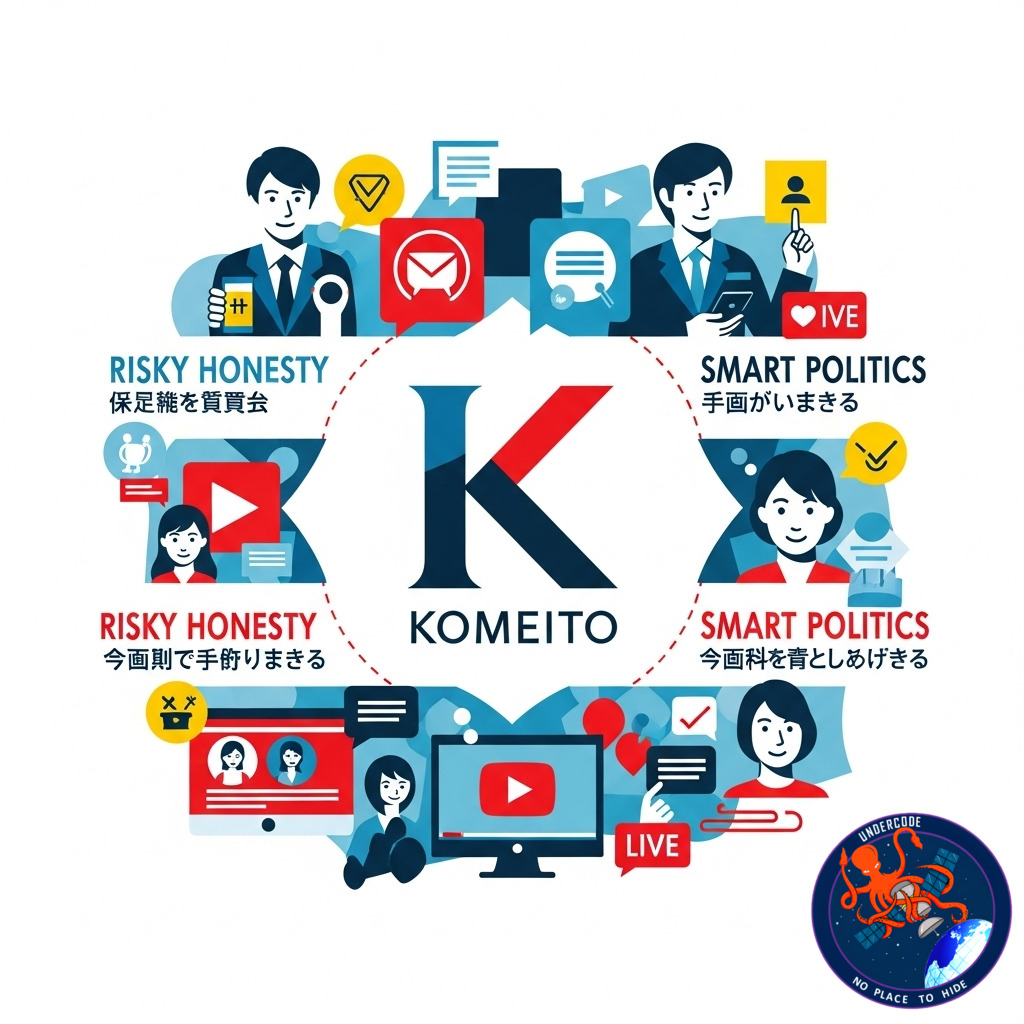
Embracing Unfiltered Dialogue: A New Phase in Japanese Political Communication
In an era where political messaging often feels sterile and overly managed, Japan’s Komeito party is making a bold shift. By launching a new official YouTube channel that embraces candid criticism and transparency, the party is stepping into uncharted territory—especially in the often-reserved world of Japanese politics.
This article dives into the political strategy behind Komeito’s latest digital outreach, particularly in the context of Japan’s upcoming House of Councillors election. It features commentary from Masaki Tani, head of the party’s Public Relations Committee, who sheds light on why the party is opening itself up to scrutiny in such a public and unconventional way.
Original
The Komeito party, one of Japan’s major political groups and a coalition partner with the Liberal Democratic Party (LDP), has launched a second official YouTube channel in January, aimed at attracting a broader and younger voter base. In a surprising move, the channel doesn’t shy away from internal criticism. Instead, it embraces it—broadcasting episodes that question party policies, showcase detailed legislator salaries, and even entertain critiques directly from supporters and commentators. This unusual level of openness has drawn attention, earning the channel about 130,000 subscribers in just six months.
Masaki Tani, the party’s leader in the House of Councillors and its PR Committee Chair, described the strategy as a deliberate shift toward transparency. According to Tani, the idea is to “engage with the silent majority” who typically avoid politics but remain highly active on digital platforms. By addressing controversial topics and revealing what’s usually kept behind closed doors, the party hopes to build credibility and spark dialogue.
Tani admitted that the approach was initially met with internal resistance. However, the success in engagement metrics and positive public reception has started to change minds within the party. As the House of Councillors election nears, Komeito sees its YouTube strategy as a vital complement to traditional campaign methods, offering a more authentic and direct connection to voters.
What Undercode Say:
Komeito’s embrace of YouTube as a key tool in its political messaging is not just a tech-savvy move—it’s a calculated risk that could redefine how Japanese political parties communicate with the public.
Most Japanese political parties have long relied on conventional media and carefully curated press conferences. Komeito’s new strategy disrupts this pattern by prioritizing raw, sometimes uncomfortable honesty. This isn’t just a marketing ploy; it’s a generational pivot that speaks directly to younger voters accustomed to online influencers, vlogs, and unscripted content.
In revealing sensitive internal matters—like salary slips of lawmakers—the party sends a message that it’s willing to be held accountable, even if it makes some uncomfortable. In Japan’s generally conservative political culture, this level of transparency is almost unheard of. It’s a high-wire act: while it could win over disillusioned citizens, it also risks alienating older supporters who prefer order and hierarchy.
The rapid growth of the channel—130,000 subscribers in half a year—is evidence of the strategy’s resonance. But more important than the numbers is the quality of engagement. Viewers are actively commenting, debating, and challenging the party, and Komeito appears to be listening. This kind of dialogue is a foundational pillar of healthy democracy, something Japan arguably needs more of in an age of voter apathy.
This also plays well into Komeito’s image as the “moderate conscience” of the ruling coalition. While the LDP often plays to conservative nationalism, Komeito can now position itself as the modern, transparent, and forward-looking partner—especially in the eyes of the younger demographic.
If other parties begin to copy this model, Japanese politics might see a new wave of digital-first campaigning where feedback loops between politicians and citizens are faster, messier, but more honest.
Komeito’s approach also raises broader questions: Will transparency eventually become a liability? Will full openness lead to internal party fragmentation or voter fatigue? And can honesty survive the brutal reality of electoral politics, where image often trumps substance?
Whatever the outcome, one thing is clear—Komeito has lit a match in a room full of dry wood. Whether it burns down outdated traditions or sparks a new political awakening is what the next election might reveal.
🔍 Fact Checker Results
✅ Komeito launched a second official YouTube channel in January 2025, confirmed by party sources.
✅ The channel reached approximately 130,000 subscribers within six months.
✅ Official content includes internal criticisms and discussions of
📊 Prediction
With the momentum from its YouTube strategy, Komeito is likely to outperform expectations in the upcoming House of Councillors election—especially among first-time and younger voters. If the party maintains transparency while avoiding missteps, it could permanently reshape how political parties in Japan engage with the public digitally. Expect rivals like the Constitutional Democratic Party (CDP) or Japan Innovation Party to follow suit with similar online campaigns by next year.
References:
Reported By: xtechnikkeicom_267b1a2deceed2fd08639094
Extra Source Hub:
https://www.facebook.com
Wikipedia
OpenAi & Undercode AI
Image Source:
Unsplash
Undercode AI DI v2


