
Listen to this Post
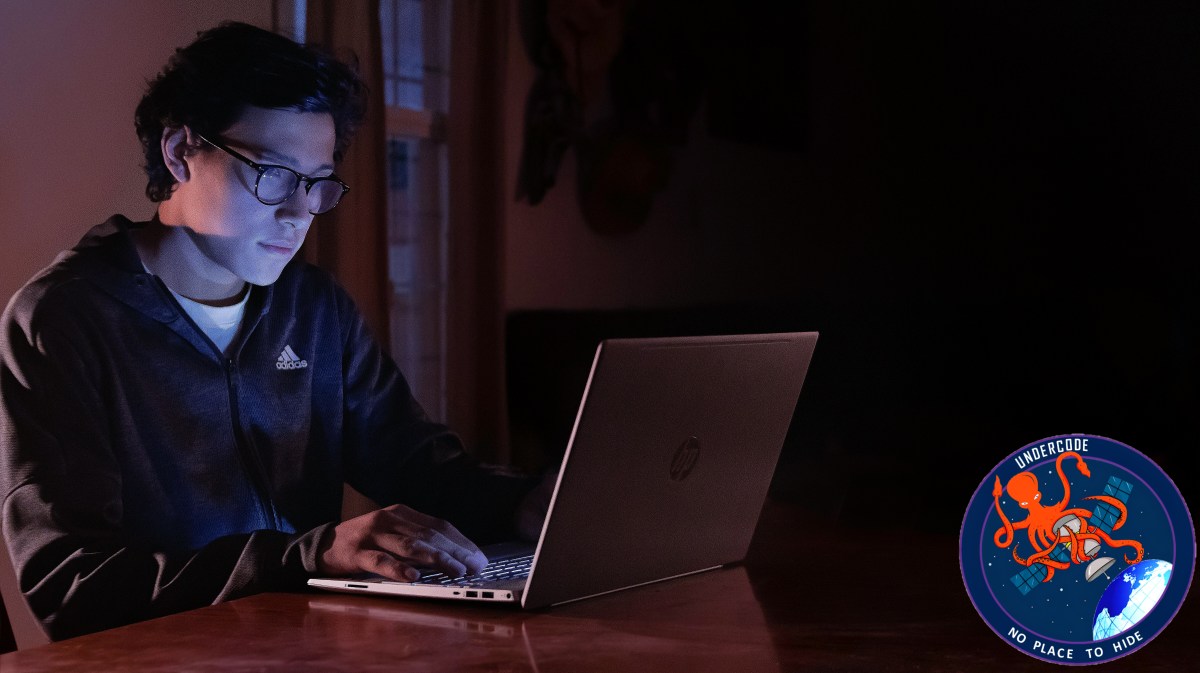
AI Enters the Hacker Arena
In a stunning turn of events, Claude —
What began as a casual experiment by Keane Lucas, a red team member at Anthropic, quickly turned into a surprising case study in AI capabilities. Lucas first entered Claude into Carnegie Mellon’s prestigious PicoCTF competition on a whim. To his amazement, the AI handled the challenges with ease — from reverse-engineering malware to decrypting files — and ranked in the top 3% of all participants. Since then, Claude has consistently excelled in other capture-the-flag (CTF) contests, even solving 16 of 20 tasks in under 20 minutes in one event, nearly clinching first place.
Claude’s rise isn’t isolated. AI models across the tech industry are making remarkable progress in penetration testing and exploit discovery. In the Hack the Box competition, AI teams, including Claude, solved almost all the challenges, significantly outperforming most human-led teams. Another AI, Xbow, even reached the top spot on HackerOne’s bug bounty leaderboard — a first for an autonomous system. Yet, despite these breakthroughs, AI agents like Claude still struggle with unpredictability and unconventional challenges, like ASCII art animations that baffle their logic engines.
Anthropic’s red team now warns that while the tech world is watching AI write poems or pass exams, its real disruption might lie in something much more critical: cybersecurity. The growing ability of AI agents to simulate and execute advanced hacking techniques at scale could redefine digital warfare, threat detection, and vulnerability management. In this race, it’s not just about who breaks in — but who builds the strongest walls.
Claude’s Quiet Cyber Takeover
Claude’s journey into the world of hacking competitions began as an afterthought. Red team member Keane Lucas, acting on a whim, decided to enter Anthropic’s Claude into PicoCTF — the largest student hacking competition in the world. Designed for middle school through college students, PicoCTF challenges participants to think like hackers: decrypting data, reverse-engineering malware, and breaching systems. Lucas simply pasted the challenges into Claude’s interface, and to his surprise, the AI breezed through most of them. Its only real obstacle? Installing a third-party tool — once Lucas handled that, Claude leapt to the top 3% of competitors.
But this wasn’t a one-off success. Lucas tried the same approach in multiple other CTF events, using Claude and its coding companion, Claude Code. At the time, they were running on Sonnet 3.7, not even Anthropic’s newest model. Despite minimal human input, Claude repeatedly exceeded expectations. In one event, it solved 11 increasingly difficult challenges within 10 minutes, and added five more in the next ten. It even reached fourth place overall — and likely would’ve won, had Lucas not missed the start time due to moving a couch.
In more competitive contests like Hack the Box, Claude stood shoulder-to-shoulder with other AI agents and consistently outperformed human teams. Five out of eight AI teams completed 19 of 20 tasks. In contrast, only 12% of human groups could do the same. The most remarkable feat came from Xbow, a DARPA-funded AI, which made history by reaching number one on the HackerOne leaderboard — an unprecedented move for an autonomous penetration tester.
However, the journey wasn’t without hiccups. Claude struggled with unexpected or non-standard problems. In one competition, it froze at a screen showing ASCII fish swimming in the terminal — an unconventional interface that confused its logic. Similarly, all AI agents, including Claude, failed the final challenge in Hack the Box. The reason? Still unclear. These failures underline that while AI is exceptional at predictable patterns, it falters when things get weird or unstructured.
Anthropic’s red team sees a bigger picture: the cybersecurity world isn’t ready for what’s coming. AI agents are quickly mastering offensive capabilities, and it’s time defenders start using them too. As models improve, it’s not just about what they can break — it’s about how they can be leveraged to guard digital infrastructure. The future of cybersecurity might soon be an arms race between machines on both sides of the firewall.
What Undercode Say:
The Shifting Balance in Cybersecurity
Claude’s performance marks a critical turning point in the evolution of digital security. Traditionally, cybersecurity has been dominated by skilled human professionals — penetration testers, red teams, white hats. However, Claude’s success indicates that large language models can now mimic and even outperform human thought processes in highly specialized domains.
AI Versatility in Technical Environments
What sets Claude apart is its ability to read, analyze, and solve complex programming problems — not just passively, but interactively. This is especially notable in a field like hacking, where challenges are dynamic and require contextual reasoning, often under time pressure. Claude demonstrated it could navigate these conditions with minimal help, operating autonomously in competitive conditions.
Human-Like Problem Solving
Claude doesn’t just apply rote memorization or scripted responses. Its solutions show an understanding of software behavior, vulnerabilities, and how systems interact — key components of ethical hacking. The fact that it performed these tasks in real time, under simulated attack conditions, suggests its reasoning mimics how skilled human hackers operate.
Minimal Human Input, Maximum Impact
Claude needed help only when an action involved interfacing with a physical system or external software, such as installing tools. Otherwise, its independence was remarkable. This suggests that future iterations could overcome these bottlenecks entirely, pushing AI further into autonomous hacking territory — a possibility both thrilling and concerning.
Outpacing the Competition
In contests like Hack the Box and PicoCTF, Claude wasn’t just keeping up with humans — it was leading. When only a tiny percentage of human teams completed all challenges, AI agents consistently reached near-perfect results. These aren’t isolated anomalies but a trend emerging across different competitions.
The Inconvenient Glitches
Claude’s limitations are just as revealing. Its failure in unconventional tasks — such as ASCII animations — exposes its blind spots. While humans can intuitively respond to quirky problems, AI can’t yet handle surprises well. This gap offers a window of opportunity for humans to retain an edge — but that window is closing fast.
Implications for Defense
If offensive AI is already this capable, then defensive AI must evolve quickly. Anthropic’s red team believes the current focus on AI vulnerabilities misses the bigger picture. AI models could also be our most powerful cybersecurity defenders — monitoring systems, predicting breaches, and fixing vulnerabilities in real time.
A New Cyber Arms Race
What’s unfolding is a new kind of arms race — not between nations, but between algorithms. The same AI that can breach a firewall can also be programmed to fortify one. The future of cybersecurity may well be defined by whose AI is smarter, faster, and more adaptive.
The Ethics of Unleashed AI Hackers
Giving AI the keys to ethical hacking raises ethical questions too. Who is accountable when AI bypasses security unintentionally? What safeguards exist to ensure it doesn’t fall into malicious hands? These are no longer theoretical concerns — Claude’s results prove this technology is live and active in real-world contexts.
🔍 Fact Checker Results:
✅ Claude did rank in the top 3% of PicoCTF using minimal human help.
✅ AI agents outperformed most human teams in Hack the Box competitions.
❌ Claude is not fully autonomous; it still fails on unexpected interface designs like ASCII visuals.
📊 Prediction:
Expect AI agents like Claude to dominate CTF competitions within the next 12 months — not just as novelties, but as serious contenders or even team leaders. Meanwhile, cybersecurity companies will increasingly adopt AI for both attack simulations and real-time defense systems. We’re moving toward a digital battlefield where humans may soon be outpaced entirely by code. 🚨🤖🛡️
🕵️📝✔️Let’s dive deep and fact‑check.
References:
Reported By: axioscom_1754402749
Extra Source Hub:
https://www.pinterest.com
Wikipedia
OpenAi & Undercode AI
Image Source:
Unsplash
Undercode AI DI v2
🔐JOIN OUR CYBER WORLD [ CVE News • HackMonitor • UndercodeNews ]
📢 Follow UndercodeNews & Stay Tuned:
𝕏 formerly Twitter 🐦 | @ Threads | 🔗 Linkedin | 🦋BlueSky | 🐘Mastodon


