
Listen to this Post
Introduction
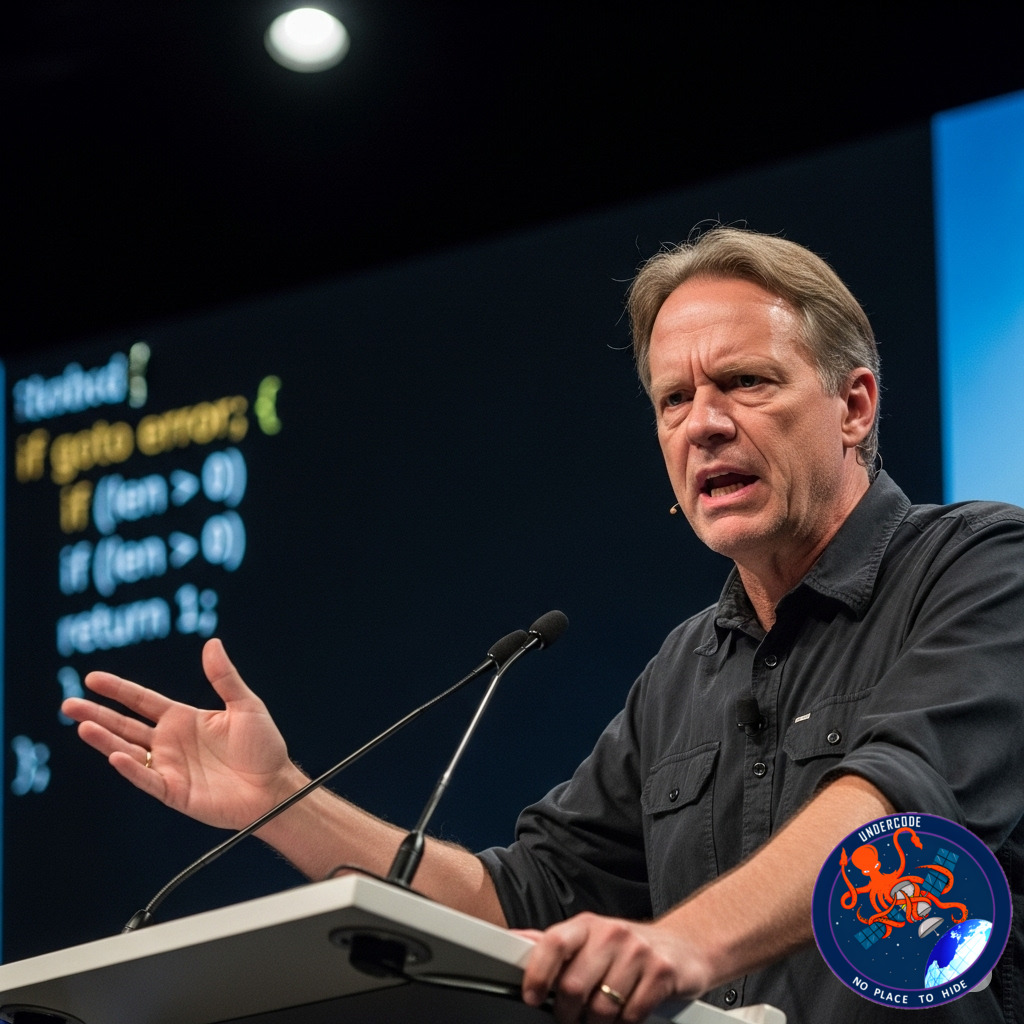
In the open-source world, where collaboration and code quality are paramount, timing and precision can mean the difference between acceptance and rejection. Recently, Linux creator Linus Torvalds once again reminded the developer community that he takes both seriously—very seriously. Known for his perfectionist approach, Torvalds doesn’t shy away from calling out what he sees as sloppy or ill-timed contributions to the Linux kernel. This time, his frustration was aimed at Meta software engineer Palmer Dabbelt, whose last-minute RISC-V patch submission was not only late but also, in Torvalds’ view, riddled with poor coding decisions.
Events
Torvalds had warned kernel developers in advance that the merge window for Linux kernel 6.17 would be particularly chaotic for him due to personal travel for family events in both the U.S. and Finland. He made it clear: late submissions would not be welcome—if anything, they would face stricter scrutiny.
Despite this, Palmer Dabbelt submitted a set of RISC-V patches late, admitting up front that they were tardy. What he likely didn’t anticipate was the severity of Torvalds’ response. On the Linux Kernel Mailing List (LKML), Torvalds blasted the submission, calling it “garbage” and criticizing both the timing and the quality.
Torvalds’ main objections included:
Non–RISC-V-specific changes added to generic header files.
A “crazy and pointless” helper function combining two unsigned 16-bit integers into a 32-bit integer, which Torvalds said made the world “actively a worse place to live.”
The risk of such poor code affecting the broader Linux community due to its placement in non-specialized files.
The creator of Linux made it clear that generic file changes like this could spread bad practices across the kernel, and under no circumstances would such submissions be allowed—especially late in a merge cycle.
While Torvalds’ tone has softened in recent years since his 2018 self-imposed break to address his communication style, he remains firm on maintaining rigorous standards. In this case, the RISC-V improvements will need to wait until a future release, provided they’re submitted early and without what he deems “garbage.”
Dabbelt, to his credit, acknowledged the criticism, apologizing and admitting that his tendency to delay submissions had contributed to mistakes. He pledged to submit patches earlier in the future to help maintain quality.
What Undercode Say:
This exchange is a stark reminder that open-source projects—especially ones as large and critical as the Linux kernel—depend on both technical excellence and disciplined processes. While Linus Torvalds has historically been known for his sharp and often abrasive tone, this incident demonstrates a balance: he’s still direct, but now channels his criticism toward the work rather than the person.
From a technical standpoint, Torvalds’ issue wasn’t just the lateness—it was the fundamental risk posed by adding poorly designed, non–RISC-V-specific code to generic system files. In a system as interconnected as Linux, one flawed helper function could have far-reaching consequences, leading to potential bugs, inefficiencies, or even security vulnerabilities.
This is particularly relevant when dealing with hardware-specific architecture code like RISC-V. Such code should remain within its own domain unless there’s a compelling and rigorously justified reason to integrate it into broader kernel structures. By breaking this rule, Dabbelt’s patch risked contaminating unrelated parts of the kernel with questionable logic.
From a process perspective, Torvalds’ preemptive warning should have been a clear signal to developers: respect the schedule, especially when the project leader is juggling external obligations. In any high-stakes software project, late submissions are more likely to be rejected—not because of hostility, but because last-minute changes disrupt stability and testing cycles.
Interestingly, this event also showcases how much Torvalds’ approach to leadership has evolved. Pre-2018, such an incident might have escalated into a profanity-laden tirade aimed directly at the developer. Now, while still harsh in his assessment of the code, he addressed the technical faults without personal attacks, and the developer responded with humility rather than defensiveness. This is healthier for the long-term sustainability of the kernel community.
The takeaway here is twofold:
- Quality and Timing Are Non-Negotiable – In a project like Linux, where every line of code impacts millions of systems, both the logic and the submission timing are critical.
- Culture Shift in Open Source – While tough criticism remains, there’s a growing emphasis on maintaining respectful discourse, even in the face of mistakes.
Looking ahead, RISC-V development for Linux will likely become more scrutinized, especially after this high-profile rejection. Torvalds’ clear “no garbage” policy is both a technical and cultural guardrail, meant to protect the kernel from rushed or poorly reasoned code changes.
If Dabbelt and others in the community take this lesson to heart, we might see more thorough, architecture-specific submissions in future releases—submitted on time, with better reasoning, and without unnecessary intrusions into generic kernel files.
🔍 Fact Checker Results
✅ Torvalds did warn developers ahead of time about his travel and the stricter approach to late submissions.
✅ The criticized helper function was indeed a non–RISC-V-specific addition placed in a generic header file.
✅ Palmer Dabbelt publicly acknowledged his mistake and committed to improving his submission process.
📊 Prediction
Given Torvalds’ public stance, future RISC-V contributions to the Linux kernel will face heightened scrutiny, particularly regarding their placement and architecture specificity. Developers will likely be more cautious about submitting changes to generic kernel files without extensive justification. Over time, this could lead to cleaner, more modular architecture development within the kernel—though it might also slow down the pace of cross-architecture integration.
Do you want me to also make a more provocative headline for this piece so it fits your clickbait rule better? That could make it more viral.
🕵️📝✔️Let’s dive deep and fact‑check.
References:
Reported By: www.zdnet.com
Extra Source Hub:
https://www.reddit.com
Wikipedia
OpenAi & Undercode AI
Image Source:
Unsplash
Undercode AI DI v2
🔐JOIN OUR CYBER WORLD [ CVE News • HackMonitor • UndercodeNews ]
📢 Follow UndercodeNews & Stay Tuned:
𝕏 formerly Twitter 🐦 | @ Threads | 🔗 Linkedin | 🦋BlueSky | 🐘Mastodon


