
Listen to this Post
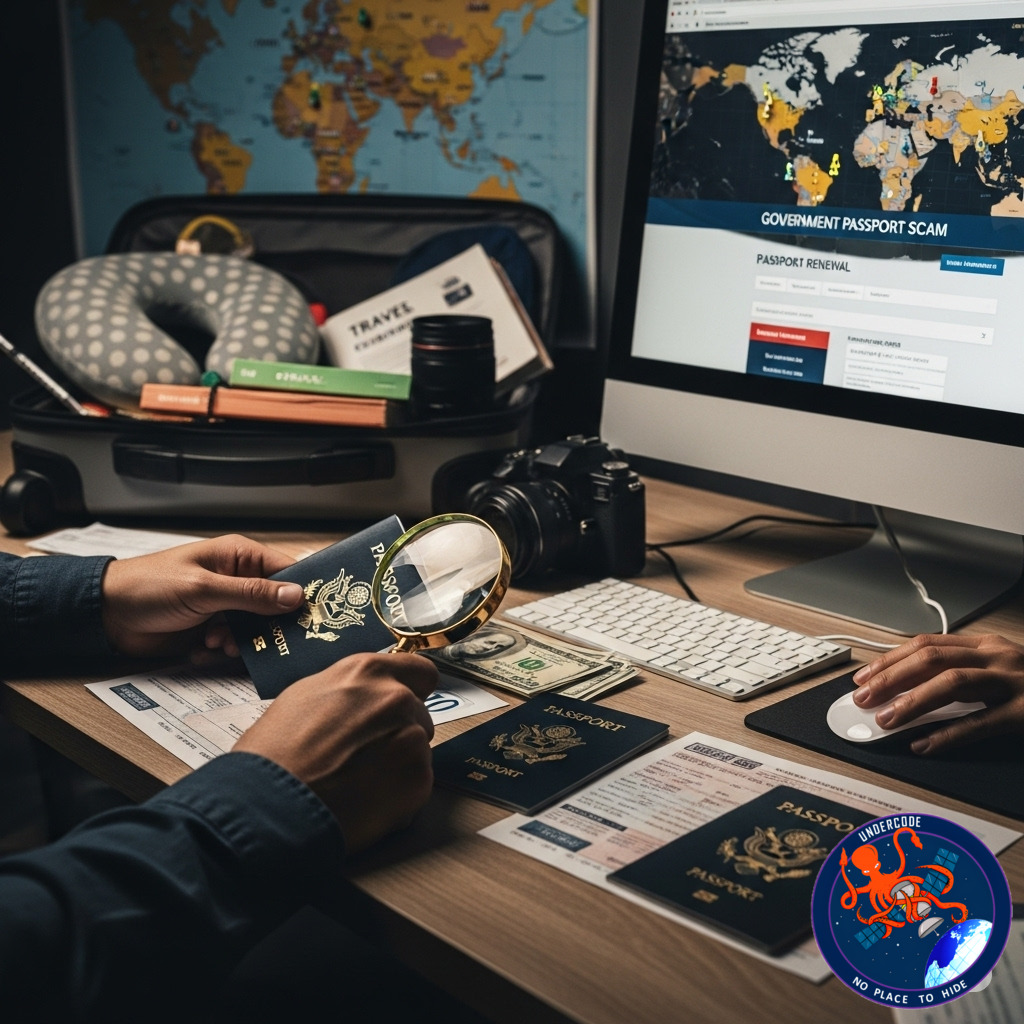
With international travel booming once again, millions are rushing to renew their passports. But amid the excitement, a growing threat is targeting travelers—fraudulent passport renewal websites that trick users into paying fake fees and steal sensitive personal and financial information. This article uncovers how these scams operate, shares real victim stories, and provides essential tips to help you stay safe.
The Passport Renewal Scam Exposed: How It Tricks You
Imagine you search online for “passport renewal” and the first result looks official—complete with a government-like URL such as “passportrenewal-state.com” or “usgovpassport.com.” It even appears as a sponsored link, boosting its credibility. The site invites you to fill out your passport renewal form and charges you a fee—sometimes \$68 or more—for what should be a free service. Unfortunately, by the time many realize they’ve been scammed, their personal data and money are gone.
Reports to the Better Business Bureau’s Scam Tracker reveal how convincing these fake websites can be. One victim shared, “I assumed it was the official site because it resembled it completely, including the URL. I only realized later it was state.com, not state.gov.” Another explained, “I went online to renew my father’s passport. I inputted all his personal information and was charged \$68—this company is posing as a government agency and scamming people.”
The official passport renewal process is free to complete on the government website travel.state.gov. You only pay the government fees after submitting your application through the correct channels.
What Undercode Say: How to Avoid Falling Victim to Passport Renewal Scams
The rise of these scams highlights a crucial need for vigilance and smart online habits. First and foremost, always start your passport renewal journey at the official site: travel.state.gov. This site provides everything you need—eligibility details, forms, fees, and current processing times.
Beware of any website charging you just to fill out or download a form. This is a red flag signaling a scam or at best a questionable third-party service. Government domains always end in .gov, so be cautious of websites ending in .com, .org, or other extensions that try to mimic the official look and feel.
A simple yet powerful tool for safety is Bitdefender Scamio, an AI-powered assistant that analyzes suspicious links, messages, or emails and flags potential scams. Use this before submitting any sensitive information.
Planning ahead is another crucial defense. Scammers exploit urgency—offering fake “fast-track” services that don’t actually speed up government processing. Avoid this trap by renewing early and checking realistic timelines on travel.state.gov.
If you consider third-party passport assistance companies, verify their legitimacy through the Better Business Bureau’s database or Scam Tracker. Even legitimate companies cannot bypass government wait times, so don’t expect miracle service.
If you’ve already shared your data on a suspicious site, act quickly: monitor your financial accounts, consider credit monitoring, and report the fraud to the BBB and government agencies.
Fact Checker Results ✅❌
Legitimate U.S. government passport websites always end in .gov ✅
Passport renewal forms are free to fill out and download—any charge before official submission is suspicious ❌
Third-party sites cannot speed up government processing times beyond official standards ✅
Prediction 🔮 What Lies Ahead for Passport Renewal Safety?
As international travel demand surges, scammers will likely ramp up their deceptive schemes, exploiting traveler urgency and the complexity of passport renewals. However, growing public awareness and advanced AI tools like Bitdefender Scamio will empower more travelers to identify scams early. Governments may respond by enhancing digital security measures and streamlining official passport renewal platforms to minimize confusion. Travelers who stay informed and vigilant will avoid costly scams and enjoy stress-free journeys. The fight against online fraud in travel-related services is only just beginning—but it will grow stronger with smarter tools and better education.
Travel safely by staying informed, double-checking every link, and using trusted official resources. Your next passport renewal should be smooth, secure, and scam-free!
🕵️📝✔️Let’s dive deep and fact‑check.
References:
Reported By: www.bitdefender.com
Extra Source Hub:
https://www.digitaltrends.com
Wikipedia
OpenAi & Undercode AI
Image Source:
Unsplash
Undercode AI DI v2
🔐JOIN OUR CYBER WORLD [ CVE News • HackMonitor • UndercodeNews ]
📢 Follow UndercodeNews & Stay Tuned:
𝕏 formerly Twitter 🐦 | @ Threads | 🔗 Linkedin | 🦋BlueSky | 🐘Mastodon


