
Listen to this Post
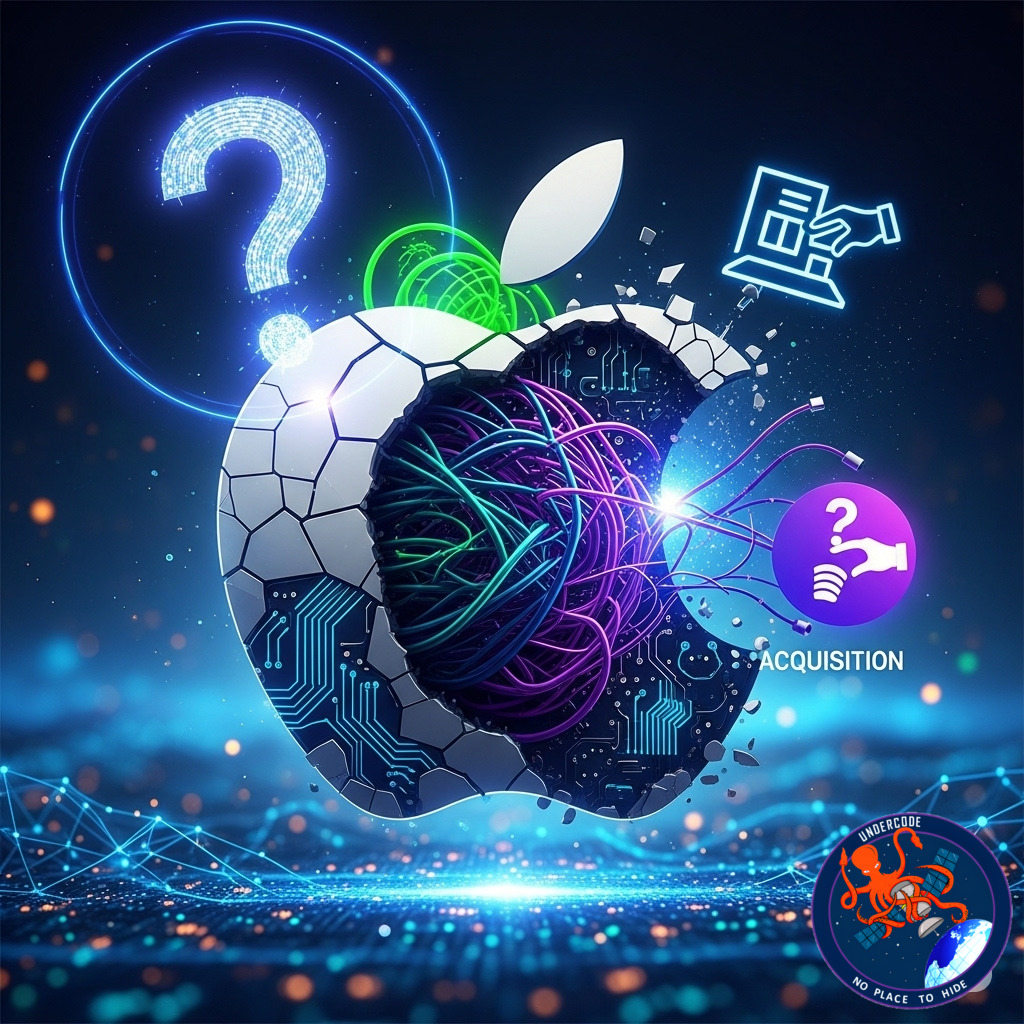
Apple’s AI ambitions have been under the spotlight recently, especially after whispers of acquiring Perplexity faded following new controversies around content restrictions. With Apple losing key engineers from its Foundation Models team, the pressure to secure new AI talent and technology is more urgent than ever. Yet, if Perplexity is off the table, who could be the next potential AI acquisition to reinvigorate Apple’s AI strategy?
The AI Acquisition Race: Apple’s Quiet Yet Aggressive Moves
Contrary to popular belief that Apple prefers acquiring small, stealthy AI startups, recent reports indicate the company made over 30 AI-related acquisitions in 2023 alone—outpacing giants like Google, Microsoft, Meta, and Amazon. Despite these moves, Apple’s progress on flagship AI projects has been slow. For example, while competitors like OpenAI and Anthropic continuously enhance their creative AI tools, Apple’s Writing Tools announced a year ago remain stagnant. Similarly, the much-anticipated AI overhaul of Siri has been plagued with setbacks.
Apple’s challenge now extends beyond just hiring talent. The company needs proven, product-ready AI technologies, ideally built on a proprietary foundation model, to meet rising market and user expectations. The problem? Companies that fit this profile are rare and increasingly expensive.
Which AI Companies Could Fit Apple’s Vision?
OpenAI and Anthropic are clearly out of reach or unsuitable. Perplexity, while a good assistant tech candidate, has a business model focused on e-commerce and content that doesn’t fully align with Apple’s ambitions or culture. Its \$18 billion valuation also makes it a pricey option with uncertain returns for Apple.
Among more viable candidates is Mistral, a \$10 billion French startup. Mistral boasts its own foundation models, an extensive API ecosystem (including OCR, speech, fine-tuning, and coding), and products aligned with privacy and responsible AI—values that resonate with Apple. Compared to Perplexity’s valuation and business scope, Mistral represents a more strategic and cost-effective acquisition.
Another European player is Aleph Alpha from Germany, heavily focused on enterprise AI for government and finance sectors. While this fits less with consumer tech, Apple’s history with military-funded Siri roots shows such pivots are possible. However, retaining AI talent focused on non-consumer applications could prove difficult.
Other smaller labs like Ai2, Beijing-based Kimi, and enterprise-focused Cohere exist, but they offer limited impact due to scale or mismatched priorities. Emerging startups like Thinking Machines Lab (\$12 billion valuation) and Safe Superintelligence (\$30+ billion valuation) are gaining hype, but their products remain promises rather than proven technologies—making them risky targets.
What Undercode Say: Apple’s AI Future Hangs in the Balance
Apple is at a critical crossroads. Despite aggressive acquisition strategies, the company has yet to fully deliver on its AI promises, lagging behind competitors who prioritize iterative, user-facing improvements. Talent retention is a glaring issue, with top engineers defecting and projects stalling. Apple’s AI dilemma isn’t just about finding brilliant minds; it’s about integrating mature, scalable AI products that can elevate Siri and other services in a highly competitive market.
Mistral’s combination of ready-to-use foundation models, ethical alignment, and manageable valuation makes it an attractive target that could accelerate Apple’s AI roadmap. If Apple continues to chase smaller, less impactful startups, or overvalues unproven hype companies, it risks falling further behind in the AI arms race.
Apple’s unique selling proposition has always been privacy and user trust. The next AI acquisition must reflect those values while delivering immediate product enhancements. Otherwise, Apple might lose its edge not just in hardware, but in the very software that powers the next generation of user experiences.
Fact Checker Results ✅❌
Apple reportedly made over 30 AI acquisitions in 2023—this figure is unconfirmed but widely cited by industry analysts.
Perplexity’s valuation is around \$18 billion, while Mistral is valued at \$10 billion—both figures supported by recent funding rounds.
Apple’s AI products like Writing Tools and Siri revamp have been publicly criticized for slow progress and inconsistent user experiences.
Prediction 🔮
Apple will likely pursue an acquisition similar to Mistral, focusing on companies that offer privacy-centric, foundation-model-based AI technologies with proven product delivery. Without such a strategic move, Apple risks losing its position as an AI innovator, falling behind competitors who rapidly iterate and scale AI-powered features in consumer products. The next 12-18 months will be crucial for Apple’s AI trajectory, with talent retention and acquisition shaping its future success.
🕵️📝✔️Let’s dive deep and fact‑check.
References:
Reported By: 9to5mac.com
Extra Source Hub:
https://www.quora.com/topic/Technology
Wikipedia
OpenAi & Undercode AI
Image Source:
Unsplash
Undercode AI DI v2
🔐JOIN OUR CYBER WORLD [ CVE News • HackMonitor • UndercodeNews ]
📢 Follow UndercodeNews & Stay Tuned:
𝕏 formerly Twitter 🐦 | @ Threads | 🔗 Linkedin | 🦋BlueSky | 🐘Mastodon


