
Listen to this Post
Introduction
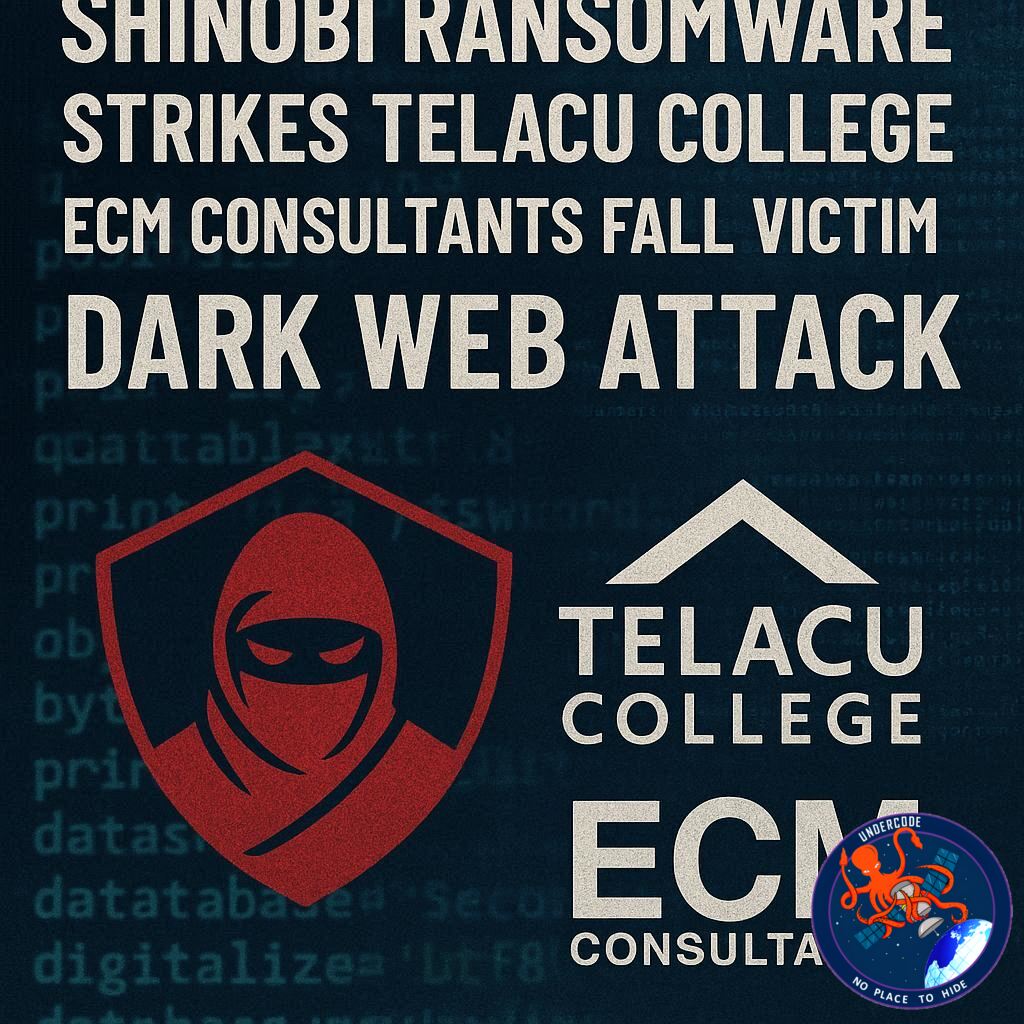
In the ever-evolving world of cybercrime, ransomware attacks have become one of the most destructive tools in the arsenal of threat actors. The notorious Sinobi ransomware group has once again made headlines, this time targeting two distinct organizations—TELACU College and ECM Consultants. Detected by the ThreatMon Threat Intelligence Team, this latest wave of attacks underscores the ongoing threat faced by educational institutions and consultancy firms alike. With the attacks surfacing on the dark web, questions arise about the group’s motives, methods, and potential future targets.
Sinobi Ransomware Targets TELACU College and ECM Consultants
On August 14, 2025, at approximately 00:39 UTC+3, ThreatMon’s ransomware monitoring system flagged malicious activity linked to Sinobi. Two victims were identified: TELACU College, an educational institution, and ECM Consultants, a consultancy service provider. Both names were reportedly added to Sinobi’s victim list, which is often a precursor to ransom demands, data leaks, or operational disruption.
The attacks were discovered through dark web surveillance, a common method for detecting early signs of ransomware campaigns before they become public knowledge. While the exact ransom amount remains undisclosed, history suggests Sinobi typically demands substantial payments—often in cryptocurrency—to restore stolen or encrypted data.
Sinobi has a well-documented history of targeting diverse industries, exploiting vulnerabilities in networks through phishing, weak credentials, or unpatched software. This latest incident serves as a stark reminder that cybercriminals are expanding their scope, striking organizations of all sizes and sectors.
What Undercode Say:
From a cybersecurity analysis perspective, this attack aligns perfectly with Sinobi’s operational blueprint. The group is known for its double extortion tactic—stealing sensitive data before encrypting systems, giving them leverage to demand higher ransoms. By targeting TELACU College, Sinobi exploits the often underfunded cybersecurity infrastructure of educational institutions, which may prioritize academic operations over digital defense.
Meanwhile, ECM Consultants represents a goldmine of client data, potentially including confidential business plans, financial records, and strategic communications. The consulting sector often maintains trust-based relationships with high-value clients, making any breach a severe reputational blow.
From a dark web activity standpoint, Sinobi’s choice of victims reflects a calculated targeting method:
Education sector → Lower cyber defenses, high operational disruption potential.
Consulting sector → High-value sensitive data with direct business impact.
This dual hit could be a strategic move to diversify ransom revenue streams while maximizing chaos. If history repeats itself, leaked data could soon appear on Sinobi’s leak site—used to pressure victims into paying.
Sinobi’s past campaigns reveal a strong adaptability in malware deployment. The group frequently updates its ransomware payload to evade detection, integrating advanced encryption algorithms and anti-forensic measures. This adaptability makes them harder to stop and more dangerous to organizations without constant security updates.
From an industry-wide perspective, this attack should act as a wake-up call for both sectors. Educational institutions must prioritize cybersecurity training and regular system patching, while consulting firms must enforce multi-layered defenses, including zero-trust frameworks and 24/7 threat monitoring.
Another concerning element is the timing. Cybercrime spikes often occur when organizations are understaffed or distracted—such as during academic breaks or fiscal closing periods. The early morning UTC timestamp suggests Sinobi leverages time zones to strike when IT teams are least prepared.
Financially, if both victims refuse to pay, the data release could lead to lawsuits, compliance violations, and severe reputational damage. If they do pay, it only fuels Sinobi’s war chest for future attacks—creating a vicious cycle.
From an ethical standpoint, negotiating with ransomware actors remains controversial. Some cybersecurity experts advise against paying, citing long-term risks, while others highlight the practical need to restore operations quickly—especially for institutions serving communities.
Looking ahead, we can expect Sinobi to continue targeting organizations with data-rich yet poorly defended infrastructures. The group’s ability to remain active in 2025 despite global law enforcement crackdowns speaks volumes about their operational sophistication and network resilience.
✅ Fact Checker Results
Confirmed: Sinobi ransomware attacks were detected against TELACU College and ECM Consultants on August 14, 2025.
Confirmed: Data surfaced via dark web monitoring by ThreatMon Threat Intelligence Team.
❌ Unconfirmed: Ransom amount and whether victims have entered negotiations.
🔮 Prediction
Given the pattern of Sinobi’s past activities, it is likely that both victims will face data leak threats within the coming weeks if no ransom is paid. Additionally, Sinobi may intensify attacks on the education and consulting sectors, leveraging the high data value and typically weaker defenses. Organizations failing to upgrade cybersecurity in the next quarter could be prime targets in Q4 2025.
🕵️📝✔️Let’s dive deep and fact‑check.
References:
Reported By: x.com
Extra Source Hub:
https://www.reddit.com
Wikipedia
OpenAi & Undercode AI
Image Source:
Unsplash
Undercode AI DI v2
🔐JOIN OUR CYBER WORLD [ CVE News • HackMonitor • UndercodeNews ]
📢 Follow UndercodeNews & Stay Tuned:
𝕏 formerly Twitter 🐦 | @ Threads | 🔗 Linkedin | 🦋BlueSky | 🐘Mastodon


