
Listen to this Post
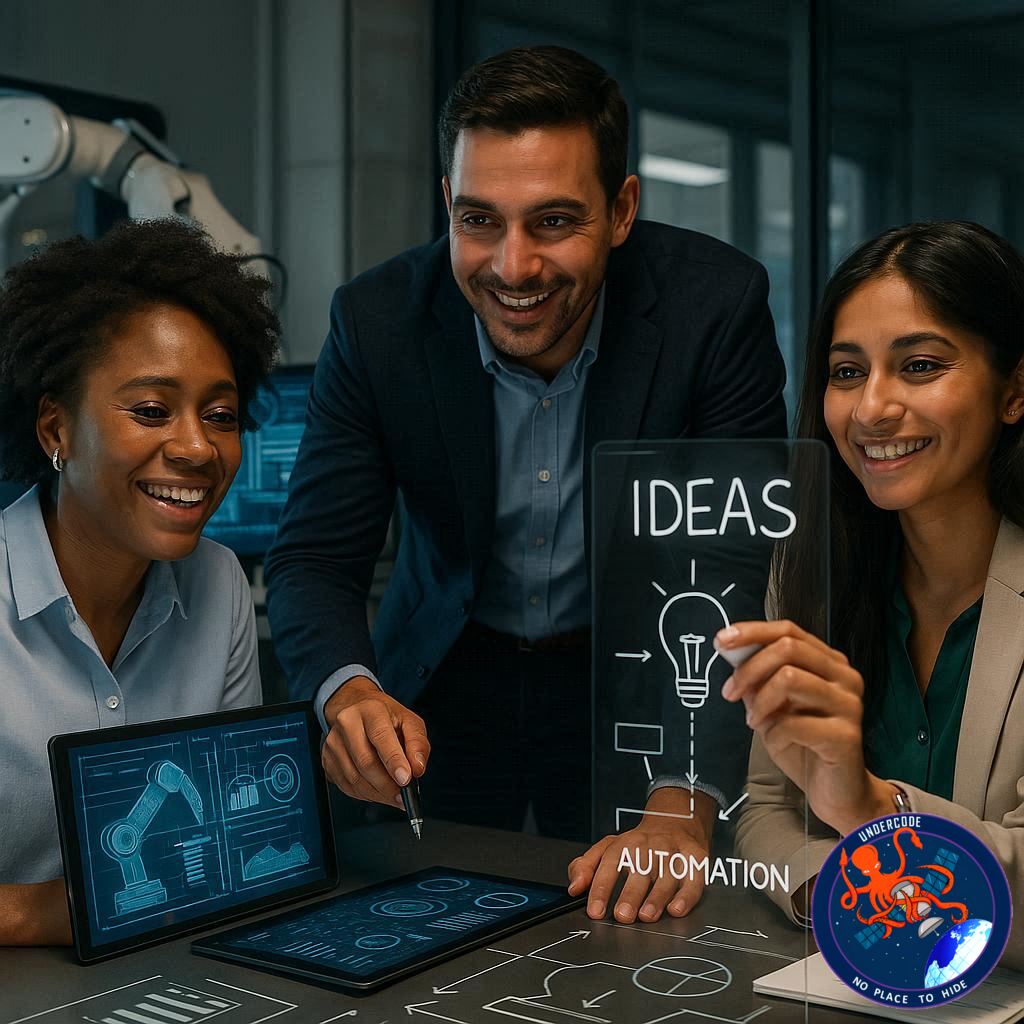
The global conversation around artificial intelligence (AI) has shifted from curiosity to urgency. With layoffs dominating headlines and companies frequently citing automation as a reason, fear is mounting over a future where machines replace human labor. From Silicon Valley tech giants to small businesses, the concern is real: millions of workers could face displacement as AI technologies accelerate. Yet amid this uncertainty, industry leaders argue that AI may not be a threat but an opportunity—if societies act wisely.
The Debate Over AI and Job Displacement
Recent news cycles show a worrying trend: companies streamlining operations, often with AI-driven tools, are laying off employees. Critics warn that entire job sectors could vanish, leaving workers scrambling to find new paths. Economists predict significant disruption across industries, particularly in repetitive and data-driven roles. The fear that humans may become obsolete in the workplace is compounded by rapid advancements in machine learning, robotics, and automation.
Sundar Pichai’s Perspective on AI as a Job Creator
Google CEO Sundar Pichai, speaking at the World Government Summit in Dubai, challenges this narrative. He acknowledges that while fear is understandable, it only tells part of the story. History consistently shows that technological disruption also creates opportunity. According to research Pichai cited from MIT, 60% of jobs created since 1940 did not exist before, underscoring the constant evolution of labor markets. New career paths emerge alongside the obsolescence of older ones, such as the rise of digital content creators—roles unimaginable a few decades ago.
Human Qualities Machines Can’t Replicate
Pichai highlighted that certain skills remain uniquely human. Creativity, emotional intelligence, and nuanced judgment are areas where AI falls short. Chess provides a clear example: AI can surpass the world’s best players, yet human participation continues to thrive. The coexistence of technology and human expertise illustrates that AI can augment rather than replace human potential.
Preparing for an AI-Driven Economy
The Google chief urged businesses to invest in upskilling and reskilling programs, enabling employees to navigate the evolving job market. He also warned of ethical challenges, including misinformation from deepfakes and other AI misuse, emphasizing the importance of responsible AI deployment. Pichai concluded that organizations willing to embrace experimentation, calculated risk, and innovation will unlock AI’s true power: enhancing human capabilities and driving sustainable economic growth.
What Undercode Say:
AI is undeniably reshaping the workforce, but framing it solely as a threat is shortsighted. While automation will eliminate some roles, history shows that technological revolutions generate new industries and jobs previously unimagined. The challenge lies in proactive adaptation: education, vocational training, and social safety nets will determine whether workers thrive or falter in this transition.
Moreover, the narrative that AI will “replace humans entirely” ignores the complementary nature of many AI applications. In sectors like healthcare, finance, and creative industries, AI acts as a force multiplier rather than a substitute. Doctors can diagnose faster, analysts can interpret bigger datasets, and artists can experiment with new mediums—human ingenuity remains central.
Ethical considerations are equally critical. Without regulation, AI’s misuse—through misinformation, bias, or surveillance—could overshadow its potential. Businesses and governments must prioritize governance frameworks alongside technological investment.
Finally, embracing AI as a tool rather than a threat could redefine economic growth. Historically, technological shifts initially displace labor but ultimately catalyze productivity gains, new markets, and entrepreneurial opportunities. The coming decade could see entirely new sectors emerge, analogous to how the internet created the gig economy, app development, and social media careers.
The real determinant of success will be flexibility: individuals who continuously learn, governments that incentivize innovation responsibly, and companies that integrate AI thoughtfully will shape a future where humans and machines coexist productively.
🔍 Fact Checker Results:
✅ MIT research confirms 60% of modern jobs didn’t exist in 1940, reflecting continuous labor market evolution.
✅ AI’s current capabilities are strong in data processing and automation, but creativity, judgment, and emotional intelligence remain human strengths.
❌ Claims that AI will entirely replace human labor are exaggerated; evidence shows augmentation is more common than total substitution.
📊 Prediction:
AI adoption will accelerate over the next decade, reshaping job markets in waves. Automation will displace repetitive roles, but growth in AI-enabled sectors—data analytics, digital content, healthcare innovation—will create net-positive employment opportunities. Success will favor nations and organizations investing early in skill development, ethical governance, and human-AI collaboration strategies. Human ingenuity combined with AI tools could redefine productivity and spark unprecedented innovation.
🕵️📝✔️Let’s dive deep and fact‑check.
References:
Reported By: timesofindia.indiatimes.com
Extra Source Hub:
https://www.facebook.com
Wikipedia
OpenAi & Undercode AI
Image Source:
Unsplash
Undercode AI DI v2
🔐JOIN OUR CYBER WORLD [ CVE News • HackMonitor • UndercodeNews ]
📢 Follow UndercodeNews & Stay Tuned:
𝕏 formerly Twitter 🐦 | @ Threads | 🔗 Linkedin | 🦋BlueSky | 🐘Mastodon


