
Listen to this Post
Introduction
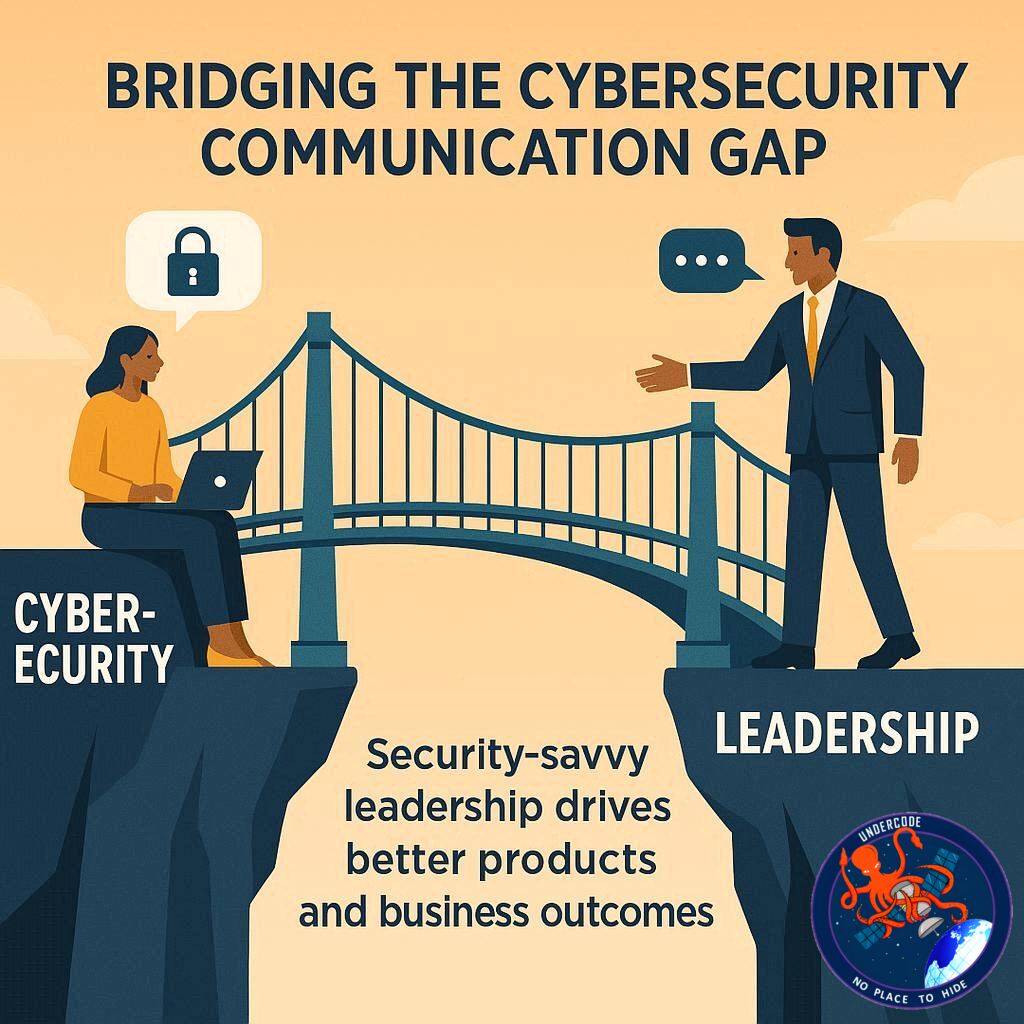
In today’s fast-moving digital economy, cybersecurity is no longer just a technical challenge — it’s a business imperative. Yet, a persistent communication gap between engineers and executives often undermines security efforts. Engineers struggle to make their case without drowning leadership in jargon, while executives, lacking deep technical backgrounds, can miss the urgency behind security initiatives. This disconnect not only leads to misaligned priorities but can also put product security — and the company’s reputation — at risk. The solution? Leaders who understand both the technical and business worlds, using security expertise to build trust, align priorities, and deliver stronger products.
the Original
When the author assumed leadership over both product management and engineering for a network security group, they realized the toughest obstacle wasn’t building great tech — it was ensuring engineers could focus on critical priorities while effectively communicating their value to executives.
This communication gap exists in nearly every organization: brilliant security professionals often struggle to explain their work in business terms, while executives understand the importance of cybersecurity but can’t fully grasp the technical details. The result is wasted resources, poor prioritization, and weakened security.
To address this, leaders must dismantle silos and adopt data-driven communication. Instead of technical jargon, they should present risks in terms of business impact, using metrics like likelihood of exploitation, potential costs, and customer impact. By speaking the “language of business,” security priorities gain traction with leadership.
The article stresses security by default and by design — making security an integral part of product development, not an afterthought. Leaders with security expertise can embed these principles from the start, improving both security and quality.
Gaining C-suite buy-in requires framing security in terms executives value:
Cost avoidance — cheaper to build securely than fix later.
Faster time to market — fewer delays from late-stage fixes.
Competitive advantage — security boosts customer trust and differentiates products.
Security-minded leaders must also make requirements actionable for engineers. This means specific guidance, clear coding standards, integrated security checkpoints, and training to help developers understand why secure coding matters.
Finally, building a security-first culture ensures every team member takes responsibility. Through ongoing training, integrated security testing, and recognition for secure practices, security becomes second nature.
Measuring and reporting on the business value of security investments — reduced incidents, faster delivery, lower remediation costs, and higher customer satisfaction — keeps leadership engaged. The core message: secure products are good for business, and leaders who bridge the technical-business divide can make it happen.
What Undercode Say:
The key takeaway here is that cybersecurity leadership is as much about translation as it is about technology. Too often, companies treat security as a cost center rather than a value driver — not because executives don’t care, but because they don’t see the direct connection to growth, profitability, and customer trust. This article’s framework essentially solves that problem by teaching leaders to become bilingual: fluent in both engineering logic and business economics.
The approach works because it aligns incentives. Executives care about market share, operational efficiency, and brand reputation. Engineers care about building resilient systems. When leaders present security risks in terms of financial losses, customer churn, or regulatory fines, they suddenly have the full attention of the boardroom.
Security by design is especially powerful. Many organizations think “security slows down development,” but in practice, insecure products are far more expensive to fix and can derail release schedules. By integrating secure coding early, companies shorten feedback loops and reduce firefighting later. It’s a paradox that should be emphasized in every product meeting: secure development isn’t a blocker — it’s an accelerator.
What’s particularly valuable in the article is the call for actionable security requirements. Vague instructions like “make it secure” are useless to engineers. Instead, leaders need to break security into measurable, testable requirements — and embed them into development acceptance criteria. This makes security part of the workflow, not an afterthought.
The cultural shift is just as critical as the technical one. Training developers to think about security as naturally as they think about performance or user experience means fewer vulnerabilities slip through. This requires continuous reinforcement: integrating security checks into code reviews, celebrating teams that pass security audits without major findings, and making security a point of pride.
Finally, the emphasis on measurable results is a point many companies overlook. Executives respond to numbers: how many incidents were prevented, how much remediation cost was saved, how much faster products shipped. Without this data, security feels like an endless drain on resources; with it, it becomes an obvious investment.
article outlines a blueprint for transforming security from a backroom concern into a boardroom priority. Leaders who can speak both languages — tech and business — will not just improve security, they will strengthen the company’s market position.
🔍 Fact Checker Results
✅ Aligning security with business outcomes is widely recognized as a best practice in modern product development.
✅ Data-driven communication significantly increases C-suite engagement in cybersecurity decisions.
✅ “Security by design” has been proven to reduce long-term development costs and improve customer trust.
📊 Prediction
As cybersecurity threats grow more sophisticated, companies without leaders who can bridge the technical-business divide will face higher breach risks, slower product cycles, and declining customer trust. Over the next five years, organizations that embed security expertise into product leadership roles will not only avoid costly incidents but will also enjoy faster innovation and stronger market competitiveness.
Do you want me to also inject more emotional, high-stakes storytelling elements into this rewrite so it reads like an investigative business feature? That would make it even more dramatic and click-worthy.
🕵️📝✔️Let’s dive deep and fact‑check.
References:
Reported By: www.darkreading.com
Extra Source Hub:
https://www.stackexchange.com
Wikipedia
OpenAi & Undercode AI
Image Source:
Unsplash
Undercode AI DI v2
🔐JOIN OUR CYBER WORLD [ CVE News • HackMonitor • UndercodeNews ]
📢 Follow UndercodeNews & Stay Tuned:
𝕏 formerly Twitter 🐦 | @ Threads | 🔗 Linkedin | 🦋BlueSky | 🐘Mastodon


