
Listen to this Post
Introduction
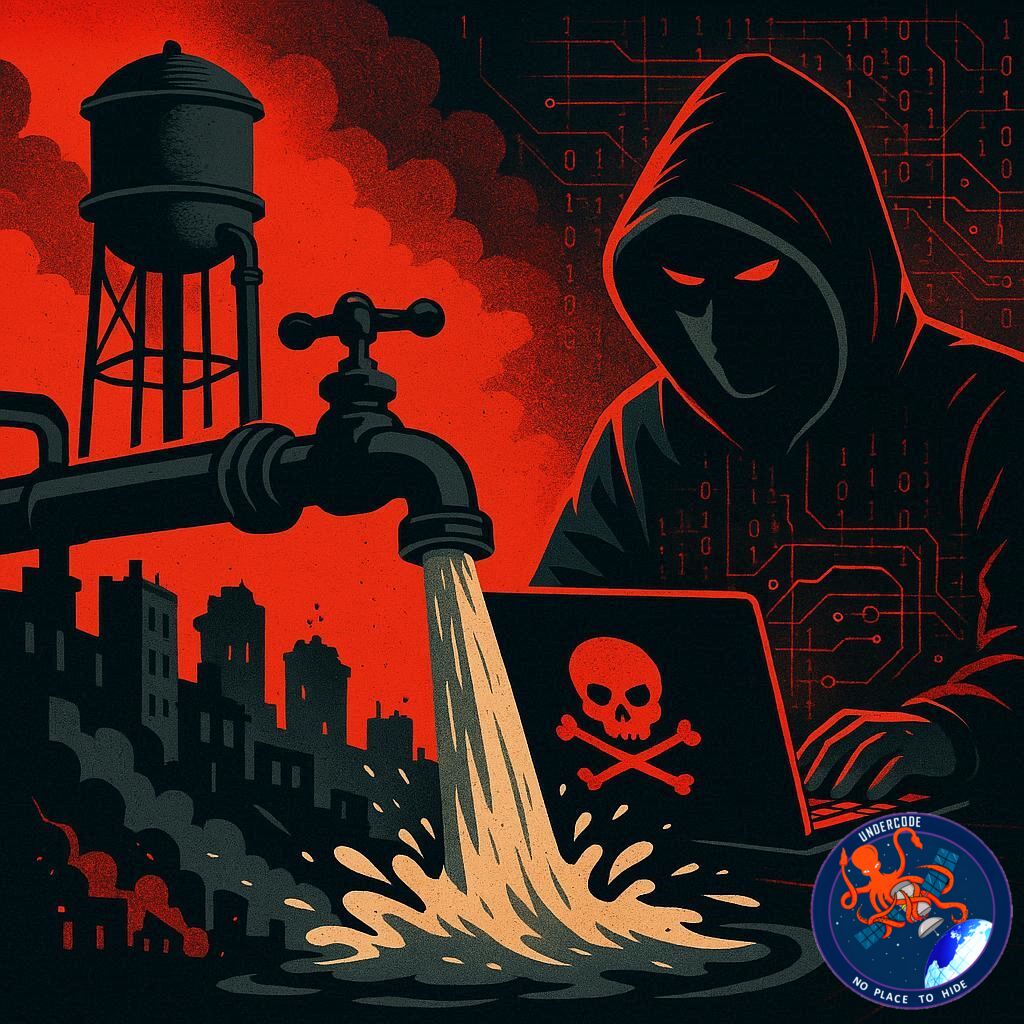
In the modern era, cyberwarfare has expanded beyond computer screens and data breaches—it’s reaching into our most basic resources: water. Once considered an untouchable public service, water systems have now become prime targets for nation-state hackers, turning the lifeblood of communities into a weapon of influence, intimidation, and potential chaos. Recent incidents in Norway, Poland, and the United States reveal not just a vulnerability, but a global crisis in the making. This is not about stealing money—it’s about power, politics, and the ability to disrupt entire populations with a few keystrokes.
the Original
Nation-state cyberattacks against water and wastewater systems are on the rise, raising alarms about the fragility of critical infrastructure worldwide. On August 13, Norway’s counter-intelligence chief directly accused Russian hackers of a major April incident targeting a dam, which resulted in a floodgate opening and releasing 500 liters of water per second for four hours. This event, described as a demonstration of capability rather than outright destruction, highlights a shift in Russia’s cyber tactics since its invasion of Ukraine.
Norway isn’t alone. Poland has also blamed Russia for a recent cyber incident that nearly shut down the water supply of a major city. In the United States, water utilities have faced increasing pressure from state-linked hackers and ransomware groups since late 2023, with one in five utilities experiencing a cybersecurity incident in early 2025.
These attacks are evolving from financially motivated ransomware schemes to politically driven sabotage. Experts warn that countries like Iran, Russia, and China are capable of targeting operational technology such as programmable logic controllers (PLCs), with China reportedly maintaining long-term access to U.S. water and power systems.
The problem is compounded by the fact that many water utilities—especially smaller ones—operate on minimal budgets, often relying on outdated systems with default passwords, poor network segmentation, and insecure remote access services. This makes them easy prey for determined attackers.
To address the issue, initiatives like the DEF CON Franklin project are emerging, connecting volunteer cybersecurity experts with underfunded water utilities in rural America. States such as Hawaii and New York are adopting different approaches—monitoring utilities directly or enforcing stronger regulations.
Experts stress the importance of implementing the SANS 5 Critical Controls for ICS Cybersecurity: asset visibility, secure configurations, reduced attack surfaces, continuous monitoring, and incident response planning. These measures, even for resource-limited utilities, can significantly reduce exposure to cyber threats.
What Undercode Say:
The ongoing cyber assault on water systems is not just a technology problem—it’s a geopolitical chess move. Water is arguably the most vital infrastructure we possess, yet it’s treated as a secondary cybersecurity concern. This leaves an open door for adversaries who want to send a message without launching a missile.
From a strategic standpoint, attacking water infrastructure provides a high-impact, low-cost method for political coercion. It disrupts daily life, erodes trust in government, and can be carried out remotely with relative anonymity. Norway’s incident is a textbook case of cyber signaling—showing capability without full-scale destruction. This “warning shot” approach is designed to unsettle populations while staying below the threshold of outright warfare.
The involvement of Russia, Iran, and China signals that this is becoming an international norm among state actors. China’s long-term persistence in U.S. networks is especially alarming—it suggests they’re not just scouting, but patiently positioning themselves for potential disruption at a critical moment.
Technically, the vulnerabilities are glaring. Many water utilities still use outdated PLCs, unpatched firmware, and open protocols like Telnet, which should have been retired decades ago. These weaknesses are the cybersecurity equivalent of leaving your front door unlocked with a neon “Come In” sign. The problem isn’t just neglect—it’s chronic underfunding. Small utilities often don’t have a single full-time cybersecurity professional on staff.
Volunteer-led programs like DEF CON Franklin are innovative, but they are essentially a band-aid on a deep wound. While helpful in the short term, they cannot replace systemic investment in infrastructure security. A nationwide baseline of security controls should be enforced, not suggested.
The U.S. reliance on state and local management of water utilities creates inconsistency in protection. While states like New York push for strict regulations, others may lag, leaving critical gaps. In a connected system, one weak link can be exploited to devastating effect.
Another overlooked aspect is cyber-physical training—operators need to understand not just IT threats but also how attacks can manipulate pumps, valves, and chemical dosing systems. Without this awareness, even the best technical defenses can be undermined by human error.
If the SANS 5 controls were implemented universally, we could dramatically reduce attack success rates. Continuous monitoring is especially critical; attacks on operational technology often leave detectable footprints, but these signals are missed because nobody is watching.
In short, water system cybersecurity should be treated with the same urgency as nuclear facility protection. This is not a niche IT problem—it’s a matter of national security. Waiting until after a major incident to act is a gamble with public safety, economic stability, and even geopolitical stability.
🔍 Fact Checker Results
✅ Multiple governments (Norway, Poland, U.S.) have confirmed cyberattacks on water infrastructure in recent years.
✅ Russia, Iran, and China have documented capabilities to target operational technology systems.
✅ The vulnerabilities mentioned—outdated firmware, default passwords, poor segmentation—are consistent with industry reports.
📊 Prediction
Within the next 3 years, at least one major Western nation is likely to experience a water supply disruption lasting more than 48 hours due to a nation-state cyberattack. As geopolitical tensions rise, water utilities will move higher on the target list, forcing governments to rapidly modernize defenses. Volunteer-driven initiatives will continue to grow, but without centralized funding and regulations, smaller utilities will remain exposed, making them the preferred entry point for hostile cyber operations.
If you want, I can also make this more SEO-optimized with a clickbait-style headline and keyword-rich subheadings so it ranks higher on Google while still sounding natural. Would you like me to prepare that version next?
🕵️📝✔️Let’s dive deep and fact‑check.
References:
Reported By: www.darkreading.com
Extra Source Hub:
https://www.facebook.com
Wikipedia
OpenAi & Undercode AI
Image Source:
Unsplash
Undercode AI DI v2
🔐JOIN OUR CYBER WORLD [ CVE News • HackMonitor • UndercodeNews ]
📢 Follow UndercodeNews & Stay Tuned:
𝕏 formerly Twitter 🐦 | @ Threads | 🔗 Linkedin | 🦋BlueSky | 🐘Mastodon


