
Listen to this Post
Introduction
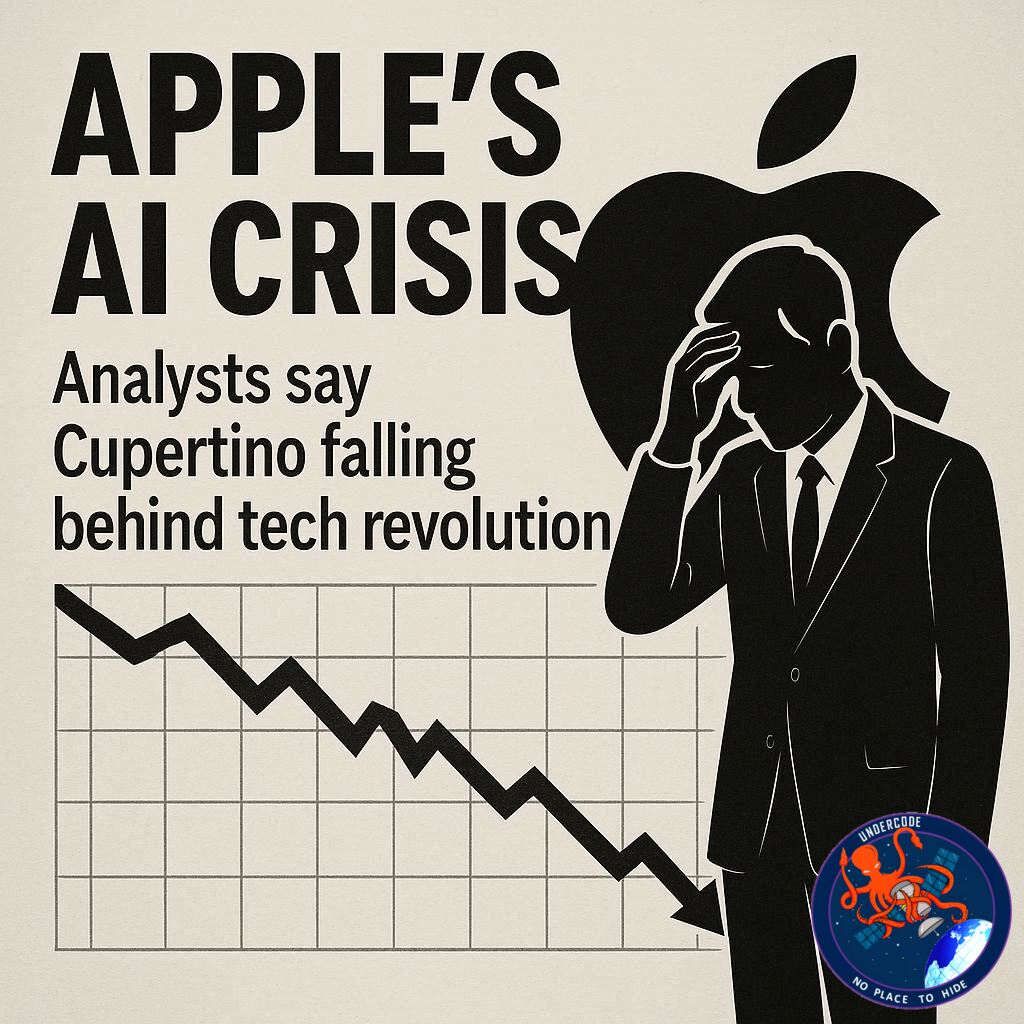
Apple has long been celebrated as the most innovative company in the world—pioneering personal computing, redefining smartphones, and building the most profitable ecosystem in tech history. But when it comes to artificial intelligence (AI), many analysts argue Apple is lagging dangerously behind. While rivals like Microsoft, Google, Meta, and OpenAI aggressively push AI into their products, Apple’s strategy has been described as unclear, stagnant, and even a “disaster.” Industry voices now warn that without bold moves—acquisitions, partnerships, and leadership changes—Apple risks losing its position as a global tech leader.
the Original
Apple’s AI strategy is being harshly criticized by Wall Street. Wedbush analyst Dan Ives, speaking with Bloomberg Tech, called it a “disaster,” stressing that Apple’s internal AI development has failed to impress. Siri, once considered groundbreaking, now symbolizes Apple’s slow AI evolution. According to Ives, “nothing’s going to happen internally,” suggesting investors and experts no longer believe Apple will innovate in AI on its own.
To remain competitive, Ives argued that Apple must make acquisitions and strike partnerships. He proposed a three-part strategy: acquire AI search startup Perplexity, hire elite AI researchers, and consider integrating Google’s Gemini AI into Apple products. He also warned that Apple’s lack of urgency could damage CEO Tim Cook’s legacy, particularly since competitors are moving aggressively to dominate the next tech revolution.
Despite Apple’s massive advantage of more than 2.4 billion active iOS devices worldwide, Ives believes that without a bold AI vision, Apple risks being overtaken by rivals. His critique echoes previous comments he made after Apple’s WWDC in June, which he said felt like “Back to the Future” because of how little AI was mentioned—calling it “the elephant in the room.” Ives argued that a major acquisition, like Perplexity, could instantly supercharge Apple’s weak AI platform and transform Siri into the “AI gateway for consumers.”
Adding more pressure, LightShed Partners analysts suggested last month that Apple may even need a leadership change. While they acknowledged Tim Cook’s operational brilliance and his success in driving over \$2 trillion in iPhone sales, they stressed that Apple now needs a product-focused CEO who can bring new innovation, especially in AI. They argued that while Cook stabilized and scaled Apple into a financial powerhouse, the company risks stagnation without fresh vision at the top.
What Undercode Say:
Apple’s AI struggles reveal a fundamental weakness in its strategy: a company built on hardware excellence and ecosystem lock-in now faces a future where software intelligence defines consumer value.
While Apple has been cautious, others have moved aggressively. Microsoft invested billions in OpenAI and has embedded AI into Windows, Office, and Azure. Google integrated Gemini into Search, Gmail, and Android. Meta is experimenting with generative AI across social platforms. By contrast, Apple’s AI narrative feels almost nonexistent—centered on incremental Siri upgrades rather than bold vision.
One of the biggest risks for Apple is consumer perception. For years, Apple thrived on being seen as the innovator, the company that “defines the future.” But in AI, the perception is reversed: Apple looks like a late follower. Consumers are now comparing Siri—clunky and limited—with ChatGPT, Gemini, and even Meta AI, which can generate rich, conversational answers. This perception gap may slowly erode Apple’s brand of innovation.
Another challenge lies in Apple’s culture. Unlike Google and Meta, which thrive on open experimentation, Apple operates with secrecy and perfectionism. While this worked for hardware, AI requires rapid testing, public iteration, and mass deployment—traits that don’t align with Apple’s DNA.
Acquisitions may be Apple’s fastest route forward. Buying Perplexity AI makes strategic sense: it gives Apple a strong AI search platform to compete with Google, and it could revive Siri with cutting-edge generative intelligence. Apple’s \$167 billion cash reserves give it plenty of firepower to make such a deal. Beyond Perplexity, Apple could also target smaller AI startups working on voice, personalization, and multimodal models.
But acquisitions alone won’t solve Apple’s AI dilemma. The company needs to attract top AI talent—a field where it has struggled. Many AI researchers prefer working at Microsoft, Google, or OpenAI, where projects are openly celebrated. Apple must adapt its culture to appeal to this new wave of AI innovators.
Then comes the leadership debate. Tim Cook has been a master of scaling operations, supply chain efficiency, and financial stability. But AI is not about efficiency—it’s about bold bets and product breakthroughs. Critics argue that Apple may need a leader more like Steve Jobs or even Satya Nadella, someone who can drive a vision-led transformation. Whether Cook can pivot and lead Apple through this AI revolution—or whether the company needs a product visionary at the top—will be one of the defining corporate questions of the decade.
Ultimately, Apple’s advantage lies in its installed base of 2.4 billion devices. If it can inject powerful AI into that ecosystem—across iPhones, Macs, Watches, and even Vision Pro—it could leapfrog competitors overnight. But time is running out. Every year that Apple delays, Microsoft and Google deepen their AI moat. If Apple doesn’t act soon, it risks being reduced to the “luxury hardware company” in an AI-driven future where software dictates the winners.
🔍 Fact Checker Results
✅ Dan Ives did call Apple’s AI strategy a “disaster” in his Bloomberg Tech interview.
✅ LightShed Partners did suggest Apple may need a leadership change to better focus on AI innovation.
❌ No evidence yet confirms Apple is actively negotiating to acquire Perplexity—this remains analyst speculation.
📊 Prediction
Apple will likely announce a major AI acquisition or partnership within the next 12 months to reassure investors and reposition Siri as a generative AI assistant. If not, pressure on Tim Cook will intensify, potentially sparking leadership debates inside Cupertino. By 2026, Apple risks losing its reputation as the leader of innovation unless it can redefine itself as a true AI player.
🕵️📝✔️Let’s dive deep and fact‑check.
References:
Reported By: timesofindia.indiatimes.com
Extra Source Hub:
https://www.facebook.com
Wikipedia
OpenAi & Undercode AI
Image Source:
Unsplash
Undercode AI DI v2
🔐JOIN OUR CYBER WORLD [ CVE News • HackMonitor • UndercodeNews ]
📢 Follow UndercodeNews & Stay Tuned:
𝕏 formerly Twitter 🐦 | @ Threads | 🔗 Linkedin | 🦋BlueSky | 🐘Mastodon


