
Listen to this Post
Introduction
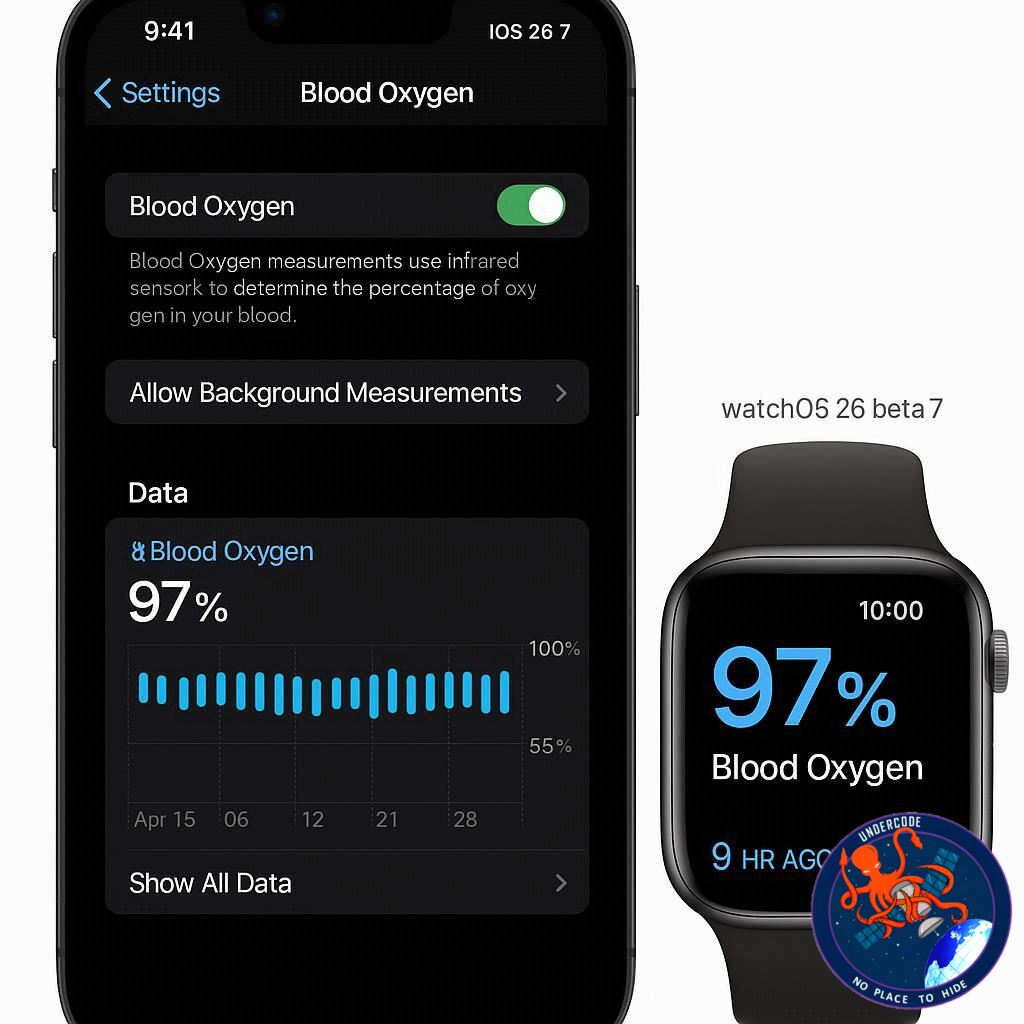
Apple has once again turned heads with the release of iOS 26 beta 7 and watchOS 26 beta 7, delivering a highly-anticipated return of the Blood Oxygen feature. After months of legal disputes and technological adjustments, Apple Watch users in the U.S. can finally test out the redesigned feature. This marks a crucial moment for Apple, not only in terms of innovation but also in reestablishing trust with health-conscious users who rely on accurate wellness tracking.
The Big Update: iOS 26 Beta 7 and watchOS 26 Beta 7
Apple rolled out its seventh beta versions of iOS 26 and watchOS 26 for developers today. The highlight of this update is the redesigned Blood Oxygen tool, specifically available for Apple Watch Series 9, Series 10, and Apple Watch Ultra 2 users in the U.S.
The feature was first introduced last week through iOS 18.6.1 and watchOS 11.6.1, after Apple’s 18-month hiatus caused by a patent dispute with health tech giant Masimo. That legal conflict forced Apple to ship newer Apple Watches without the blood oxygen sensor enabled in the U.S., frustrating both consumers and the company’s reputation in the health-tech market.
How the New Blood Oxygen Feature Works
Users can launch the Blood Oxygen app on their Apple Watch.
The watch collects sensor data during a reading session.
The raw data is processed by the paired iPhone, which then provides accurate oxygen measurements.
Results are viewable only in the Health app’s Respiratory section on iPhone, not on the watch itself.
This new approach shifts computation responsibility to the iPhone, allowing Apple to work around Masimo’s contested patents while still giving users valuable health insights.
Background Monitoring Comes Into Play
Another exciting enhancement is background monitoring. Now, Apple Watches can automatically collect data while worn throughout the day. This means users don’t have to trigger manual sessions—blood oxygen levels will be passively tracked and sent to the iPhone for analysis.
What’s Next for Developers and Public Users
Currently, iOS 26 beta 7 and watchOS 26 beta 7 are exclusive to developers, but Apple is expected to roll out a public beta later this week. This early access allows developers to test and provide feedback on stability, usability, and feature performance before it reaches the masses.
Accessories and Apple Ecosystem
With health-focused updates, Apple also continues to highlight accessories that enrich the iPhone and Apple Watch experience, such as:
Anker Power Bank with built-in USB-C cable
Multi-device chargers for iPhone, Watch, and AirPods
Wireless CarPlay adapters
MagSafe-compatible power banks
These accessories reinforce Apple’s goal of creating a seamless ecosystem for users.
What Undercode Say:
The return of the Blood Oxygen feature is more than just a technical upgrade—it’s a strategic recovery move by Apple. Here’s why it matters:
Health Innovation Meets Legal Boundaries
Apple had to rethink its health data collection model after losing ground in the Masimo patent dispute. By shifting the heavy lifting of oxygen measurement from the Watch to the iPhone, Apple cleverly sidestepped legal obstacles while keeping customers happy.
Impact on the U.S. Market
The U.S. is Apple’s largest market, and losing a key health feature hurt sales and trust. Reintroducing blood oxygen monitoring could boost demand for Series 9, Series 10, and Ultra 2, especially among fitness enthusiasts and health-conscious consumers.
Competitive Landscape
Rivals like Samsung Galaxy Watch and Fitbit already promote health-tracking features. Apple’s comeback ensures it doesn’t fall behind in the wearable health-tech race. With background monitoring, Apple takes the lead by blending accuracy, compliance, and convenience.
Data Centralization on iPhone
By storing results only on the iPhone, Apple consolidates its health data ecosystem in one place, making the iPhone indispensable for serious wellness tracking. This could pave the way for AI-powered predictive health insights in future iOS updates.
Developer Testing = Stability Boost
Beta testing with developers ensures Apple can fine-tune bugs before going public. Given the complexity of health data, accuracy and privacy will be critical selling points in upcoming releases.
Consumer Trust and Future Growth
Reinstating this feature signals that Apple is willing to fight—and innovate—when consumer trust is on the line. This move may not only strengthen Apple’s brand reputation but also open doors for future FDA-approved health features.
✅ Fact Checker Results
The redesigned Blood Oxygen tool is officially back for Series 9, Series 10, and Ultra 2.
Data processing is now done on the iPhone, not directly on the Apple Watch.
Background monitoring is indeed part of the beta updates.
🔮 Prediction
Apple’s health-tech journey is far from over. With AI and machine learning integrated into the Health app, the company is likely to expand into early disease detection, personalized fitness guidance, and real-time health alerts. Expect future Apple Watches to become not just fitness trackers, but personal medical companions—a game-changer in the wearable industry.
🕵️📝✔️Let’s dive deep and fact‑check.
References:
Reported By: 9to5mac.com
Extra Source Hub:
https://www.twitter.com
Wikipedia
OpenAi & Undercode AI
Image Source:
Unsplash
Undercode AI DI v2
🔐JOIN OUR CYBER WORLD [ CVE News • HackMonitor • UndercodeNews ]
📢 Follow UndercodeNews & Stay Tuned:
𝕏 formerly Twitter 🐦 | @ Threads | 🔗 Linkedin | 🦋BlueSky | 🐘Mastodon


