
Listen to this Post
Introduction
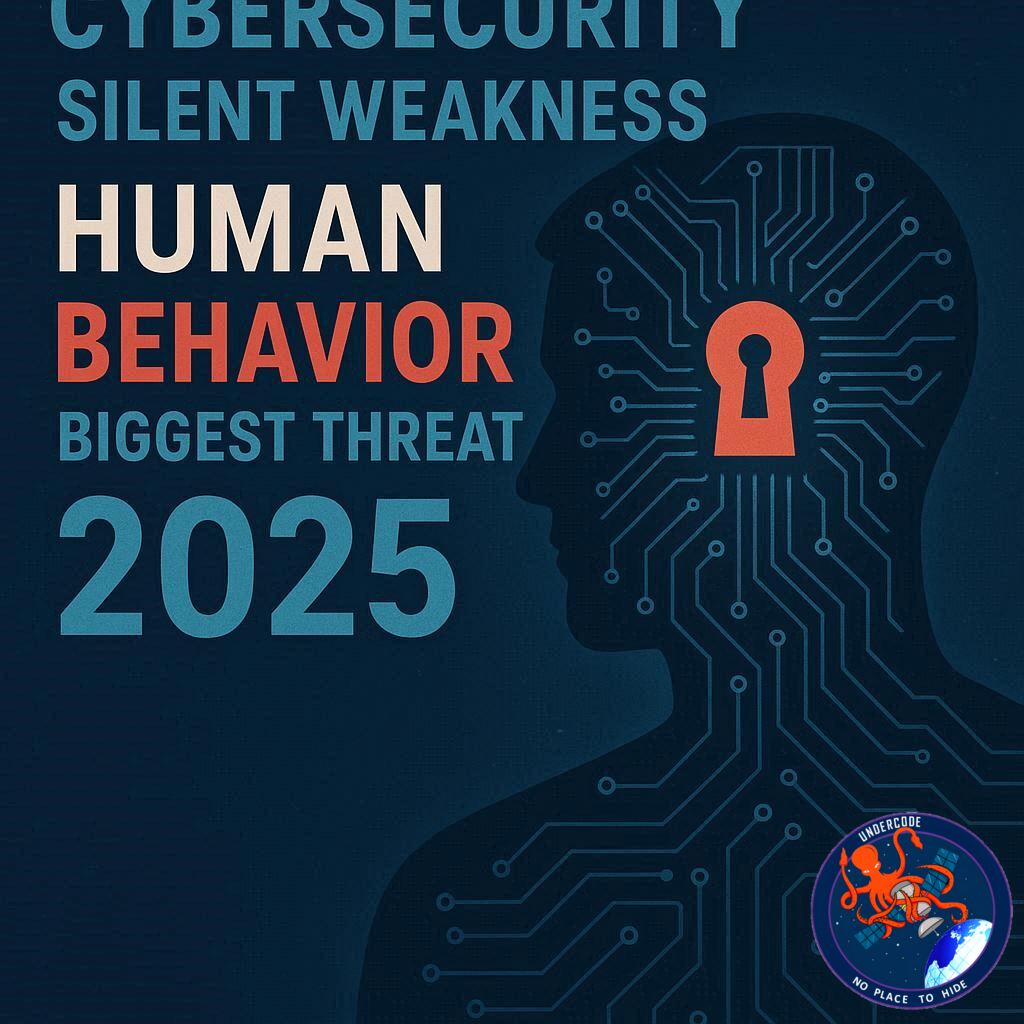
For years, organizations have invested billions in cutting-edge security tools, next-generation firewalls, AI-driven detection systems, and cloud security frameworks. Yet, despite this technological progress, the majority of cyber breaches still trace back to one factor: human behavior. Attackers are no longer solely exploiting technical vulnerabilities—they are exploiting people. This shift has forced businesses to rethink their approach to security, recognizing that culture, clarity, and communication may be just as critical as software and systems.
The Human Factor in Cybersecurity
Over the past two decades, cybersecurity has matured significantly. However, the stark reality remains: people—not technology—are the biggest entry point for attackers. Modern breaches often start not with zero-day exploits but with phishing emails, social engineering, or manipulation of human trust.
Data reinforces this fact. According to Verizon’s Data Breach Investigations Report, nearly 60% of all breaches in 2024 involved human factors. Contrary to the common phrase “people are the weakest link,” it’s not employees failing security—it’s that security systems and communication are failing employees. Policies are often written in legal jargon, training is outdated, and security feels like an obstacle rather than an enabler.
Organizations must realize that mitigating human risk is not about adding more firewalls or stricter rules; it’s about building a security culture that integrates seamlessly into daily workflows.
Defining Security Culture
Every company has a security culture—whether intentional or accidental. At its core, security culture is the shared beliefs, values, and behaviors around cybersecurity in an organization. Employees must see themselves not only as workers but also as defenders of digital trust.
When security is framed as someone else’s responsibility, risk multiplies. But when employees believe they play a direct role in protecting company assets, behaviors shift dramatically. To achieve this, leaders must create an environment that rewards secure behavior rather than punishes mistakes.
Four Pillars of Security Culture
To embed security into daily business, organizations should focus on four core drivers:
Leadership Signals – When executives champion cybersecurity through budgets, accountability, and recognition, employees take notice. Without visible leadership commitment, culture collapses.
Security Team Engagement – Security teams should act as enablers, not blockers. A hostile or confusing approach discourages employees from seeking help.
Policy Design – Policies must be clear, practical, and easy to apply. Overly complex rules push employees toward risky shortcuts.
Security Training – Training should be relevant, interactive, and role-specific. Boring, outdated sessions only reinforce that security is unimportant.
Aligning Culture With Practice
Consistency is key. If leadership talks about cybersecurity but employees face rigid policies, irrelevant training, or unapproachable security teams, trust erodes. On the other hand, when policies are simple, training is engaging, and leadership shows real commitment, employees begin to see security as a natural part of their role.
This alignment transforms security from a barrier into a business enabler—making the organization stronger against evolving threats.
What Undercode Say: 🔎
The article shines a spotlight on the hidden truth of cybersecurity: despite advanced tools, the weakest defense remains human behavior. Let’s analyze this deeper:
1. The Illusion of Technology-First Security
Companies often believe that investing in more tools equals stronger protection. But attackers are agile, adapting faster than enterprises can implement systems. Human behavior—clicking a malicious link, reusing passwords, ignoring protocols—remains the easiest path for attackers.
2. Cultural Psychology of Security
Security is less about technology and more about psychology. Humans respond to incentives, recognition, and clarity. If employees feel punished for mistakes, they hide them, which worsens risks. Positive reinforcement creates trust and openness.
3. Why Leadership Matters More Than Firewalls
Executives drive the narrative. When CISOs have board-level visibility, budgets improve, and employees feel that cybersecurity is a shared mission. Conversely, when leaders treat it as a checkbox, the workforce disengages.
4. Policy vs. Practicality
Lengthy, technical policies are counterproductive. Employees want actionable, simplified steps they can follow without hindering productivity. Clear policies are often more effective than the most sophisticated technology.
5. Training Transformation
Outdated training sessions once a year are useless. Instead, micro-learning modules, phishing simulations, and gamified sessions resonate better. Training must evolve with modern workplace dynamics.
6. Economic Implications of Poor Culture
Breaches caused by human error are not only reputational disasters but also financial black holes. From regulatory fines to customer trust erosion, the cost of ignoring culture far outweighs investment in it.
7. The Future of Human-Centric Security
By 2030, the organizations thriving will be those that blend technology with behavioral science. Security awareness will shift from compliance to culture—where every employee, from intern to CEO, feels accountable.
Fact Checker Results ✅❌
✅ Fact: Over 60% of breaches involve human elements (confirmed by Verizon DBIR).
❌ Misconception: Employees are always the weakest link—they are often victims of poorly designed systems.
✅ Fact: Leadership commitment and cultural alignment significantly reduce security incidents.
Prediction 🔮
By 2030, organizations that fail to integrate human-centric security cultures will face exponential risks. Cybercriminals will increasingly exploit trust, emotions, and psychology, while businesses that invest in leadership-driven culture, engaging training, and simplified security practices will outpace competitors—not just in safety but also in trust and reputation.
🕵️📝✔️Let’s dive deep and fact‑check.
References:
Reported By: thehackernews.com
Extra Source Hub:
https://www.reddit.com
Wikipedia
OpenAi & Undercode AI
Image Source:
Unsplash
Undercode AI DI v2
🔐JOIN OUR CYBER WORLD [ CVE News • HackMonitor • UndercodeNews ]
📢 Follow UndercodeNews & Stay Tuned:
𝕏 formerly Twitter 🐦 | @ Threads | 🔗 Linkedin | 🦋BlueSky | 🐘Mastodon


