
Listen to this Post
Introduction
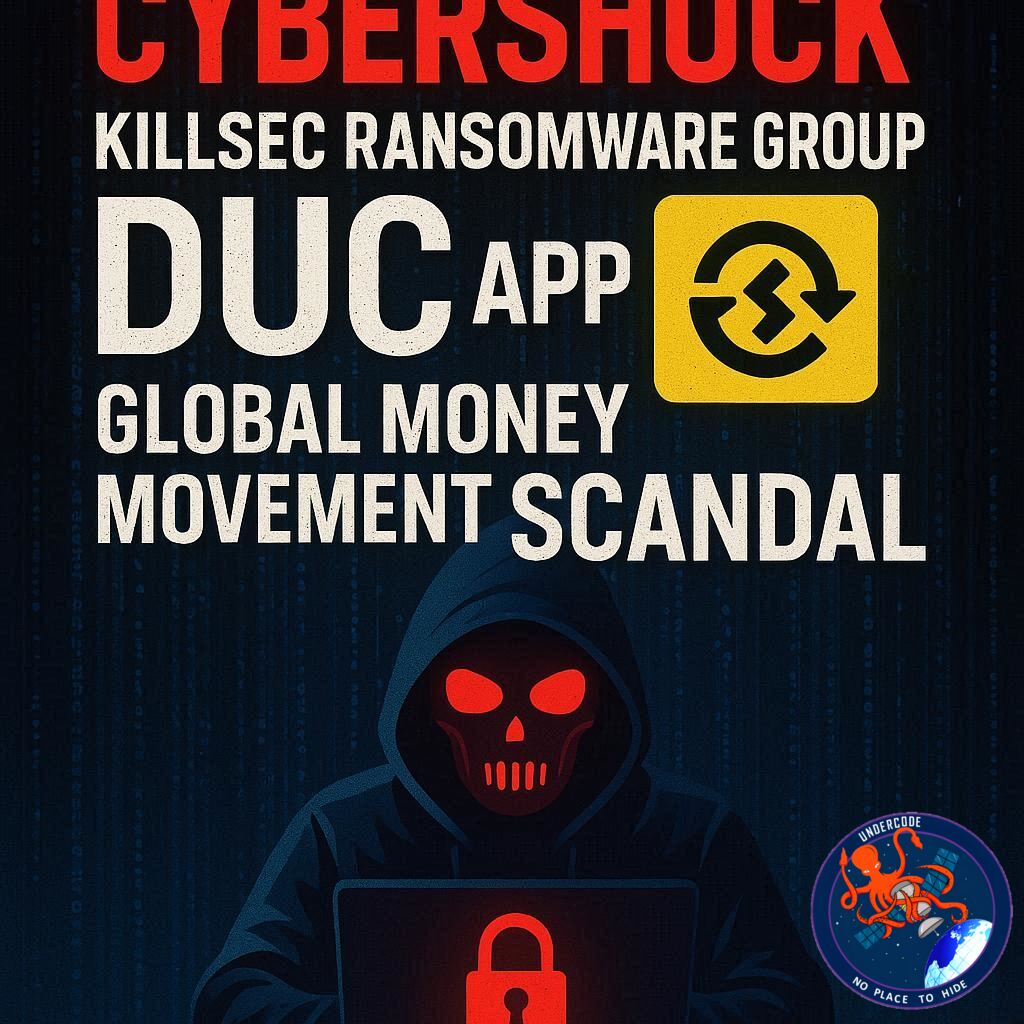
In the ever-evolving battlefield of cybercrime, ransomware remains one of the most destructive threats to financial institutions and tech companies worldwide. On August 20, 2025, the notorious ransomware group “Killsec” reportedly claimed responsibility for targeting DUC App: Global Money Movement, Simplified, a platform involved in streamlining international transactions. This revelation came through monitoring by the ThreatMon Ransomware Intelligence Team, igniting concerns about data security, financial disruptions, and the rising aggressiveness of dark web actors.
the Reported Incident
The ThreatMon Ransomware Monitoring division detected fresh dark web activity attributed to Killsec, a well-known ransomware group that has been increasingly active in 2025. Their latest victim, DUC App, operates as a major hub for simplifying global financial transactions, raising alarms due to the sensitive data it handles.
On August 20, 2025, at 12:37:18 UTC+3, Killsec listed DUC App among its victims on underground forums. The attack highlights a dangerous trend where ransomware groups deliberately target fintech companies to maximize financial leverage and pressure.
This incident was revealed through ThreatMon’s continuous surveillance of dark web marketplaces, providing intelligence on Indicators of Compromise (IOC) and Command-and-Control (C2) infrastructures. While the scale of the breach and ransom demand is not yet confirmed, the attack points to a sophisticated campaign with possible global financial repercussions.
The tweet that broke the news has already gained attention, being shared within cybersecurity circles and raising speculation about whether customer financial data was stolen. The fact that Killsec chose such a high-value target suggests they are evolving their strategy, possibly testing the resilience of fintech platforms that facilitate international money transfers.
Given DUC App’s role in global money movement, an attack of this nature risks disrupting not only the company but also its partners and users across different regions. This may trigger regulatory scrutiny, customer panic, and further vulnerabilities if the attack isn’t contained quickly.
Experts suggest that Killsec may attempt double extortion tactics—encrypting systems while also threatening to leak stolen data unless ransom demands are met. If true, this could put sensitive banking details, personal records, and international transaction logs at risk of being exposed on dark web marketplaces.
The situation continues to develop, but cybersecurity experts warn that this case represents a larger pattern of ransomware syndicates shifting from targeting individuals and small firms to directly hitting financial platforms that underpin global trade and payments.
What Undercode Say:
The attack on DUC App by Killsec is more than just another ransomware headline—it represents a strategic escalation in the cybercriminal ecosystem. Let’s break down the deeper implications:
Financial Warfare: Targeting a financial transaction hub indicates Killsec’s intention to exploit the backbone of international payments. By disrupting money flows, they increase their leverage exponentially.
Dark Web Strategy: Killsec is signaling to rivals and potential recruits on the dark web that it has the capability to breach financial institutions, thus boosting its reputation.
Fintech Vulnerability: Platforms like DUC App rely heavily on trust and compliance. A successful breach shatters that trust and may drive customers to competitors.
Global Ripple Effect: This isn’t just about one company. Any disruption to a cross-border money platform has downstream effects on banks, merchants, and even governments.
Data as a Weapon: If customer records or banking credentials were stolen, this data could be sold, reused in fraud schemes, or weaponized for further attacks.
Geopolitical Angle: While Killsec has not shown clear political motives, ransomware groups often operate in regions with loose enforcement, meaning the attack might also have indirect geopolitical consequences.
Evolving Extortion Models: Killsec could adopt “triple extortion”—demanding ransom not just from the victim company but also pressuring customers or partners affected by the breach.
Investor Impact: News of ransomware attacks often leads to sharp declines in company valuation and can discourage future investment in fintech innovation.
Regulatory Repercussions: Authorities may impose stricter compliance requirements on fintech firms after such incidents, slowing innovation but improving resilience.
Underground Economy Growth: Each successful ransomware hit fuels the dark economy, inspiring new groups to replicate these tactics.
This attack is not an isolated case but part of a wider trend where cybercriminals are focusing on industries where the stakes are high, and the willingness to pay ransoms is greater. Killsec’s move against DUC App could mark the start of a new wave of assaults on financial infrastructures, forcing companies worldwide to rethink their cybersecurity posture.
✅ Fact Checker Results
Killsec has indeed been active in 2025, targeting multiple sectors.
ThreatMon is a legitimate ransomware monitoring intelligence platform.
No confirmed ransom amount or data leak has yet been made public.
🔮 Prediction
Given Killsec’s trajectory, it is highly likely that they will expand their campaigns against fintech and payment processors in the coming months. If ransom is paid, it could embolden them further, while refusal might push Killsec to leak stolen data on the dark web. Expect tighter government oversight and increased demand for advanced cybersecurity defenses across financial platforms.
🕵️📝✔️Let’s dive deep and fact‑check.
References:
Reported By: x.com
Extra Source Hub:
https://stackoverflow.com
Wikipedia
OpenAi & Undercode AI
Image Source:
Unsplash
Undercode AI DI v2
🔐JOIN OUR CYBER WORLD [ CVE News • HackMonitor • UndercodeNews ]
📢 Follow UndercodeNews & Stay Tuned:
𝕏 formerly Twitter 🐦 | @ Threads | 🔗 Linkedin | 🦋BlueSky | 🐘Mastodon


