
Listen to this Post
Introduction
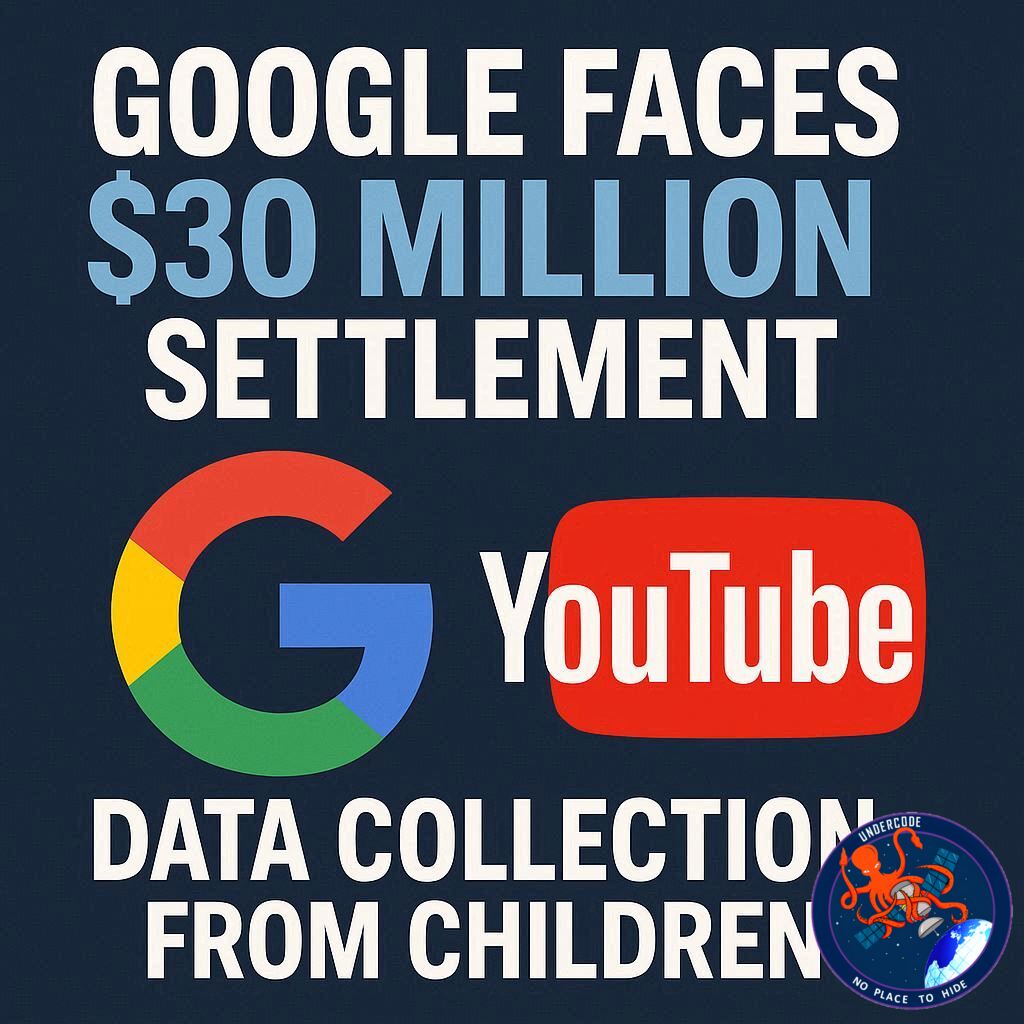
Google, one of the most powerful tech giants in the world, has once again found itself at the center of controversy. This time, it has agreed to a \$30 million settlement in the United States over accusations of illegally collecting data from underage YouTube users. The case highlights long-standing concerns about children’s online privacy, advertising practices, and the role of artificial intelligence in age detection.
The issue is not new. In fact, this isn’t the first time Google has faced such charges. With parents, regulators, and privacy advocates keeping a close eye, the settlement raises serious questions about whether the company has truly learned from past mistakes — or simply considers these fines as the cost of doing business.
the Case
Google has agreed to pay \$30 million to settle a lawsuit claiming it illegally collected data from children under 13 without parental consent, violating the Children’s Online Privacy Protection Act (COPPA). While the company denies any wrongdoing, it chose to settle rather than battle the allegations in court.
This case feels familiar because, in 2019, Google paid \$170 million in a separate FTC settlement for almost identical accusations — tracking underage users on YouTube without proper permission. Despite that earlier fine, plaintiffs in this new lawsuit argued that Google continued to gather children’s personal data for targeted advertising.
The class-action lawsuit applies to children under 13 who watched YouTube videos between July 2013 and April 2020. Lawyers estimate that 35–45 million children could be eligible for compensation. Based on typical claim rates, hundreds of thousands may actually receive payments ranging from \$10 to \$60 per person, depending on how many claims are filed and validated.
Google’s staggering revenue — \$384 billion in 2024 alone — means this settlement barely scratches its financial surface. Critics argue the fine might not even cover the profit made from the alleged data violations.
Adding to the controversy, YouTube has been testing AI-driven systems to identify under-18s, using viewing behavior, searches, and account history instead of asking for birthdays. While meant to protect kids, this approach has sparked debates about surveillance and accuracy.
Parents who believe their child may be eligible for compensation should:
Confirm their child was under 13 and active on YouTube during the eligibility period.
Gather proof of usage, such as emails, device logs, or account confirmations.
Stay alert for official settlement notices from legal firms and avoid scams.
Act quickly once claims open, as deadlines are usually tight.
Beyond the lawsuit, experts urge parents to safeguard children’s digital activity:
Review device privacy settings and disable ad tracking.
Use child-friendly versions of apps where available.
Monitor viewing habits and have open conversations instead of imposing blanket bans.
What Undercode Say:
From an analytical standpoint, this settlement reveals more than just a legal clash — it underscores systemic issues in Big Tech’s handling of data privacy.
First, the repetition of violations (2019 and now 2025) indicates that financial penalties alone do not significantly change corporate behavior. For a company earning nearly half a trillion dollars annually, a \$30 million payout is insignificant. This raises the ethical question: Are such fines deterrents, or just operational costs?
Second, the AI-based age detection system sparks a new debate. While it aims to protect children, it also opens the door to increased surveillance and profiling. If AI is scanning user behavior to determine age, what other personal patterns might be tracked in the future? This could set a dangerous precedent.
Third, the class-action structure reflects an important trend in digital law: empowering ordinary users to seek compensation. However, payouts between \$10–\$60 seem symbolic compared to the scale of violations. This highlights a power imbalance between individuals and tech giants.
Furthermore, the settlement reveals the weak enforcement of COPPA. Despite being a U.S. law, its penalties appear too small to challenge the massive advertising business models of companies like Google. Until stronger penalties or new laws are introduced, violations may continue.
Another overlooked angle is the global impact. While this case covers only U.S. children, YouTube is a global platform. Millions of minors worldwide may have been similarly affected, yet they are excluded from this settlement. This raises questions about international regulatory gaps.
Finally, parents and educators must recognize that relying solely on tech companies for privacy protection is risky. Digital literacy and proactive parental guidance remain the strongest defenses against data exploitation. Teaching children how algorithms and ads work is just as important as installing parental controls.
In essence, the settlement serves as both a warning and a reminder: tech companies prioritize profit, regulators struggle to keep pace, and families must stay vigilant.
✅ Fact Checker Results
Google indeed settled for \$30 million in the U.S. over COPPA violations.
The case covers children under 13 between 2013–2020 on YouTube.
Previous similar settlement in 2019 cost Google $170 million.
🔮 Prediction
In the coming years, regulators are likely to tighten online privacy laws, especially for children. Future penalties may move beyond small fines to revenue-based sanctions that truly impact tech giants. At the same time, AI-driven age detection will become more common — but also more controversial. Parents can expect more tools to monitor digital activity, yet privacy concerns will remain a fierce battleground.
🕵️📝✔️Let’s dive deep and fact‑check.
References:
Reported By: www.malwarebytes.com
Extra Source Hub:
https://www.pinterest.com
Wikipedia
OpenAi & Undercode AI
Image Source:
Unsplash
Undercode AI DI v2
🔐JOIN OUR CYBER WORLD [ CVE News • HackMonitor • UndercodeNews ]
📢 Follow UndercodeNews & Stay Tuned:
𝕏 formerly Twitter 🐦 | @ Threads | 🔗 Linkedin | 🦋BlueSky | 🐘Mastodon


