
Listen to this Post
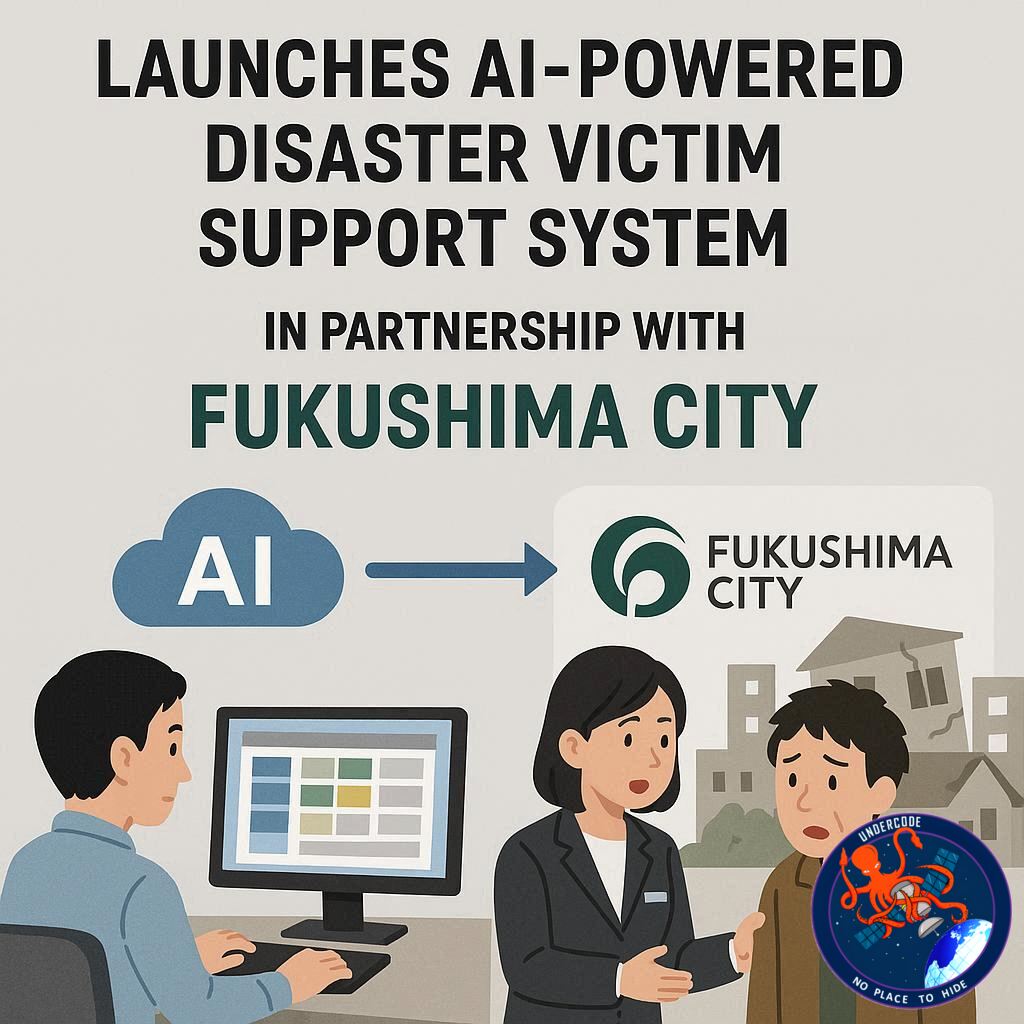
A New Era of Disaster Relief Technology
Fujifilm System Services, a subsidiary of Fujifilm Holdings, has officially launched a groundbreaking disaster victim support system developed jointly with Fukushima City. The platform, introduced on August 29, is designed to speed up the issuance of disaster victim certificates by using artificial intelligence (AI) to analyze housing and property damage. This advancement aims to reduce bureaucratic delays and ensure quicker access to aid for people affected by natural disasters.
the Original
Fujifilm System Services, headquartered in Shinjuku, Tokyo, released its new disaster support system on the 29th, created in collaboration with Fukushima City. The platform leverages AI technology to automatically assess disaster damage and issue victim certificates more efficiently than traditional manual processes.
Traditionally, municipal staff members were required to input data by hand and build aid recipient lists manually. This process often led to delays, especially during large-scale disasters when applications surged. The new system automates the creation of these lists and even proposes suitable aid programs in a push-based manner, reducing staff workload and minimizing human error.
In practical terms, if 1,000 victims apply for aid, previous methods required around 400 hours of administrative work. With this AI-driven platform, the time drops to approximately 200 hours—cutting the burden in half. This not only saves resources but also ensures victims receive necessary support without unnecessary waiting times.
The urgency for such a system became evident after the 2022 Fukushima offshore earthquake, where the issuance of disaster victim certificates was severely delayed. Learning from that crisis, Fukushima City partnered with Fujifilm System Services in July 2024 to develop a solution. The result is now being marketed nationwide, with the expectation that municipalities across Japan will adopt it to strengthen their disaster response frameworks.
This initiative is seen as a crucial step in improving local governments’ resilience, enhancing administrative efficiency, and providing timely relief to disaster-stricken communities. It also reflects a broader industry trend where private technology companies collaborate with public institutions to address crisis management challenges.
What Undercode Say:
The launch of this AI-powered disaster support system by Fujifilm is more than a technological milestone—it is a practical response to one of Japan’s recurring national challenges: disaster preparedness and relief.
1. Fukushima as a Testing Ground
The choice of Fukushima is symbolic. Having faced multiple natural disasters, including the 2011 earthquake and nuclear crisis, the region understands firsthand the human cost of administrative bottlenecks. By piloting this technology in Fukushima, Fujifilm ensures credibility, real-world validation, and an emotional connection with the broader Japanese public.
2. Efficiency vs. Human Oversight
While halving administrative time is impressive, there remains a question of oversight. AI-driven analysis may accelerate certification, but errors in assessment or system vulnerabilities could still lead to disputes. Local governments must strike a balance between automation and human validation to maintain trust among citizens.
3. Scalability and Adoption
The system’s nationwide expansion is promising, but adoption rates will depend on costs, training, and integration with existing municipal infrastructure. Smaller municipalities with limited budgets may hesitate unless subsidies or national-level support is provided.
4. Data Privacy and Security Concerns
Collecting and analyzing disaster-related data raises questions about personal information security. In a country sensitive to data breaches, Fujifilm will need robust safeguards to reassure the public that sensitive information will not be misused.
5. A New Role for Corporations in Crisis Management
Fujifilm’s move demonstrates how private corporations can evolve beyond their core businesses to address social challenges. This aligns with a global trend where tech companies increasingly engage in public service initiatives, bridging gaps that governments alone cannot fill.
6. Global Implications
Japan is not the only country grappling with natural disasters. If proven effective, this system could be exported to regions prone to earthquakes, floods, or hurricanes. Fujifilm might find an international market for its disaster management technologies, positioning itself as a leader in humanitarian AI solutions.
7. Potential for Integration with National Resilience Plans
Japan’s government has been pushing for smarter disaster response frameworks. Fujifilm’s system could be integrated into national-level databases, allowing for faster coordination between municipalities, prefectures, and central authorities.
8. Long-Term Perspective
Beyond immediate efficiency gains, such systems could evolve into comprehensive disaster management hubs, integrating real-time satellite data, predictive analytics, and resource allocation tools. This would redefine how countries handle crises in the future.
In summary, Fujifilm’s AI system represents a timely technological innovation that addresses deep structural weaknesses in disaster response. However, its success will depend on adoption, trust, and long-term scalability.
🔍 Fact Checker Results
✅ Fujifilm System Services launched the disaster victim support system on August 29, 2025.
✅ Fukushima City partnered with Fujifilm after delays in certificate issuance following the 2022 offshore earthquake.
✅ The system reduces administrative workload from 400 hours to 200 hours for 1,000 applications.
📊 Prediction
The Fujifilm system is likely to see rapid adoption among medium and large municipalities within the next two years, especially in disaster-prone regions. The Japanese government may consider subsidizing its rollout to ensure uniform nationwide adoption. Long-term, Fujifilm could expand the platform internationally, particularly to Southeast Asia and the United States, where natural disaster frequency is increasing.
Recommendation: Highlight the dual role of Fujifilm as both a technology innovator and a social problem-solver.
Next step: Track municipal adoption rates and potential government subsidies over the next 12–18 months.
🕵️📝✔️Let’s dive deep and fact‑check.
References:
Reported By: xtechnikkeicom_0f08b79162d97941d6b485bc
Extra Source Hub:
https://www.medium.com
Wikipedia
OpenAi & Undercode AI
Image Source:
Unsplash
Undercode AI DI v2
🔐JOIN OUR CYBER WORLD [ CVE News • HackMonitor • UndercodeNews ]
📢 Follow UndercodeNews & Stay Tuned:
𝕏 formerly Twitter 🐦 | @ Threads | 🔗 Linkedin | 🦋BlueSky | 🐘Mastodon


