
Listen to this Post
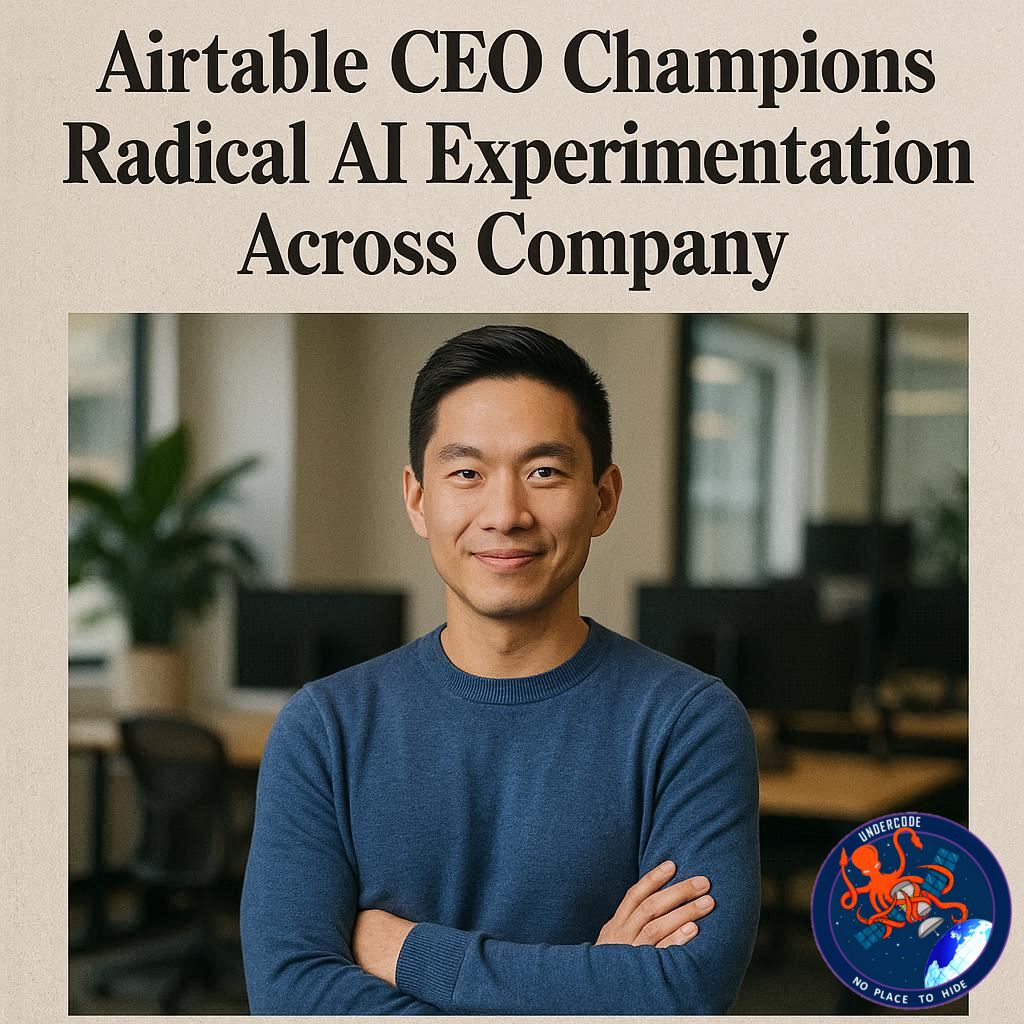
In a daring move that defies conventional corporate culture, Airtable CEO Howie Liu is redefining how tech companies approach artificial intelligence. Rather than quietly encouraging incremental AI adoption, Liu is actively instructing his 700+ employees to hit “pause” on routine work, cancel meetings, and dedicate entire days—or even weeks—to experimenting with AI tools. His bold strategy reflects a growing urgency in Silicon Valley: AI is no longer optional, and early mastery could define the next wave of innovation.
Liu recently articulated this vision on Lenny’s Podcast, emphasizing the importance of “play” in AI development. “If you want to cancel all your meetings for a day or for an entire week and just go play around with every AI product that you think could be relevant to Airtable, go do it. Period,” he stated. The CEO underscores that unstructured experimentation—trying, failing, and iterating—is central to mastering AI capabilities, a stark contrast to the regimented approaches typical of enterprise tech.
What sets Liu apart is not just his encouragement of AI experimentation but his personal commitment to it. He claims to be Airtable AI’s most expensive user worldwide, deliberately engaging in what he calls “wasteful” AI practices. By spending hundreds of dollars analyzing sales call transcripts, Liu generates insights that he argues would otherwise cost millions if obtained via consulting firms. This high-risk, high-reward mindset illustrates a growing trend among tech leaders: AI isn’t just a tool; it’s a strategic differentiator that justifies bold, unconventional investment.
Silicon Valley’s push toward AI fluency extends far beyond Airtable. Microsoft executives, including Julia Liuson, have made AI proficiency a core expectation for every employee, while Google CEO Sundar Pichai encourages staff to “be more AI-savvy.” Amazon CEO Andy Jassy and Shopify leadership similarly demand AI literacy, linking it to team performance and access to resources. Even Duolingo has embraced structured AI experimentation with weekly sessions—dubbed “f-r-A-I-days”—to discover new ways to optimize workflows and create efficiencies.
Airtable itself has embraced this philosophy at a product level. Valued at nearly \$12 billion in 2021, the company relaunched as an “AI-native app platform,” aiming to scale AI beyond simple chatbots into more sophisticated, code-adjacent applications that can transform business operations. Liu frames this as building the “killer application of AI”—a platform where creativity and experimentation are baked directly into the product experience.
What Undercode Say:
Howie Liu’s approach illustrates a rare blend of bold leadership and experimental culture that could redefine AI adoption across industries. By encouraging employees to dedicate entire days to AI experimentation, he is effectively institutionalizing “play” as a core competency—a practice that mirrors how breakthrough technologies often emerge. While most companies treat AI as a productivity booster or automation tool, Airtable’s model emphasizes strategic insight, creativity, and risk-taking.
Liu’s self-described “wasteful” use of AI is particularly noteworthy. At a glance, spending hundreds of dollars analyzing sales transcripts may seem excessive, but when measured against the potential for actionable insights that might otherwise cost millions, the ROI—both financial and intellectual—becomes clear. This behavior also signals to employees that experimentation, even if costly or messy, is not only allowed but encouraged. In a culture often driven by efficiency metrics, this is a radical departure.
The broader industry context reinforces the timeliness of Airtable’s strategy. Companies like Microsoft, Google, Amazon, and Shopify are increasingly evaluating employees on AI usage, making mastery of these tools critical for career advancement. Airtable’s emphasis on immersive, hands-on experimentation could give it a competitive edge by producing employees who are not just AI-literate but creatively fluent in applying AI to solve complex problems.
This approach also reflects a psychological shift in tech leadership: failure is reframed as learning, experimentation is incentivized, and the traditional “always-on productivity” mindset is temporarily suspended. Liu is essentially gamifying AI adoption, converting what is often seen as a tedious learning process into an engaging, exploratory activity. Such cultural shifts could accelerate innovation cycles, uncover previously hidden efficiencies, and position Airtable as a thought leader in AI-native platforms.
From a strategic perspective, this is more than just internal culture—it’s a marketing signal. By openly promoting a high-risk, high-reward model of AI experimentation, Airtable projects itself as a forward-thinking, innovation-first company. This could attract top-tier AI talent and early adopters who are eager to work in environments where creative freedom is prioritized.
Moreover, Airtable’s evolution into an AI-native app platform demonstrates that Liu’s vision is not abstract. It is tightly integrated with product strategy, emphasizing scalable applications that go beyond simple AI chat tools. By enabling teams to experiment both internally and through the platform itself, Airtable is creating a feedback loop where learning drives product improvement, which in turn incentivizes further experimentation—a potentially self-reinforcing cycle of innovation.
Finally, Liu’s method may serve as a template for other mid-sized tech firms looking to bridge the gap between AI potential and real-world application. Traditional training programs or incremental adoption strategies may be insufficient in a rapidly evolving AI landscape. Immersive, experimental models like Airtable’s may become increasingly necessary for companies that aim to compete with Silicon Valley giants while fostering an internal culture of innovation.
🔍 Fact Checker Results:
✅ Airtable was valued at nearly \$12 billion in 2021.
✅ Howie Liu has publicly encouraged employees to experiment with AI by canceling regular meetings.
✅ Google, Microsoft, Amazon, and Shopify have made AI proficiency increasingly important for employees.
📊 Prediction:
Airtable’s radical AI experimentation approach could redefine internal innovation models in tech. Within the next 2–3 years, similar immersive AI initiatives are likely to emerge across mid-sized tech firms, creating a culture where “playful experimentation” is a recognized pathway to strategic insight. Liu’s strategy may also accelerate Airtable’s adoption as a go-to platform for AI-native applications, potentially positioning it as a leading innovator in scalable AI tools.
🕵️📝✔️Let’s dive deep and fact‑check.
References:
Reported By: timesofindia.indiatimes.com
Extra Source Hub:
https://www.medium.com
Wikipedia
OpenAi & Undercode AI
Image Source:
Unsplash
Undercode AI DI v2
🔐JOIN OUR CYBER WORLD [ CVE News • HackMonitor • UndercodeNews ]
📢 Follow UndercodeNews & Stay Tuned:
𝕏 formerly Twitter 🐦 | @ Threads | 🔗 Linkedin | 🦋BlueSky | 🐘Mastodon


