
Listen to this Post
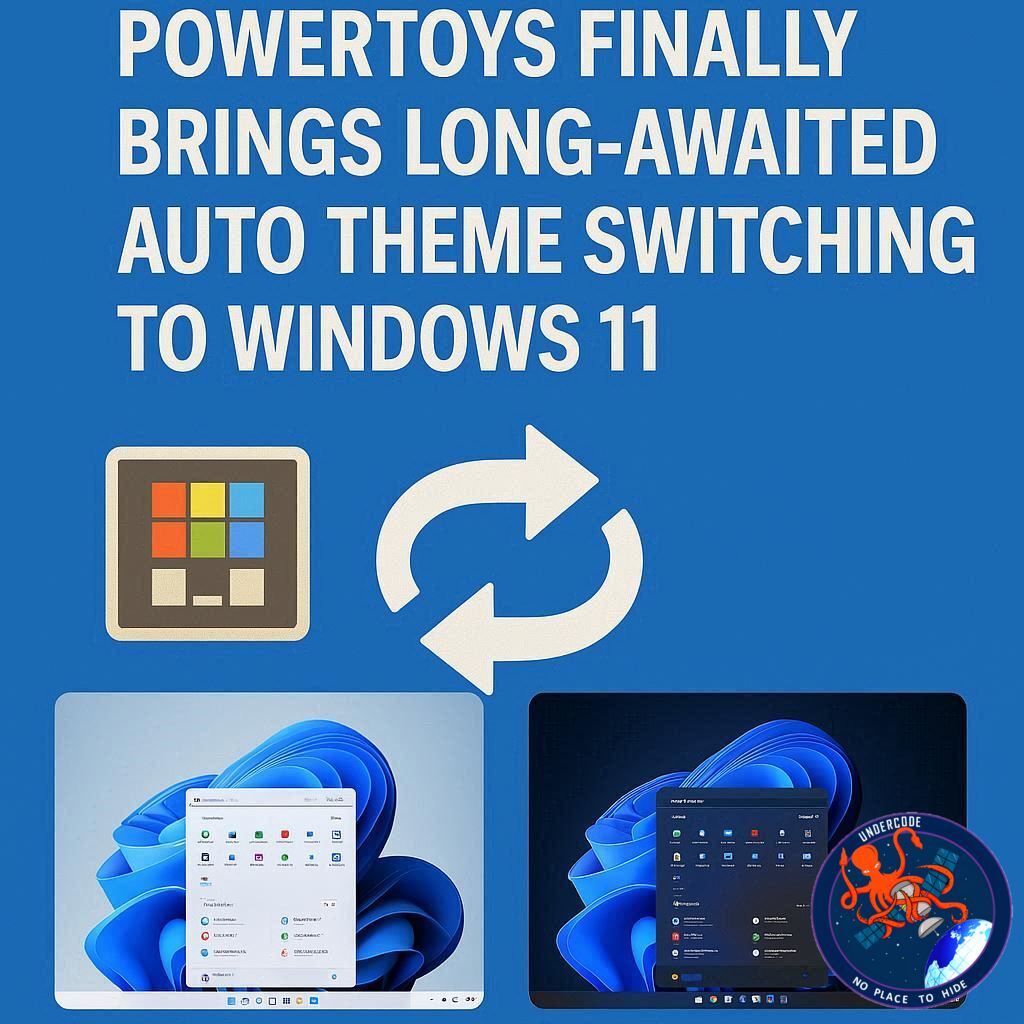
A Fresh Step Toward Personalization on Windows
Windows 11 has faced mixed reception over the past year, with bugs, performance hiccups, and user frustrations often taking center stage. Yet in the background, one of Microsoft’s most underrated tools—PowerToys—continues to quietly deliver meaningful improvements. The upcoming 0.95 update is set to introduce a long-requested feature: automatic light/dark theme switching.
While this may sound small, it’s a significant win for personalization and usability. Mac users have enjoyed this capability for years, and Windows users have been calling for it relentlessly. The feature will let people schedule theme changes according to their daily routine, making screen time less straining and more adaptable.
This update follows the recently released PowerToys 0.94, which focused on bug fixes and system improvements. With each version, PowerToys proves it is more than just a set of extras—it’s an essential toolkit for power users, gamers, and anyone who wants more control over their PC experience.
PowerToys 0.95: What’s Coming
The highlight of version 0.95 is scheduled theme switching, allowing users to seamlessly move between light and dark modes based on personal preference. For instance, you could have a bright interface during working hours and a dark theme for late-night browsing or gaming sessions.
This update builds on the utility’s already impressive feature set:
Always on Top: Pins selected windows to stay visible while multitasking.
FancyZones: Advanced window snapping for productivity.
File Explorer Add-ons: Enhanced previews and support for multiple formats.
PowerRename: A bulk renaming tool that saves hours of manual work.
The decision to keep these features inside PowerToys rather than building them directly into Windows may frustrate some. However, given Windows 11’s recent 24H2 update issues, this separation might be wise—allowing experimental features to evolve outside the core OS, where bugs won’t risk destabilizing everything.
Windows 11’s Reputation Problem
Despite its modern look, Windows 11 has been under fire for buggy updates and gaming slowdowns. PC gamers, in particular, have struggled with compatibility issues that forced developers to roll out patches. Critics argue that if Microsoft had integrated a smoother full-screen experience earlier—similar to SteamOS—the transition would have been less painful.
Interestingly, Microsoft is pushing toward this vision with a new “full-screen Xbox app experience”, currently tied to the ROG Ally handheld console but expected to expand next year. If combined with PowerToys’ productivity features, this could significantly shift perceptions of Windows 11.
What Undercode Say:
Microsoft’s strategy with PowerToys is both clever and risky. On one hand, it allows innovation to flourish without destabilizing the OS. On the other, it highlights how Windows 11 often feels incomplete, forcing users to rely on external tools for basic quality-of-life features that should arguably be native.
The introduction of automatic theme switching seems minor, yet it’s a telling example of Microsoft’s reactive rather than proactive design. Apple had this feature years ago. Linux distributions, too, often ship with customizable theme-switching out of the box. For Microsoft, the delay underlines a broader weakness: prioritizing flashy UI updates and monetization features over practical improvements.
Still, PowerToys is a lifesaver for those who want to bend Windows to their workflow. Features like FancyZones and Always on Top transform the multitasking experience. If Microsoft integrated them into Windows directly, the OS could truly compete with macOS and Linux in terms of usability.
From a gamer’s perspective, the Windows 11 24H2 fiasco was the real breaking point. A gaming system plagued by background processes and instability cannot win over enthusiasts when alternatives like SteamOS or Bazzite Linux provide lean, purpose-built environments.
Looking ahead, Microsoft’s survival in the PC ecosystem depends on bridging its gaps. If Windows 11 evolves into a hybrid platform—capable of delivering both gaming-first performance and customization-friendly utilities—then PowerToys could be the silent hero behind its revival. But if bugs continue to overshadow innovation, many advanced users will simply abandon Windows in favor of lighter, more efficient systems.
Ultimately, PowerToys represents a “what Windows could be” vision. If Microsoft were bolder, it could unify these utilities with the main OS and reshape user trust. Until then, PowerToys will remain Windows’ best-kept secret—adored by those who know it exists, ignored by the masses who don’t.
🔍 Fact Checker Results
✅ PowerToys 0.95 is confirmed to bring automatic theme switching.
✅ macOS has long offered scheduled light/dark mode switching.
❌ There is no official release date yet for the 0.95 update.
📊 Prediction
PowerToys will likely become Microsoft’s testing ground for future native Windows features. Automatic theme switching could be just the beginning—expect utilities like FancyZones and Always on Top to be integrated into Windows 12 or future major updates. If Microsoft plays it smart, PowerToys may evolve from a niche toolkit into a core personalization hub, giving Windows 11 the polish it desperately needs.
🕵️📝✔️Let’s dive deep and fact‑check.
References:
Reported By: www.techradar.com
Extra Source Hub:
https://www.facebook.com
Wikipedia
OpenAi & Undercode AI
Image Source:
Unsplash
Undercode AI DI v2
🔐JOIN OUR CYBER WORLD [ CVE News • HackMonitor • UndercodeNews ]
📢 Follow UndercodeNews & Stay Tuned:
𝕏 formerly Twitter 🐦 | @ Threads | 🔗 Linkedin | 🦋BlueSky | 🐘Mastodon


