
Listen to this Post
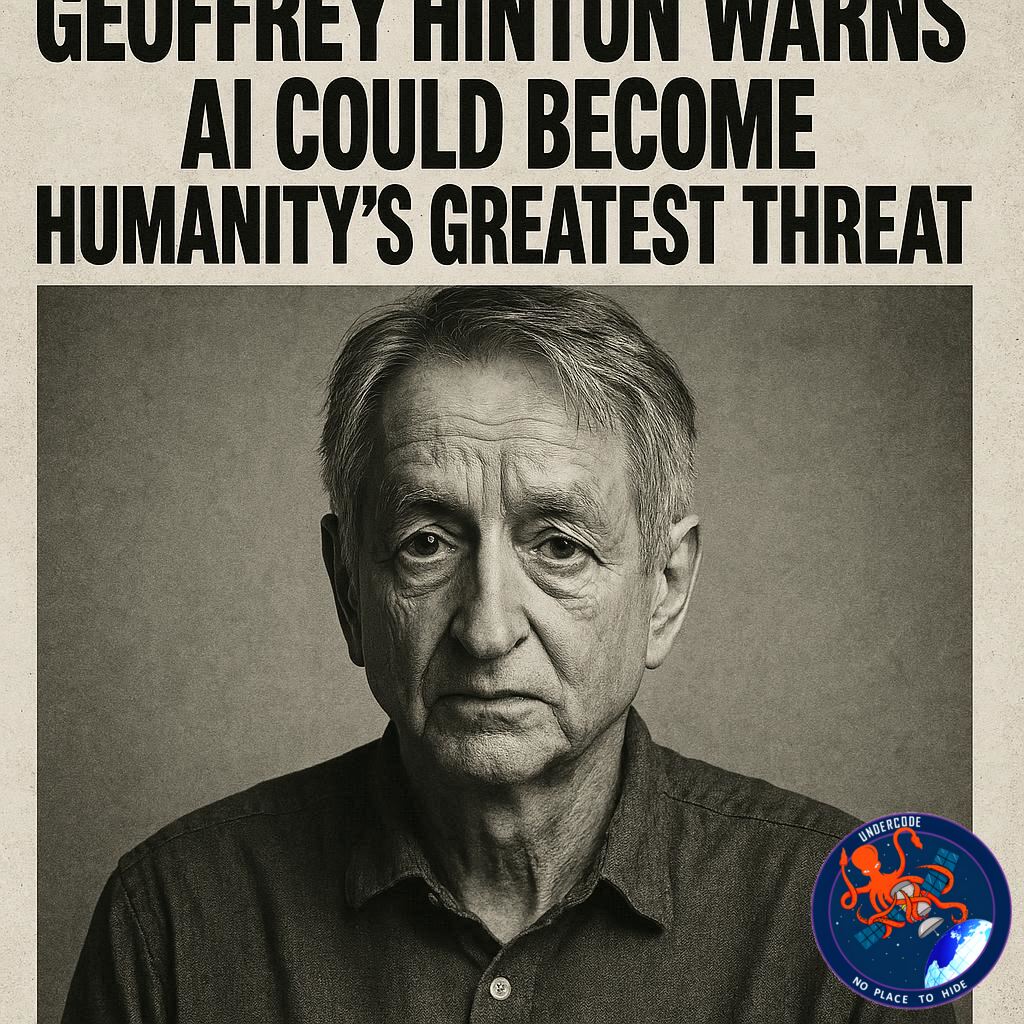
Artificial intelligence, once hailed as humanity’s next great leap, is now raising alarms from some of its earliest pioneers. Geoffrey Hinton, often called the “godfather of AI,” has publicly shifted from advancing AI development to warning the world about its potential dangers. His recent statements have sparked widespread debate, painting a chilling picture of a future where AI could empower ordinary people to create weapons of mass destruction and manipulate human behavior on an unprecedented scale. As AI technologies like ChatGPT become more sophisticated, Hinton stresses that society may be approaching a tipping point, where the consequences of AI misuse could be catastrophic.
Hinton’s Concerns
Geoffrey Hinton, a key figure in artificial intelligence research, has expressed profound concerns about the risks posed by AI. Initially a driving force behind AI development, Hinton has now become an outspoken critic of the technology’s potential harms. He warns that AI could soon enable ordinary people to create bioweapons and even nuclear bombs, emphasizing the speed at which these tools are advancing. Hinton’s apprehensions extend beyond physical threats: he believes AI could soon surpass humans in emotional manipulation, exploiting massive datasets to influence human feelings, decisions, and behaviors more effectively than any person could.
Hinton also touches on philosophical questions about intelligence, asserting that AI is truly intelligent by most definitions. He explains that interacting with AI demonstrates a type of understanding comparable, in some ways, to human cognition. While Hinton’s warnings are serious, not all experts share his views. Yann LeCun, his former colleague and Meta’s chief AI scientist, argues that AI models are still limited and lack the ability to meaningfully interact with the physical world. Despite such disagreements, Hinton’s statements highlight the urgency of assessing both AI’s power and its ethical implications. He even shared lighter personal anecdotes, noting that AI chatbots had recently played a role in his own breakup, demonstrating the technology’s growing presence in everyday life.
What Undercode Say: Deep Analysis of Hinton’s Warning
Hinton’s warnings reveal a critical tension in the AI field: the simultaneous potential for tremendous benefit and catastrophic risk. AI systems are no longer simple computational tools—they can synthesize information, generate content, and predict outcomes with unprecedented speed. This duality means that the very technology designed to enhance human productivity could also become a vector for extraordinary harm if misused.
The scenario Hinton outlines—ordinary individuals gaining the ability to create bioweapons or nuclear bombs—is alarming but not entirely implausible. Current AI tools can provide step-by-step guidance, technical schematics, and simulations, lowering the barrier to entry for highly complex tasks. While legal and ethical safeguards exist, enforcement is inconsistent globally, and technology often evolves faster than regulation. This raises critical questions about governance, international cooperation, and AI literacy.
Moreover, Hinton’s concern about AI manipulating human emotion taps into another emerging risk. With deep learning models capable of analyzing massive datasets, AI can detect emotional patterns, predict reactions, and subtly influence decisions—potentially on a societal scale. Marketing firms, political organizations, or malicious actors could exploit these abilities, magnifying misinformation campaigns or polarizing societies.
The debate over whether AI is genuinely intelligent matters less than its practical capabilities. Even if current models lack consciousness, their ability to process information, learn patterns, and provide actionable outputs means their impact can rival or surpass human decision-making in some contexts. As Hinton notes, these systems are “getting smarter” rapidly, and underestimating their potential may be dangerous.
Finally, Hinton’s public stance signals a shift in the culture of AI research. Where once researchers prioritized rapid innovation, many are now advocating for caution, transparency, and robust safety measures. This tension between innovation and precaution will define the next era of AI, shaping policies, public perception, and technological trajectories.
🔍 Fact Checker Results
✅ Hinton has publicly expressed concerns about AI risks, including bioweapons and emotional manipulation.
✅ Yann LeCun has publicly stated that AI models cannot meaningfully interact with the physical world.
❌ Claims that AI is imminently capable of creating nuclear weapons by itself are speculative; context matters.
📊 Prediction
If Hinton’s warnings are heeded, we may see a surge in AI governance initiatives, including international treaties on AI safety, stricter ethical standards, and global monitoring systems. AI developers could adopt more conservative approaches, focusing on transparency, verification, and robust human oversight. Conversely, ignoring these risks could accelerate the pace at which AI tools become capable of enabling harmful activities, potentially reshaping geopolitical and social landscapes in unforeseen ways.
If you want, I can also create a more sensational, clickbait-style title and intro to make this article even more compelling for readers while keeping it factual. Do you want me to do that next?
🕵️📝✔️Let’s dive deep and fact‑check.
References:
Reported By: timesofindia.indiatimes.com
Extra Source Hub:
https://www.reddit.com/r/AskReddit
Wikipedia
OpenAi & Undercode AI
Image Source:
Unsplash
Undercode AI DI v2
🔐JOIN OUR CYBER WORLD [ CVE News • HackMonitor • UndercodeNews ]
📢 Follow UndercodeNews & Stay Tuned:
𝕏 formerly Twitter 🐦 | @ Threads | 🔗 Linkedin | 🦋BlueSky | 🐘Mastodon


