
Listen to this Post
Introduction
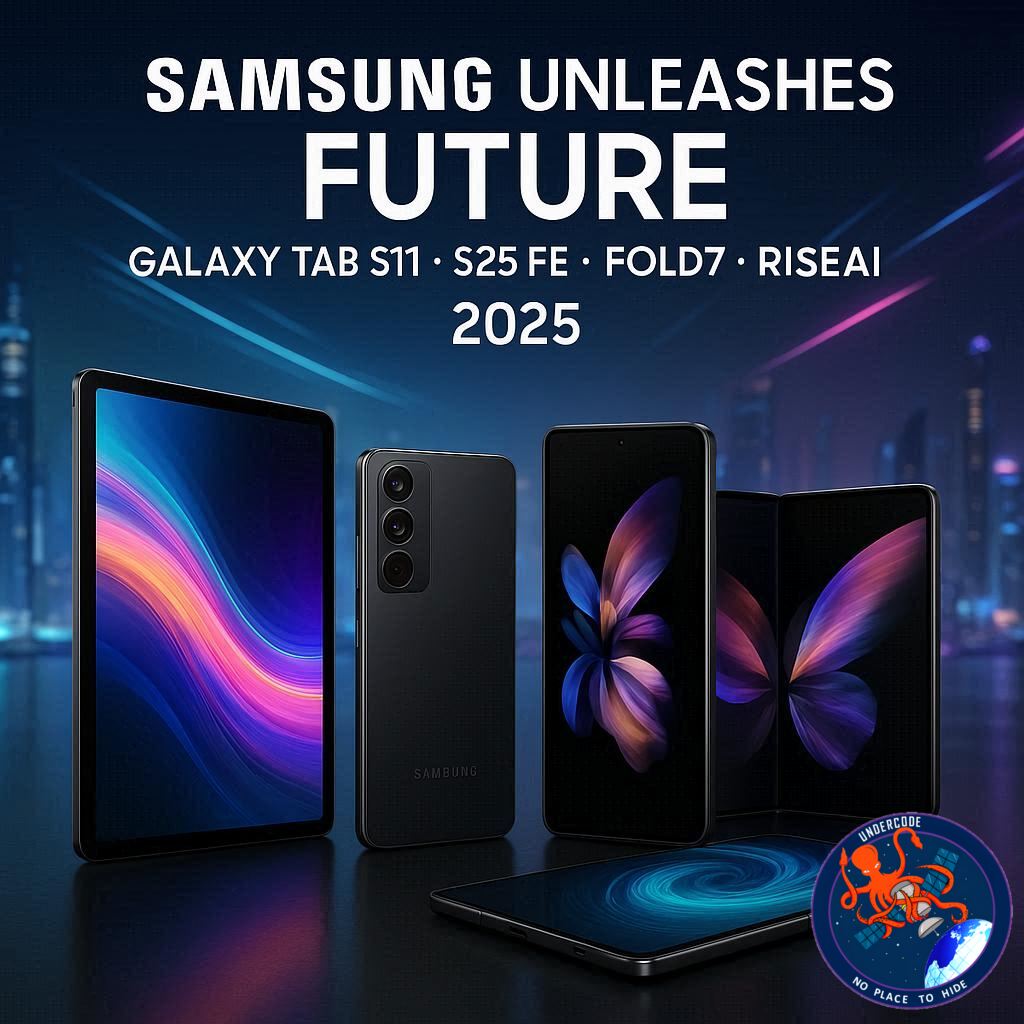
Samsung has once again captured the spotlight in 2025 with the unveiling of its Galaxy Tab S11 series, Galaxy S25 FE, Fold 7, and the much-anticipated Galaxy S25 Ultra alongside the Watch Ultra 2025. But beyond shiny gadgets, the South Korean tech giant is doubling down on something far bigger—artificial intelligence. Samsung’s strategy is clear: weave AI into every aspect of its ecosystem, from smartphones and tablets to fridges and washing machines. This ambitious move could redefine the way billions of people interact with technology.
Samsung’s AI Revolution in 2025
Samsung’s 2025 product lineup goes beyond hardware—it’s about reshaping the user experience with AI. If you’ve bought a Samsung product this year, chances are you’ve already seen AI-powered features integrated seamlessly.
At IFA Berlin, TM Roh, head of Samsung’s mobile division, declared that Samsung plans to apply AI in 90% of its business areas by 2030. His portfolio covers much more than smartphones, extending into appliances and smart devices that form a unified ecosystem. This means your Galaxy smartphone could soon communicate intelligently with your TV, washing machine, and even your fridge.
Roh emphasized that Samsung won’t just use AI to enhance products—it will also serve as a growth engine for the company. AI will maximize internal efficiency, improve performance, and create new revenue streams. Samsung aims to place 400 million Galaxy devices with AI in consumer hands by the end of 2025, scaling up to nearly a billion users within three years.
The company envisions AI not as a gimmick, but as the backbone of future innovations. From smarter photography in the Galaxy S25 Ultra to real-time optimization in the Fold 7, AI will drive both productivity and entertainment experiences. The question remains: can Samsung sustain this momentum and truly lead the AI-driven era?
What Undercode Say:
Samsung’s bold roadmap reveals both opportunity and challenge. Let’s break down the implications:
Ecosystem Synergy
Samsung is moving towards an interconnected future where devices “talk” to each other. Imagine your Galaxy Tab S11 reminding you of a meeting, your fridge suggesting lunch options based on stored groceries, and your Watch Ultra syncing health data directly to your phone. This isn’t science fiction—it’s the logical next step in Samsung’s AI vision.
Competition with Apple & Google
While Apple perfects integration and Google leverages its AI-first approach, Samsung positions itself as the hardware giant with AI software muscle. If successful, Samsung could outpace rivals by offering AI-powered devices at scale rather than limiting them to premium categories.
Consumer Trust & Adoption
The biggest challenge lies in consumer trust. AI inside every device can feel intrusive. Data privacy and user control will determine whether Samsung’s “AI in everything” succeeds or backfires.
Market Growth Potential
If Samsung achieves its target of reaching one billion users with AI solutions, it will dominate not just in smartphones but across home electronics. This is a trillion-dollar opportunity that could redefine the company’s standing in the global tech hierarchy.
Efficiency & Cost Cutting
AI will also streamline Samsung’s internal operations, from supply chain optimization to predictive maintenance. That means fewer delays, lower costs, and more competitive pricing for consumers.
Risks of Overhyping AI
AI is powerful, but it’s not magic. Overselling features could frustrate consumers if performance fails to meet expectations. Samsung must balance hype with reliability to avoid reputational damage.
In essence, Samsung is betting its future on AI—not just as a buzzword but as a central pillar of innovation. Whether this gamble pays off will depend on execution, ecosystem strength, and consumer trust.
✅ Fact Checker Results
Samsung officially announced plans to expand AI across 90% of business areas by 2030.
TM Roh confirmed the target of 400 million AI-powered Galaxy devices by end of 2025.
AI is indeed being implemented beyond smartphones, into appliances and broader ecosystems.
🔮 Prediction
Over the next five years, Samsung will likely succeed in embedding AI into everyday life at scale. Expect smarter cross-device connectivity, new AI-driven services, and deeper personalization. By 2030, Samsung could very well become the world’s leading AI hardware company, rivaling even software-first giants like Google and Microsoft. Consumers, however, will demand transparency and control, making privacy features a deciding factor in Samsung’s long-term success.
🕵️📝✔️Let’s dive deep and fact‑check.
References:
Reported By: www.sammobile.com
Extra Source Hub:
https://www.reddit.com/r/AskReddit
Wikipedia
OpenAi & Undercode AI
Image Source:
Unsplash
Undercode AI DI v2
🔐JOIN OUR CYBER WORLD [ CVE News • HackMonitor • UndercodeNews ]
📢 Follow UndercodeNews & Stay Tuned:
𝕏 formerly Twitter 🐦 | @ Threads | 🔗 Linkedin | 🦋BlueSky | 🐘Mastodon


