
Listen to this Post
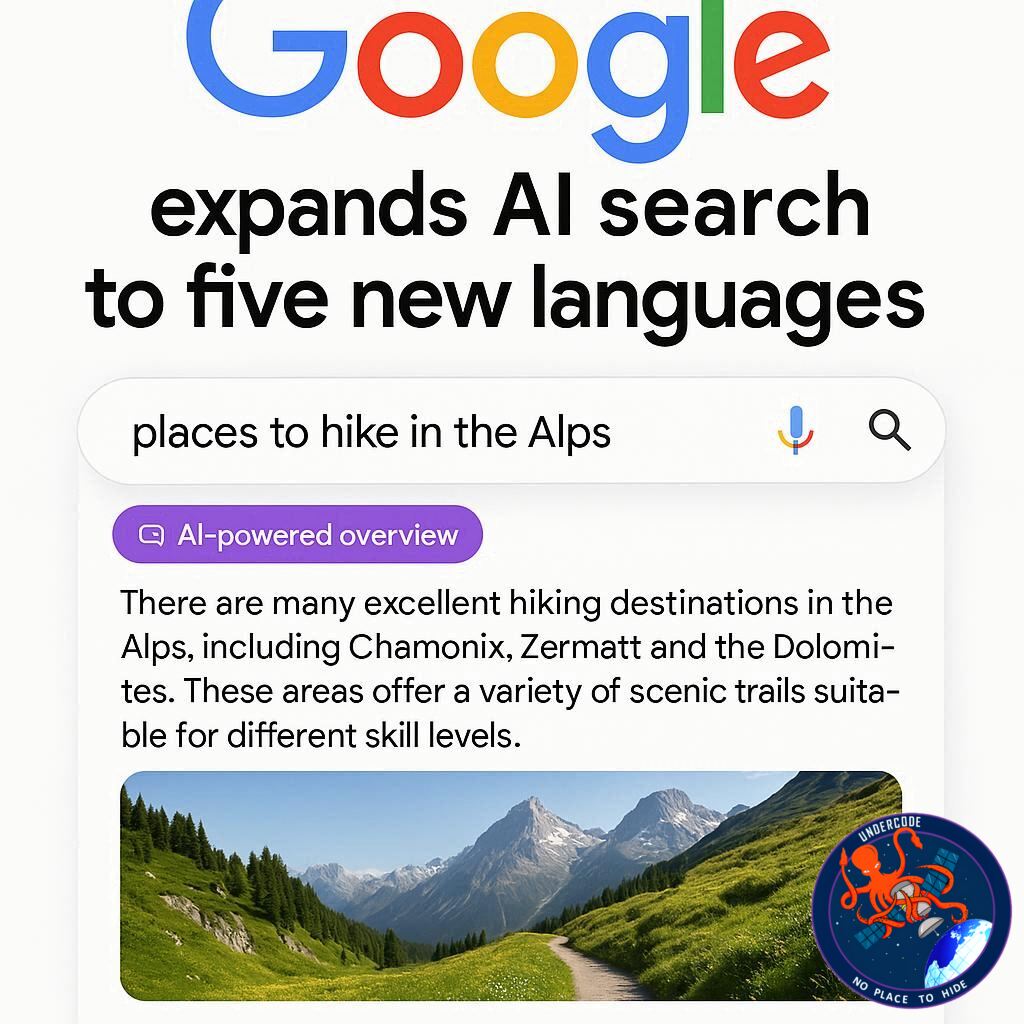
The landscape of online search is undergoing a transformative shift as Google rolls out its AI-powered search mode, now available in five additional languages, including Japanese, Korean, Hindi, Indonesian, and Portuguese. This marks the first time Google’s generative AI search functionality has extended beyond English, enabling users worldwide to ask questions conversationally and receive AI-generated answers. Beyond simple text queries, users can now combine images with their questions, unlocking a more interactive and intuitive search experience.
Previously limited to English-speaking countries, Google introduced AI Mode earlier this year and gradually expanded its reach. By late August, English AI Mode became accessible in over 180 countries. Starting September 9, users can switch to AI Mode directly from Google’s homepage at no cost. Once activated, the AI scours the web to provide detailed answers in response to natural-language questions, offering follow-up clarification to improve accuracy.
A standout feature of this update is image-based queries. For instance, users can snap a photo of an unknown product, such as clothing or a gadget, and ask the AI to identify it. The system analyzes online data to deliver accurate product names. Voice input is also supported, making the search experience more fluid and accessible.
Additionally, the “Draw-to-Search” feature, which allows users to select specific sections of images or videos for targeted searches, is now AI Mode compatible. This enables users to find similar items, such as sunglasses or shoes spotted on a celebrity in a video clip, directly from their Android devices.
While these innovations promise convenience, they also raise concerns about the prevalence of “zero-click searches,” where users receive answers without visiting the original websites. This could reduce ad impressions, potentially affecting Google’s revenue and other online content providers. A study by SEO tool company Semrush indicated that AI Mode produces zero-click results in over 90% of cases. Google, however, counters that many such studies are based on inaccurate data and that no significant decline in ad viewing has been observed.
What Undercode Say:
The expansion of AI Mode into multiple languages represents a pivotal moment in global search technology. By integrating image and voice capabilities, Google is effectively transforming traditional search into a more dynamic, interactive experience. Users can now obtain precise answers without needing technical query knowledge, bridging the accessibility gap across languages and regions.
However, this convenience comes with trade-offs. The rise of zero-click searches may redefine how content creators and advertisers engage with audiences, possibly shifting the internet economy toward platforms capable of retaining user attention within AI interfaces. From a technological standpoint, Google’s approach combines advanced natural language processing with visual recognition, creating a hybrid search methodology that could set a new industry standard.
Moreover, the AI’s ability to cross-reference massive online datasets in real-time ensures more accurate responses than conventional search algorithms. Yet, the system must navigate challenges such as misinformation, biased datasets, and cultural context nuances, especially when operating across multiple languages. For businesses, this update signals the need to adapt SEO strategies to remain visible in a world increasingly dominated by AI-generated summaries.
The expansion also hints at Google’s broader ambitions for a fully conversational AI ecosystem, integrating AI across products like Android, YouTube, and Maps. As AI Mode matures, it could fundamentally change online information consumption patterns, making searches more personalized, context-aware, and multi-modal. For end-users, the benefit is undeniable—faster, more intuitive answers—but for advertisers and content creators, the new paradigm necessitates strategic rethinking.
Finally, AI Mode’s image integration can revolutionize e-commerce and lifestyle search trends. Users can now identify products instantly, compare prices, or find alternatives using a single snapshot. This convergence of AI, visual recognition, and natural language could become the blueprint for the next generation of search engines, redefining both user expectations and market dynamics.
🔍 Fact Checker Results
✅ Google AI Mode now supports Japanese, Korean, Hindi, Indonesian, and Portuguese.
✅ Users can combine text queries with images and voice input for enhanced results.
❌ Claims of massive ad revenue decline due to zero-click searches are not confirmed by Google.
📊 Prediction
AI Mode’s expansion into multiple languages is likely to accelerate global adoption, particularly in regions previously underserved by advanced search technology. We can expect a surge in multi-modal queries—text combined with images or voice—while traditional SEO strategies may need rapid adaptation. Advertisers may shift focus to AI-native content, and zero-click interactions could redefine the online advertising landscape within the next 12–18 months.
🕵️📝✔️Let’s dive deep and fact‑check.
References:
Reported By: xtechnikkeicom_bd98cbd56c97832c9e530a7f
Extra Source Hub:
https://www.reddit.com/r/AskReddit
Wikipedia
OpenAi & Undercode AI
Image Source:
Unsplash
Undercode AI DI v2
🔐JOIN OUR CYBER WORLD [ CVE News • HackMonitor • UndercodeNews ]
📢 Follow UndercodeNews & Stay Tuned:
𝕏 formerly Twitter 🐦 | @ Threads | 🔗 Linkedin | 🦋BlueSky | 🐘Mastodon


