
Listen to this Post
A New Era of Work at Google
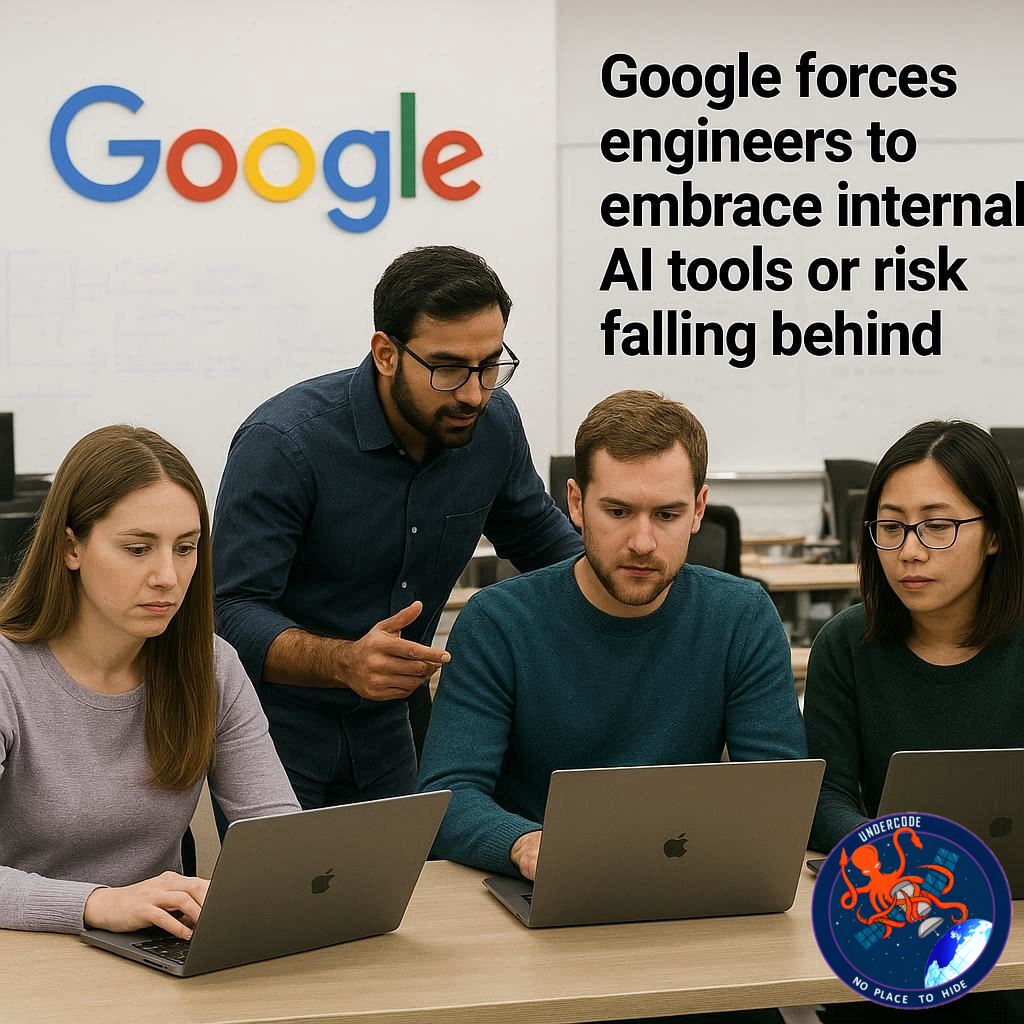
Google is taking its AI transformation to a new level, making artificial intelligence not just a tool but a requirement for its employees. The company has introduced strict guidelines for software engineers, requiring them to use only Google’s internal AI systems for coding tasks. This move underscores how central AI has become to the company’s vision and reflects the broader industry race where big tech players are pushing their workforce to master AI or risk being left behind.
the Original
In June, Google’s Engineering Vice President Megan Kacholia sent an email mandating that software engineers use Google’s own AI models to boost coding productivity. Third-party AI tools are restricted, and engineers must request approval before using them even for non-coding tasks. This directive aligns with CEO Sundar Pichai’s July announcement, where he emphasized that adopting AI is critical for Google’s competitive survival.
Employees now report that managers are actively checking whether staff are integrating AI into their daily workflows, and expectations are rising that this usage will play into performance reviews. Some engineers noted that those who create AI-driven solutions that benefit broader teams are being rewarded, reinforcing the competitive environment within the company.
The push reflects Google’s broader industry battle, as artificial intelligence becomes a standard expectation across the tech world. Already, over 30% of Google’s code is AI-generated, an increase from 25% just last year. Job descriptions for engineers now explicitly list AI usage as a required skill.
Internally, Google has built tools like Cider, a coding platform powered by “Gemini for Google” (formerly Goose), trained on proprietary technical data. Meanwhile, divisions beyond engineering — such as sales and legal — are being encouraged to adopt tools like NotebookLM, with some employees receiving training to develop role-specific custom versions of Gemini AI.
Google’s \$2.4 billion acquisition of AI startup Windsurf further highlights its commitment to “agentic coding,” bringing in talent like former Windsurf CEO Varun Mohan. While Google officially claims that AI adoption isn’t yet part of performance reviews, many employees believe proficiency will inevitably shape career progression.
However, the transition hasn’t been seamless. Resistance exists within the company, with some employees posting memes questioning whether truly revolutionary technology should need forced adoption to ensure usage. Despite the skepticism, Google’s message is clear: in the AI era, staying relevant means using AI every single day.
What Undercode Say:
Google’s move reveals not just a company policy change, but a deep cultural shift in the tech industry. By mandating AI adoption, Google is essentially redefining what it means to be a software engineer within its walls. The coding job is no longer about just writing clean, efficient code; it’s now about leveraging AI to supercharge productivity and innovation.
This approach makes sense strategically. Competitors like Microsoft and OpenAI are rapidly advancing in the AI space, and Google cannot afford to fall behind. By forcing employees to adopt internal AI models, Google ensures two things:
- Its workforce is trained and aligned on AI usage.
- Sensitive company data doesn’t leak through third-party AI tools.
But the hidden layer here is cultural. Google has long prided itself on innovation and autonomy. This new rule flips that narrative, showing a company moving from free-flowing experimentation toward structured, AI-centered discipline. That shift may be necessary, but it comes at the risk of alienating engineers who value independence.
The numbers are revealing. A jump from 25% to 30% in AI-generated code within a year may not sound huge, but in a company the size of Google, it represents millions of lines of AI-driven development. If that pace continues, AI could account for half of Google’s codebase within the next two to three years. That would fundamentally change how products are built and maintained.
The \$2.4 billion acquisition of Windsurf also signals a critical bet: that “agentic coding” — where AI acts like an autonomous developer capable of handling complex projects — is the future. If successful, this could make Google less reliant on human coders for routine work, freeing engineers to focus on higher-level problem-solving. But it also raises questions about job security. If AI is doing the bulk of coding, what happens to junior engineers who historically cut their teeth on simpler tasks?
There’s also a competitive psychology at play. By rewarding employees who build AI workflows for teams, Google is fostering a culture of internal competition where AI adoption isn’t just encouraged but gamified. This could accelerate innovation but may also create stress, with workers fearing they’ll be penalized if they don’t integrate AI enough into their work.
Resistance within the ranks shouldn’t be underestimated. The memes mocking AI mandates highlight a tension: true innovation thrives on voluntary adoption, not forced compliance. If engineers feel coerced, they may comply outwardly while resisting creatively. Over time, that could weaken morale.
Still, Google’s move fits the logic of survival in tech’s AI arms race. Every major player is betting on AI, and those who fail to integrate it deeply into their workflows risk being left irrelevant. Google isn’t just future-proofing its workforce — it’s future-forcing it.
🔍 Fact Checker Results
✅ Google has mandated internal AI use for coding, verified by Business Insider reports.
✅ Over 30% of Google’s code is now AI-generated, confirmed by Sundar Pichai.
❌ No official evidence that AI adoption is part of performance reviews, though employees believe it influences advancement.
📊 Prediction
Google will continue to expand its AI mandates beyond engineering into all divisions, making AI fluency as essential as basic coding was in the 2000s. Within three years, AI could generate 50% or more of Google’s codebase, reshaping the role of human engineers from direct builders to AI supervisors and architects. Those who fail to adapt may find themselves sidelined in an AI-first corporate culture.
🕵️📝✔️Let’s dive deep and fact‑check.
References:
Reported By: timesofindia.indiatimes.com
Extra Source Hub:
https://www.quora.com/topic/Technology
Wikipedia
OpenAi & Undercode AI
Image Source:
Unsplash
Undercode AI DI v2
🔐JOIN OUR CYBER WORLD [ CVE News • HackMonitor • UndercodeNews ]
📢 Follow UndercodeNews & Stay Tuned:
𝕏 formerly Twitter 🐦 | @ Threads | 🔗 Linkedin | 🦋BlueSky | 🐘Mastodon


