
Listen to this Post
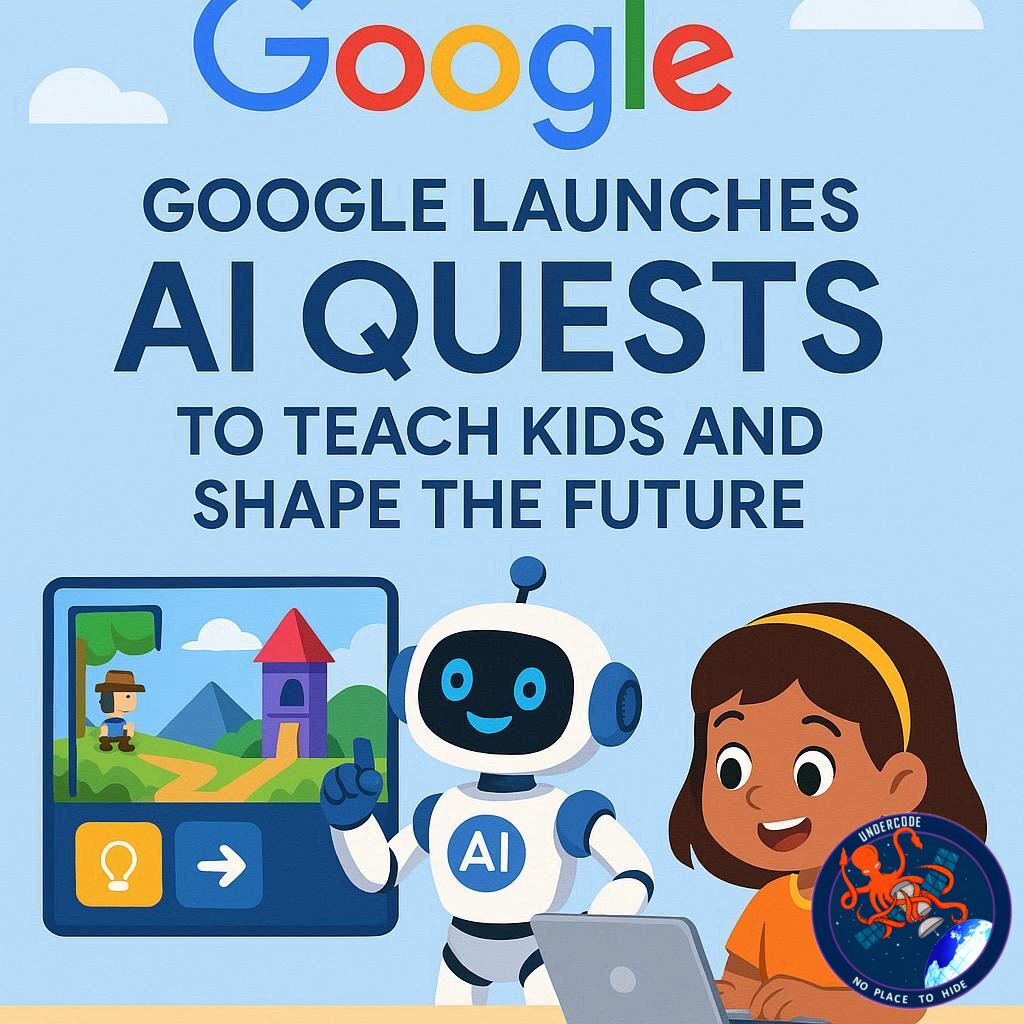
In an era where artificial intelligence is becoming central to almost every industry, tech giant Google is taking a bold step to bring AI literacy to the next generation. Through a series of interactive, game-based learning experiences called AI Quests, students aged 11 to 14 can explore how AI tackles real-world problems, from climate change to healthcare. The initiative blends education with entertainment, aiming to inspire young minds to not only understand AI but also think creatively about applying it to make a positive impact on the world.
Google’s AI Quests: A New Way to Learn
Google recently unveiled AI Quests, a set of interactive online games that immerse students in the practical applications of AI. Developed in collaboration with the Stanford Accelerator for Learning, these quests allow students to step into a virtual fantasy world guided by an AI mentor named Dr. Skye. In the first quest, inspired by Google’s Flood Forecasting research, students track rainfall and river flow, train an AI model, and help in-game characters predict floods accurately.
Future quests will tackle challenges like detecting eye diseases and mapping the brain, further expanding students’ understanding of AI in science and healthcare. By gamifying complex concepts, Google is transforming AI from an abstract idea into a hands-on, engaging experience for young learners.
Targeting the Next Generation
Silicon Valley has long embraced the philosophy of “move fast and break things,” but a new mantra seems to be emerging: “teach them young.” Tech companies are increasingly focusing on students because they are highly receptive to new technologies and can influence broader cultural trends. Google’s AI Quests exemplify this strategy by introducing AI at an early age, nurturing skills and habits that could persist into adulthood.
Beyond K-12 students, Google recently offered college students in five countries free access to its AI Pro plan, joining efforts from Perplexity, Grammarly, Anthropic, and OpenAI to integrate AI into education globally. This approach not only boosts AI literacy but also subtly builds long-term user loyalty.
The Broader AI Education Trend
AI is now positioned as the “operating system of the future,” and tech companies are racing to capture young audiences who will be the future workforce and decision-makers. By introducing AI through interactive quests and gamified learning, Google is helping students see the technology as practical and approachable, while encouraging critical thinking and problem-solving.
The educational push also mirrors larger geopolitical concerns. As AI development becomes a global competition, familiarizing younger generations with these tools could shape both national capabilities and individual career trajectories in the coming decades.
What Undercode Say:
Google’s AI Quests represent more than just educational innovation—they are a strategic move in the broader AI ecosystem. By combining gamification with real-world AI research, Google is teaching students not only to understand algorithms but to appreciate the societal implications of their use.
This approach aligns with the increasing trend of integrating AI into schools, where students are introduced to complex concepts in accessible, interactive ways. Games like these foster curiosity, analytical thinking, and ethical reasoning—skills that will become essential as AI becomes embedded in everyday life.
Moreover, by targeting pre-teens and early teens, Google ensures that AI literacy is not a late-stage addition to education but a foundational component of modern learning. This could give participating students a head start in tech-related careers while subtly encouraging brand loyalty.
The initiative also highlights a shift in how educational content is delivered: instead of passive learning through lectures, immersive, hands-on experiences are now seen as more effective in retaining knowledge and sparking creativity. The collaboration with academic institutions, like Stanford, ensures the content is both credible and pedagogically sound.
As AI Quests expand, they could influence curriculum design globally, pushing schools to incorporate AI problem-solving into core subjects. Students engaging with AI through games may also develop interdisciplinary skills, blending computer science, environmental science, and critical thinking in ways traditional classrooms rarely achieve.
Finally, the societal impact cannot be understated. By demonstrating how AI can be used to tackle real-world challenges—from natural disasters to healthcare—Google is framing AI as a tool for positive change, which may inspire the next generation of innovators, scientists, and problem-solvers.
🔍 Fact Checker Results
✅ Google launched AI Quests for students aged 11-14.
✅ First quest is based on Flood Forecasting research.
✅ Collaboration includes Stanford Accelerator for Learning.
📊 Prediction
AI Quests could become a blueprint for integrating AI literacy into global education systems. As gamified learning gains traction, more tech companies may develop similar initiatives, leading to widespread early exposure to AI. Over the next five years, students familiar with such tools may dominate AI-driven fields, influencing both career trajectories and future technological innovation.
🕵️📝✔️Let’s dive deep and fact‑check.
References:
Reported By: www.zdnet.com
Extra Source Hub:
https://www.reddit.com/r/AskReddit
Wikipedia
OpenAi & Undercode AI
Image Source:
Unsplash
Undercode AI DI v2
🔐JOIN OUR CYBER WORLD [ CVE News • HackMonitor • UndercodeNews ]
📢 Follow UndercodeNews & Stay Tuned:
𝕏 formerly Twitter 🐦 | @ Threads | 🔗 Linkedin | 🦋BlueSky | 🐘Mastodon


