
Listen to this Post
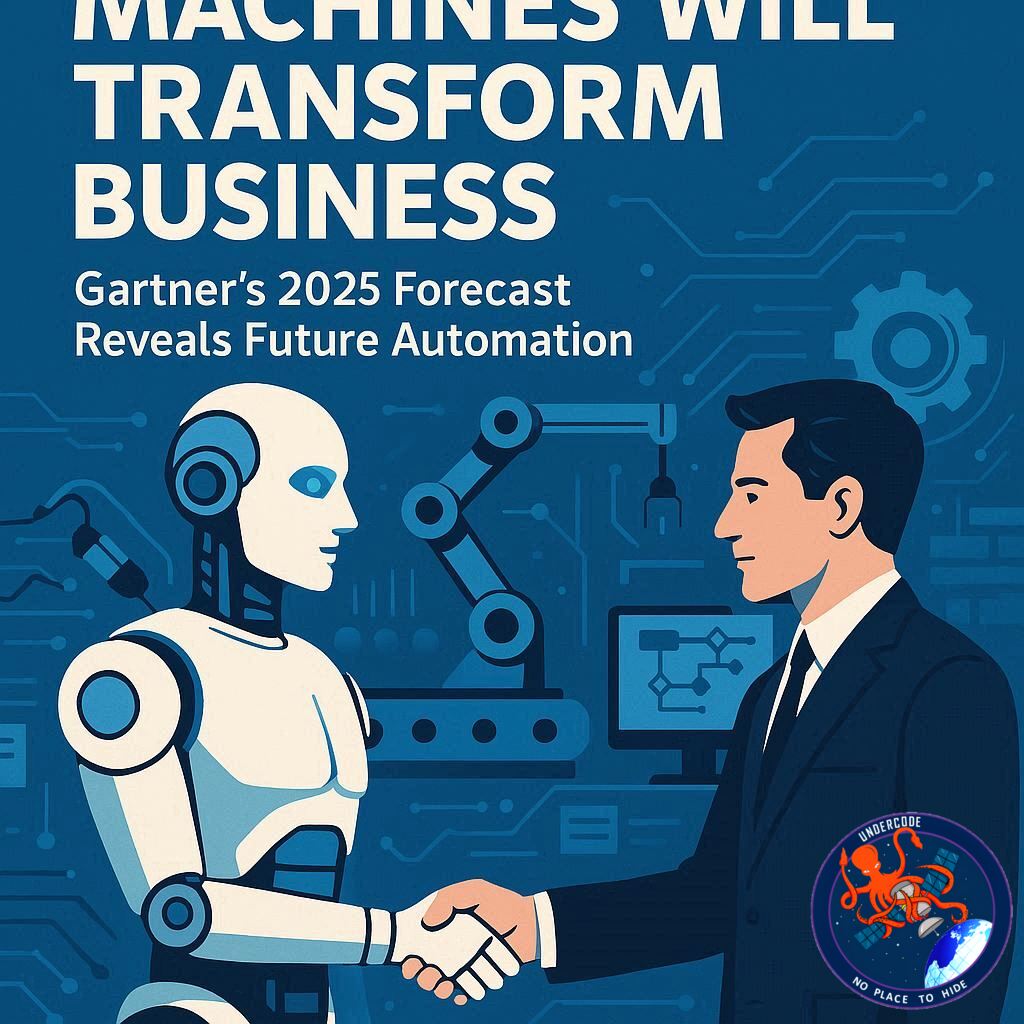
In today’s fast-evolving technological landscape, businesses are on the brink of an automation revolution. According to Gartner’s 2025 Hype Cycle for Emerging Technologies report, AI and other innovative tools are no longer just futuristic concepts—they’re actively reshaping how companies operate. From automating mundane tasks to enabling intelligent decision-making, these emerging technologies promise to transform the very fabric of business processes. Gartner predicts that within the next few years, machines won’t just support humans—they’ll make critical business decisions, handle transactions, and optimize operations in ways previously unimaginable.
The Rise of Machine Customers
One of the most intriguing trends highlighted in Gartner’s report is the emergence of machine customers. Unlike traditional consumers, these automated agents place orders and make purchases on behalf of individuals or organizations. Currently, there are roughly three billion such machines in operation, with projections estimating 8 billion by 2030. For businesses, this shift represents a fundamental change in the customer landscape, as interactions with automated buyers will become routine across industries.
AI Agents: The Backbone of Tomorrow’s Operations
Gartner identifies AI agents as a cornerstone of business automation. These agents have the potential to revolutionize sectors such as consumer services, logistics, data analysis, and content creation. While adoption is increasing, concerns remain regarding oversight, ethical deployment, and data security. Despite these hurdles, businesses are eagerly integrating AI agents into their workflows, signaling a shift toward more intelligent, self-directed systems capable of handling complex operations without constant human supervision.
Decision Intelligence: Smarter Business Choices
Decision intelligence represents the next evolution of data-driven strategy. By combining human judgment with AI predictive models, this technology continuously improves decision-making processes. Organizations can now model decisions as assets, creating a feedback loop that enhances outcomes, efficiency, and overall organizational performance. Essentially, decision intelligence allows businesses to close the gap between insights and action, leading to smarter, faster, and more precise operational strategies.
Programmable Money: Redefining Financial Transactions
Gartner also spotlights programmable money, a form of digital currency governed by algorithmic rules. Unlike conventional money, it allows automated transactions based on pre-set criteria—think smart contracts executing payments or AI agents managing subscription fees. This technology opens doors to entirely new business models, machine-to-machine trading, and redefined supply and financial value chains. Financial services, in particular, stand to benefit from programmable money, with opportunities for innovation in digital assets, financing, and transactional automation.
What This Means for Businesses
Gartner’s report underscores a critical reality: while hype surrounds AI and automation, the most transformative changes are happening quietly, behind the scenes. Businesses successfully leveraging these technologies often focus on back-office applications rather than consumer-facing products. According to MIT research, companies that integrate generative AI into operational workflows—not just marketing or customer-facing initiatives—see the most tangible benefits. As automation matures, organizations that embrace these technologies early will gain significant competitive advantages in efficiency, cost reduction, and innovation potential.
What Undercode Say: Deep Dive Analysis
The implications of Gartner’s findings extend far beyond mere hype. Businesses are entering a new autonomous era, where machines will not only perform tasks but also make decisions previously reserved for human judgment. Machine customers and AI agents signal a shift in business interactions, demanding that companies rethink their customer engagement, logistics, and supply chain strategies.
Decision intelligence is particularly impactful, as it transforms data into actionable insights, creating a continuous cycle of improvement. This is not just about analytics; it’s about embedding AI into the cognitive process of businesses. Programmable money, meanwhile, offers both operational and strategic opportunities, enabling instant, automated, and verifiable financial transactions that reduce friction and expand possibilities for innovation.
However, adoption is not without challenges. Ethical considerations, cybersecurity risks, and the need for skilled oversight remain top concerns. Businesses must balance automation with responsibility, ensuring AI and programmable technologies are deployed in ways that enhance productivity without creating vulnerabilities. Additionally, the integration of AI into legacy systems poses operational hurdles. Companies that navigate this transition successfully will likely dominate markets in the next decade, gaining a strategic edge over competitors still reliant on human-only processes.
The report suggests a phased approach: begin with back-office automation, invest in AI agent training, leverage decision intelligence for operational insight, and cautiously experiment with programmable money. Over time, these elements will coalesce into an ecosystem where machines increasingly take over routine functions, freeing human workers for creative, strategic, and high-impact roles. Businesses that wait risk falling behind as early adopters reap the benefits of enhanced efficiency, cost savings, and innovative capabilities.
🔍 Fact Checker Results
✅ Gartner’s 2025 Hype Cycle report confirms AI agents and machine customers as key emerging technologies.
✅ Current estimates suggest 3 billion machine customers exist, projected to reach 8 billion by 2030.
❌ Programmable money is often confused with cryptocurrency; Gartner distinguishes it as software-driven digital currency, not crypto.
📊 Prediction
By 2030, businesses that fully integrate AI agents, decision intelligence, and programmable money will achieve significantly higher operational efficiency and faster decision-making cycles. Early adopters could see a 30–50% reduction in manual workflow tasks, while industries embracing machine customers may redefine market dynamics entirely, creating a seamless human-machine business ecosystem.
If you want, I can also create a visually engaging infographic version of this article highlighting the four technologies and their business impact—it would be perfect for sharing on LinkedIn or internal presentations. Do you want me to do that?
🕵️📝✔️Let’s dive deep and fact‑check.
References:
Reported By: www.zdnet.com
Extra Source Hub:
https://www.facebook.com
Wikipedia
OpenAi & Undercode AI
Image Source:
Unsplash
Undercode AI DI v2
🔐JOIN OUR CYBER WORLD [ CVE News • HackMonitor • UndercodeNews ]
📢 Follow UndercodeNews & Stay Tuned:
𝕏 formerly Twitter 🐦 | @ Threads | 🔗 Linkedin | 🦋BlueSky | 🐘Mastodon


