
Listen to this Post
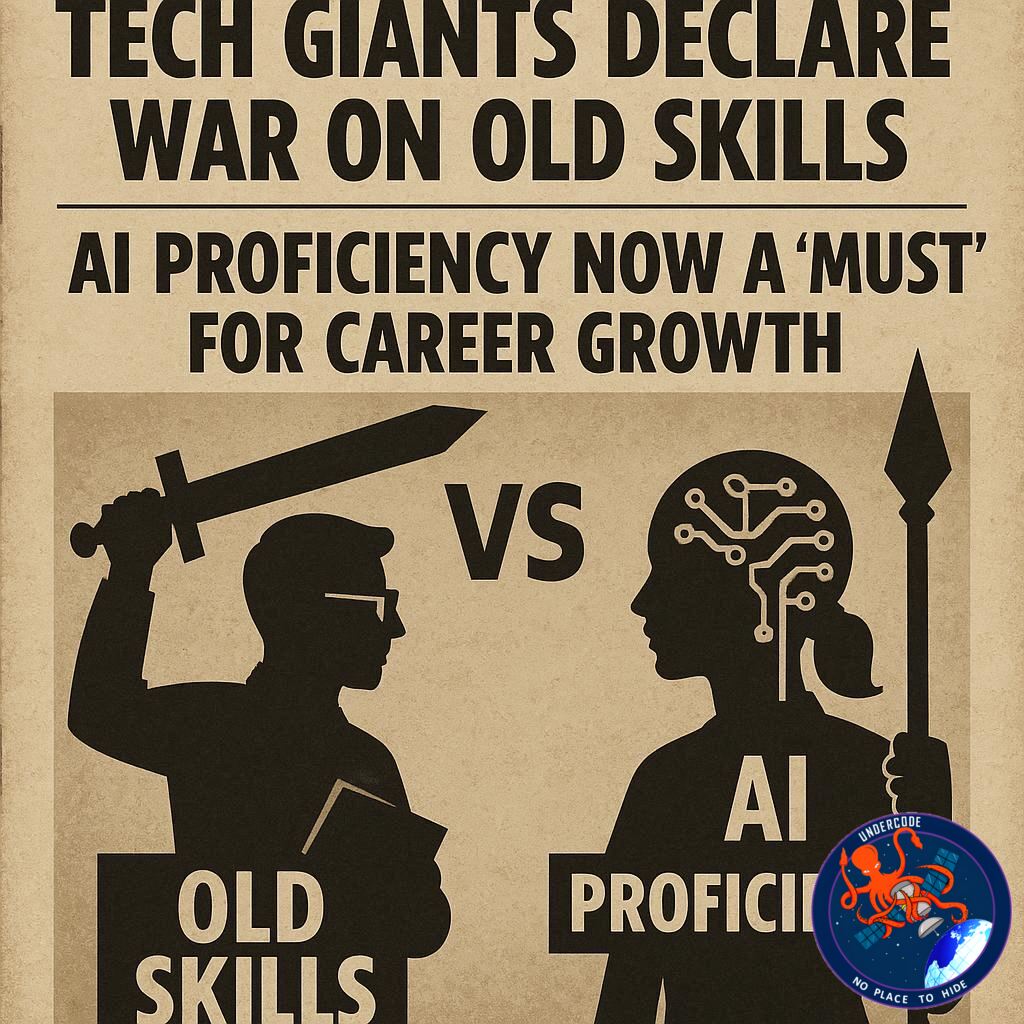
The New Corporate Reality
The world’s biggest tech companies are no longer treating artificial intelligence as a nice-to-have skill — they’re making it a requirement. Microsoft and Google, two of the most powerful players in Silicon Valley, are now explicitly tying career growth to AI adoption. Employees at both firms are being told that mastering AI is as essential as collaboration, communication, or data-driven decision-making. In other words, if you don’t use AI, you’re not just behind — you’re irrelevant.
This dramatic shift underscores a new era in workplace culture, where AI literacy is no longer optional. It is a baseline expectation. Let’s break down what this means for employees, the industry, and the future of work.
the Original
Microsoft and Google are sending identical signals to their employees: embrace AI or risk career stagnation. Microsoft executive Julia Liuson declared that AI use is now “core to every role and every level,” instructing managers to include AI adoption in employee performance reviews. Similarly, Google CEO Sundar Pichai emphasized the necessity of being “AI-savvy” to remain competitive, warning staff that rivals are already gaining productivity advantages.
Google has gone a step further by mandating engineers to use AI tools for coding, updating job descriptions to reflect AI problem-solving skills, and rolling out internal programs like “AI Savvy Google.” More than 30% of Google’s code is now AI-generated, up from 25% last year. Microsoft is preparing to add formal AI usage metrics to performance reviews, with former GitHub CEO Thomas Dohmke comparing AI adoption to mandatory workplace tools like GitHub itself.
These policies are not confined to software engineers. Employees across sales, legal, and other departments are being encouraged — or pressured — to integrate AI into daily work. Resistance is met with skepticism, as most insiders admit that AI proficiency is now vital for career growth.
The movement isn’t limited to Microsoft and Google. Amazon’s Andy Jassy has told staff to learn AI for greater efficiency, while Shopify requires proof of AI adoption before granting more resources. Across Silicon Valley, the message is clear: adapt to AI workflows or risk being left behind.
What Undercode Say:
The mandates from Microsoft and Google represent more than internal policies — they signal the formalization of AI literacy as a universal professional requirement. Let’s unpack the deeper implications.
First, this is a cultural revolution inside the workplace. For decades, tech companies emphasized creativity, problem-solving, and collaboration. Today, those traits remain relevant, but AI fluency is now positioned alongside them as a “foundational skill.” It’s not about optional experimentation anymore — AI is being woven into the DNA of corporate performance metrics.
Second, this shift exposes the competitive paranoia driving Silicon Valley. With rivals racing ahead, no leader wants to risk being the company whose workforce lags in AI adoption. Google’s insistence on AI coding tools and Microsoft’s move to tie Copilot usage into reviews are essentially acts of corporate survival. The message is clear: productivity gains from AI are too significant to ignore.
Third, there is a generational workforce divide at play. Younger employees, digital natives, may find this transition natural. But older employees or those in non-technical roles may feel coerced, raising questions about fairness, training, and morale. The “AI or out” culture risks alienating valuable employees who may need time to adapt.
Fourth, the ripple effects extend beyond tech giants. When Amazon and Shopify adopt similar mandates, it signals the standardization of AI proficiency across industries. This is no longer about engineers in Silicon Valley — it’s about lawyers, marketers, accountants, and consultants in every sector who will be judged on how effectively they leverage AI.
Fifth, ethical and performance dilemmas will emerge. If AI adoption becomes a metric, will employees focus more on using AI for the sake of compliance rather than effectiveness? Companies risk encouraging surface-level usage rather than meaningful integration. There’s also the issue of data privacy and dependency on AI tools that might expose corporate vulnerabilities.
Sixth, AI literacy will redefine corporate hierarchies. Employees who master AI tools could leapfrog traditional seniority lines, as efficiency and output take precedence over tenure. This democratization of skill could be empowering for ambitious newcomers, but destabilizing for established veterans.
Seventh, this could trigger a new “AI arms race” in education and hiring. Universities may feel pressured to retool curricula around AI fluency, while companies may start filtering applicants based on their ability to showcase real-world AI use. Recruiters will increasingly value not just degrees, but demonstrable AI proficiency.
Finally, this policy underscores a deeper truth: AI isn’t replacing jobs, it’s replacing workers who don’t use AI. The difference is crucial. Roles themselves may survive, but the humans filling them must evolve. It’s not a question of whether AI will change work — it already has. The only question is whether employees will keep pace.
🔍 Fact Checker Results
✅ Microsoft and Google have formally instructed managers to evaluate AI use in performance reviews.
✅ Google confirmed more than 30% of its code is AI-generated.
❌ There is no evidence yet that all roles at these companies require AI use, though pressure is strong across departments.
📊 Prediction
AI adoption will become a formal line item in annual performance reviews across major corporations by 2026, not just in tech companies but also in finance, healthcare, and education. By then, job descriptions will routinely list “AI literacy” as a core requirement, making it as fundamental as proficiency in Excel or email communication today. Employees who fail to adapt will face stalled careers or forced exits, while those who embrace AI will gain faster promotions, better pay, and higher job security.
🕵️📝✔️Let’s dive deep and fact‑check.
References:
Reported By: timesofindia.indiatimes.com
Extra Source Hub:
https://www.github.com
Wikipedia
OpenAi & Undercode AI
Image Source:
Unsplash
Undercode AI DI v2
🔐JOIN OUR CYBER WORLD [ CVE News • HackMonitor • UndercodeNews ]
📢 Follow UndercodeNews & Stay Tuned:
𝕏 formerly Twitter 🐦 | @ Threads | 🔗 Linkedin | 🦋BlueSky | 🐘Mastodon


