
Listen to this Post
Introduction
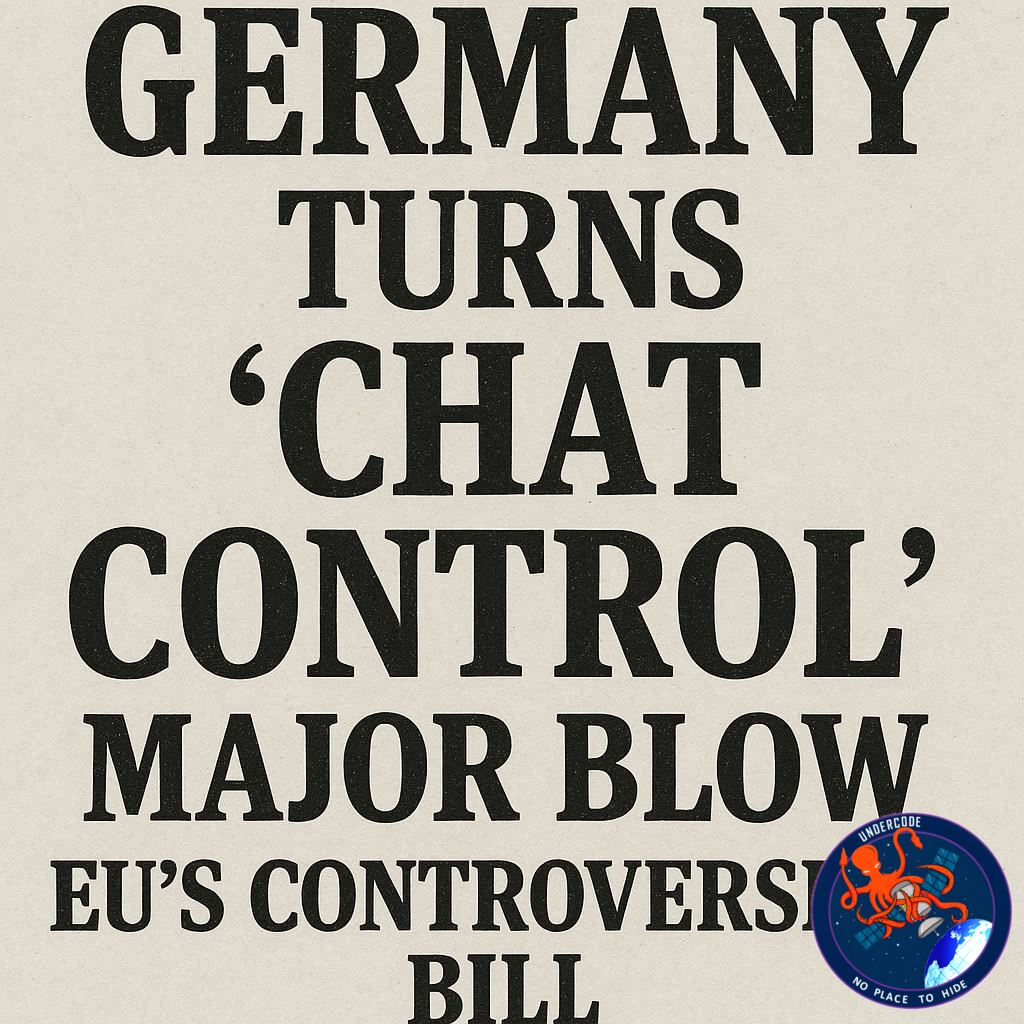
In a dramatic turn of events, Germany and Luxembourg have joined the growing resistance against the European Union’s proposed “Chat Control” law, a measure that would force messaging platforms to scan private chats in search of child sexual abuse material (CSAM). The move comes just ahead of a critical EU Council meeting on September 12, where member states are expected to finalize their positions. With privacy and digital rights at stake, the debate is heating up as the legislation faces mounting opposition from both governments and technology experts.
the
Germany and Luxembourg are the latest nations to oppose the Danish-led CSAM scanning proposal, increasing the total number of opposing countries to eight. Other opponents include Austria, Belgium, the Czech Republic, Finland, the Netherlands, and Poland. On the other side, 15 EU members have expressed their support, leaving Estonia, Greece, Romania, and Slovenia still undecided.
The bill, known as “Chat Control,” would compel messaging platforms operating within the EU to scan private communications—even encrypted ones—for both known and unknown CSAM. The process would occur directly on users’ devices before encryption, covering messages, pictures, videos, and URLs. Exemptions would apply only to government and military accounts.
Germany’s Federal Ministry of the Interior (BMI) officially declared its refusal to back the proposal, stressing its opposition to undermining encryption. Encryption, a cornerstone of online privacy, ensures secure communication by making messages unreadable to outsiders. Apps like Signal, WhatsApp, Proton Mail, and VPN services rely on this technology to protect users’ data.
Law enforcement argues encryption hinders investigations, but experts caution that creating “backdoors” would weaken security for everyone, exposing private data to criminals and hostile states. Critics have long feared Germany’s stance could tip the balance, given its past commitment to enshrining encryption as a legal right. While the current administration initially sent mixed signals, its opposition now significantly reduces the likelihood of the proposal passing.
German-based encrypted email provider Tuta Mail has even threatened to sue the EU if Chat Control becomes law. CEO Matthias Pfau emphasized that private communication is vital for democracy, free expression, and citizens’ safety, warning that “a backdoor for the good guys only” is a dangerous illusion.
The September 12 Council meeting and an upcoming Justice Minister gathering on October 14 will be decisive for the future of the bill. The outcome could redefine the balance between child protection measures and fundamental digital freedoms in Europe.
What Undercode Say:
Germany’s opposition is a defining moment in the Chat Control saga. For months, critics feared that Berlin’s mixed messaging meant the bill had a stronger chance of survival. Now, the tables have turned, and Europe’s digital rights landscape has been reshaped overnight.
This development highlights a broader philosophical clash within the EU. On one side are governments that view encryption as a barrier to law enforcement, demanding unprecedented surveillance capabilities in the name of child safety. On the other side stand privacy advocates, technologists, and certain member states that see encryption as the last line of defense against cybercrime, authoritarian overreach, and data exploitation.
Germany’s position matters not just politically but symbolically. It signals that a major EU economy is unwilling to compromise on encryption—sending a message that privacy and security are not expendable bargaining chips. Luxembourg’s alignment further strengthens this stance, especially when paired with countries like Finland and the Netherlands, which are known for progressive digital policies.
However, the battle is far from over. With 15 nations still backing the proposal and four undecided, the possibility of a divided outcome remains. Smaller undecided countries may face heavy political pressure in the coming weeks, particularly from states prioritizing law enforcement concerns. If even one or two tip toward support, the proposal could still survive, albeit in a weakened form.
Another key issue is trust. Citizens are increasingly skeptical of government surveillance, especially in light of past scandals like NSA spying or Pegasus spyware revelations. Introducing a law that forces scanning of private chats risks fueling public distrust in institutions and technology providers alike. It could push people toward underground tools, unofficial apps, or even self-hosted encrypted solutions outside EU jurisdiction—ironically making monitoring more difficult.
Technically, the proposal is also flawed. Pre-encryption scanning on devices introduces vulnerabilities that hackers could exploit. Imagine a malicious actor mimicking government scanning protocols to gain access to private photos or financial data. By weakening encryption for all, the bill risks endangering the very citizens it claims to protect.
Economically, enforcing Chat Control could hurt Europe’s tech ecosystem. Messaging services, VPN providers, and email platforms might withdraw or limit their operations in the EU to avoid compliance. That would reduce consumer choice and undermine Europe’s ambition to be a leader in digital innovation.
Germany’s decision therefore represents more than a vote. It is a defense of democratic values, a rejection of mass surveillance, and a signal that Europe must find smarter, safer ways to protect children online without dismantling privacy protections for everyone. The challenge now is whether undecided nations will follow this lead or cave to political pressures.
🔍 Fact Checker Results
✅ Germany and Luxembourg officially oppose the Danish proposal.
✅ The bill mandates pre-encryption scanning on devices.
❌ A “backdoor for good guys only” is technically feasible—experts widely agree it is impossible.
📊 Prediction
Given Germany’s shift, the chances of Chat Control passing in its current form are slim. The most likely outcome is either the bill being blocked or heavily revised to soften its surveillance aspects. Expect undecided countries to lean toward caution, and prepare for heated debates in October as the EU weighs whether safeguarding children should come at the cost of dismantling encryption across the continent.
🕵️📝✔️Let’s dive deep and fact‑check.
References:
Reported By: www.techradar.com
Extra Source Hub:
https://www.digitaltrends.com
Wikipedia
OpenAi & Undercode AI
Image Source:
Unsplash
Undercode AI DI v2
🔐JOIN OUR CYBER WORLD [ CVE News • HackMonitor • UndercodeNews ]
📢 Follow UndercodeNews & Stay Tuned:
𝕏 formerly Twitter 🐦 | @ Threads | 🔗 Linkedin | 🦋BlueSky | 🐘Mastodon


