
Listen to this Post
Introduction
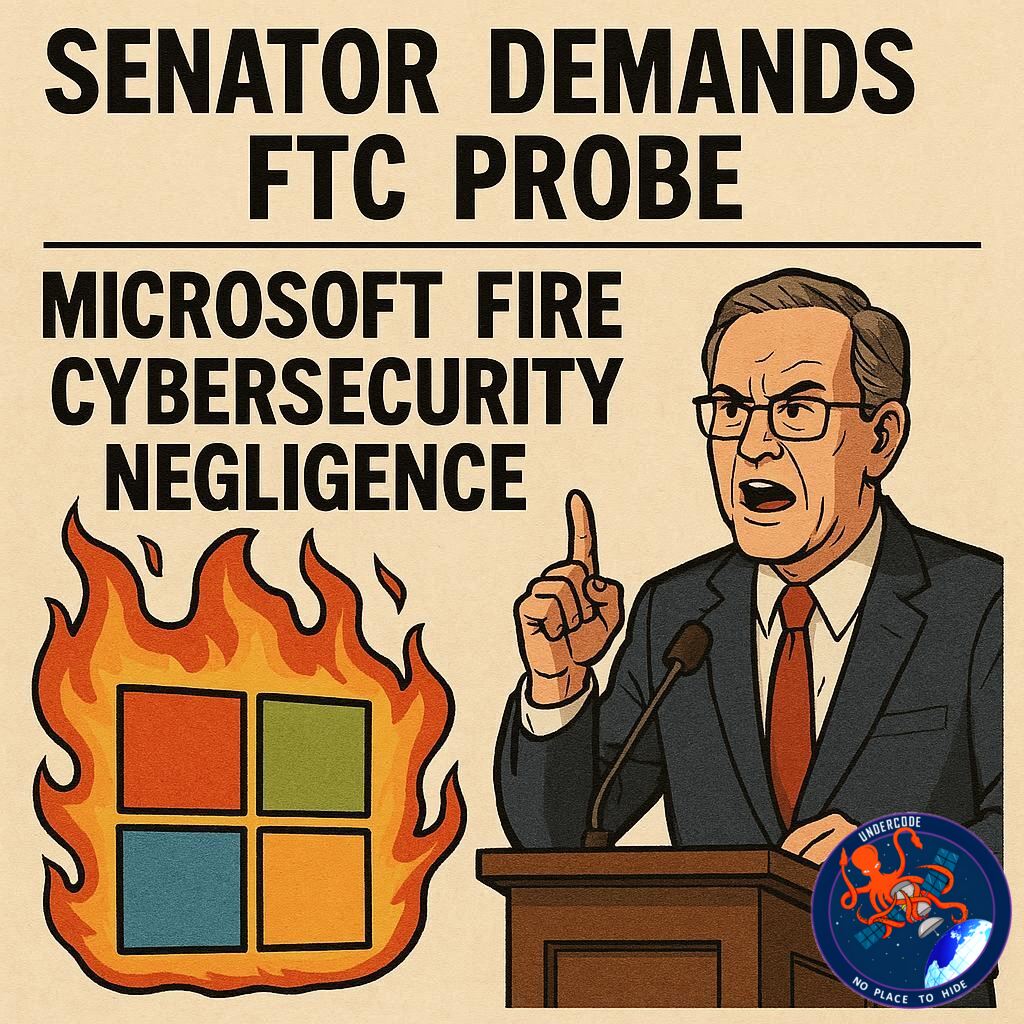
The cybersecurity spotlight is once again on Microsoft after U.S. Senator Ron Wyden sent a scathing letter to the Federal Trade Commission (FTC), urging a full investigation into the company’s alleged negligence. The senator accuses Microsoft of failing to secure its widely used products, directly enabling devastating ransomware attacks that threaten patient safety, corporate stability, and even U.S. national security. This renewed scrutiny raises critical questions about whether Microsoft’s monopoly on enterprise IT has left the country dangerously vulnerable.
the Original
Senator Ron Wyden has formally requested that the FTC hold Microsoft accountable for repeated cybersecurity failures. His letter highlights the company’s poor security practices, including default Windows settings that leave organizations highly susceptible to ransomware attacks.
A major example was the May 2024 ransomware attack on healthcare giant Ascension. Hackers infiltrated the system when a contractor clicked a malicious Bing link, eventually compromising the entire network, stealing 5.6 million personal records, and crippling patient care.
Wyden blames Microsoft’s outdated support for RC4 encryption, which enabled a Kerberoasting attack that let hackers steal privileged credentials. Although Microsoft later acknowledged the risks and pledged to phase out RC4 in Windows Server 2025, Wyden argues that the company failed to adequately warn customers.
This incident, alongside past breaches such as the Microsoft Exchange Online hack and the exploitation of SharePoint zero-days by Chinese actors, demonstrates what Wyden calls Microsoft’s “culture of negligent cybersecurity.” Instead of embedding robust protections into its products, the senator claims Microsoft profits from selling costly add-on security services—likening the company to an “arsonist selling firefighting services.”
Experts echo Wyden’s concerns, stressing that when a dominant vendor like Microsoft dictates enterprise IT standards, its insecure defaults create systemic national risks. While Microsoft insists it is working to phase out insecure protocols like RC4 and strengthen security, critics argue these changes come far too late, leaving businesses and governments exposed.
Wyden concludes by urging the FTC to take decisive action, warning that Microsoft’s negligence, combined with its market dominance, poses an “inevitable” threat of future cyberattacks.
What Undercode Say:
The accusations against Microsoft underscore one of the most pressing dilemmas in modern cybersecurity: how to balance widespread adoption of legacy systems with the urgent need for secure defaults.
When a single vendor dominates enterprise infrastructure, its design decisions ripple across critical sectors like healthcare, finance, and government. In Microsoft’s case, outdated protocols like RC4 remain embedded in millions of networks, creating fertile ground for attackers. Even if these vulnerabilities affect a “small percentage” of traffic, the scale of exposure is vast.
What makes this issue even more concerning is Microsoft’s business model. Instead of prioritizing security-by-design, the company has cultivated a parallel industry of premium cybersecurity services. This model incentivizes reactive measures rather than proactive solutions. Wyden’s analogy of an “arsonist selling firefighting services” resonates strongly here.
The Ascension ransomware case is particularly alarming. A single careless click led to widespread chaos, patient safety risks, and a massive data breach. The attack wasn’t just about human error—it exposed architectural flaws in Microsoft’s Active Directory and the inherent risks of weak default settings.
Furthermore, national security experts are alarmed at the geopolitical implications. If U.S. critical infrastructure relies so heavily on Microsoft, adversaries can exploit systemic vulnerabilities to disrupt hospitals, power grids, or government operations. Cyber warfare no longer requires missiles; it only requires exploiting insecure configurations.
Microsoft’s gradual approach to phasing out RC4 highlights the difficulty of legacy dependencies. While sudden changes could disrupt existing systems, maintaining insecure protocols extends the attack surface. The company’s argument that disabling RC4 could “break customer systems” only reinforces how deeply entrenched these weaknesses are.
For enterprises, the lesson is clear: relying solely on vendor promises is risky. Organizations must take ownership of their configurations, enforce stronger encryption, and implement layered defenses. Governments, meanwhile, must push vendors toward secure defaults through regulation, as Wyden urges.
The FTC investigation, if pursued, could mark a turning point. A ruling against Microsoft would signal that dominance in IT infrastructure carries a higher burden of responsibility. Without accountability, the cycle of breaches, blame, and expensive fixes will continue.
Ultimately, Wyden’s warning reflects a broader truth: cybersecurity negligence in dominant platforms is not just a corporate issue—it is a national security threat. The stakes are too high for complacency.
✅ Fact Checker Results
Senator Wyden did send a letter to the FTC demanding an investigation into Microsoft.
The Ascension ransomware attack occurred in May 2024 and affected millions.
Microsoft confirmed RC4 will be deprecated by default in Windows Server 2025.
🔮 Prediction
Regulators will likely intensify scrutiny of Microsoft in the coming months, especially as the 2026 RC4 phase-out approaches. Healthcare, government, and defense organizations may push for stricter compliance mandates, while rival cloud providers could seize the moment to promote their platforms as more secure alternatives. If Microsoft fails to act faster, public trust and government contracts could shift dramatically.
🕵️📝✔️Let’s dive deep and fact‑check.
References:
Reported By: www.securityweek.com
Extra Source Hub:
https://stackoverflow.com
Wikipedia
OpenAi & Undercode AI
Image Source:
Unsplash
Undercode AI DI v2
🔐JOIN OUR CYBER WORLD [ CVE News • HackMonitor • UndercodeNews ]
📢 Follow UndercodeNews & Stay Tuned:
𝕏 formerly Twitter 🐦 | @ Threads | 🔗 Linkedin | 🦋BlueSky | 🐘Mastodon


