
Listen to this Post
Introduction: A New Era for Developers ✨
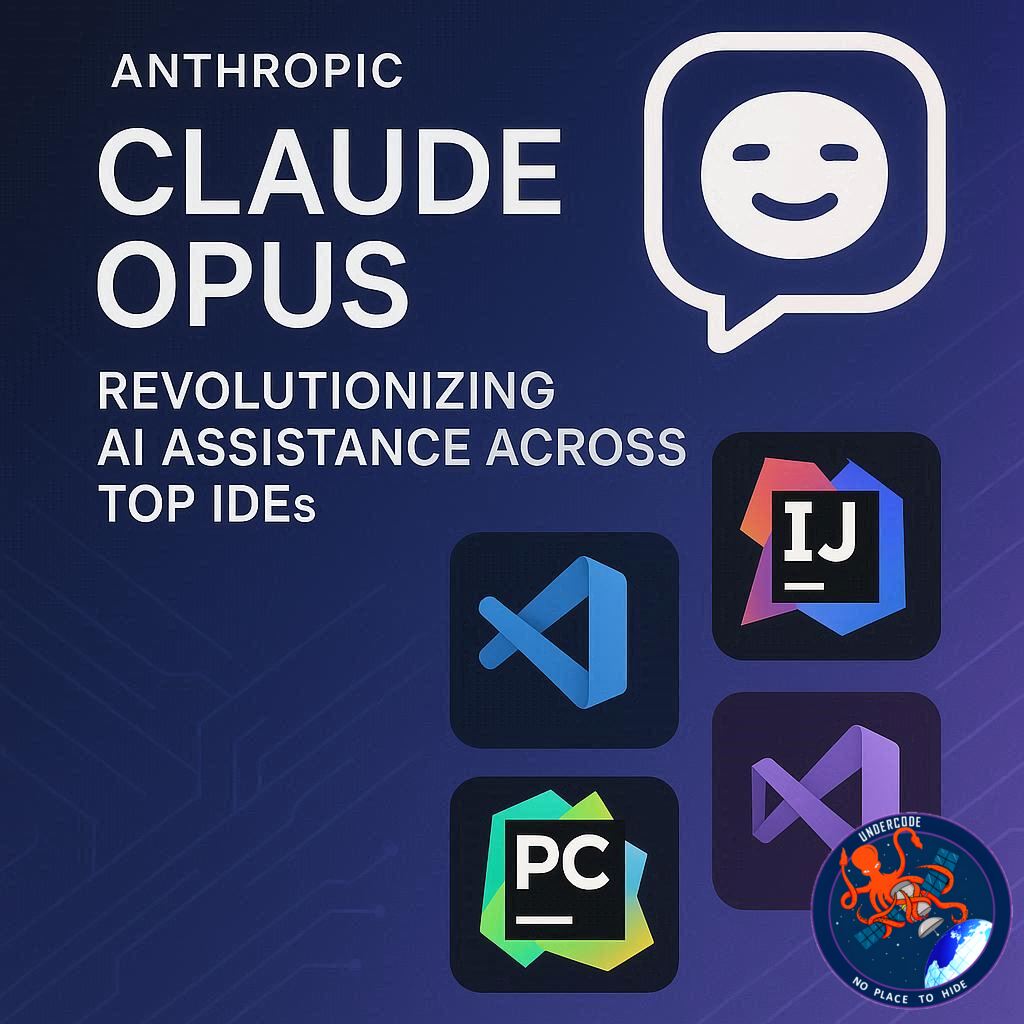
Anthropic has just unveiled Claude Opus 4.1 in public preview, marking a major leap for AI-assisted coding. This update brings the advanced AI model to a wide range of popular development environments, including Visual Studio, JetBrains IDEs, Xcode, and Eclipse. Designed to enhance productivity and streamline coding workflows, Claude Opus 4.1 promises smarter suggestions, more intuitive interactions, and seamless integration with GitHub Copilot.
Claude Opus 4.1 Now Available in GitHub Copilot 💻
Claude Opus 4.1 is now accessible for users on GitHub Copilot’s Enterprise and Pro+ plans. Developers can interact with the model directly through GitHub Copilot Chat, available on github.com, GitHub Mobile, VS Code, Visual Studio, JetBrains IDEs, Xcode, and Eclipse. The model supports multiple chat modes, including Agent, Ask, and Edit, enabling developers to handle complex coding tasks with ease.
How to Enable Claude Opus 4.1 ⚙️
Enterprise administrators need to opt in by activating the Claude Opus 4.1 policy within Copilot settings. Once enabled, all users in that organization will have access to the model via the chat model picker. For detailed guidance, developers can refer to GitHub’s official documentation on available models and Copilot usage.
Community Feedback & Collaboration 🌐
Anthropic encourages developers to provide feedback, share insights, and participate in community discussions. This collaborative approach ensures the AI continues to improve based on real-world usage, making Claude Opus 4.1 a responsive and evolving tool for developers.
What Undercode Say: Analytical Insights 🔍
Claude Opus 4.1 represents a significant enhancement over its predecessors. With integration across major IDEs, it allows developers to maintain workflow continuity without switching tools. The inclusion of Agent, Ask, and Edit modes enables contextual AI assistance, reducing coding errors and speeding up development cycles.
Enterprise adoption is expected to increase, as organizations benefit from more efficient code generation and review processes. The ability to opt in at the administrator level ensures controlled deployment, maintaining security while giving teams access to advanced AI capabilities.
In terms of performance, Claude Opus 4.1 shows improvements in code understanding, predictive completion, and contextual reasoning. Developers working on complex projects in Java, Python, Swift, and other languages will notice enhanced suggestions and smarter code edits.
Moreover, the integration with GitHub Mobile allows for on-the-go problem solving, making remote collaboration smoother. As AI-assisted coding becomes more mainstream, Claude Opus 4.1 sets a new benchmark for how artificial intelligence can complement human expertise in real-time.
From a market perspective, this release positions Anthropic as a strong competitor in the AI coding assistant space, challenging models like OpenAI’s Copilot and other AI-powered development tools. Its cross-IDE compatibility increases its appeal for multi-platform teams and enterprise environments.
User feedback channels and community discussions are vital for iterative improvement. By enabling a participatory ecosystem, Anthropic ensures that Claude Opus 4.1 evolves according to developer needs, rather than being a static tool.
Overall, Claude Opus 4.1 offers a compelling mix of innovation, usability, and performance. Its broad availability and enhanced functionality make it a valuable addition for professional developers seeking faster, smarter, and more reliable coding assistance.
Fact Checker Results ✅❌
✅ Claude Opus 4.1 is indeed available in public preview for Visual Studio, JetBrains IDEs, Xcode, and Eclipse.
✅ It is accessible through GitHub Copilot for Enterprise and Pro+ plans.
❌ There are no claims of full general availability yet; access depends on opting in via administrator settings.
Prediction 🔮
Claude Opus 4.1 is likely to drive a significant increase in AI-assisted development adoption, particularly in enterprise settings. Developers can expect faster coding cycles, reduced errors, and improved collaboration across platforms. As feedback loops refine the AI, we may see it evolve into an indispensable partner for software engineering projects worldwide.
🕵️📝✔️Let’s dive deep and fact‑check.
References:
Reported By: github.blog
Extra Source Hub:
https://stackoverflow.com
Wikipedia
OpenAi & Undercode AI
Image Source:
Unsplash
Undercode AI DI v2
🔐JOIN OUR CYBER WORLD [ CVE News • HackMonitor • UndercodeNews ]
📢 Follow UndercodeNews & Stay Tuned:
𝕏 formerly Twitter 🐦 | @ Threads | 🔗 Linkedin | 🦋BlueSky | 🐘Mastodon


