
Listen to this Post
Introduction
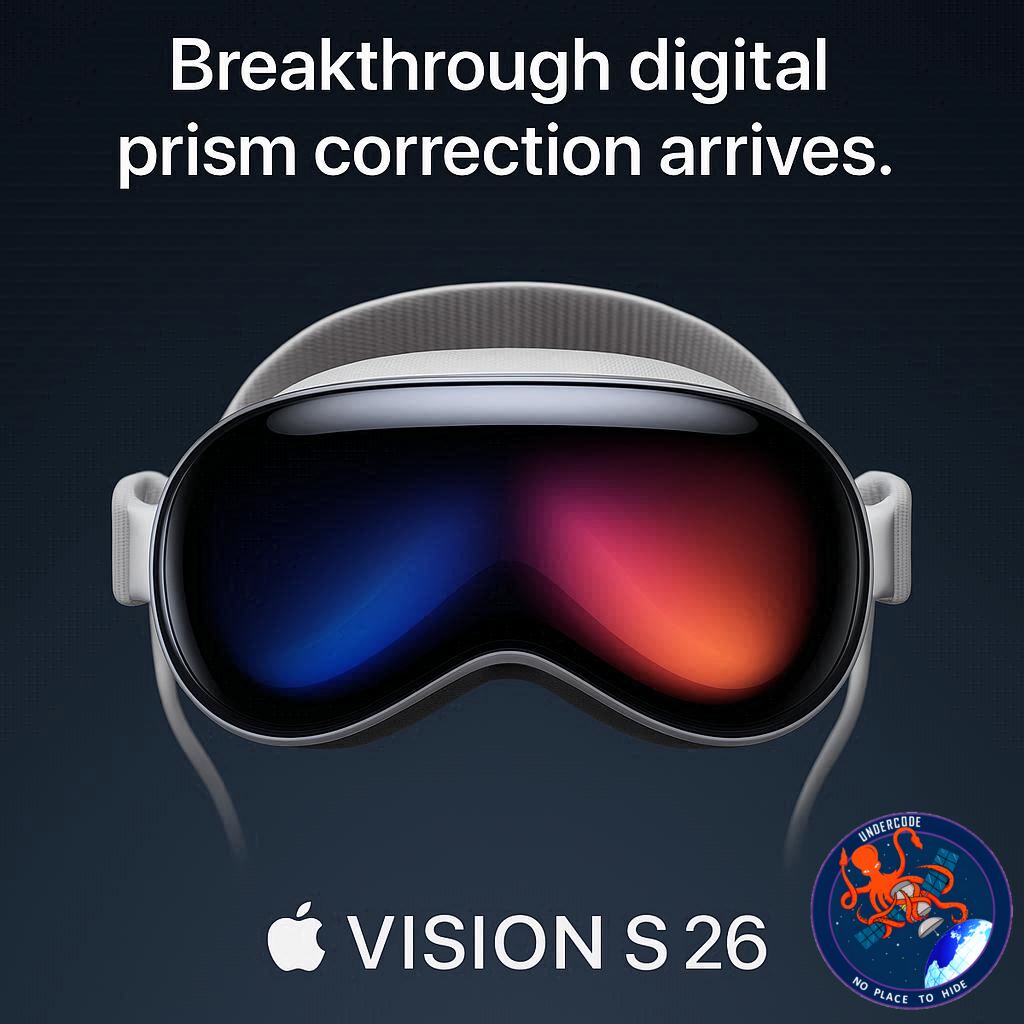
Apple has taken another bold step in making its revolutionary Vision Pro headset more inclusive and user-friendly. Until now, one of the biggest drawbacks was its lack of support for glasses prescriptions with prism values — a limitation that excluded a small but significant group of users. With the release of visionOS 26, Apple introduces Digital Prism Correction, a software-powered solution that finally addresses this challenge. This update is not just a minor tweak; it’s a major accessibility milestone that could transform the way users with complex vision prescriptions interact with mixed reality.
the Original Update
Since its launch, Apple Vision Pro users with prism prescriptions faced a frustrating obstacle: ZEISS optical inserts simply didn’t support prism values. For people who required prism corrections—values that are essential for addressing double vision and other binocular vision issues—this meant Vision Pro was out of reach.
Apple had always warned users upfront that ZEISS inserts would not accommodate prism prescriptions. These values are usually written separately from other metrics like sphere, cylinder, axis, or ADD in an eyeglass prescription. For many users, that meant having to either skip Vision Pro altogether or wait for Apple to come up with a solution.
With visionOS 26, the wait is finally over. Apple has rolled out a new feature called Digital Prism Correction. Now, users in the United States and its territories (including American Samoa, Guam, Puerto Rico, Northern Mariana Islands, U.S. Minor Outlying Islands, and the U.S. Virgin Islands) can head into the Vision Pro settings and select the option to “Add Prism Prescription.”
The feature comes with certain technical boundaries. It supports prism prescriptions up to 7.75 Prism Diopters (PD) in both horizontal and vertical orientations — base-in (BI), base-out (BO), base-up (BU), base-down (BD), and equivalent polar directions (0°–359°), per eye.
Once entered, the prism values become tied to the user’s optical inserts. The system is flexible enough to allow multiple sets of inserts across devices and even makes room for guest profiles.
This update isn’t just about convenience; it’s about inclusivity. By enabling prism correction digitally, Apple is expanding Vision Pro accessibility for people who were previously left out. While currently limited to U.S. regions, the hope is clear: this feature should expand worldwide soon.
What Undercode Say:
The release of Digital Prism Correction signals more than a technical fix; it’s a strategic move in Apple’s long-term vision for wearable computing.
Apple has been heavily marketing the Vision Pro as a breakthrough in immersive technology, yet accessibility gaps risked tarnishing its reputation. By addressing prism prescriptions, Apple not only fixes a functional problem but also strengthens its brand identity as a company that prioritizes inclusivity.
From a market standpoint, this move could unlock a new segment of customers who were previously excluded. While prism prescriptions only affect a small percentage of users, every adoption counts in a premium product category. And Apple’s pattern is clear: they often begin with U.S.-only rollouts, test the system, then expand globally. That suggests Digital Prism Correction will likely be available in Europe and Asia in the near future.
There’s also a deeper narrative: Apple is shifting reliance from hardware to software adaptability. Instead of waiting for ZEISS to manufacture prism-supporting inserts, Apple created a digital solution. This mirrors Apple’s broader ecosystem approach—replacing physical limitations with software intelligence, much like it has done with computational photography in iPhones.
Technically, the 7.75 PD limit is quite generous for most prescriptions, covering the majority of cases. While some extreme prescriptions may still remain unsupported, the range is sufficient to serve most patients who depend on prism values. This clever boundary ensures usability without overcomplicating the optical or computational load.
For developers and third-party accessory makers, this is also a quiet signal: Apple is serious about accessibility and personalization. Expect future Vision Pro updates to introduce even more nuanced visual corrections and possibly AI-driven optimization tailored to individual users.
On the competitive front, this is another way Apple distances itself from rivals like Meta’s Quest Pro or other mixed reality devices. None currently match this level of vision customization, which could make Vision Pro the device of choice for professionals and creators who demand both performance and inclusivity.
Ultimately, this update reflects Apple’s strategy of constant iteration. They launch bold products, face limitations, and then refine through software updates. This rhythm not only keeps the Vision Pro relevant but also reinforces Apple’s dominance in the immersive tech market.
✅ Fact Checker Results
Digital Prism Correction is officially available in visionOS 26.
The feature supports prescriptions up to 7.75 PD in horizontal, vertical, and polar directions.
Currently, the rollout is limited to the U.S. and its territories.
🔮 Prediction
Apple will likely expand Digital Prism Correction to international markets within the next year. As Apple tests performance and gathers user feedback in the U.S., a broader rollout could align with the next Vision Pro hardware revision or visionOS update. Additionally, future versions may push boundaries beyond 7.75 PD and integrate AI-driven real-time visual enhancements, further solidifying Apple’s dominance in accessible immersive technology.
🕵️📝✔️Let’s dive deep and fact‑check.
References:
Reported By: 9to5mac.com
Extra Source Hub:
https://stackoverflow.com
Wikipedia
OpenAi & Undercode AI
Image Source:
Unsplash
Undercode AI DI v2
🔐JOIN OUR CYBER WORLD [ CVE News • HackMonitor • UndercodeNews ]
📢 Follow UndercodeNews & Stay Tuned:
𝕏 formerly Twitter 🐦 | @ Threads | 🔗 Linkedin | 🦋BlueSky | 🐘Mastodon


