
Listen to this Post
Introduction
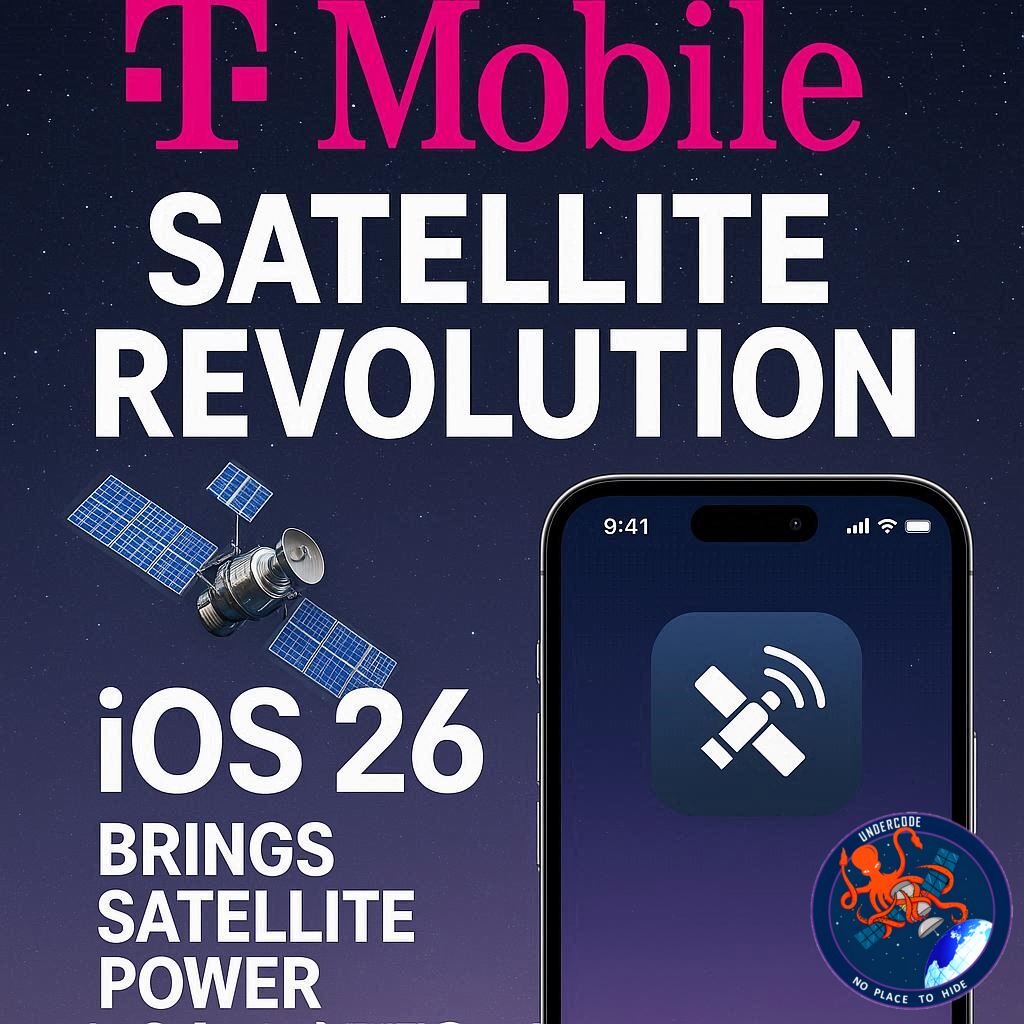
The future of mobile connectivity is no longer tied to cell towers. With T-Mobile’s T-Satellite service, powered by SpaceX’s Starlink technology, iPhone users are stepping into a new era where staying connected is possible even when networks fail. What started as a text-only service is now expanding into app support with iOS 26, giving Apple users a glimpse of a satellite-powered future. Here’s everything you need to know about this breakthrough, its evolution, and what it could mean for the mobile industry.
The Evolution of T-Satellite
When T-Mobile introduced its T-Satellite service in July, the offering was limited: iPhone owners could only send text messages via satellite. But promises were made—apps would be added, and broader functionality would arrive. With the arrival of iOS 26, those promises are becoming reality.
Initially, satellite texting was the core function, helping users stay in touch when traditional cellular networks collapsed. During the LA wildfires in January, T-Mobile even opened the service for free to the public, ensuring safety through emergency communication. This move mirrored Apple’s own Emergency SOS via Satellite but extended compatibility beyond the latest iPhones, making it usable even on models older than the iPhone 14.
After free beta testing, T-Satellite officially launched in July for \$10 per month, offering lifeline connectivity when users had no signal. The service wasn’t limited to T-Mobile customers either—anyone with an unlocked eSIM-compatible smartphone could join, no matter their carrier.
T-Satellite Grows with iOS 26
October 1 marks a turning point: T-Satellite will begin enabling data connectivity. The speeds aren’t blazing fast, but they’re strong enough to power selected apps. T-Mobile, in collaboration with Apple, is working on satellite-optimized applications designed to function under limited bandwidth.
As of now, six apps have joined the lineup of satellite-supported tools on iOS:
Apple Compass
Apple Fitness
Apple Maps
Apple Messages
Apple Music
Apple Weather
While the initial offering is Apple-focused, Android already has more supported apps, and third-party developers are expected to join soon. The expansion signals T-Mobile’s determination to make satellite connectivity more than just an emergency lifeline—it could soon become a mainstream feature.
What Undercode Say:
T-Mobile’s partnership with SpaceX is not just a technical upgrade; it’s a strategic move that could reshape the wireless industry. Satellite services have always been seen as niche, expensive, and only for remote explorers. But now, with a \$10 monthly subscription, satellite connectivity is within reach for everyday consumers.
From a competitive standpoint, this positions T-Mobile ahead of other carriers in innovation. AT\&T and Verizon have dabbled in satellite partnerships, but none have matched T-Mobile’s speed of implementation and Apple integration. This aggressive rollout may push rivals to accelerate their plans, sparking a race for satellite dominance in the U.S.
For Apple, the collaboration means deeper integration of hardware and services. Instead of keeping satellite features confined to emergency use, Apple is now embracing practical, everyday applications. Imagine hikers navigating trails without losing Maps access, or music lovers streaming Apple Music at a remote campsite—scenarios that once required portable hotspots or complete disconnection.
Economically, the \$10 per month pricing strategy is clever. It’s low enough to attract mass adoption but high enough to generate substantial recurring revenue. The cost of operating Starlink satellites is enormous, but spreading the cost across millions of subscribers makes the model viable. This could also become a profitable avenue for Apple and T-Mobile through shared revenue streams.
The broader implication is social. Natural disasters, wildfires, hurricanes, and rural connectivity gaps often leave people stranded without communication. T-Satellite closes that gap, providing not just convenience but potentially saving lives. Governments and emergency organizations may also partner with T-Mobile for wider safety networks, reinforcing the importance of resilient communication.
One challenge, however, is speed. Current satellite bandwidth supports only lightweight applications, and high-demand apps like video streaming are still out of reach. Yet, with Starlink’s rapid expansion and future satellite generations, faster and broader support is inevitable.
In essence, T-Satellite isn’t just another carrier perk—it’s a glimpse of the future where cellular boundaries fade, and global satellite coverage becomes standard. Consumers are entering an era where the phrase “no signal” could soon disappear from our vocabulary.
✅ Fact Checker Results
T-Mobile officially partnered with SpaceX in 2022 to deliver Starlink-powered smartphone service.
The service costs \$10/month and does not require users to be T-Mobile customers.
iOS 26 supports six apps via satellite, with more on the way.
🔮 Prediction
Within the next two years, T-Satellite will expand beyond six apps, integrating popular third-party tools like WhatsApp and Spotify. As Starlink strengthens its constellation, speeds will improve, making video calls and richer app experiences possible. Ultimately, T-Mobile’s early entry will pressure global carriers to adopt satellite partnerships, making satellite connectivity as common as Wi-Fi today.
🕵️📝✔️Let’s dive deep and fact‑check.
References:
Reported By: 9to5mac.com
Extra Source Hub:
https://www.instagram.com
Wikipedia
OpenAi & Undercode AI
Image Source:
Unsplash
Undercode AI DI v2
🔐JOIN OUR CYBER WORLD [ CVE News • HackMonitor • UndercodeNews ]
📢 Follow UndercodeNews & Stay Tuned:
𝕏 formerly Twitter 🐦 | @ Threads | 🔗 Linkedin | 🦋BlueSky | 🐘Mastodon


