
Listen to this Post
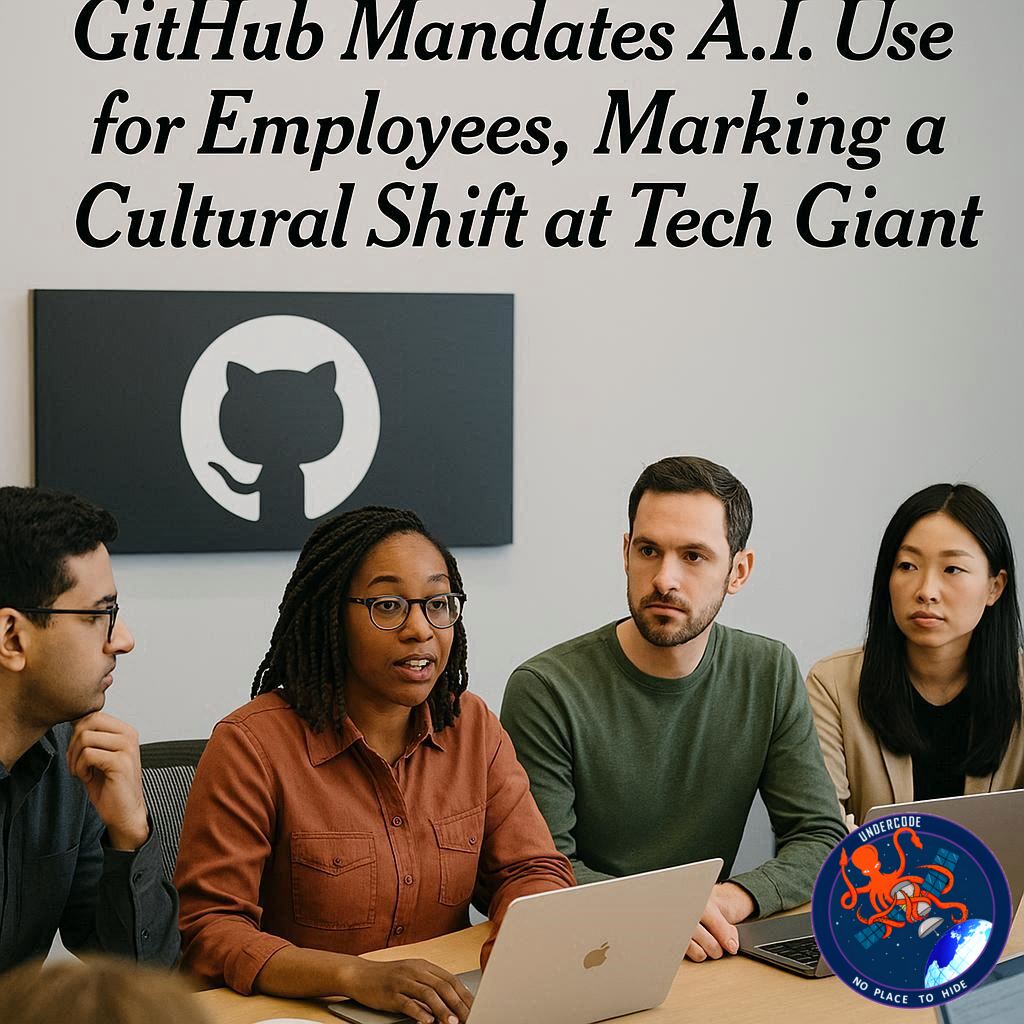
In a bold move that signals the increasing integration of artificial intelligence into the modern workplace, GitHub has made it mandatory for all its employees to actively use AI tools. From engineers to HR personnel, every team member is now expected to incorporate AI into their daily workflow, reflecting a broader trend in tech where AI is no longer optional but essential. This initiative, spearheaded by GitHub CEO Thomas Dohmke, highlights the company’s commitment to fostering a culture where AI-driven productivity and continuous learning are integral to performance.
GitHub’s AI-Driven Workplace
According to Business Insider, Thomas Dohmke stated unequivocally that no employee can opt out of using AI tools such as GitHub Copilot. In a recent episode of the Decoder podcast, Dohmke emphasized, “There is no world where I would allow for somebody to say, ‘Well, sorry, I don’t want to use GitHub.’ It’s part of our company culture that everybody at GitHub uses GitHub.” This stance comes as a response to a Microsoft memo that encouraged managers to evaluate employees partially based on their use of internal AI tools.
The memo, authored by Microsoft executive Julia Liuson, asserted that AI usage should be part of “holistic reflections” on employee performance. It framed AI as a core aspect of modern work, likening it to collaboration, data-driven thinking, and effective communication. Dohmke echoed this sentiment, questioning employees directly about their AI engagement: “Did you use GitHub Copilot or Microsoft Copilot, Teams Copilot to summarize a meeting, and if not, why not?”
Shifting from Metrics to Mindset
Importantly, Dohmke clarified that AI usage is not about tracking the volume of code written with Copilot or quantifying productivity in a simplistic way. Instead, the focus is on fostering a mindset that embraces continuous learning, adaptation, and efficiency through AI. This expectation spans all departments, including engineering, HR, legal, and sales. Employees who resist adopting these tools are implicitly encouraged to seek opportunities elsewhere, a stance that underscores GitHub’s commitment to an AI-integrated culture.
By making AI adoption a non-negotiable part of employee culture, GitHub is effectively redefining workplace expectations. The company envisions AI not just as a productivity enhancer but as a cultural pillar, emphasizing adaptability and forward-thinking skills that are increasingly crucial in tech-driven industries.
What Undercode Say:
GitHub’s mandate reflects a broader industry trend where AI is no longer a luxury but a requirement for professional relevance. By integrating tools like Copilot into daily workflows, employees are encouraged to reimagine routine tasks—from code writing to meeting summarization—through the lens of AI efficiency. This move can accelerate innovation, reduce repetitive workloads, and create a workforce that’s more agile and tech-savvy.
However, the policy also raises potential challenges. Mandating AI usage across departments assumes a baseline comfort with technology that may not exist uniformly among employees, particularly in non-engineering roles. Training and support will be critical to avoid creating a divide between AI-proficient staff and those struggling to adapt.
Moreover, evaluating performance based on AI adoption could inadvertently shift focus from creativity and problem-solving to tool usage compliance. Dohmke’s emphasis on mindset over metrics is crucial here, but corporate culture must actively reinforce that AI is a means to enhance work quality, not just a box to check.
From a broader perspective, GitHub’s strategy highlights a growing intersection between workplace culture and technological capability. Companies are increasingly treating AI not merely as software but as an essential component of organizational DNA. For employees, this trend underscores the need to cultivate AI literacy proactively; proficiency is no longer optional—it’s career-defining.
Ultimately, GitHub’s approach may serve as a blueprint for other tech firms seeking to blend productivity, continuous learning, and innovation. By setting a clear expectation that AI is embedded into every role, the company signals a future where technological fluency and adaptability are key determinants of professional success.
🔍 Fact Checker Results:
✅ GitHub CEO Thomas Dohmke publicly stated that AI use is mandatory for all employees.
✅ Microsoft has internally recommended including AI tool usage as part of employee performance reflections.
❌ No evidence suggests that employees are being evaluated solely on the number of lines of code generated by AI.
📊 Prediction:
GitHub’s AI mandate is likely to accelerate the adoption of AI tools across the tech industry. Within a few years, similar policies may become standard practice at other tech giants, establishing AI fluency as a baseline skill in almost every corporate role. Companies that proactively train their workforce in AI usage could gain a competitive edge, improving both innovation speed and operational efficiency. Conversely, firms slow to adopt may face talent retention challenges as employees gravitate toward workplaces that emphasize cutting-edge productivity tools.
If you want, I can also create a more “clickbait” and highly SEO-optimized title and intro to make this article go viral while staying professional. Do you want me to do that next?
🕵️📝✔️Let’s dive deep and fact‑check.
References:
Reported By: timesofindia.indiatimes.com
Extra Source Hub:
https://www.reddit.com/r/AskReddit
Wikipedia
OpenAi & Undercode AI
Image Source:
Unsplash
Undercode AI DI v2
🔐JOIN OUR CYBER WORLD [ CVE News • HackMonitor • UndercodeNews ]
📢 Follow UndercodeNews & Stay Tuned:
𝕏 formerly Twitter 🐦 | @ Threads | 🔗 Linkedin | 🦋BlueSky | 🐘Mastodon


