
Listen to this Post
Introduction
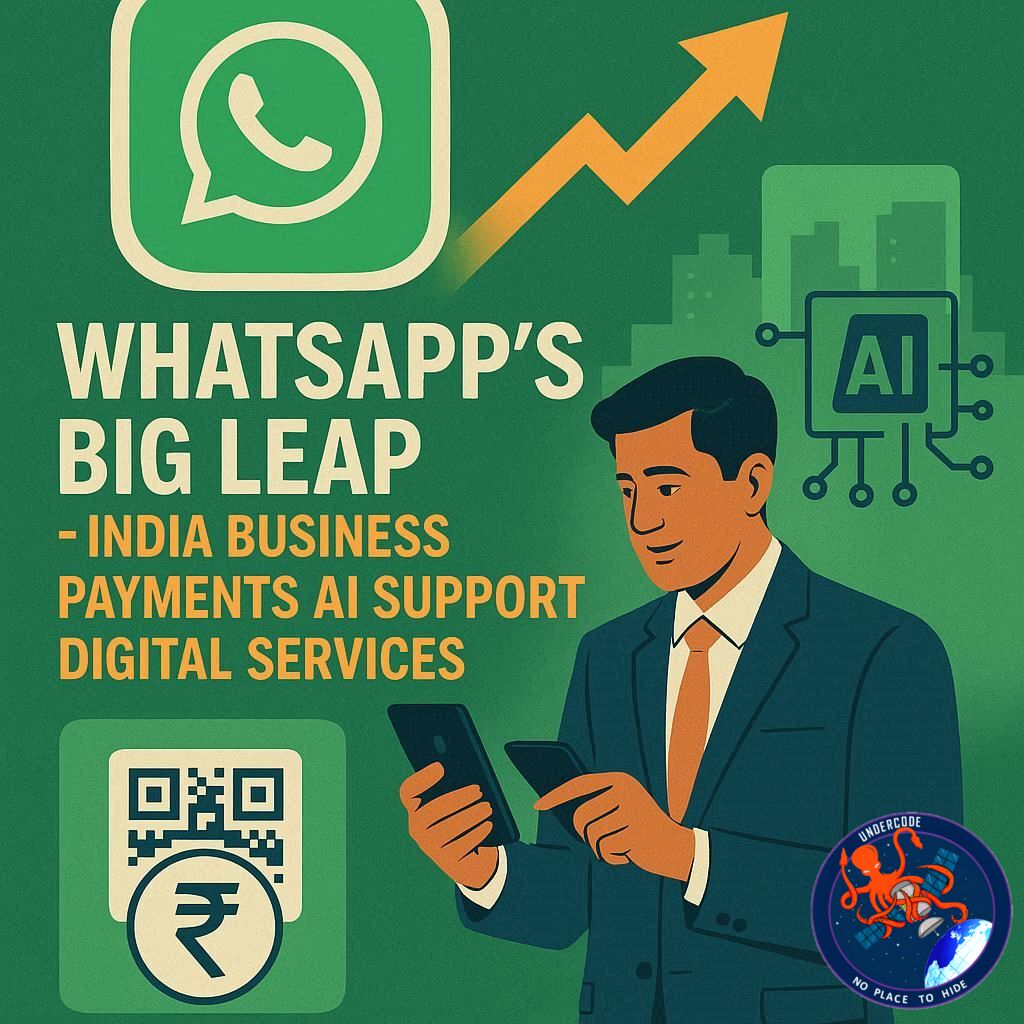
India has rapidly become one of the most important markets for digital platforms, and WhatsApp is at the center of this transformation. With over half a billion users in the country, WhatsApp is no longer just a messaging app—it is evolving into a hub for business, commerce, and even governance. At its second business summit in India, Meta unveiled a range of new tools designed to help businesses of all sizes thrive in the digital economy. From in-app payments and AI-powered customer support to integrated ad campaigns and government service chatbots, these updates signal WhatsApp’s ambition to become the backbone of India’s digital-first ecosystem.
the Original
At the summit, WhatsApp showcased new features aimed at boosting business engagement and customer convenience. One of the biggest updates is payments within the WhatsApp Business app, allowing small businesses to securely share QR codes and accept payments directly in the app. This step is expected to simplify transactions and speed up sales closures.
Another major innovation is in-app calling and Business AI integration. Customers can now call larger businesses directly through WhatsApp, receive callbacks, or even use voice/video calls for services like telehealth consultations. AI-powered assistants are also being integrated into these calls, providing instant support at scale.
Meta has also centralized ad campaigns management across WhatsApp, Facebook, and Instagram using Ads Manager. Businesses can now run unified marketing campaigns, optimize budgets with Meta’s AI systems, and improve customer reach.
To further boost visibility, WhatsApp is enhancing its Updates tab, where over 1.5 billion people interact daily. Ads in Status, promoted channels, and channel subscriptions are being rolled out. Big brands like Maruti Suzuki, Air India, and Flipkart are early adopters, while popular entertainment platforms like Jio Hotstar are using promoted channels to reach audiences.
Small businesses are also being empowered to use both the WhatsApp Business App and Business Platform simultaneously, providing flexibility for daily communication as well as large-scale automation during peak campaign times.
Beyond business, WhatsApp is expanding its role in public services. With 91% of Indian internet users chatting with businesses weekly, WhatsApp has become a go-to for not only shopping and payments but also government services. State governments such as Odisha, Maharashtra, Andhra Pradesh, and Tamil Nadu are deploying WhatsApp chatbots for citizen services. Andhra Pradesh’s “Mana Mitra” chatbot already offers 700 services in multiple languages and has been used by 4 million citizens.
Meta executives emphasized that these tools will deliver higher ROI for businesses, deepen customer connections, and unlock opportunities for millions across India.
What Undercode Say:
The updates announced at WhatsApp’s India summit are not just incremental features—they represent a strategic shift toward turning WhatsApp into a full-fledged digital economy platform. Let’s break down the significance of these changes.
First, payments within the Business app will be a game-changer for small and medium enterprises (SMEs). India has a massive unorganized retail sector, and many small merchants rely on cash transactions. With QR-enabled payments inside WhatsApp, these businesses can transition smoothly into digital commerce without needing additional apps or infrastructure. This aligns perfectly with India’s booming Unified Payments Interface (UPI) ecosystem.
Second, the in-app calling feature combined with AI addresses a long-standing challenge—scaling customer support. In India, customers still value human-like interactions for problem-solving, especially in sectors like banking, travel, and healthcare. By blending AI automation with the option to escalate to a real agent, WhatsApp is positioning itself as a customer service powerhouse. This could also reduce costs for companies by cutting down call center operations while keeping customers satisfied.
Third, centralized campaign management in Ads Manager indicates Meta’s push to unify its platforms. For businesses, this means more efficient ad spending, better targeting, and less hassle in running cross-platform promotions. For Meta, it ensures advertisers remain locked into its ecosystem rather than experimenting with competitors like Google or local ad networks.
The Updates tab monetization through ads and promoted channels could reshape how people discover products and services. While this may raise privacy concerns, it also creates opportunities for brands to be discovered organically within everyday interactions. If WhatsApp executes this carefully, it could become a discovery engine similar to Instagram, but with even higher engagement due to its ubiquity in India.
The decision to allow businesses to use both the Business App and Business Platform simultaneously reflects Meta’s understanding of India’s diverse business landscape. Not every enterprise can immediately scale up to APIs, but providing flexibility ensures smooth transitions as they grow.
Finally, WhatsApp’s role in citizen services is perhaps the most impactful. By enabling citizens to access essential services like bill payments, ticket bookings, and government schemes via chatbots, WhatsApp is essentially becoming a digital public utility. This is crucial for India, where digital literacy varies widely. Citizens may struggle with apps or websites, but WhatsApp’s familiar chat interface lowers entry barriers.
In essence, WhatsApp is transforming from a chat app to a digital operating system for India, bridging business, governance, and daily life. However, challenges remain—data privacy, over-commercialization, and ensuring inclusivity for those not yet digitally literate.
🔍 Fact Checker Results
✅ The feature for QR-based payments within WhatsApp Business is officially announced at the India summit.
✅ Multiple state governments (Odisha, Maharashtra, Andhra Pradesh, Tamil Nadu) are confirmed partners for citizen service chatbots.
❌ Global rollout of all features has not yet been announced; many are currently India-specific.
📊 Prediction
Within the next two years, WhatsApp will likely become India’s leading platform for business transactions and public services, rivaling specialized apps. Its integration of payments, ads, AI customer support, and government services positions it as a one-stop solution for both commerce and governance. Expect WhatsApp to evolve into a super-app, with India being its proving ground before global expansion.
🕵️📝✔️Let’s dive deep and fact‑check.
References:
Reported By: about.fb.com
Extra Source Hub:
https://stackoverflow.com
Wikipedia
OpenAi & Undercode AI
Image Source:
Unsplash
Undercode AI DI v2
🔐JOIN OUR CYBER WORLD [ CVE News • HackMonitor • UndercodeNews ]
📢 Follow UndercodeNews & Stay Tuned:
𝕏 formerly Twitter 🐦 | @ Threads | 🔗 Linkedin | 🦋BlueSky | 🐘Mastodon


