
Listen to this Post
Introduction
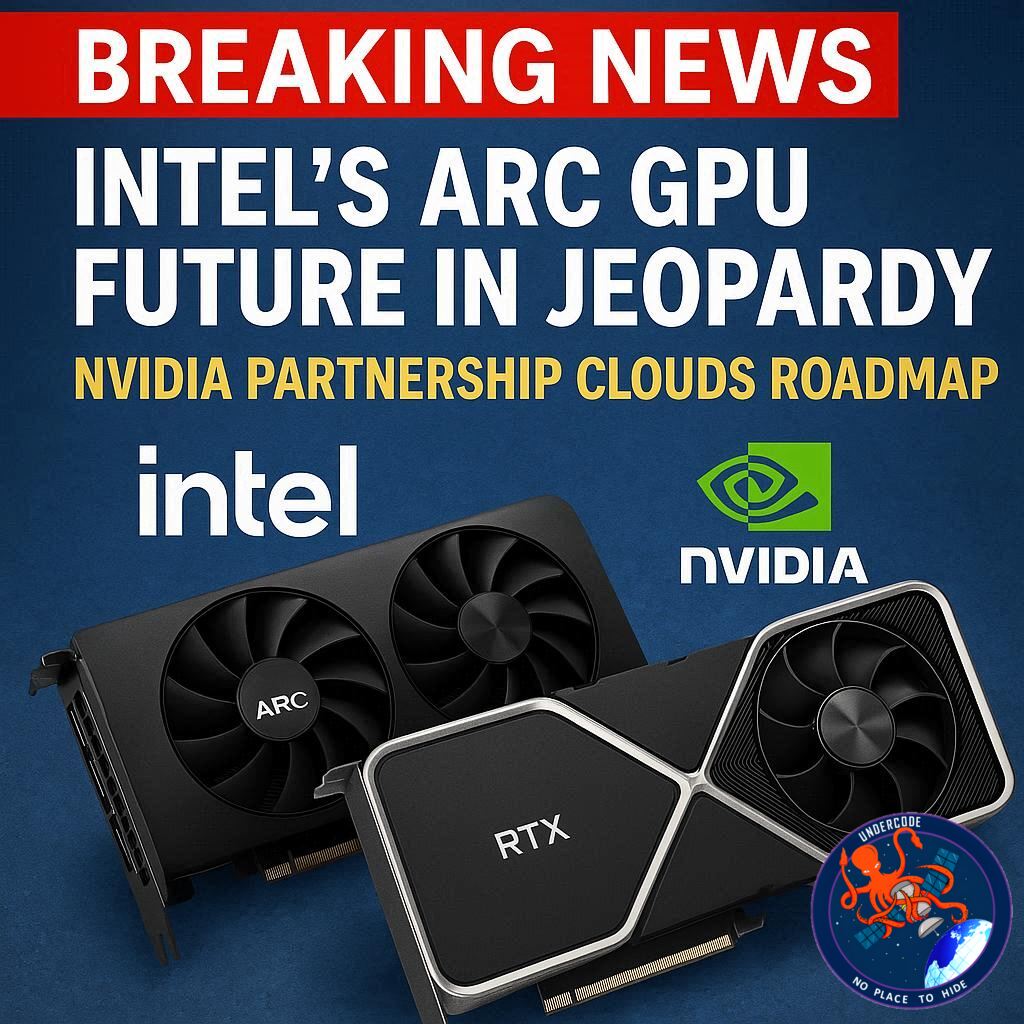
The tech world is buzzing after Intel’s latest comments on its Arc GPU division, which many analysts see as deliberately vague. While Intel insists its graphics lineup will continue, its partnership with Nvidia—worth \$5 billion—is reshaping the competitive landscape in ways that cast doubt on the long-term survival of Arc. With chiplets from Nvidia’s RTX series being integrated into Intel CPUs, the big question remains: is Arc destined to become redundant?
the Original
Intel has issued carefully worded statements about the future of its Arc GPU business, raising concerns about whether the division will continue in its current form. Although Intel claims the Nvidia collaboration is “complementary” to its roadmap, the company avoids giving clear details on funding, product timelines, or long-term commitment to discrete GPUs.
The ambiguity is striking, especially as Intel has been cutting costs by laying off employees and selling off divisions. Investing heavily in Arc GPUs may no longer make sense when Nvidia’s technology offers superior performance and is now directly tied into Intel processors.
Industry analysts point out that Intel’s choice of words—phrases like “complementary” and “continue to have GPU product offerings”—leaves plenty of space for scaling back or even phasing out Arc entirely.
The Nvidia partnership focuses on integrating RTX chiplets into Intel CPUs, directly targeting AMD’s strong market position in combined CPU-GPU solutions. This move makes discrete Arc cards appear less relevant to the average consumer.
The timing of the announcement is also questionable. Intel’s Arc B580 graphics card has received positive reviews, and the next-gen Battlemage and Celestial architectures were generating excitement. Yet, just as momentum was building, Intel announced its Nvidia deal, hinting at a possible strategic pivot.
Observers suggest Intel may quietly wind down Arc while fulfilling existing commitments, leaving Nvidia to take over the heavy lifting in graphics technology. The real answers will likely come in Intel’s next quarterly guidance, particularly in how R\&D resources are allocated.
What Undercode Say:
The Intel-Nvidia partnership is both a strategic masterstroke and a silent warning for Intel’s Arc division. On one hand, Intel gains immediate access to Nvidia’s best-in-class graphics technology, allowing it to compete more effectively against AMD in the growing CPU-GPU fusion market. On the other, the deal undermines Intel’s own investment in Arc, raising questions about whether the division is being quietly sidelined.
The business logic is clear: Intel has struggled for years to gain meaningful traction in discrete graphics. Despite recent positive press for Arc GPUs, they still lag behind Nvidia and AMD in terms of ecosystem, software optimization, and sheer performance. By leveraging Nvidia’s RTX chiplets, Intel can deliver competitive hybrid processors without the enormous R\&D costs of continuing Arc development independently.
This move reflects broader industry trends. The future of graphics is increasingly tied to integrated solutions, where CPUs and GPUs work seamlessly together rather than existing as separate products. AMD pioneered this strategy with its APUs, and Intel has been trying to catch up. Nvidia’s entry into this space through Intel partnerships is a direct challenge to AMD’s dominance.
However, the optics of Intel’s messaging reveal caution. Instead of boldly stating Arc’s future, Intel relies on vague assurances. This indicates two possibilities: either Intel is keeping its options open to exit gracefully, or it is buying time while determining how to integrate Arc with Nvidia’s technologies without duplicating effort.
Financially, the pressure is immense. Intel has already slashed thousands of jobs and divested multiple divisions to cut costs. Continuing expensive GPU development when Nvidia’s solutions are on the table may simply not be sustainable. Investors are unlikely to tolerate large-scale spending on a project that has yet to deliver strong returns.
For gamers and PC enthusiasts, the Arc story has always been about disruption—a third player in a duopoly-dominated space. If Intel abandons Arc, the graphics card market risks reverting to a two-player system, which could slow down innovation and keep prices high. That would be a major disappointment for consumers who were excited by Arc’s potential to shake things up.
Still, Intel may not completely shutter Arc. It’s possible Arc could pivot into specialized roles, such as AI acceleration, workstation graphics, or niche consumer products, rather than competing head-on with Nvidia and AMD in gaming. Intel could also retain Arc as a bargaining chip in negotiations, showing that it has some internal capability even if Nvidia is the primary partner.
In the short term, the Nvidia deal is a win-win for Intel and Nvidia. Intel gets to strengthen its CPUs with cutting-edge GPUs, while Nvidia gains deeper access to the PC processor market. But in the long term, Intel risks losing its independence in graphics—a critical component of computing’s future.
Ultimately, Arc’s survival will depend less on marketing statements and more on budget allocation. If Intel’s R\&D spending on Arc declines in upcoming reports, it will be a clear sign that the division is being scaled down. For now, consumers and investors must read between the lines of Intel’s cautious words.
🔍 Fact Checker Results
✅ Intel has publicly confirmed the Nvidia partnership worth \$5 billion.
✅ Intel’s official statement used the terms “complementary” and “continue to have GPU product offerings.”
❌ No explicit confirmation exists that Intel will continue funding Arc GPUs long-term.
📊 Prediction
Within the next 18–24 months, Intel is likely to downscale Arc as a mainstream gaming brand, shifting focus toward integrated solutions with Nvidia. Arc may survive in niche roles, but discrete GPUs could quietly disappear from Intel’s roadmap. If that happens, the graphics market will once again be dominated by the Nvidia-AMD duopoly, leaving consumers with fewer choices and potentially higher prices.
🕵️📝✔️Let’s dive deep and fact‑check.
References:
Reported By: timesofindia.indiatimes.com
Extra Source Hub:
https://www.instagram.com
Wikipedia
OpenAi & Undercode AI
Image Source:
Unsplash
Undercode AI DI v2
🔐JOIN OUR CYBER WORLD [ CVE News • HackMonitor • UndercodeNews ]
📢 Follow UndercodeNews & Stay Tuned:
𝕏 formerly Twitter 🐦 | @ Threads | 🔗 Linkedin | 🦋BlueSky | 🐘Mastodon


