
Listen to this Post
Introduction
Tesla’s long-awaited Cybertruck has been on the road for nearly two years, and while its futuristic design and bold engineering have captivated fans, the journey has not been without turbulence. From technical issues with key components to confusing trim levels and ambitious market launches, the Cybertruck’s rollout tells a story of innovation colliding with real-world challenges. Elon Musk himself has admitted that certain flaws are a “major area of focus,” signaling that Tesla is still fine-tuning the vehicle that was supposed to revolutionize the pickup market. Below, we break down the latest developments surrounding the Cybertruck, what they mean for Tesla, and what could come next.
Cybertruck’s Road So Far
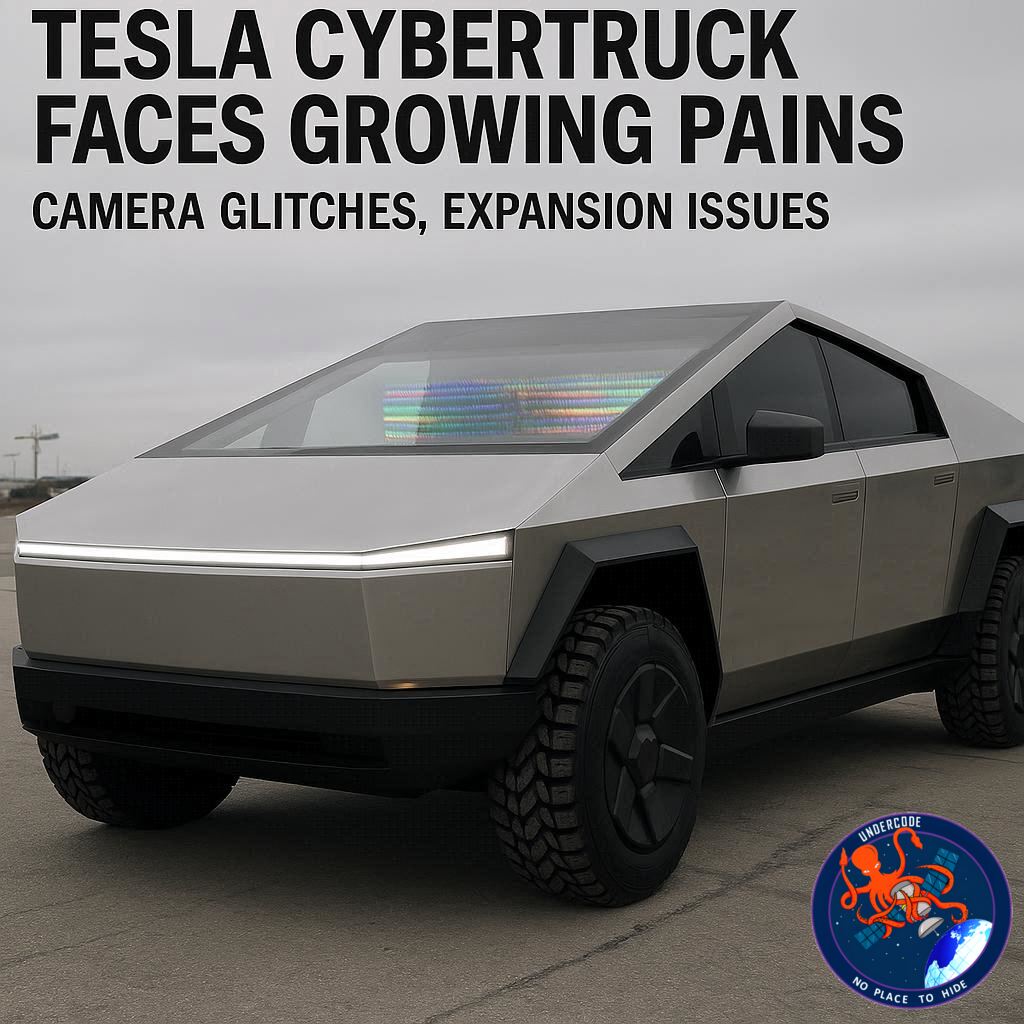
The Tesla Cybertruck, introduced as a groundbreaking all-electric pickup, has gone through several growing pains since deliveries began. One of the most widely reported issues comes from the Full Self-Driving (FSD) central windshield camera. Positioned at the top of the glass, this camera is crucial for Tesla Vision to monitor surroundings. However, owners frequently face warnings that FSD is unavailable due to condensation buildup, creating a hazy obstruction. While Tesla recommends a quick cleaning, drivers are frustrated at having to perform repeated maintenance on such a critical component. Musk acknowledged the issue and confirmed it’s a “major area of focus,” hinting at both hardware and software solutions.
Tesla’s global ambitions also remain a hot topic. While markets like Europe and Asia still struggle with approval due to size and design restrictions, Tesla successfully launched Cybertruck reservations in the United Arab Emirates, making the Middle East the first region outside North America to access the vehicle. With Saudi Arabia and Qatar soon to follow, the Texas-built trucks are slowly expanding beyond American soil. Musk has teased a smaller Cybertruck variant for narrower roads, but so far, no evidence of such a project has surfaced.
Another recent shake-up came with Tesla’s decision to discontinue the Long Range Rear-Wheel-Drive (RWD) trim. Launched at \$69,990, the single-motor version stripped away many premium features—textile seats instead of leather, fewer speakers, no rear touchscreen, and no powered tonneau cover. With the All-Wheel-Drive version offering vastly better value at just \$10,000 more, demand for the RWD trim was dismal. Tesla officially pulled the plug, leaving the AWD and high-end Cyberbeast as the main options.
Tesla also made headlines by shelving wireless charging for the Cybertruck. While the idea sounded futuristic, the truck’s elevated ground clearance made the technology impractical. Engineers admitted that the concept was “silly” for such a large vehicle, though Tesla continues to explore wireless charging for other cars and residential applications. This move reflects Tesla’s pragmatic approach: not every flashy concept translates well into real-world performance.
Through it all, Tesla remains committed to refining the Cybertruck experience, leveraging software updates, hardware tweaks, and bold strategy pivots. The journey may not be smooth, but it’s certainly disruptive—just as Musk intended.
What Undercode Say:
The Cybertruck is more than just a vehicle; it’s Tesla’s experiment in reshaping consumer expectations for electric trucks. Here’s how the latest updates shape the bigger picture:
Camera Glitch Signals Bigger Reliability Concerns
The condensation issue may seem small, but it highlights Tesla’s ongoing struggle with real-world durability. Inconsistent performance of the FSD system erodes confidence among owners who invested in autonomy. If Tesla cannot guarantee reliability across all conditions, its reputation in autonomous driving could take a hit.
Global Strategy Hinges on Market Customization
Tesla’s selective expansion into the Middle East is strategic—roads and regulations there better accommodate the Cybertruck’s size. However, Tesla cannot ignore Europe and Asia forever. A smaller Cybertruck could open lucrative new markets, but development costs and engineering challenges make it a long-term gamble.
Trim Confusion Shows Pricing Missteps
The discontinued RWD trim proves that Tesla sometimes miscalculates buyer expectations. Value-driven customers wanted a lower-cost entry point, but Tesla priced it too close to the feature-rich AWD model. This mistake underscores the delicate balance between affordability and Tesla’s premium image.
Ditching Wireless Charging = Smart Move
Wireless charging for a truck may sound futuristic, but the inefficiency and impracticality outweighed the benefits. By shelving the idea, Tesla avoided wasting resources on a gimmick. Instead, it can focus on home charging solutions where wireless tech makes more sense.
Cybertruck as a Brand Symbol
Even with flaws, the Cybertruck embodies Tesla’s daring spirit. It generates attention, dominates headlines, and fuels brand loyalty. Every update—good or bad—keeps Tesla in the spotlight. This cultural influence may be as valuable as the sales numbers themselves.
Economic Angle
At a starting price north of \$70,000, the Cybertruck targets a wealthier segment. But Tesla risks alienating mainstream truck buyers who seek affordability and rugged reliability. With rising competition from Ford’s F-150 Lightning and Rivian R1T, Tesla must balance hype with accessibility.
Future Outlook
Tesla’s iterative approach ensures the Cybertruck will continue evolving. Owners may find the process frustrating, but the constant updates keep the truck relevant in a fast-moving market. If Tesla executes well, the Cybertruck could mature into the company’s flagship model.
✅ Fact Checker Results
Elon Musk did confirm on X that condensation in the FSD camera is a “major area of focus.” ✅
Tesla officially discontinued the Long Range RWD Cybertruck trim due to low demand. ✅
Wireless charging was abandoned for the Cybertruck, confirmed by Tesla engineers. ✅
🔮 Prediction
Tesla will likely release a smaller, globally compliant Cybertruck within the next five years to penetrate European and Asian markets. Meanwhile, expect continued over-the-air updates aimed at refining FSD reliability and customer experience. By 2030, the Cybertruck may become not just a niche status symbol but a mainstream contender in the EV truck wars.
🕵️📝✔️Let’s dive deep and fact‑check.
References:
Reported By: www.teslarati.com
Extra Source Hub:
https://www.instagram.com
Wikipedia
OpenAi & Undercode AI
Image Source:
Unsplash
Undercode AI DI v2
🔐JOIN OUR CYBER WORLD [ CVE News • HackMonitor • UndercodeNews ]
📢 Follow UndercodeNews & Stay Tuned:
𝕏 formerly Twitter 🐦 | @ Threads | 🔗 Linkedin | 🦋BlueSky | 🐘Mastodon


