
Listen to this Post
Introduction: A New Chapter in Apple’s Design Legacy
Apple has a long history of reshaping industries with groundbreaking products. From the original iPhone to the M-series chips, each innovation has set new benchmarks. Now, whispers from inside the tech world suggest Apple is preparing to unveil something that could once again shift the smartphone landscape: a foldable iPhone. Unlike anything we’ve seen before, the upcoming device is expected to combine ultra-thin engineering, premium materials, and a futuristic design language that may push competitors back to the drawing board. With its rumored late 2026 release, anticipation is at fever pitch.
Apple’s Foldable iPhone: What We Know So Far
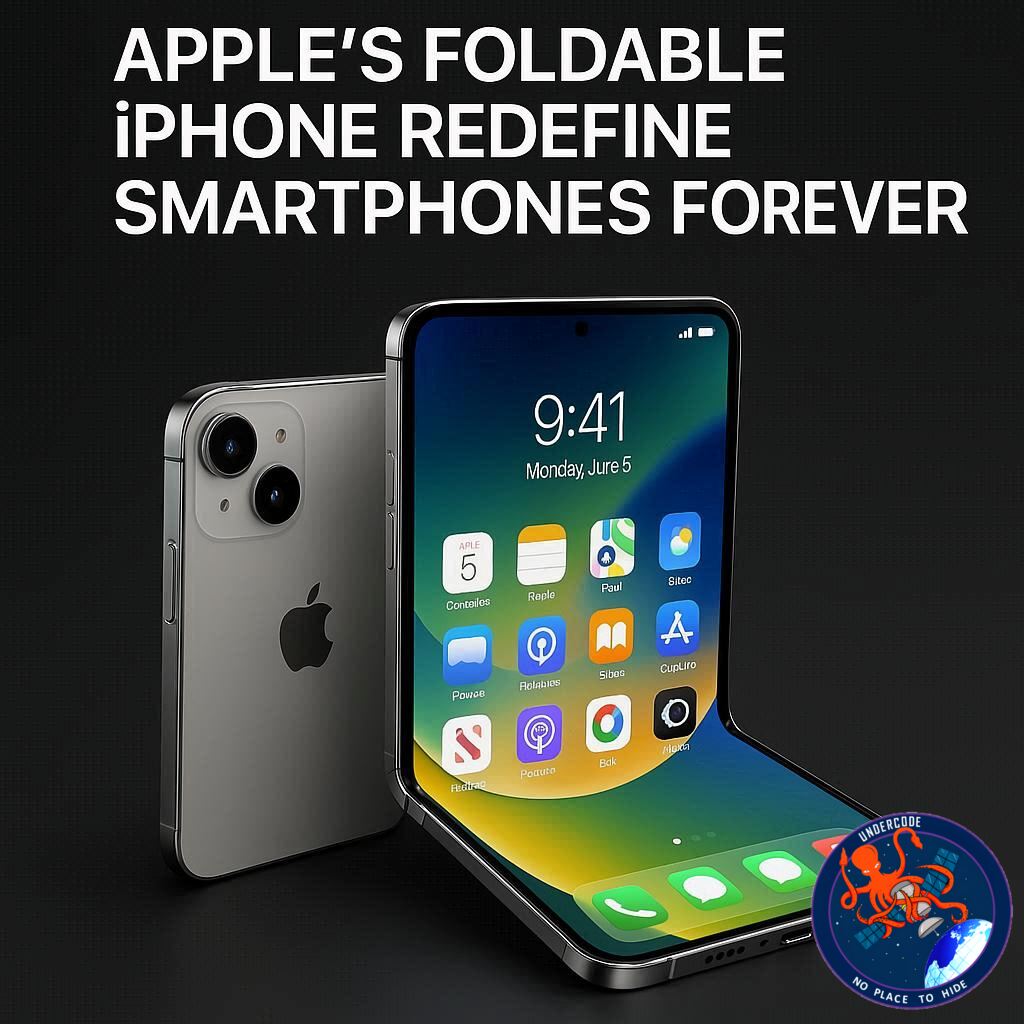
Industry leaks, primarily from Bloomberg’s Mark Gurman, indicate that Apple’s first foldable iPhone will adopt a bold design resembling two iPhone Air models seamlessly attached side by side. This unique form factor, made possible by cutting-edge engineering, could result in one of the thinnest foldables on the market, maintaining the iPhone Air’s sleek 5.6mm thickness per side. Some analysts even predict it might be slimmer once unfolded, cementing Apple’s reputation for obsessive detail in design.
The device will reportedly be crafted with a titanium chassis, a material Apple has recently embraced to enhance durability while keeping weight low. This choice directly addresses one of the major criticisms of foldables to date: fragility. With the iPhone Air already scoring high in both durability and repairability tests, the foldable model could finally bring reliability to a segment notorious for screen creases and hinge failures.
That durability, however, comes with a steep price. Gurman estimates the foldable iPhone will launch at a starting price of at least \$2,000, with some configurations potentially reaching \$2,300. This pricing would place it firmly in the ultra-premium category, significantly higher than current flagship iPhones or foldables from Samsung and Huawei. Apple, as always, seems confident its loyal base and design excellence will justify the cost.
On the production side, reports suggest Apple is moving aggressively to ensure a smooth launch. Nikkei Asia revealed that suppliers have been instructed to prepare for a 10% increase in orders for the 2026 iPhone lineup, signaling the company’s belief in strong demand. A pilot production line is already being set up in Taiwan to refine manufacturing processes before scaling operations in India. This strategic approach could minimize early hiccups and help Apple meet anticipated global demand.
Timing also plays a role. Instead of the traditional September launch, Apple may debut the foldable alongside the iPhone 18 series in October or November 2026. The timing could give Apple extra breathing room for production readiness while maximizing holiday season sales. More importantly, Apple is betting that this device will create a powerful “halo effect” across its lineup, driving not just foldable adoption but also boosting interest in the entire iPhone family.
If successful, the foldable iPhone won’t just be a product—it will be a statement of Apple’s ability to reinvent the smartphone once again.
What Undercode Say:
When looking beyond the hype, the foldable iPhone raises several critical questions. On one hand, the engineering behind creating a foldable device as thin as the iPhone Air is an undeniable achievement. Foldables have historically been clunky, with durability concerns overshadowing their futuristic appeal. Apple’s entry could reset expectations and bring foldables into the mainstream by fixing their biggest flaws: thickness, weight, and resilience.
But the cost factor cannot be ignored. A \$2,000–\$2,300 starting price places this device far beyond the reach of most consumers. Even Apple loyalists may hesitate, especially when the regular iPhone lineup already offers high performance, cutting-edge cameras, and longevity at a lower price point. The foldable risks being seen as more of a luxury showcase than a mass-market revolution.
That said, Apple has a history of charging premium prices and still dominating the market. The original iPhone was mocked for its price in 2007, yet it changed everything. The Apple Watch Ultra followed a similar trajectory, entering at a high cost but successfully carving out a niche. The foldable iPhone may follow the same playbook—start elite, then trickle down as production scales and costs normalize.
Another key factor is timing. By 2026, foldables from Samsung, Oppo, and Huawei will be even more advanced, with refined hinge technology and competitive pricing. Apple isn’t entering a vacuum; it’s stepping into a battlefield. However, Apple’s unmatched ecosystem integration—seamless sync with Macs, iPads, and AirPods—gives it a strategic edge. Even if rival foldables are cheaper, the Apple experience may be the deciding factor for many users.
From a design philosophy standpoint, Apple’s rumored approach is fascinating. Rather than reinventing the foldable shape entirely, it seems to be taking a conservative but precise approach: ultra-thin, titanium build, and minimalist execution. This could appeal to professionals and early adopters who value refinement over gimmicks. If successful, it may shift the narrative from “foldables are fragile toys” to “foldables are practical daily drivers.”
One potential concern is repairability. While the titanium frame promises durability, foldable displays remain notoriously expensive to repair. If Apple doesn’t find a way to make replacements more accessible, consumers may hesitate. Repairability will be a crucial test in determining the long-term adoption of this product.
Another aspect worth noting is Apple’s production strategy. Setting up a pilot line in Taiwan before shifting to India highlights its focus on quality control while expanding manufacturing diversity. This dual-pronged approach could protect Apple from supply chain shocks while also meeting its goal of reducing reliance on China. Strategically, it’s as much about geopolitics as it is about technology.
Finally, the rumored launch alongside the iPhone 18 series could be a masterstroke. Apple knows that excitement around the foldable will spill over into the rest of its lineup. Many consumers may walk into Apple Stores curious about the foldable but end up purchasing a more affordable iPhone 18, boosting sales across the board. The foldable may therefore serve as both a halo device and a marketing magnet.
In conclusion, Apple’s foldable iPhone has the potential to change the perception of foldables entirely. But its success will depend on more than just design—it will require pricing strategy, repairability solutions, and ecosystem leverage. Apple’s track record suggests it could pull it off, but the risks remain significant.
Fact Checker Results
✅ Apple is developing a foldable iPhone, expected in late 2026.
✅ Reports confirm titanium chassis and ultra-thin design are central features.
❌ Pricing and final specs are not confirmed until Apple’s official announcement.
Prediction
If Apple successfully delivers on durability and thinness, the foldable iPhone could trigger a new wave of smartphone adoption. While the first generation may remain exclusive due to price, within three to five years costs could drop, making foldables mainstream. Expect competitors to accelerate their own designs, while Apple continues to refine and eventually dominate this new category.
🕵️📝✔️Let’s dive deep and fact‑check.
References:
Reported By: timesofindia.indiatimes.com
Extra Source Hub:
https://www.stackexchange.com
Wikipedia
OpenAi & Undercode AI
Image Source:
Unsplash
Undercode AI DI v2
🔐JOIN OUR CYBER WORLD [ CVE News • HackMonitor • UndercodeNews ]
📢 Follow UndercodeNews & Stay Tuned:
𝕏 formerly Twitter 🐦 | @ Threads | 🔗 Linkedin | 🦋BlueSky | 🐘Mastodon


