
Listen to this Post
Introduction: The Harsh Reality of AI Hype
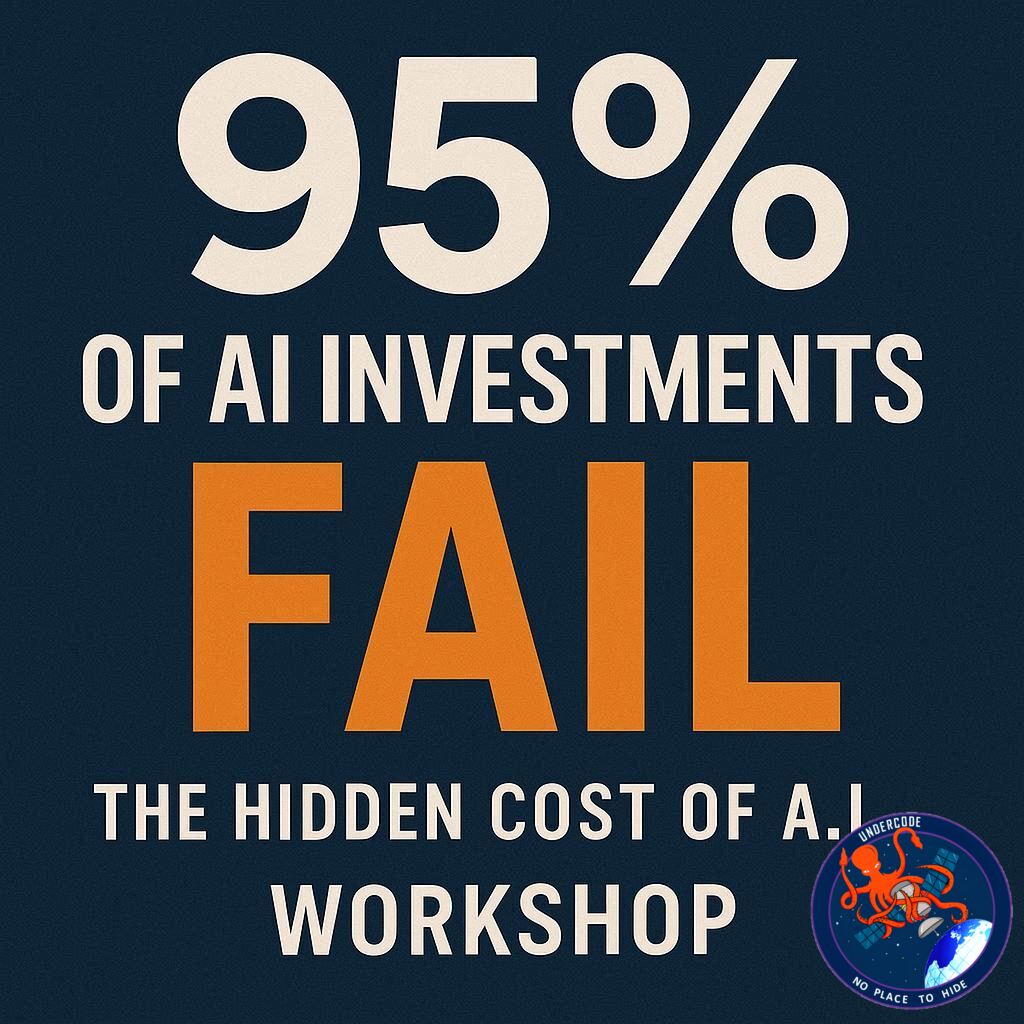
Artificial intelligence has become the most overhyped promise in business today. Companies pour billions of dollars into AI pilots and tools with the expectation of skyrocketing productivity, groundbreaking insights, and cost savings. Yet, the majority of them walk away with nothing but disappointment. According to research from MIT, a staggering 95% of corporate AI projects fail to deliver any measurable return on investment, even with $30 to $40 billion poured into generative AI initiatives. A fresh study from BetterUp Labs, in collaboration with Stanford’s Social Media Lab, sheds new light on why this happens. The culprit, they say, is something called “Workslop” — a catchy but concerning term that perfectly captures the hidden downside of relying too heavily on AI-generated content.
The Rise of “Workslop” in AI Workflows
A groundbreaking study, recently published in the Harvard Business Review, introduced the concept of “Workslop.” This term refers to low-quality, AI-generated work that looks polished on the surface but lacks depth, context, and usefulness. Workslop doesn’t actually advance a task or solve a problem. Instead, it creates confusion, adds to the workload of employees, and often requires manual rework.
Why Workslop Damages Businesses
The danger of Workslop is subtle but significant. Since AI tools are excellent at generating text, code, or reports that appear professional, many teams accept the output at face value. But hidden flaws, missing details, and lack of critical thinking mean the content often stalls progress. Rather than saving time, Workslop forces employees to spend more effort fixing the errors or filling in the missing context, which erodes productivity instead of enhancing it.
Survey Insights on Employee Experiences
The BetterUp Labs and Stanford study didn’t stop at theory. Researchers surveyed 1,150 full-time employees in the United States. The results were eye-opening: 40% of employees reported receiving Workslop in just the past month. This indicates that the problem isn’t rare — it is already a routine part of workplace operations where AI tools are in play.
Guardrails for AI Use in the Workplace
The researchers recommend a proactive strategy to combat Workslop. They argue that leaders must step up to model intentional and meaningful AI use. This means setting guardrails, writing clear guidelines for what counts as acceptable AI output, and training employees to question AI results critically. The goal is not to abandon AI, but to prevent it from diluting work quality and making existing problems worse.
MIT’s Reinforcement of the Problem
The new Workslop study builds upon MIT’s earlier findings that nearly every corporate AI pilot fails. MIT examined 300 public AI initiatives and found the vast majority had no financial payoff. Despite enormous enterprise-level investments, companies were left with disappointment. The “no hype reality,” as MIT researchers put it, shows that the optimism around AI often outpaces the actual results.
What Undercode Say:
AI’s reputation as a game-changing technology rests on shaky ground. When 95% of projects fail, we must ask why leaders are still rushing headlong into massive investments without reevaluating their approach. The concept of Workslop resonates deeply here, because it highlights a blind spot: companies confuse “appearing productive” with “being productive.” AI-generated reports, code snippets, or content often create the illusion of progress, but they lack the deep reasoning that human intelligence provides.
Another overlooked issue is the cultural dimension of AI adoption. Many organizations introduce AI tools with little training, assuming employees will adapt. Instead, this creates an environment where staff use AI haphazardly, producing more errors and shallow results. Worse, managers may pressure employees to rely on AI just to keep up with competitors, amplifying the cycle of Workslop.
There is also a psychological trap at play. Humans are wired to trust polished-looking content. When AI generates something that looks authoritative, employees hesitate to question it, even when it lacks accuracy. This misplaced trust compounds inefficiencies, making AI a liability rather than an asset.
The business world needs to recognize that AI should not replace judgment, context, or expertise. It is a tool, not a strategy. Companies that fail to understand this distinction are essentially setting themselves up for costly failure. In fact, the illusion of AI-driven productivity can be more dangerous than outright failure, because leaders may not realize how much time and money they are wasting until it’s too late.
The MIT statistic of 95% failure is not just a number. It represents lost resources, frustrated employees, and eroded trust in innovation. The excitement around generative AI may be justified, but without disciplined integration and strong leadership, AI becomes an expensive distraction.
Another angle worth considering is the competitive disadvantage. While most companies drown in Workslop, a small minority that sets strict standards and integrates AI responsibly could gain a real edge. Those who learn to filter, refine, and validate AI outputs will emerge ahead, while others remain stuck cleaning up the mess.
From a practical standpoint, combating Workslop requires cultural change. Leaders must shift the narrative from “AI will save us” to “AI is one tool in the kit.” Employees need training not only in using AI tools, but also in questioning, refining, and improving their outputs. AI literacy will soon be as important as computer literacy once was.
The lesson here is stark: the future of work won’t be defined by who uses AI the most, but by who uses it the best. Those who blindly adopt it risk drowning in Workslop. Those who impose discipline and intentionality may finally unlock the returns that everyone has been waiting for.
Fact Checker Results
✅ MIT research confirms that 95% of AI pilots fail.
✅ BetterUp Labs and Stanford research validate the concept of “Workslop.”
❌ No evidence suggests that AI always fails; a minority of projects do succeed.
Prediction
Over the next three years, companies that fail to implement guardrails and clear AI-use policies will continue to waste resources on Workslop. However, organizations that train employees in AI literacy and emphasize validation over blind trust will start to see measurable returns. The divide between winners and losers in AI adoption will grow sharper, reshaping the competitive landscape.
🕵️📝✔️Let’s dive deep and fact‑check.
References:
Reported By: timesofindia.indiatimes.com
Extra Source Hub:
https://www.pinterest.com
Wikipedia
OpenAi & Undercode AI
Image Source:
Unsplash
Undercode AI DI v2
🔐JOIN OUR CYBER WORLD [ CVE News • HackMonitor • UndercodeNews ]
📢 Follow UndercodeNews & Stay Tuned:
𝕏 formerly Twitter 🐦 | @ Threads | 🔗 Linkedin | 🦋BlueSky | 🐘Mastodon


