
Listen to this Post
Introduction
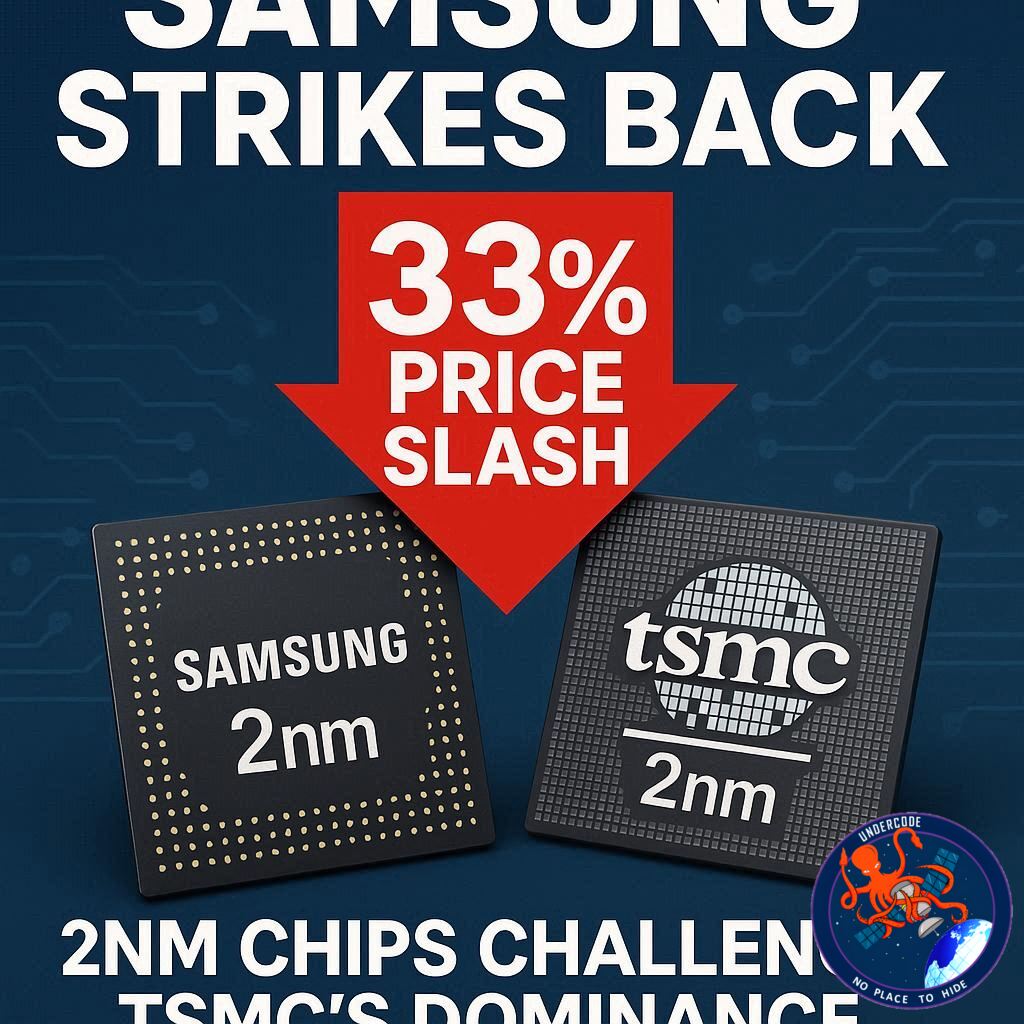
The semiconductor war is heating up again, and Samsung is pulling out its most aggressive weapon yet—pricing. While TSMC (Taiwan Semiconductor Manufacturing Co.) has been the undisputed leader in the advanced 2nm chipmaking race, Samsung is now offering drastic discounts to attract major clients. This bold move could reshape the balance of power in the global semiconductor industry, potentially setting the stage for new partnerships, big deals, and a wider adoption of Samsung’s advanced chipmaking technology.
the Original Report
Samsung’s 2nm chip manufacturing has been struggling to gain traction compared to TSMC, which already dominates the market with clients like NVIDIA and AMD. To bridge this gap, Samsung is slashing wafer prices by 33%, bringing the cost down to $20,000 per wafer, while TSMC reportedly charges around $30,000 per wafer.
This strategy comes as a response to underutilized production capacity, with Samsung’s multi-billion-dollar foundries in South Korea and the United States running far below expectations. Offering discounts may dent profit margins, but it helps keep production lines active, prevents idle investments, and could attract new long-term clients.
Samsung recently gained momentum by securing a $16.5 billion deal with Tesla to manufacture next-generation AI chips. This agreement may open the door for further partnerships, possibly including Elon Musk’s xAI projects. If successful, Samsung’s discount strategy could strengthen confidence in its 2nm technology and expand its presence in the global semiconductor market.
What Undercode Say:
Samsung’s decision to cut wafer prices by one-third is not just about affordability—it’s about survival and future dominance. Here’s the deeper analysis:
Market Dynamics: TSMC remains the go-to foundry for high-performance chips, but Samsung’s discounted rates give startups and mid-tier companies a cost-effective alternative. This could encourage new entrants to shift their production to Samsung.
Financial Gamble: Offering wafers at $20,000 means Samsung risks thin or even negative profit margins in the short run. However, the long-term reward could be increased market share and better positioning once economies of scale kick in.
Strategic Partnerships: The Tesla deal signals that Samsung isn’t just undercutting prices; it’s strategically aligning with influential partners. Tesla’s AI chip order could be a gateway for industries like autonomous driving, robotics, and supercomputing to trust Samsung’s foundry.
Technology Confidence: While pricing is one thing, performance is another. If Samsung can demonstrate reliable yields and competitive efficiency, discounted prices won’t just look like desperation—they’ll look like opportunity.
The U.S. Factor: With major investments in American chip facilities, Samsung’s price strategy could appeal to U.S.-based companies looking to diversify away from TSMC’s Taiwan-centric manufacturing. This geopolitical advantage could accelerate adoption.
Risk of Brand Perception: A heavy discount might make Samsung appear like a budget option rather than a premium competitor. The challenge is convincing clients that low price does not mean low quality.
The Ripple Effect on TSMC: If Samsung manages to secure high-profile clients, TSMC may be forced to reconsider its pricing. This could trigger a new era of competitive pricing in the semiconductor industry, benefiting end customers but shrinking profit margins across the board.
Investment Pressure: With billions already sunk into factories, Samsung has no choice but to fill capacity. Discounts may seem drastic, but keeping fabs idle is far costlier in the long run.
Long-Term Play: If Samsung manages to attract stable demand and improve yields, it could break TSMC’s monopoly-like grip on 2nm technology, setting up a healthier competitive landscape in advanced chipmaking.
The Bigger Picture: This battle isn’t just about chips—it’s about control over the AI, data center, and future consumer electronics markets. Whoever dominates 2nm production could hold the keys to next-gen computing power.
✅ Fact Checker Results
Samsung has indeed cut 2nm wafer prices by 33% compared to TSMC.
The Tesla $16.5 billion AI chip deal is confirmed.
TSMC remains the leader, but Samsung’s discount strategy is factual and ongoing.
🔮 Prediction
Samsung’s aggressive pricing will initially attract smaller companies and experimental AI startups, but within the next two years, major tech giants may also test its 2nm capacity. If yields improve and Tesla’s partnership proves successful, Samsung could realistically claim 20–25% of the 2nm foundry market by 2027, forcing TSMC to respond with its own discounts or strategic incentives.
🕵️📝✔️Let’s dive deep and fact‑check.
References:
Reported By: www.sammobile.com
Extra Source Hub:
https://www.reddit.com/r/AskReddit
Wikipedia
OpenAi & Undercode AI
Image Source:
Unsplash
Undercode AI DI v2
🔐JOIN OUR CYBER WORLD [ CVE News • HackMonitor • UndercodeNews ]
📢 Follow UndercodeNews & Stay Tuned:
𝕏 formerly Twitter 🐦 | @ Threads | 🔗 Linkedin | 🦋BlueSky | 🐘Mastodon


