
Listen to this Post
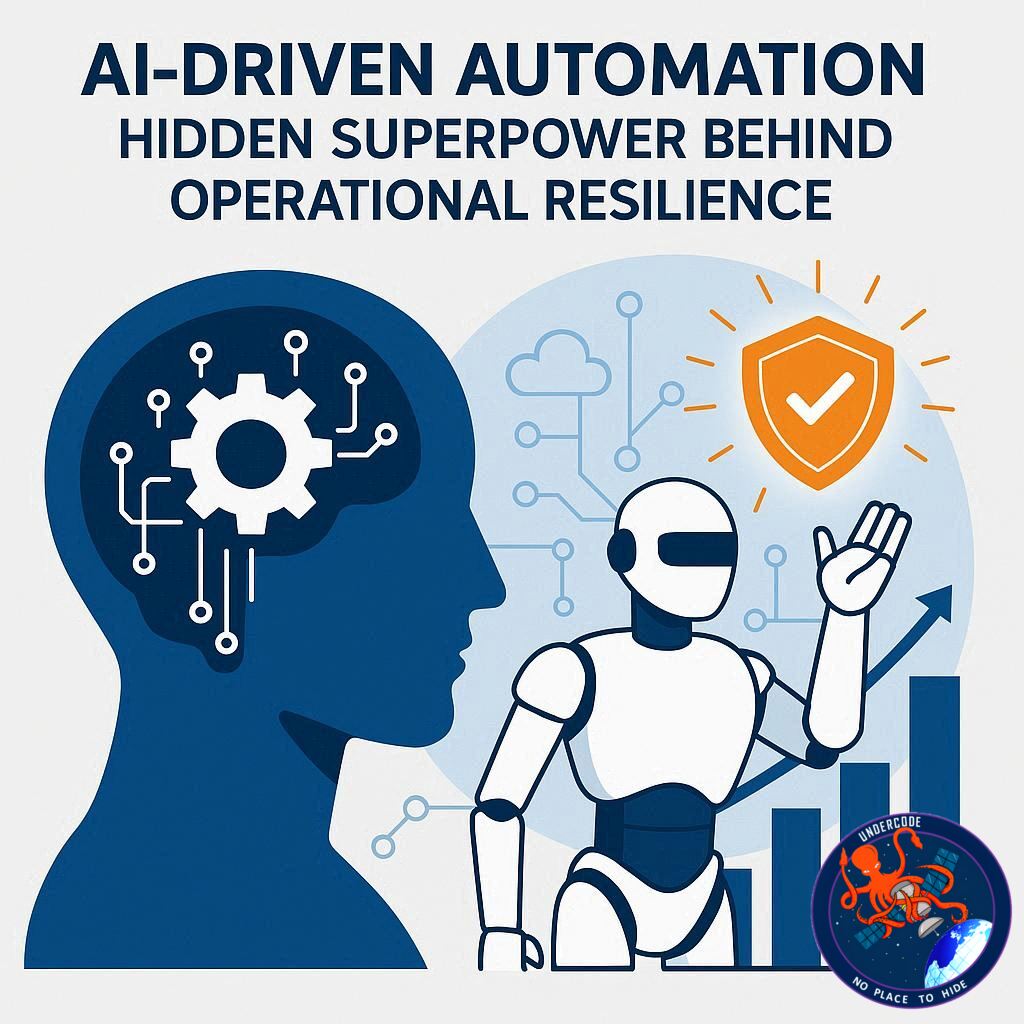
Introduction: Why Resilience Demands Automation
In today’s digital-first economy, resilience is no longer optional — it is the lifeline that keeps organizations operational when disruption strikes. Whether the threat comes from IT outages, cybersecurity breaches, or global crises, the ability to detect, respond, and recover swiftly determines which businesses thrive and which collapse under pressure. Traditional manual approaches are proving insufficient, leaving automation, powered by artificial intelligence and machine learning, as the critical driver of resilience. This shift isn’t about replacing human decision-making; it’s about augmenting it with speed, precision, and scalability. Companies that embrace AI-driven automation are not only protecting themselves against risks but also unlocking new opportunities for efficiency and growth.
How AI Unlocks Operational Resilience
The original discussion, featuring insights from experts at Spiceworks Ziff Davis and xMatters (an Everbridge company), highlighted how AI-powered automation is fundamentally reshaping the resilience landscape.
Growing Pressure for Continuity
Organizations face unprecedented pressure to maintain continuity. Outages are more frequent, cyberattacks more sophisticated, and customer expectations for seamless service higher than ever. Research shows that businesses are shifting investments toward capabilities that go beyond protection and governance, emphasizing detection, response, and recovery.
Three Dimensions of Resilience
Resilience now extends beyond technology. It covers three dimensions:
Operational resilience: ensuring systems and processes remain functional.
Personal resilience: enabling employees to stay effective under stress.
Business resilience: protecting strategic outcomes from disruption.
The Role of AI in Critical Event Management
Everbridge’s High Velocity Critical Event Management (CEM) platform, infused with AI, was showcased as a prime example of this evolution. Designed to help organizations “know earlier, respond faster, and improve continuously,” the platform addresses the rising volume of threats with automated intelligence.
xMatters and Digital Operations
xMatters extends this vision to IT operations. By automating the incident lifecycle, from detection through resolution, it reduces both downtime and costs. AI-driven workflows enrich incident signals with contextual data, ensuring that the right teams receive actionable insights instantly. Metrics such as Mean Time to Acknowledge (MTTA) and Mean Time to Resolve (MTTR) are drastically improved, minimizing disruption impact.
Automation as the Core Driver
The central takeaway is clear: automation is the bedrock of resilience. Manual processes, once relied upon, now represent bottlenecks. Automation streamlines troubleshooting, communication, and recovery, delivering both speed and cost-effectiveness.
The Future with AI Agents
Looking ahead, AI agents will increasingly handle repetitive and time-critical tasks. Incident commanders will shift roles — from micro-managing workflows to overseeing autonomous bots that execute troubleshooting, stakeholder updates, and even mitigation steps. This represents the next generation of IT resilience, enhanced by low-code and no-code automation tools.
From Risk Mitigation to Business Enablement
AI-driven automation doesn’t just reduce risks; it enables strategic business outcomes. The conversation identified three major benefits:
Risk management: faster identification and resolution minimize financial and reputational damage.
Efficiency gains: automation takes over low-value tasks, freeing human talent for innovation.
Strategic opportunity: reduced firefighting allows businesses to accelerate digital transformation.
The Business Outcomes Trifecta
Everbridge and xMatters were cited as examples of solution providers that achieve this “trifecta” — risk reduction, efficiency, and growth enablement. By automating incident response and communication, they deliver tangible business results while positioning organizations for long-term resilience.
What Undercode Say:
The emphasis on AI-driven automation as a cornerstone of operational resilience is not just industry hype; it reflects a fundamental truth about the evolving digital landscape. Let’s break down why this shift matters and how it shapes the future of business continuity.
Automation as a Necessity, Not Luxury
Businesses used to view automation as an optimization tool, something to consider when budgets allowed. Today, it is a survival mechanism. The frequency and severity of disruptions mean manual workflows can no longer keep pace. If every minute of downtime costs thousands or even millions, automation becomes the most cost-effective safeguard.
The Collapse of Manual Processes
Manual processes are inherently fragile. They depend on human availability, accuracy, and speed — factors easily compromised during crises. In contrast, AI-powered workflows never sleep, never hesitate, and can scale infinitely when pressure spikes. This is why organizations that cling to traditional methods will be the first to falter during major disruptions.
The Rise of AI Agents in Operations
The idea of AI agents taking over core incident response tasks is both revolutionary and inevitable. Humans excel at strategy, context, and judgment, but they are limited by time and bandwidth. Bots, on the other hand, thrive on repetition and precision. By assigning bots the legwork of troubleshooting, escalation, and communication, organizations free human leaders to focus on strategy.
Shifting IT From Firefighting to Innovation
A major hidden cost of poor resilience is lost innovation. IT teams bogged down in endless incident resolution cannot contribute to long-term transformation projects. Automation reclaims this lost capacity, turning resilience into a driver of competitive advantage rather than just a defensive shield.
Integration as the Missing Link
Automation’s power multiplies when systems are integrated. Standalone tools, even if AI-powered, cannot deliver resilience if they operate in silos. Platforms like xMatters prove that integration with ITSM, DevOps, and monitoring tools creates a unified, intelligent ecosystem that ensures rapid, coordinated responses.
Resilience as a Business Strategy
Operational resilience is no longer a niche IT issue; it is a board-level priority. Shareholders, regulators, and customers demand assurance that businesses can withstand shocks. Companies that embed AI-driven automation into resilience planning are not only protecting their operations but also signaling to the market that they are stable, trustworthy, and future-ready.
The Psychological Factor
Interestingly, resilience also has a human angle. Employees working in organizations with strong automation frameworks experience less stress during crises. They know that critical processes will execute reliably, allowing them to focus on creative problem-solving instead of panicked firefighting. This boost in morale indirectly contributes to productivity and retention.
Predictive Resilience: The Next Frontier
The future lies in predictive resilience — using AI not just to respond to incidents, but to anticipate them before they occur. With AIOps, pattern recognition, and anomaly detection, companies can resolve issues before users even notice a disruption. This proactive model transforms resilience into a competitive differentiator.
The Cost Equation Reversed
While skeptics point to the cost of implementing advanced automation platforms, the financial argument is overwhelmingly in favor of adoption. The cost of downtime, compliance penalties, reputational damage, and lost opportunities dwarfs the investment in AI-driven resilience systems. Over time, automation pays for itself many times over.
The Road Ahead
The trajectory is clear: resilience will increasingly hinge on AI and automation. Companies that embrace this transformation will not only survive disruptions but will also gain strategic momentum. Those that resist will find themselves locked in a cycle of reactive firefighting, bleeding resources while competitors move ahead.
Fact Checker Results
✅ AI-driven automation is already widely adopted in incident response and critical event management.
✅ Platforms like Everbridge and xMatters demonstrate real-world proof of reduced downtime and costs.
❌ Manual-first resilience strategies are no longer viable for large-scale, modern enterprises.
Prediction
In the next five years, AI agents will become standard across IT and business operations. Incident commanders will evolve into strategic overseers, while automation platforms will handle execution with near-zero human intervention. Resilient organizations will increasingly use predictive AI to neutralize disruptions before they manifest, creating an era where downtime becomes a rare anomaly rather than a recurring threat.
🕵️📝✔️Let’s dive deep and fact‑check.
References:
Reported By: www.zdnet.com
Extra Source Hub:
https://www.reddit.com/r/AskReddit
Wikipedia
OpenAi & Undercode AI
Image Source:
Unsplash
Undercode AI DI v2
🔐JOIN OUR CYBER WORLD [ CVE News • HackMonitor • UndercodeNews ]
📢 Follow UndercodeNews & Stay Tuned:
𝕏 formerly Twitter 🐦 | @ Threads | 🔗 Linkedin | 🦋BlueSky | 🐘Mastodon


